
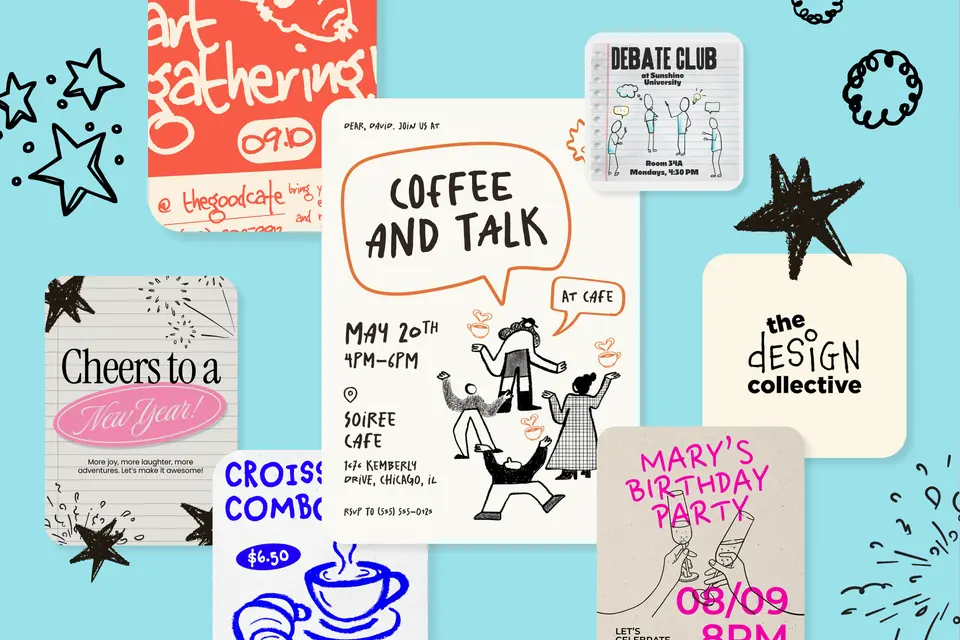
Embrace imperfect charm with Naive Design
You’re scrolling through the usual parade of polished posts when something crooked catches your eye. The letters are uneven. The flowers look like they were doodled during a video call. Nothing’s aligned, and it all feels off-kilter — but also fun.
After years of white space and minimalist looks, people are feeling bogged down by picture-perfect aesthetics. Today, audiences want content that’s raw, funky, and human, and that’s why Naive Design is making an impression.
This emerging design trend celebrates wavy lines, bright colors, and handmade charm that feels human. It’s a little rebellious and not afraid to color outside the lines. Here’s why this microtrend is showing up everywhere, and how to use it to make your content feel more personal — and less predictable.
Overview
Naive Design, explained
While the name may sound like an insult, Naive Design doesn’t mean you don’t know what you’re doing. It’s the opposite. You know enough about design to know which rules you should keep and which are worth breaking.
Naive Design embraces childlike wonder and the kind of imperfect charm that stands out in a feed of hyper-curated content. Now that so much digital content looks AI-filtered and a little too sleek, Naive Design says, “Relax. We’re having fun again.”
The trend is based on the simplicity of children’s art. There’s no fancy shading or realism here. Think uneven lines, squiggly shapes, flat perspectives, bright colors, smiley faces, handwritten lettering, and compositions that don’t follow every rule.
Something that should be far away might look just as big as the thing in front. Letters might tilt, lean, or bounce out of line. Shapes might look a little wobbly. That’s the point. It’s rough around the edges, but intentionally so.
Why polished perfection is losing its grip
Naive Design is having a moment because people are hungry for work that feels human. AI can generate glossy, technically impressive images in a few clicks, but that’s exactly why polished design doesn’t feel fresh anymore. It feels too expected and unoriginal. Naive Design pushes back against that sameness with something more personal, playful, and unmistakably made by someone with a point of view.
It’s also the natural next step after years of minimalist design trends. Clean aesthetics had a nice run, but that tidiness feels sterile now. Naive Design loosens the collar and brings back color, spontaneity, and the joy of making something expressive instead of “optimized.”
Nostalgia is also a big factor. Remember when you were in high school, doodling in homeroom and scribbling in bubble letters with markers from your Kit ’N’ Caboodle? That memory of casual creativity makes the style feel warm and familiar. It reminds us of a time when making things was less about perfection and more about play.
How to create the Naive Design look
Naive Design may look carefree and chaotic, but the best versions of it are very intentional. The goal isn’t to be messy for fun, but to make playful work that’s just imperfect enough to turn heads. It puts character over polish without compromising communication.
Handwritten-style fonts are a good place to start with this trend. Lettering that looks sketched, tilted, or slightly uneven instantly makes your design feel more human.
Doodles and hand-drawn elements are also a must. Smiley faces, arrows, uneven borders, little scribbles in the margins — these details create that sketchbook feel. And yes, drawing things by hand is encouraged, even if you’re not a professional illustrator. That might help since this design trend is all about amateur vibes.
When it comes to imagery, ditch the polished stock photos and go with symbolic images. Instead of using a polished photo of flowers, for example, try hand-drawn flowers that look like they came straight from a kid’s notebook. Swap sleek icons for quirky shapes.
Color is also a must-have. Big, vivid colors help bring the style to life, especially when paired with flat layouts and simple shapes.
With that said, balance is key. Even a playful design needs some structure. Leave enough breathing room between elements so you don’t overcrowd the piece.
Naive Design in action
Need a design that’s delightfully unbuttoned? Naive Design works well for small businesses or creators who want to trade perfection for personality. This design trend is perfect for kids’ brands, toy shops, party planners, bakeries, artists, and indie cafés. When being memorable matters more than making something mass produced, Naive Design is the look for the job.
For example, if you have a children’s clothing brand, you can use hand-drawn stars and playful lettering for your social media graphics. A party-planning business could create flyers with squiggly shapes and bright colors to make its brand look more energetic and inviting. Pop-up markets use this style a lot by building out social posts with handwritten headlines and doodled borders that make the brand feel friendly and full of life.
Regardless of your niche or business, Naive Design breathes fresh air into spaces overrun by perfection. Used well amid scrolls of sameness, this confident-in-itself design trend is attractive and attention-grabbing in a slightly disheveled, glasses-askew kind of way.