

AI has become an everyday assistant in India creative market.
In India, artificial intelligence has evolved far beyond being a simple informational tool. It has become an everyday assistant, helping people plan schedules, learn new skills, and make decisions in both professional and personal pursuits.

https://main--cc--adobecom.aem.live/cc-shared/assets/img/product-icons/svg/firefly-80.svg
Adobe Firefly
https://main--cc--adobecom.aem.live/cc-shared/assets/img/product-icons/svg/firefly-80.svg
Adobe Firefly
Use everyday language to create extraordinary results with generative AI.
Key Takeaways
- AI in India is widely used, with 99% of users engaging with AI platforms.
- AI has become an everyday assistant, supporting tasks from content creation to decision-making.
- High trust in AI enables Indian users to rely on it for daily and professional use.
- Indian users actively upskill in AI, strengthening its role in regular workflows.
- Strong adoption, trust, and experimentation position India as a leader in AI innovation.
Until recently, AI adoption was primarily limited to tasks like explaining complicated topics, summarising long reports, drafting emails, or generating content outlines. These administrative applications helped improve efficiency, but they rarely crossed into the creative domain. That is changing rapidly.
Large Language Models (LLMs) and generative AI platforms are now sophisticated enough to support complex creative workflows. For instance, Adobe Firefly can generate images, text effects, mood boards, tattoo designs, sound effects, soundtracks, and other assets through AI.
It’s clear that the future of AI is bright. Slowly and steadily, it is becoming a co-creator in many creative industries in India and around the world:
- Music: Platforms like Suno, endorsed by Grammy-winning producer Timbaland, are enabling artists to create tracks like never before. Using AI text prompts, users can generate vocals, instrumentation, lyrics, riffs, beats, and harmonies. This reduces production time while expanding creative possibilities.
- Film: Hollywood studios are experimenting with AI-assisted post-production. Disney’s de-ageing of Harrison Ford in Indiana Jones and the Dial of Destiny and Lucasfilm’s deepfake of Luke Skywalker in The Mandalorian demonstrate AI’s ability to enhance storytelling while reducing production complexity. In India, similar AI tools are being tested for VFX-heavy Bollywood films.
- Business and Marketing: Entrepreneurs and small business owners are using AI to create posters, flyers, product visuals, and social media posts at speed. With simple text prompts, they can generate campaign graphics, promotional videos, branded templates, and ad variations in minutes. This reduces reliance on external agencies, lowers production costs, and allows businesses to test and iterate creative ideas quickly.
AI usage leads in India compared to APAC markets.
India is now among the most active AI markets in the APAC region. According to a December 2025 study conducted for Adobe by Zenith Research & Insights, 99% of Indians reported using an AI-powered platform in the past 12 months, surpassing Australia by 1% and South Korea by 4%.
The reasons for this high adoption are multifaceted:
- Freemium AI platforms: ChatGPT, Gemini, and locally developed AI solutions are widely available without cost, lowering barriers for students, professionals, and creative users.
- Mobile-first population: Cheap smartphones and inexpensive mobile data make AI accessible to nearly all urban and semi-urban Indians.
- Cultural curiosity and experimentation: Indian users are naturally inclined to explore new technologies, from gaming to content creation, which accelerates AI integration into daily life.
While adoption numbers are impressive, what sets India apart is the high awareness of AI’s creative potential. Indian users are not merely using AI for administrative or productivity tasks—they are experimenting with generative AI to transform everyday digital content into art, design, and interactive experiences.
This is reflected in real-life applications shared by Indian users. When asked about the most creative or unexpected ways they’ve used AI, one respondent shared, “Yesterday I added some photographs into ChatGPT and got it to turn them into colouring pages for a nice family activity.”
Another one shared, “I once used AI to turn a simple photo of my family into a digital artwork that looked like a painted portrait. It was unexpected because it came out far better than I imagined, and it showed me how creative AI can be even with everyday moments.”
Trust in AI is high in the Indian market.
High awareness and hands-on experimentation naturally feed into another defining trait of the Indian market: trust.
Indians exhibit remarkable confidence in AI technologies. 92% of users believe AI improves decision-making through personalised recommendations, 78% are willing to let AI make suggestions or decisions on their behalf, and 79% trust technology to handle personal data securely and ethically*.
But why do Indians have an overwhelming trust in AI? Several structural and cultural factors underpin this confidence:
Reliable digital public infrastructure.
Platforms such as Aadhaar (via eKYC), Unified Payments Interface (UPI), DigiLocker, and CoWIN normalised fast, algorithm-driven processes for millions of citizens. Indians have grown accustomed to trusting automated systems for high-stakes, real-world outcomes: verifying identity, transferring money instantly, booking vaccination appointments, and more.
WhatsApp and mobile-centric usage.
With a mobile-first population and low-cost data, AI-powered chatbots are embedded in everyday apps and feel intuitive and frictionless. AI is not considered as a separate “tech product” to be learned. Rather, it is layered into platforms people already use daily.
Voice interfaces in Indic languages.
AI systems that function in Hindi, Tamil, Bengali, and other regional languages significantly reduce literacy and language barriers. Voice-based queries make AI accessible to users who may not be comfortable typing long prompts in English, expanding trust beyond urban, English-speaking populations.
Underserviced professions and practical value.
In a country where access to doctors, tutors, financial advisors, or legal experts can be limited or costly, AI often serves as a first point of contact. While not a replacement for professional expertise, it provides guidance, triage, and second opinions that are “good enough” to move forward with confidence.
More importantly, this trust is reinforced by visible, tangible outcomes. Users see AI helping them make faster decisions, generate better creative outputs, and solve everyday problems. When AI consistently delivers practical value (whether drafting a marketing plan, generating creative assets, or clarifying a complex topic), it strengthens belief in its reliability.
Simply put, in many global markets, trust in AI is still abstract and theoretical. In India, it is experiential.
Indians actively upskill in AI.

Rather than simply accepting AI recommendations at face value, Indian users are actively investing time in understanding how these systems work and how to use them effectively. They are participating in its growth and are deliberately learning to master it.
94% of users report actively improving their AI skills, 91% say they know how to craft effective prompts, and 88% believe they can identify AI-generated images or videos. What this shows is a level of literacy that goes beyond casual familiarity. The population sees AI as a competitive advantage in professional and personal settings.
What fuels this fiery surge in AI learning?
National skilling at scale.
AI upskilling in India is not happening organically alone; it is being institutionalised. Government initiatives such as the IndiaAI Mission, Skill India (including PMKVY), and AI curricula introduced by CBSE and AICTE are embedding AI literacy into mainstream education and vocational programs. MOOC platforms like NASSCOM FutureSkills Prime, NPTEL, and SWAYAM are also offering scalable, often free or affordable AI training to millions of learners. AI skills are increasingly seen not as niche technical knowledge, but as core professional competencies.
A workforce primed for AI transferability.
India’s large tech and digital services workforce is uniquely positioned to benefit from this trend. With 77% of Indian professionals using generative AI daily, proficiency in AI tools is becoming increasingly important in various sectors, such as IT services, marketing, design, and other similar sectors. As AI skills are cross-functional and industry-agnostic, once professionals learn to use AI effectively in one context, these capabilities can be applied in multiple roles and sectors. This makes the Indian workforce highly adaptable and positions the country to take full advantage of the rapid expansion of generative AI in business and creative industries.
Corporate encouragement and top‑down adoption
New research commissioned by IBM found that 59% of enterprise-scale organisations in India (1,000+ employees) already have AI actively in use. Among early adopters, 74% have accelerated their AI investments in the past 24 months, particularly in R&D and workforce reskilling, signalling that AI is moving beyond experimentation into core business strategy. As Sandip Patel, Managing Director of IBM India & South Asia, noted, “The increase in AI adoption and investments by Indian enterprises is a good indicator that they are already experiencing the benefits from AI. However, there is still a significant opportunity to accelerate as many businesses are hesitant to move beyond experimentation and deploy AI at scale.”
Indians feel emotionally positive about AI.
Indians are not just competent users. They are enthusiastic and confident in the value AI brings to their work and daily lives. 93% of users report favourable interactions with AI, which is significantly higher than 73% in South Korea and 75% in Australia*.
When asked about their attitudes towards technology and how they’ve used AI in their lives, one respondent shared, “Generating a family tree collage of all my family members. It was absolutely beautiful to see it come alive. Thanks, Gemini!”
Another one said, “I used AI to restore my grandmother’s old recipes, turning faded notes into complete dishes. It felt like bringing family memories back to life.”
Several factors contribute to this positivity:
Early exposure and frequent use.
For many Indians, AI is woven into the fabric of everyday life. From chatbots in banking and financial services, to virtual assistants in e-commerce, to generative AI tools for creative tasks, Indians interact with AI across work, education, and personal life. This early and frequent exposure to AI has normalised its presence, allowing users to see it as a reliable, accessible, and empowering technology.
Representation in global tech leadership.
Today, Indian professionals occupy some of the most influential positions in AI and creative technology, shaping the direction of global innovation. AI leaders like Shantanu Narayen (Chair and CEO of Adobe), Aravind Srinivas (Co-founder and CEO of Perplexity AI), Manish Gupta (Senior Director at Google DeepMind), and Srinivas Narayanan (Vice President of Engineering at OpenAI) exemplify this trend. Their visibility and impact provide aspirational examples for Indian users, reinforcing the perception that AI is not only a tool for productivity and creativity but also a viable pathway for career growth, entrepreneurship, and financial opportunity.
Pragmatic approach to automation.
Unlike some markets that frame AI as a replacement for human labour, Indians often view AI as a productivity enabler. According to a recent Naukri report, 87% of employers don’t think AI has any significant impact on overall employment in the country. On the contrary, 13% see AI as a catalyst for the creation of new jobs in the areas of IT, analytics, and business development. In this context, Indians tend to see AI as a force that will reshape rather than simply eliminate jobs, prompting both vigilance and opportunity‑driven learning.
Cultural openness to experimentation.
The combination of a mobile-first population, low-cost digital access, and a startup-driven ecosystem has created a population in India that is less concerned about perfection and more focused on exploration with AI. This contrasts sharply with many Western and European creative markets, where adoption is often slower and more cautious due to a more traditional view that creativity is innately a human skillset and cannot be replaced. Furthermore, there is likely a concern for job security in Western markets, with a Goldman Sachs report predicting that AI advancements will expose the equivalent of 300 million full-time jobs to automation.
Why India is leading the future of Generative AI.
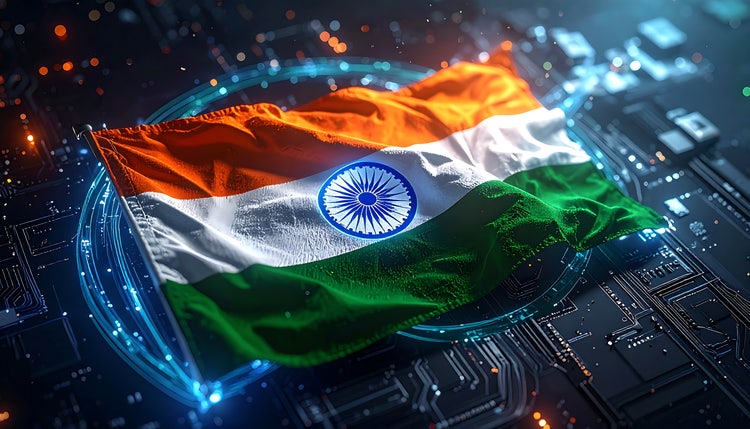
AI technology is advancing at an exponential pace, and India’s creative and professional ecosystem is uniquely positioned to benefit. Indians are already highly engaged, optimistic, and skilled in using AI as both a practical and strategic assistant in daily and professional tasks. This culture of experimentation creates a self-reinforcing cycle: familiarity builds trust, trust drives exploration, and exploration accelerates innovation.
As AI continues to evolve, India is emerging as a global testbed for generative AI trends. Creative industries, marketing teams, and digital enterprises are iterating faster, discovering new applications, and defining the next frontier of AI-driven creativity and business solutions. By embracing AI early and boldly, Indians are set to reap disproportionate advantages over markets that are slower to adopt, positioning the country as a trailblazer in shaping the future of AI-powered work and innovation.
Frequently asked questions.
You may also like
/