Like to know more? Write to us.
Empowering Healthcare Professionals to Address Evolving Patient Needs
Evolving patient needs is forcing Healthcare Professionals to adapt quickly, while technology advancevements, staff shortages, and burnout are all necessitating focussed enablement to ensure patient needs are met.
Benefits

Clinical Education that Improves Patient Care
Drive business growth by delivering personalized education for your healthcare professionals at scale, customized for your business needs.
- Deliver targeted knowledge with personalized learning using AI recommendations based on specialty, interests, and individual learning history.
- Drive brand consistent experiences & monetization through custom domains, branded portals, and integrated commerce capabilities.
- Make learning accessible anywhere with mobile access, offline content, and automatic progress synchronization across devices.
- Streamline onboarding with organization, geography, and role-based user classification.
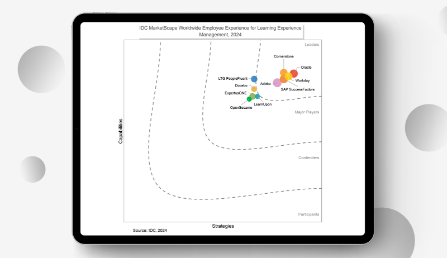
IDC Names Adobe a Leader in Learning Experience Management for Employees
Learn why IDC named Adobe a Leader in learning experience management for employee skilling. Explore current trends in learning experience management, how AI is shaping enterprise learning strategies and how leading vendors are meeting evolving enterprise needs.
Resources
Blog: How to use customer education to accelerate customer time to value
Navigate the essentials of customer education with our step-by-step guide to creating better learning experiences.
--- #e1e1e1
Video: How to Build a Successful Customer Education Program
Explore how structured learning programs help businesses reduce onboarding friction and create communities of loyal advocates.
--- #e1e1e1
Forrester Study: Driving customer loyalty and revenue-impact through learning
Learn how customer education empowers manufacturing teams to drive better product adoption, increase customer retention and improve business outcomes.
--- #e1e1e1
Video: Adobe Learning Manager for Healthcare Manufacturing
Learn how healthcare professionals improve clinical outcomes with personalized content, smart recommendations, and seamless learning experiences using Adobe Learning Manager.
--- #e1e1e1
On Demand: Take Your Customer Experience to the Next Level with Customer Education
Discover how tailored customer education strategies enhance loyalty and experience in manufacturing.
--- #e1e1e1
Questions? We have answers.
A healthcare LMS is a learning management system designed to help healthcare organizations deliver training, manage certifications, track compliance requirements, and develop workforce skills. Hospitals, clinics, health systems, and healthcare providers use a healthcare LMS to ensure employees receive the right training while maintaining operational efficiency and regulatory readiness.
Unlike a general-purpose learning platform, a healthcare LMS must support role-based learning, certification management, onboarding, continuing education, compliance training, and workforce development across diverse clinical and non-clinical teams. Healthcare organizations also need the ability to deliver training consistently across multiple locations, departments, and care teams while maintaining centralized visibility into learner progress and training outcomes.
Adobe Learning Manager helps healthcare organizations deliver personalized learning experiences for employees, customers, and partners through AI-powered recommendations, learning paths, blended learning, certification tracking, and automation. Administrators can streamline onboarding, automate learning assignments, monitor training completion, and measure workforce readiness through comprehensive reporting and analytics.
The best LMS for healthcare organizations is one that combines compliance training, workforce development, certification tracking, onboarding, and personalized learning within a single platform. Healthcare organizations need more than course delivery. They need a learning management system that can support diverse learner groups, evolving regulatory requirements, and large-scale workforce training across multiple locations and care teams.
When evaluating the best LMS for healthcare, learning leaders should look for AI-powered personalization, certification management, mobile learning, blended learning, analytics, automation, and enterprise-grade security. The platform should help healthcare organizations improve workforce readiness, streamline training administration, and deliver engaging learning experiences for clinical and non-clinical staff.
Adobe Learning Manager is an AI-powered learning platform designed to support healthcare workforce training at scale. As an AI learning management system, it combines personalized learning paths, AI-powered recommendations, mobile learning, certifications, learning plans, blended learning, and enterprise reporting within a single platform. Organizations can automate training assignments, track learner progress, and deliver role-based learning experiences across hospitals, clinics, departments, and care teams.
For healthcare organizations looking to modernize workforce development, onboarding, and compliance training, Adobe Learning Manager provides the scalability, flexibility, and enterprise capabilities needed to support long-term workforce readiness and continuous learning.
Yes. Adobe Learning Manager can create personalized learning paths tailored to different medical specialties, roles, skills, certifications, and learning requirements. This helps healthcare organizations deliver relevant training to physicians, nurses, allied health professionals, administrators, and support staff without requiring every learner to complete the same training program.
Healthcare organizations often need different learning experiences for different audiences. A nurse may require compliance training, patient care protocols, and specialty-specific education, while a physician may need continuing education, clinical updates, and leadership development. Personalized learning paths ensure each learner receives content aligned with their responsibilities, experience level, and professional development goals.
Adobe Learning Manager uses AI-powered recommendations, learning paths, learning plans, and role-based content assignments to deliver personalized learning at scale. Administrators can automatically enroll learners in training based on user attributes, job roles, certifications, organizational groups, or learning activity. AI-powered recommendations further help learners discover relevant content based on their interests, skills, and learning history.
As an AI-powered learning platform, Adobe Learning Manager helps healthcare organizations improve learner engagement, accelerate workforce development, and ensure training remains relevant across diverse specialties and care teams.
Yes. Adobe Learning Manager supports mobile learning for nurses, clinicians, and other healthcare professionals through a mobile-friendly learning experience that enables training anytime, anywhere. Learners can access courses on smartphones, tablets, or desktops, allowing them to complete training without being tied to a workstation.
Healthcare employees often work across shifts, locations, and care settings, making flexible access to training essential. Mobile learning helps nurses and field clinicians complete onboarding, compliance training, certification preparation, and professional development activities when it fits their schedules and workflows.
Adobe Learning Manager's mobile app allows learners to continue training across devices without losing progress. Learners can bookmark content, receive push notifications about upcoming training and deadlines, and download learning materials for offline access when internet connectivity is limited. The platform's Fluidic Player supports a wide range of learning formats, including SCORM, xAPI, videos, PDFs, and other e-learning content, creating a consistent experience across devices.
A healthcare LMS can help reduce clinical staff burnout and improve healthcare employee retention by simplifying training, automating administrative learning tasks, and delivering personalized learning experiences that fit into healthcare professionals' daily workflows. By making training more accessible, relevant, and flexible, healthcare organizations can reduce training-related frustration while supporting professional growth and career development.
Healthcare professionals often balance patient care responsibilities with onboarding, compliance training, certification renewals, and ongoing workforce development. When training is difficult to access, repetitive, or disconnected from day-to-day responsibilities, it can contribute to administrative burden and employee dissatisfaction. A healthcare LMS helps streamline these learning experiences while ensuring staff receive the training they need to remain effective in their roles.
Adobe Learning Manager helps healthcare organizations streamline healthcare workforce training through personalized learning paths, automated learning plans, certification tracking, compliance training, mobile learning, and AI-powered recommendations. Learners receive relevant content based on their role, skills, interests, and learning history, while administrators can automate enrollments, recurring certifications, and training assignments. Mobile access and blended learning options allow healthcare staff to complete training when and where it is most convenient.
Adobe Learning Manager supports integrations with enterprise systems, HRIS platforms, collaboration tools, content providers, and business applications through a combination of built-in connectors, APIs, and single sign-on capabilities. These integrations help healthcare organizations streamline workforce training, automate user management, and connect learning with existing operational systems.
Healthcare organizations often rely on multiple systems to manage employees, training, certifications, and workforce data. Adobe Learning Manager includes built-in integrations with platforms such as Workday, Microsoft Teams, Salesforce, Adobe Experience Manager, Marketo Engage, and Adobe Commerce. It also supports enterprise data exchange through APIs, FTP connectors, and standards-based integrations that allow organizations to connect learning workflows with their existing technology ecosystem.
For healthcare organizations using electronic health record (EHR), HR, or workforce management systems, Adobe Learning Manager's API framework and enterprise integration capabilities enable secure data exchange, automated user provisioning, learning assignments, and reporting workflows. Single sign-on (SSO) support allows learners to access training using existing enterprise credentials, reducing administrative effort and improving the learner experience.
Healthcare organizations can use an LMS to track continuing medical education (CME) activities, certification progress, training completions, and professional development requirements from a centralized platform. By automating learning assignments, monitoring completion status, and maintaining learner records, an LMS helps administrators simplify continuing education management and improve visibility into workforce readiness.
Managing continuing education requirements across physicians, nurses, and other healthcare professionals can be complex, particularly in large healthcare organizations with multiple departments and locations. Manual tracking processes often create administrative burden and make it difficult to monitor training progress, certification renewals, and ongoing learning requirements at scale.
Adobe Learning Manager helps healthcare organizations manage continuing education and professional development through certifications, recurring certifications, learning paths, automated learning plans, learner transcripts, and reporting dashboards. Administrators can assign role-based training, monitor completion status, automate recurring learning requirements, and generate reports that provide visibility into learner progress and certification activity across the organization.
An LMS supports patient education programs by helping healthcare organizations deliver accessible, personalized, and scalable learning experiences to patients and caregivers. Hospitals can use an LMS to provide educational content, learning resources, and guided learning journeys that help patients better understand health conditions, treatment plans, wellness programs, and post-care instructions.
Patient education often requires organizations to deliver information to diverse audiences with different levels of health literacy, learning preferences, and support needs. Traditional methods such as printed materials or one-time consultations can make it difficult to ensure patients have ongoing access to relevant educational resources. A learning management system provides a centralized platform where healthcare organizations can organize, deliver, and update patient education content at scale.
Adobe Learning Manager helps healthcare organizations create personalized learning experiences through learning paths, AI-powered recommendations, mobile learning, and customizable learning portals. Educational content can be delivered through multiple formats, including videos, documents, self-paced learning modules, and blended learning experiences. Patients and caregivers can access learning materials from any device, making it easier to engage with educational content when and where it is most convenient.
As an AI-powered learning platform, Adobe Learning Manager helps healthcare organizations scale patient education programs, improve learner engagement, and deliver consistent educational experiences across multiple patient populations and care settings.
Yes. Adobe Learning Manager helps healthcare organizations deliver and manage training across multiple hospital locations, clinics, departments, and care teams from a single AI-powered learning platform. As an enterprise healthcare LMS, it enables organizations to maintain consistent training standards while supporting the unique learning needs of different facilities, specialties, and learner groups.
Healthcare systems often need to train thousands of employees across multiple locations, including physicians, nurses, allied health professionals, administrators, and support staff. Managing training separately for each hospital or department can create administrative complexity, inconsistent learning experiences, and limited visibility into workforce readiness.
Adobe Learning Manager helps healthcare organizations scale healthcare workforce training through personalized learning paths, automated learning plans, certifications, user groups, and enterprise reporting. Administrators can assign training based on location, department, role, or other organizational attributes while maintaining centralized oversight. Multi-tenant architecture also enables organizations to create distinct learning experiences for different hospitals, departments, or audiences while managing governance and reporting from a single platform.
A healthcare LMS provides reporting and analytics that help administrators track compliance training, certifications, learner progress, workforce readiness, and training performance across healthcare organizations. These insights enable healthcare organizations to monitor learning outcomes, identify skills gaps, and make informed decisions about workforce development initiatives.
Healthcare organizations often need visibility into training activity across multiple departments, locations, and care teams. Administrators must be able to monitor compliance requirements, onboarding progress, certification renewals, learning engagement, and training completion rates while maintaining centralized oversight of workforce training programs.
Adobe Learning Manager provides comprehensive reporting dashboards, learner transcripts, certification tracking, skills insights, and customizable analytics. Healthcare training administrators can access reports on learner progress, team performance, compliance training, certifications, learning paths, and engagement metrics. Reporting can be filtered by department, role, location, or learner group, helping organizations identify trends and prioritize training interventions where they are needed most.
AI-powered learning helps healthcare organizations train employees more effectively by delivering personalized learning experiences, identifying relevant training opportunities, and helping learners access the information they need when they need it. By tailoring learning to individual roles, skills, interests, and development goals, healthcare organizations can improve learner engagement, accelerate workforce development, and strengthen workforce readiness.
Healthcare organizations often need to train diverse audiences, including physicians, nurses, allied health professionals, administrators, and support staff. Traditional training programs frequently rely on standardized learning experiences that may not address the unique requirements of each learner. AI-powered learning helps solve this challenge by recommending relevant content, adapting learning paths, and surfacing information based on individual learner needs.
Adobe Learning Manager is an AI-powered learning platform that combines AI-powered recommendations, semantic search, personalized learning paths, learning plans, and AI-assisted learner support. Learners can discover relevant content based on their role, skills, interests, certifications, and learning history, while administrators can automate learning assignments and deliver more personalized training experiences at scale. AI-powered search helps learners find answers faster, while conversational learning support provides contextual guidance grounded in trusted learning content.
As an AI learning management system, Adobe Learning Manager helps healthcare organizations deliver personalized learning at scale, improve learner engagement, reduce administrative effort, and build a more skilled and adaptable workforce prepared for evolving healthcare needs.
Healthcare organizations use blended learning to combine self-paced learning, instructor-led training, virtual classrooms, coaching, and hands-on practice into a single learning experience. This approach helps clinical and non-clinical staff develop knowledge and skills more effectively by delivering training in the format that best matches the learning objective.
Healthcare workforces often include diverse learner groups such as physicians, nurses, allied health professionals, administrators, and support staff. Some training topics, such as compliance requirements and policy updates, are well suited to self-paced learning, while clinical skills, patient care protocols, and leadership development often benefit from live instruction, collaboration, and practical application. Blended learning allows healthcare organizations to deliver consistent training while accommodating different roles, schedules, and learning preferences.
Adobe Learning Manager supports blended learning by combining self-paced courses, instructor-led training (ILT), virtual instructor-led training (VILT), assessments, certifications, and social learning experiences within a single platform. Administrators can create structured learning paths that combine multiple learning formats, automate enrollments, manage sessions, and track learner progress through centralized reporting and analytics. Mobile learning capabilities also allow healthcare professionals to access training when and where it is most convenient.
Fill out the form and we will contact you soon.