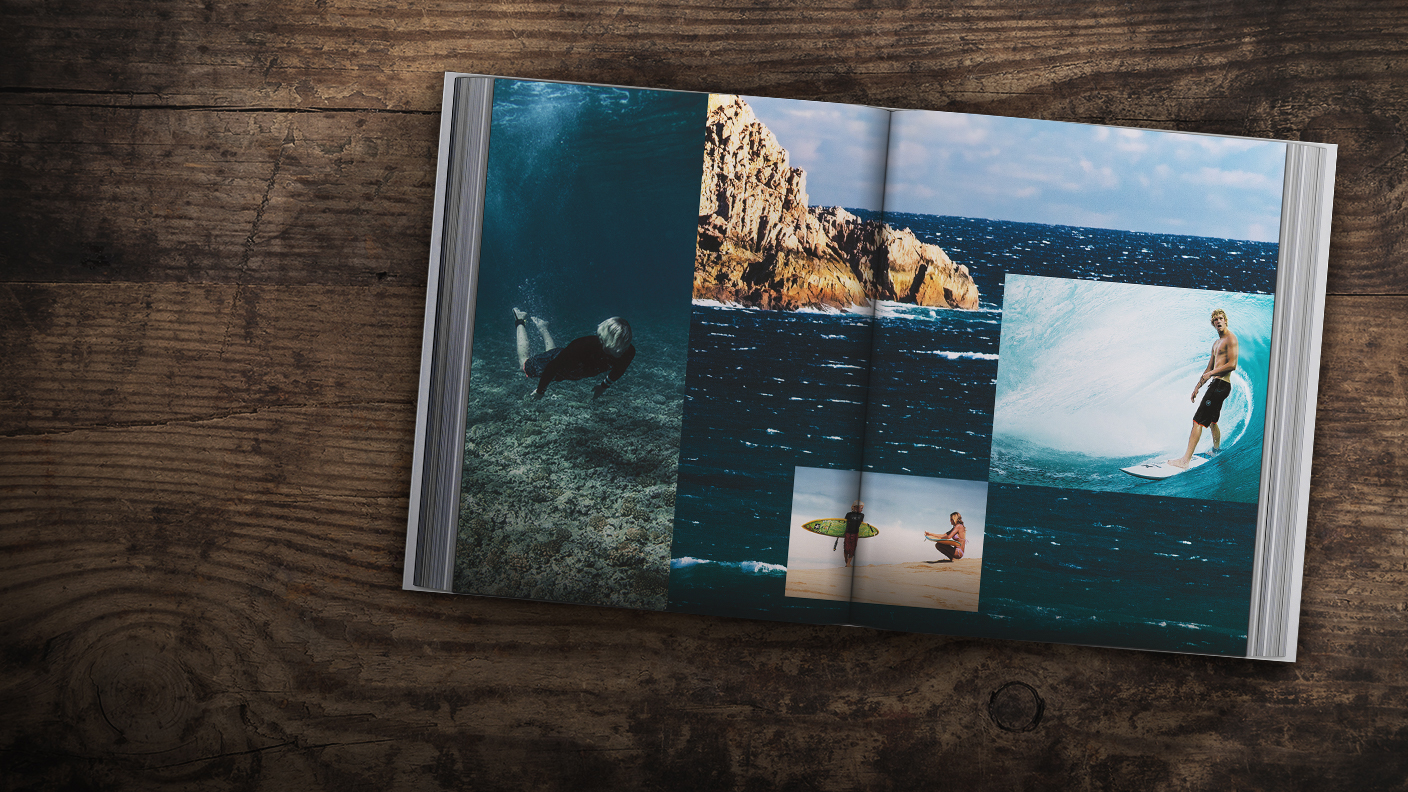
Lerne, wie du mit einfachen Mitteln Fotos und Bilder zu einem Layout kombinierst.
Veröffentlicht am
Ein neues Dokument erstellen.
Wähle in Photoshop „Datei > Neu“. Wähle einen Dokumenttyp aus, z. B. „Web“ oder ein Papierformat. Ein Bild, das für die Verwendung im Web vorgesehen ist, wird in Pixeln gemessen. Ein Bild, das für den Druck vorgesehen ist, wird in Millimetern gemessen. Setze den Hintergrundinhalt auf „Transparent“. Klicke auf „OK“.
Ein Hintergrundbild hinzufügen und die Bildgröße ändern.
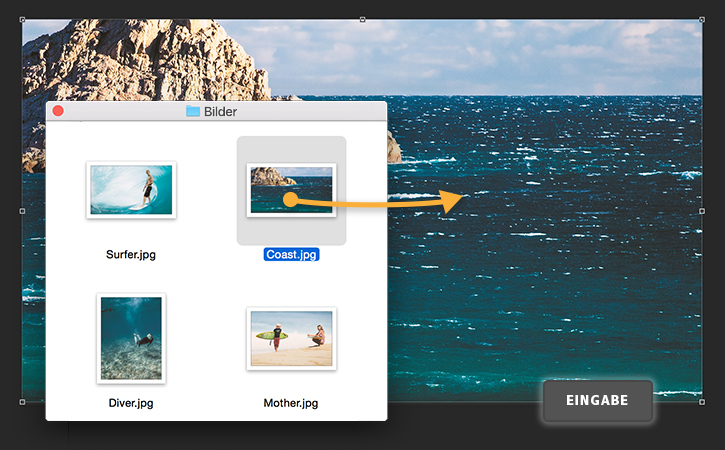
Ziehe ein Bild von deiner Festplatte in das neue Dokument. Ziehe die Griffe an den Ecken, bis die Bildgröße dem Dokument entspricht. Halte beim Skalieren des Bildes die Umschalttaste gedrückt, damit die ursprünglichen Proportionen erhalten bleiben.
Drücke die Eingabetaste, um die Platzierung des Bildes abzuschließen.
Weitere Bilder hinzufügen.
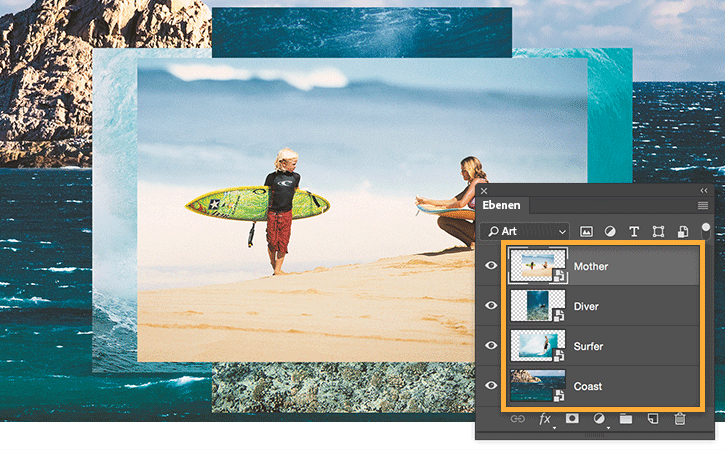
Ziehe weitere Bilder in das Dokument. Überlappungen sind kein Problem – du kannst sie später korrigieren. Für jedes Bild wird eine eigene Ebene angelegt und im Bedienfeld „Ebenen“ rechts neben dem Arbeitsbereich angezeigt. Falls das Bedienfeld nicht sichtbar ist, wähle „Fenster > Ebenen“.
Bilder in den Vorder- oder Hintergrund verschieben.
Ziehe eine Ebene im Bedienfeld „Ebenen“ nach oben bzw. nach unten, um ein Bild vor bzw. hinter ein anderes Bild zu legen.
Bilder anzeigen und ausblenden.
Klicke auf das Augensymbol , um eine Ebene auszublenden. Klicke erneut auf das Symbol, um die Ebene wieder sichtbar zu machen.
Das Layout optimieren.
Nachdem du nun ein paar grundlegende Techniken kennst, kannst du jetzt die Platzierung der Bilder verfeinern, bis du mit dem Ergebnis zufrieden bist.
Wähle eine Bildebene im Bedienfeld „Ebenen“ aus. Verwende das Verschieben-Werkzeug, um das Bild auf der Arbeitsfläche neu zu positionieren. Um die Größe eines Bildes zu ändern, wählst du die zugehörige Ebene aus. Drücke Strg+T (Windows) bzw. Befehl+T (macOS), um die Griffe anzuzeigen. Ziehe die Griffe, um die Größe des Bildes zu ändern. Positioniere jedes Bild neu, um dein Layout zu erstellen. Feile so lange an deiner Komposition, bis das Ergebnis deiner Vorstellung entspricht.
Gut gemacht!
Du hast Bilder verschoben und neu angeordnet und auf diese Weise eine neue Komposition erstellt. Diese Technik kannst du für Print- und Digitalprojekte nutzen.
Das Foto mit dem Surfer stammt aus dem Making-of-Material zum Film „View From A Blue Moon“, einem der bis dato ehrgeizigsten Action-Sport-Filme. Mehr zum Film erfährst du unter viewfromabluemoon.com.
You can control how Adobe websites use cookies and similar technologies by making choices below. But note that if you disable cookies and similar technologies entirely, Adobe websites may not function properly.
Cookies are small text files stored by your web browser when you use websites. There are also other technologies that can be used for similar purposes like HTML5 Local Storage and local shared objects, web beacons, and embedded scripts. These technologies help us do things like remembering you and your preferences when you return to our sites, measure how you use the website, conduct market research, and gather information about the ads you see and interact with.
You can make choices in the menu below about what cookies and other technologies you want us to use on Adobe sites when you visit them from this browser. You can always change those choices later by clicking on the Cookie Preferences link at the bottom of the page.
If enabled:
We can improve your experience by tailoring the site and the content to things we think might be of interest
We can better keep track of your preferences — like what language you prefer to use
We will better understand your likely interests so we can provide you more relevant Adobe ads and content on non-Adobe websites and in non-Adobe apps
It will help us improve the performance of our website and those of our partners who use the Adobe Experience Cloud
If disabled:
We won’t be able to remember you from session to session so the experience may not be tailored to your interests
You’ll still have access to the content of the site but certain features that depend on cookies may not function
You’ll still see ads, they just may not be as relevant to you
General information
You can control how Adobe websites use cookies and similar technologies by making choices below. But note that if you disable cookies and similar technologies entirely, Adobe websites may not function properly.
Cookies are small text files stored by your web browser when you use websites. There are also other technologies that can be used for similar purposes like HTML5 Local Storage, web beacons, and embedded scripts. These technologies help us do things like remembering you and your preferences when you return to our sites, measure how you use the website, conduct market research, and gather information about the ads you see and interact with.
You can make choices in the menu below about what cookies and other technologies you want us to use on Adobe sites when you visit them from this browser. You can always change those choices later by clicking on the Cookie Preferences link at the bottom of the page.
If enabled:
We can improve your experience by tailoring the site and the content to things we think might be of interest
We can better keep track of your preferences — like what language you prefer to use
We will better understand your likely interests so we can provide you more relevant Adobe ads and content on non-Adobe websites and in non-Adobe apps
It will help us improve the performance of our website and those of our partners who use the Adobe Experience Cloud
If disabled:
We won’t be able to remember you from session to session so the experience may not be tailored to your interests
We’ll still count your use of our site and services
You’ll still have access to the content of the site but certain features that depend on cookies may not function
You’ll still see ads, they just may not be as relevant to you
Operate the site and core servicesOperate site and measure engagement
Always active
These cookies are required, and they are used to enable the site and related services core functionality. Without them the site could not operate, so they cannot be disabled.
These cookies enable the site and related services’ core functionality and collect statistics about user engagement, such as counting active use to help us understand trends. These cookies cannot be disabled.
Measure performance
These cookies are used to analyze site usage to measure and improve performance. Without them Adobe cannot know what content is most valued and how often unique visitors return to the site, making it hard to improve information we offer to you.
These cookies are used to analyze site usage to measure and improve performance. Without them Adobe cannot know what content is most valued, making it hard to improve information we offer to you.
Extend functionality
These cookies are used to enhance the functionality of Adobe sites such as remembering your settings and preferences to deliver a personalized experience; for example, your username, your repeated visits, preferred language, your country, or any other saved preference.
Personalize advertising
These cookies are used to enable Adobe and our partners to serve ads more relevant to your interests. Without them you will still see ads, but they might not be as relevant to you.
Personalize advertising
These cookies are used to enable Adobe and our partners to serve ads more relevant to your interests. Without them you will still see ads, but they might not be as relevant to you.