
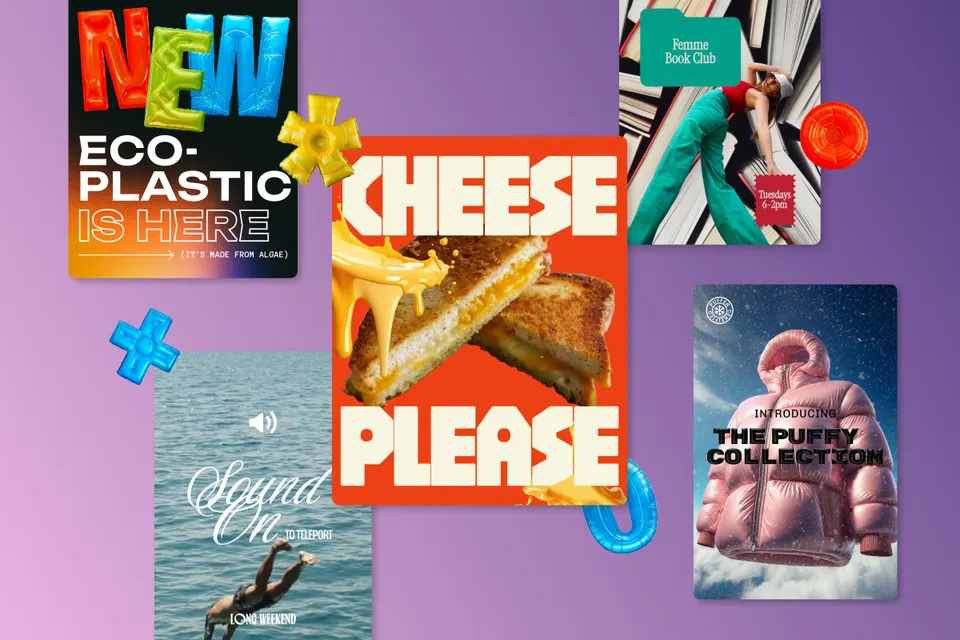
Experience the wonder of All the Feels
One of the most revered morning rituals is that first cup of coffee. Before you’re even fully awake, the aroma of coffee fills the room, and with that first sip — feeling the warmth of your mug and the steam on your skin — your shoulders drop and your eyes open wider. Suddenly, you’re ready to start your day. It’s sensory experiences like this and the immersive, emotional connection they conjure up that define our first microtrend of 2026, All the Feels.
Each year, Adobe forecasts creative trends for the year ahead. Then we at Adobe Express expand on those trends to uncover upcoming microtrends that will drive the visuals we’ll see on social media and beyond.
Audiences today want design that’s multidimensional — that goes beyond looking good to feeling big and bold. When you create with all the senses in mind, you do more than capture attention. You connect people.
Overview
All the Feels, explained
All the Feels is an emotional, immersive creative style that activates your senses through vivid colors, exaggerated typography, motion-filled elements, dynamic compositions, and visual overwhelm. It emphasizes sensational and tactile elements to create a maximalist viewing experience that feels all-encompassing. With AI-generated gradients, three-dimensional components, and amplified textures, these images pop out of the screen, stir up audience emotions, and make people take notice. It’s the type of design that you feel and react to instinctively.
Why emotional design matters right now
When AI is seemingly everywhere and smartphones have become extensions of ourselves, we’re craving more connection to our human experience. For a while, minimalism reigned supreme, but now, personality and playful details help brands stand out and build loyalty.
All the Feels offers a buffet of multisensory potential that taps into what makes us uniquely human — that we can feel, see, hear, taste, and smell the world around us. This creative trend draws people in and gives the impression that content is alive. The designs communicate emotion, intention, and meaning in ways words alone can’t.
At its core, All the Feels is about designing for emotional impact. Visuals aren’t just seen, they’re experienced — influencing mood, creating atmosphere, and bridging the digital and physical worlds. Through bold scale, rich color, dynamic motion, and intentional composition, the imagery can evoke everything from calm to exhilaration. At a time when much of life unfolds on screens, brands that feel most vivid and sensory are the ones people will remember.
Maximal Realm, one of 2025 design microtrends, similarly leaned into the visual experience of sensory overload, with bright colors and different textures. Both All the Feels and Maximal Realm are fearlessly expressive, refusing to play it safe.
A key difference between the two is that Maximal Realm is intentionally over the top. On the other hand, All the Feels invites viewers to experience the depth of specific moments, such as our morning coffee. It favors immersion over excess, invitation over shock and awe.
A yoga studio could promote an outdoor event by portraying the warm feeling of the sun on the skin and the joy that comes with moving in nature. A local bakery could bring the community together with small bites and light drinks using the humorous and relatable “Girl Dinner” phrase with 3D food elements to help viewers picture the snack-filled spread.
How to make your designs feel alive and memorable
All the Feels is eye-catching, but it also accurately captures a specific moment or emotion by tapping into humor, nostalgia, or other sensation. Leading your designs beyond the borders of a canvas starts with deciding what you want your viewer to feel — whether it’s awe, excitement, surprise, or intrigue.
It’s important to be intentional with sensory cues like color palettes, tactile fabrics, and motion graphics, but don’t forget about the text. Typography can communicate emotional tone and message. Rounded, soft fonts feel approachable and friendly, while strong, exaggerated fonts come across as energetic and humorous.
Remember, simple execution produces a greater impact. When tapping into All the Feels, ensure the design has a clear focal point and isn’t crowded or complicated by too many elements. You want to be bold, but turning the contrast and saturation too high or overwhelming the visuals with textures can make them difficult to read and understand.
While crafting a specific emotion or atmosphere is essential, mood without clear intention won’t drive engagement. When creating the mood for a design, go beyond colors and shapes that may resemble a feeling — pull from real-life experiences to give your content the authenticity it deserves.
For example, a melty grilled cheese sandwich shot in a sterile studio comes across as staged. Without tactile cues, viewers can’t picture the perfectly gooey texture, warmth, or smell. By tapping into the comfort and joy of the experience through bold, whimsical text and visual cheesy goodness, the sandwich practically melts before your eyes, making tastebuds water and leaving a sense of nostalgia for this simple, homey meal.
All the Feels in action
Like a revered morning ritual, All the Feels brings immersive magic so vivid and tactile you practically feel, smell, hear, and taste it. It transports you. For event coordinators, travel creators, and others who make use of content, this trend pushes the boundaries of experiential storytelling. Whether you’re showing a snowflake landing softly on a new puffy coat or white milk pouring into that hot cup of black coffee, the goal is the same — visual design that engages every sense and makes a moment feel unforgettable.