Photography
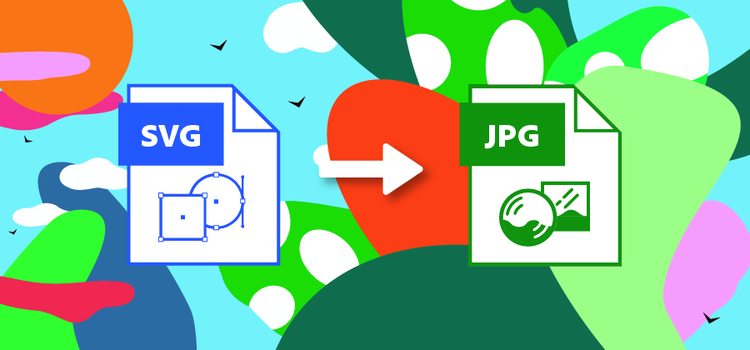
How to convert an SVG to a JPG.
Use Adobe Photoshop to convert SVG files to JPG or JPEG quickly and easily.


Photography
Use Adobe Photoshop to convert SVG files to JPG or JPEG quickly and easily.
JUMP TO SECTION
When to convert your SVG file to a JPG.
How to convert SVGs to JPGs in Photoshop
Create and convert with Photoshop
Tips for preserving image quality when converting SVG to JPG.s
If your logo is in SVG format and you're trying to upload it to Instagram, you might notice it won’t work. That’s because Instagram and many other platforms don’t support SVG files. To share your logo successfully, you'll need to convert it to JPG, a format that's widely accepted and quick to upload.
Here’s how to convert your SVG to JPG easily using Adobe tools:
1. Open the SVG file in Adobe Photoshop.
2. Go to File > Export > Export As.
3. Select JPG as the output format.
4. Adjust image size or quality settings if needed.
5. Click Export and save your new file.
Why JPG works better for platforms like Instagram:
With Adobe Photoshop or Adobe Express, this conversion takes just a few clicks and ensures your logo looks sharp, professional, and shareable across all your digital channels.
SVG (Scalable Vector Graphics) files are designed to be resized without losing image quality. That’s what you want for logos, web design and animations. But for other digital projects you need the smaller JPG file format. JPGs are easy to transfer and quick to upload to any source, for:
With a SVG to JPG converter like Adobe Photoshop, you can switch formats quickly—no extra software needed.
SVG is a vector-based file format, which means you can resize graphics without losing image quality. If you’re creating digital projects like logos, web design and animations, SVG files are your best bet. But, in some cases, you need a smaller file. When you need to export work for use on web browsers or social media or to send to storage, the JPG (Joint Photographic Experts Group) format strikes a better balance between quality and file size.
Unlike SVGs, which are meant for flexible editing, JPGs work best for final, ready-to-share images. Use Adobe Photoshop as a SVG to JPG converter to get high-quality results in just a few clicks.
Follow these simple steps to convert SVG to JPG using Adobe Photoshop:
1. Open your SVG image file in Photoshop.
2. Go to File > Export.
3. Click Export As...
4. Select JPG format from the drop-down menu.
5. Adjust the image size and canvas size as needed.
This quick process turns your scalable SVG into a more compact and widely supported JPG format—perfect for web use and sharing.
Converting from SVG to JPG can sometimes result in image quality loss due to the differences between vector and raster file types. Use these practical tips to maintain visual clarity during the conversion process:
Before exporting, select a high resolution in the export settings—especially if your JPG will be used in presentations or printed materials. Higher pixel density ensures the final image stays sharp.
Make any resizing within the SVG file before converting to JPG. Resizing the rasterised JPG afterward can lead to blurriness or pixelation.
In Adobe Photoshop, the “Export As” option offers more control over image quality, file size, and compression. It lets you adjust quality sliders, colour space, and canvas size to get the best results.
When exporting, avoid setting JPG compression too high. Lower quality settings reduce file size but may degrade visual clarity—especially around text or fine lines.
Keep a backup in PNG or TIFF if you may need transparency or lossless quality later. This allows you to re-export from a clean source if needed.
Whether you vibe with the vector image format or roll with raster graphics, Photoshop supports file types for creative pursuits of all kinds. With just a few steps, you can:
With Creative Cloud, your design tools are always up to date—perfect for converting, editing, and sharing images from anywhere.


