Introducing Adobe Firefly.
Use generative AI and simple prompts to create the highest-quality output - images, text effects, colour palettes and more.


CREATIVE GENERATIVE AI
Generative AI produces impressive results but it still depends on human direction and imagination. Discover how it can enhance your ideas and open new creative possibilities.
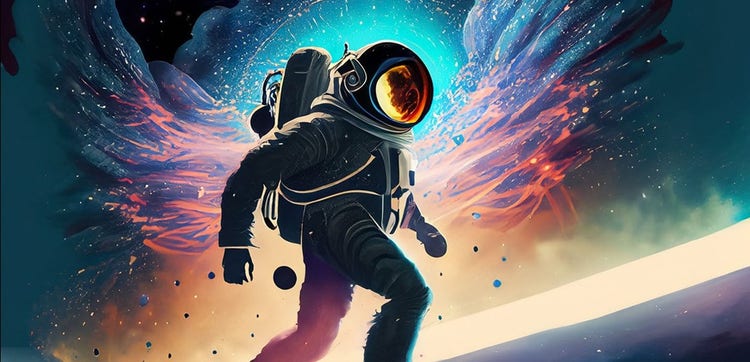
Artificial intelligence has been in creative tools for a while. (Content-Aware Fill is an example of artificial intelligence in Photoshop that photo editors know well.) Generative AI is a more recent development; it’s a technology trained on so much data that it learns to generate new works. Generative AI powers services like the text-only ChatGPT and Adobe Firefly, which has a text-to-image feature.
Generative AI can mimic human intelligence pretty convincingly, but it’s not trying to take over the world. It’s a tool that requires a human to give it direction, usually in the form of a text prompt. When you understand how generative AI is changing creative work, it becomes easier to see it as a partner rather than a threat.
Generative AI can enhance creative work by speeding up idea generation, offering alternative visual directions and helping creators move quickly through early concept stages. It allows you to experiment with multiple variations, styles and compositions in seconds, freeing up more time to refine, edit and apply your own creative judgement.
Rather than replacing creative jobs, generative AI strengthens the overall creative process. It expands your visual vocabulary, helps you overcome blocks and supports tasks like moodboards, mock ups and rapid prototypes, all while keeping the core decisions of taste, storytelling and cultural understanding firmly in human hands.
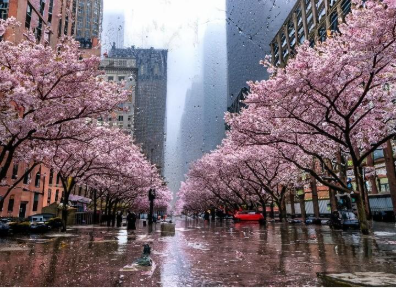
Text-to-image prompt: Midtown Manhattan with cherry blossoms on a rainy day.
Play around with text prompts until you learn how to write ones that push the AI in unique directions. Experimenting with phrasing, style cues and specific details will help you discover results that feel distinctive and personal rather than generic or predictable.
Image generators are good at pumping out a lot of variations. That doesn’t mean they’re all winners. When you train your eye to recognise successful compositions, contrast and colour combinations, you’ll recognise which variations are worth pursuing. This is where AI for creative work still relies heavily on human expertise, making your role more important rather than less.
If you want a particular kind of person to notice you, you’ll have to do some homework. What’s important to them? Do you understand their cultural context? Bring audience empathy to your creations and you’ll cut through the noise.
More traditional software skills aren’t obsolete. Generative AI imagery is usually a starting point, not an end-point. You’ll almost certainly want to refine it in software like Photoshop or Illustrator. This highlights one of the major limitations of AI in creative tasks: it still struggles with consistency, accuracy and storytelling without human refinement.



Generative AI is an opportunity to branch out creatively. Image generators aren’t limited to flat drawings. Text prompts can produce 3D renderings and even video.
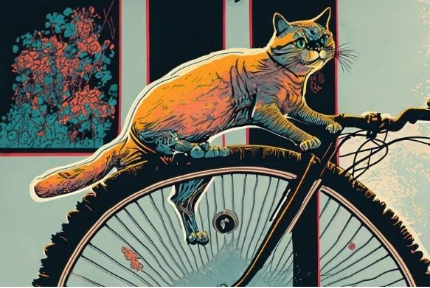
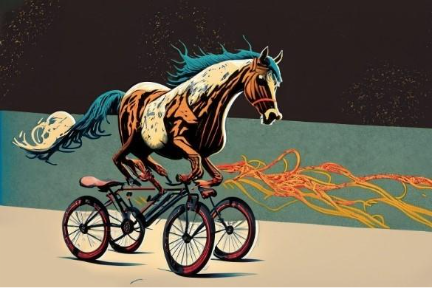
You may discover all sorts of unexpected AI art use cases for the technology. Say you want to make a meme that conveys “uncertainty.” To you, a cat nervously balancing on a bicycle is an obvious image, but enter the text prompt in an image generator and see what happens. If the image doesn’t quite match your vision, enter a new text prompt — maybe a nervous horse will do the trick.
One of the coolest parts of generative AI is that you don’t have to stick with your first option. Try modifying your text prompt and tweaking the controls of the AI art generator you’re using until you get something that’s ready to share — or more likely, ready for a final polish by hand.
AI cannot replace human creativity because it still lacks the intuition, emotional depth and cultural understanding that humans bring to creative work. It can generate content quickly, but it does not understand meaning, context or audience in the way a human creator does.
Generative AI is powerful, but it remains a support tool rather than a substitute for original thinking. It helps with idea generation, variation and efficiency, yet the decisions that shape compelling stories, visuals or designs continue to depend on human judgement. Creative professionals guide, refine and elevate what AI produces, keeping the final result uniquely human.
The future of creative work will centre on collaboration between humans and generative AI. Instead of replacing creative professionals, AI will handle repetitive or time-consuming tasks, allowing people to focus more on ideas, storytelling and craft. As tools improve, creators will be able to explore more concepts at speed, refine their vision earlier and work with greater flexibility across styles and mediums.
Creative roles will continue to evolve as AI becomes a standard part of workflows. Designers, illustrators and photographers may use AI to experiment more widely, while new roles such as prompt specialists or AI-assisted concept artists will emerge. Human judgement will remain essential, guiding the overall direction and deciding what feels meaningful, ethical and culturally relevant, with AI expanding what is possible rather than replacing the creative mind behind the work.

Use generative AI and simple prompts to create the highest-quality output - images, text effects, colour palettes and more.
Based on your location, we think you may prefer the United States website, where you'll get regional content, offerings, and pricing.


