Inverse kinematics in 3D design
3D animation gives engineers and storytellers the tools to tell immersive stories in a new dimension.
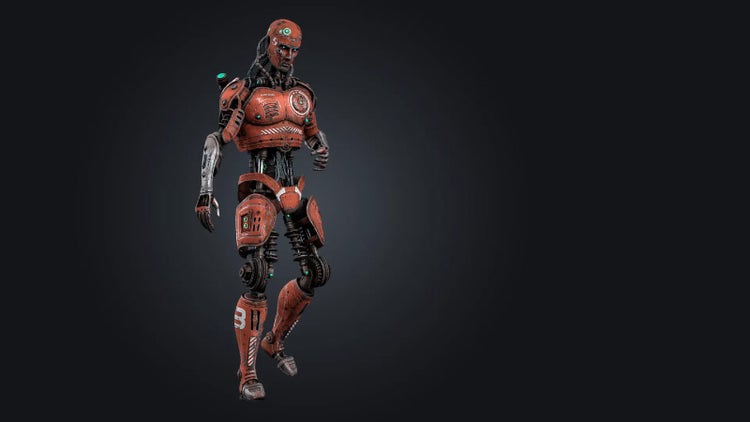
3D design improves the quality and depth of everything from video games to architectural models to medical scans.
3D animation certainly requires creativity, but it also requires technical skill. Inverse kinematics is the mathematical framework that makes textures and character movements more lifelike and natural. Use Substance 3D to create your model, texture it, and add smart materials before exporting it to an animation tool.
In this guide, we’ll examine how inverse kinematics works, why it’s so beneficial, and how you can start using it in your designs.
What is inverse kinematics?
Inverse kinematics is a mathematical model that calculates all the joint parameters for a kinematic chain. Put simply, inverse kinematics (IK) determines which joint parameters you need for a more lifelike animation. It’s the underlying concept that makes lifelike characters possible. All you need to do is tell the software the start and end points of an armature and it takes care of the rest.
Forward kinematics, on the other hand, determines the end point when you give it a series of joints. It’s more focused on finding an end point, while inverse kinematics involves breaking the entire chain into necessary joints for a more realistic product.
Inverse kinematics is popular in robotics because it helps engineers decide where to position joints on robotic arms. But IK also applies to:
- Designing ergonomic prosthetic limbs
- Creating 3D characters with natural hand and foot placement in an environment
- Rigging 3D facial features to move naturally
Applications of inverse kinematics animation.
Inverse kinematics is essential to 3D animation because it supports natural and realistic character animations. Before IK animation, it took a lot of work to design characters that could reach for an object without adjusting each joint. Fortunately, reverse kinematics streamlines the animation process by breaking down joints in just a click.
Benefits of using inverse kinematics.
Inverse kinematics has several benefits, such as:
- Saving time. Don’t waste hours wrestling with mechanics. IK does the hard work, so you have more time to focus on storytelling.
- Exploring more creative possibilities. Inverse kinematics broadens your creative horizons, which allows more time for creative exploration. Rigging 3D facial features to move naturally
- Improving efficiency. Animators work more efficiently with IK, which helps designers create more lifelike animations for less effort.
Inverse kinematics in 3D model interaction.
Inverse kinematics is great for animation, but it also plays a key role in 3D models. This technology makes 3D models more realistic, improving both the model’s quality and the end-user experience.
For example, reverse kinematics supports virtual reality and augmented reality experiences, which give users more immersive experiences. Healthcare providers use this technology to teach medical students how to perform surgery, while automotive designers use it to brainstorm designs before they create expensive physical prototypes.
Best practices for working with inverse kinematics.
Inverse kinematics is a must-have for modern design. But it’s still good to follow a few rules of thumb to get more value out of this feature, including:
- Balance automation and manual adjustments. The software will handle a lot, but you may need to manually adjust a few bones to get the exact movement you want.
- Keep it simple at first. Complex rigs and high-resolution meshes can slow down IK. Use a simplified rig while setting up inverse kinematics and adjust it afterward.
- Check constraints. If you’re getting odd movement or collapsed chains, check for joint constraints or overextended chains.
Getting Started with Adobe Substance 3D.
Inverse kinematics makes 3D animation and design faster, more creative, and highly realistic. However, you need the right tools to do IK correctly.
Build your models in Adobe Substance 3D and import them to an animation software to create pro-level digital creations. Inverse kinematics has many possibilities, so don’t be afraid to experiment with this technology to bring your creations to life.
Frequently Asked Questions
WHAT ARE INVERSE KINEMATICS TECHNIQUES IN COMPUTER GRAPHICS?
WHAT ARE THE TWO TYPES OF KINEMATICS IN 3D ANIMATION?
There are two types of kinematics:
1. Forward kinematics. This type of kinematics determines the end point of a model using joint angles you provide.
2. Inverse kinematics: As the name suggests, this is the opposite of forward kinematics. IK takes the start and end points to provide joint angles.
WHAT TOOLS ARE USED FOR INVERSE KINEMATICS?
You can use a variety of tools to do IK, including:
● Blender
● Maya
● 3ds Max