What is a cost plus contract and how does it work?
Transparent agreements for projects with evolving scope and uncertain requirements.

What is a cost plus contract?
A cost plus contract, also known as a cost-reimbursement contract, is an agreement where a client agrees to reimburse a contractor for all allowable, documented expenses incurred during a project, plus an additional negotiated fee. This fee represents the contractor's profit. The core principle is transparency: the client pays for the actual effort and materials, providing flexibility when the project scope is not well-defined from the start.
Key components of a robust cost plus agreement include:
- Scope of work (SOW): While the scope might be fluid, this section should describe the project's objectives, key deliverables, and known requirements as clearly as possible.
- Definition of allowable costs: This is a critical section that explicitly lists what expenses are reimbursable. This typically includes direct labor, materials, subcontractor costs, and equipment rentals. It should also clarify how overhead costs (like administrative support or office space) are calculated and applied.
- Fee structure: The contract must define how the contractor's profit (the "plus") is calculated. Common structures include a fixed fee, an incentive fee based on performance metrics, or an award fee for exceptional outcomes.
- Documentation and reporting requirements: This clause specifies the level of detail required for cost verification, such as receipts, timesheets, and subcontractor invoices. It also sets the cadence for financial reporting.
- Audit rights: The client usually retains the right to audit the contractor's financial records to ensure all claimed costs are accurate and allowable under the contract terms.
- Change control process: This defines the formal procedure for making changes to the project scope, ensuring both parties agree on adjustments and their potential impact on cost and schedule.
When drafting an agreement, it is essential to build on a solid foundation. You should review details on how to write a contract, as well as refresh your understanding of the difference between a binding vs non-binding contract to ensure the agreement is enforceable.
The specific rules for cost plus agreements can vary significantly by industry and jurisdiction. Government contracts, for example, often have highly regulated definitions of allowable costs. To prevent ambiguity, the agreement must define precisely how costs are tracked, how fees are calculated, and when payments are made.
How does a cost plus contract work?
In practice, a cost plus contract operates on a cycle of work, documentation, and reimbursement. This transparent process ensures the client has full visibility into project expenditures as they happen. A typical workflow involves several key stages:
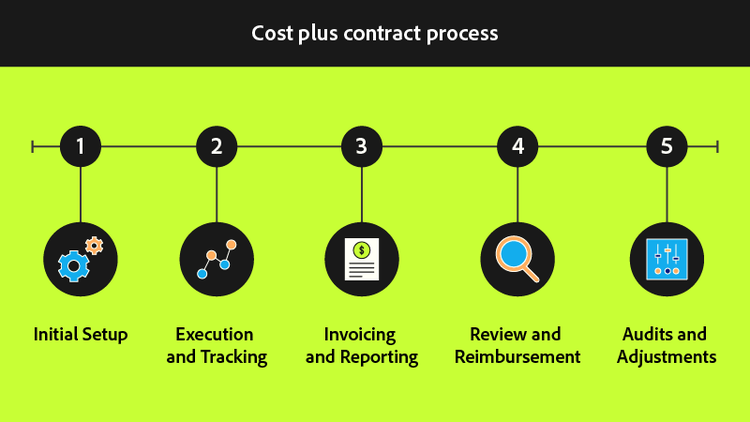
- Initial Setup. Both parties collaboratively define the scope, establish categories for allowable costs, set documentation standards, and agree on the fee structure. This foundational step is crucial for building a transparent working relationship.
- Execution and Tracking. As work begins, the contractor meticulously tracks all project-related costs. This involves collecting receipts for materials, maintaining detailed timesheets for labor, and logging all other expenses that fall under the agreed-upon allowable categories.
- Invoicing and Reporting. At predetermined intervals (e.g., monthly), the contractor submits an invoice to the client. This invoice includes a detailed breakdown of all costs incurred during the period, along with the required supporting documentation.
- Review and Reimbursement. The client reviews the submitted invoice and documentation to verify that all costs are accurate and fall within the allowable categories defined in the contract. Once approved, the client pays the contractor the reimbursed amount plus the calculated fee.
- Audits and Adjustments. Periodically, the client may exercise their right to audit the contractor's records. This ensures ongoing compliance and provides an opportunity to align on any budget adjustments or scope changes.
This model stands in contrast to a fixed-price contract, where a single price is agreed upon upfront, shifting the risk of cost overruns entirely to the contractor. It also differs from a unilateral contract, where one party's promise is accepted by the other's performance, rather than through mutual, negotiated promises.
So, who pays for mistakes in a cost plus contract? The answer depends on the nature of the mistake and the contract's specific terms. If a mistake is due to contractor negligence—such as ordering the wrong materials or performing substandard work that requires rework—those costs are typically not reimbursable. However, if a mistake arises from unclear specifications provided by the client, the costs to correct it may be allowable. Well-drafted agreements explicitly define what constitutes a reimbursable expense versus a cost borne by the contractor.
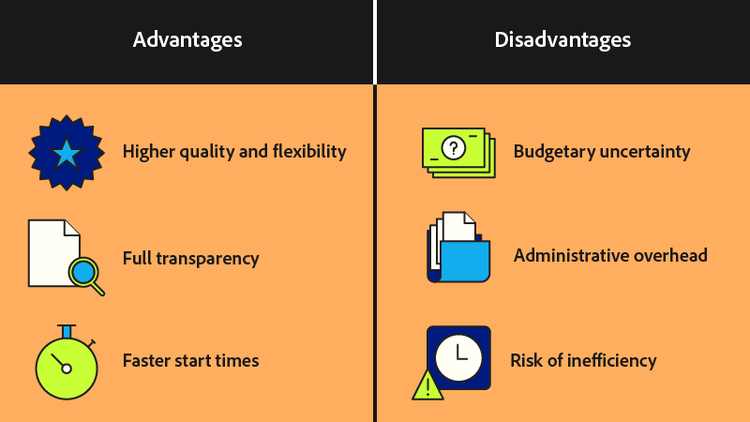
Pros and cons of cost plus contracts.
While cost plus contracts offer significant flexibility, they come with trade-offs that businesses must weigh carefully.
Advantages
- Higher Quality and Flexibility: Contractors are less likely to cut corners, as they know all legitimate costs will be covered. This model allows for high-quality materials and skilled labor, and it easily accommodates scope changes as project needs evolve.
- Full Transparency: Clients have complete visibility into where their money is going. This open-book approach can foster a strong, collaborative relationship built on trust.
- Faster Start Times: Projects can often begin more quickly, as a detailed, final scope is not required to start the work. Initial phases can commence while later stages are still being planned.
Disadvantages
- Budgetary Uncertainty: It can be difficult to predict the final project cost, which poses a risk for clients with strict budgets. The final total depends on actual expenses, which can fluctuate.
- Administrative Overhead: The need for detailed record-keeping, frequent reporting, and invoice reviews creates a significant administrative burden for both the client and the contractor.
- Risk of Inefficiency: Without strong oversight, there is a risk that costs could escalate. The contractor may have less incentive to be efficient if they know all costs will be reimbursed.
The most significant disadvantage of a cost-plus contract is this potential for financial risk if not managed properly. To mitigate these downsides, many businesses implement controls such as a "not-to-exceed" (NTE) clause, which sets a ceiling on total costs. Others may use a hybrid fee structure, such as a fixed fee with a performance-based bonus for meeting or beating budget and schedule targets.
When to use a cost plus contract.
Cost plus contracts are most effective in situations where the scope of work is difficult to define upfront, the project is subject to change, or quality is the primary driver. Common scenarios include:
- Research and Development (R&D): When the outcome of a project is experimental, it's nearly impossible to estimate the total cost accurately.
- Construction Projects: In large-scale construction, unforeseen issues like site conditions or material price fluctuations are common. A construction contract structured as cost plus allows for these variables.
- Software Development: Agile development methodologies, where requirements evolve through sprints, are well-suited to the flexibility of a cost plus model.
- Creative Projects: Engagements with creative agencies for design or branding work can benefit from a cost plus approach, allowing ideas to evolve organically.
When deciding if a cost plus contract is right for your project, consider these questions:
- How well-defined is our project scope?
- How likely is it that requirements will change during the project?
- Do we have the internal resources to manage detailed invoice reviews and oversight?
- Is achieving the highest quality more important than cost certainty?
For projects involving dense technical specifications or complex legal clauses, modern tools can significantly improve clarity and efficiency. You can use generative AI for business documents to summarize lengthy sections, identify key obligations, and even ask questions about the contract in plain language to ensure you understand every detail.
Once you move forward with a cost plus approach, it's wise to share a concise internal summary of the agreement's key terms with all stakeholders. This ensures everyone is aligned on what's reimbursable, how fees are paid, and when reviews will occur. Providing a central, accessible location for all documentation helps streamline reviews across Windows, Mac, and mobile environments.
To evaluate, draft, and manage your agreements more efficiently, explore PDF tools for business that help teams organize documentation, compare different versions, and collaborate securely across all devices.
Frequently asked questions.
You may also like
https://www.adobe.com/dc-shared/fragments/seo-articles/business-seo-caas-collection
https://main--dc--adobecom.aem.live/dc-shared/fragments/seo-articles/acrobat-color-blade