Adobe Acrobat Sign
What does collateral mean when you take out a loan?
Learn about lender security and how to speed up the loan process.


Adobe Acrobat Sign
Learn about lender security and how to speed up the loan process.

The collateral facts
Collateral is something a borrower promises to a lender in case they can’t repay the loan. For home, personal, or business loans, lenders usually require collateral. If the borrower defaults on the loan, the lender can claim the assets offered as collateral. This claim is called a lien. For example, if you put up a car as collateral for a personal loan, and then you default, the lender or creditor can issue a lien on the car and sell it to cut their loss on the unpaid debt.
Anything of monetary value can be collateral: stocks and bonds, money in the bank, a mint-condition baseball card from the 1950s. The type of collateral you can offer a lender usually depends on the kind of loan you’re seeking.
For a home loan, the collateral might be the house itself or another piece of real estate. For a business loan, the collateral could be business equipment, like factory machines or delivery trucks. It could also be outstanding invoices, which represent money owed to the business by customers.
Here are the main categories of collateral types:

An unsecured loan (a loan made with no collateral) exposes the lender to more risk of losing their money, so the interest rates are often much higher. But with collateral, the lender feels safer making the loan, so they can offer the borrower a better interest rate. The borrower benefits from the collateral-secured loan because they get the cash they need — to pay debts or make important purchases — without having to sell their property to get cash.
Whether you’re applying for a personal or small business loan, you can speed up the process by following these steps.
The better your score, the lower your interest rate will be.
Meet with multiple lenders to see if you qualify for a loan. Different lenders will offer different terms.
With multiple offers, you can make an educated decision about which lender offers the best interest rates, loan terms, and lender fees.
To prove your ownership of the collateral you’re offering, you’ll have to provide additional documents like W-2s, bank statements, pay stubs, receipts, and deeds.
Most lenders accept digital applications online which can be faster and easier for everyone. You can complete your loan application with free fill and sign PDF tools. To include supporting documents, convert them to PDF and attach to an email.

As all lenders know, a lot of paperwork goes into processing every loan. But tools that convert paper documents to digital, that make it easy to create and fill in templates, and that allow for quick e-signatures can make the whole loan agreement process move faster. A digital mortgage lender, for example, will be able to send and receive required documentation much faster than a traditional lender with in-person meetings.
Your template should include the names and contact information for all parties, terms and conditions, promissory note information (written payment plans), duties and responsibilities for all parties, effective dates, and signature fields for both parties.
With templates, you can set up a more efficient document workflow for any type of document. Smart tools like automatic form field recognition can help you turn a paper document or Microsoft Word file into a PDF loan agreement fast.
Going paperless is better for the environment and for business. By sending a PDF for e-signature, you can get loan documents signed in minutes instead of days. Share with multiple signers at once, and automatically ensure that everyone gets a digital copy of the agreement.
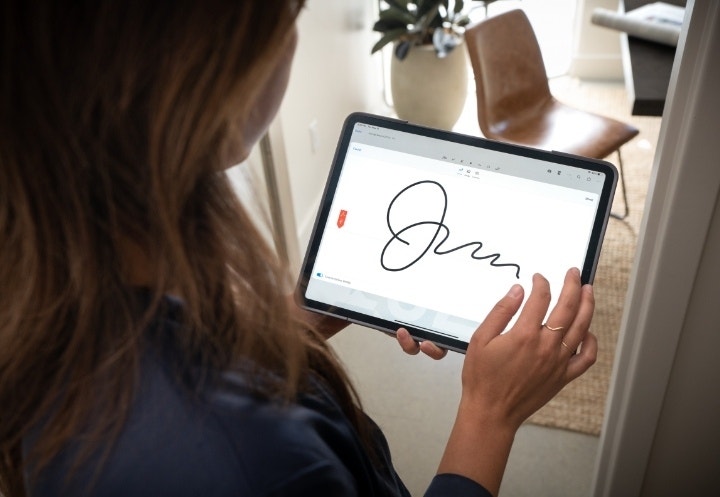
Before you share private lender and borrower information, it’s easy to protect it with a password. You can also set up automated document tracking with email reminders and notifications to ensure that all parties meet their deadlines.
Going to a notary in person can slow everything down, so it makes sense to go with remote online notarization. By connecting with a notary through video chat, you can check all of the boxes in a fraction of the time.
Set up a system for storing completed loan agreements. With digital cloud storage, you can search and filter results so you can easily find the agreements and supporting documentation whenever you need them.