


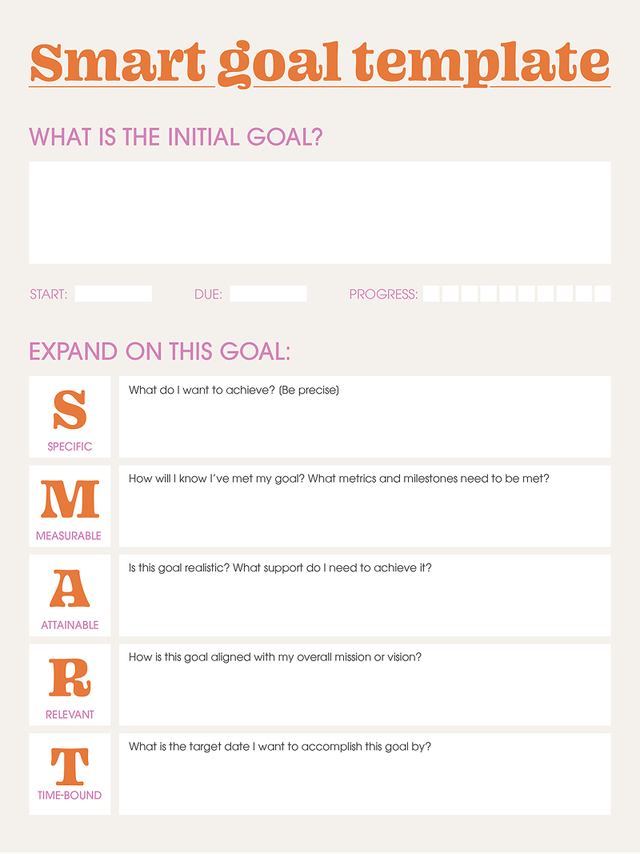


Setting goals is easy. Sticking to them is the real challenge. That’s where a SMART goals template comes in. Whether you’re planning a career move, launching a project, or trying to build better habits, having a clear structure helps turn vague intentions into actionable steps. A good SMART goals PDF template keeps you focused, accountable, and aligned with your bigger picture, making it easier to track progress and stay motivated along the way.
What are SMART goals?
A SMART goal is a clearly defined goal that describes all expectations and creates a measurable scale to determine success. It is often combined with maintenance and growth goals.
SMART is an acronym that stands for:
- Specific. This answers the questions “who” and “what.”
- Measurable. Can you measure success? This answers the “how” question.
- Attainable. SMART goals are realistic and achievable within a reasonable time frame.
- Relevant. Ensure the goals and overall direction are aligned with other tasks and projects.
- Time-oriented. Include a clear time frame or final deadline.
Since they can be measured, goals that include every aspect of the SMART acronym are more likely to succeed. The timelines and specificity will also help to keep you and your team on track as you work toward your goal.
SMART goals template.
Whenever you set personal or business goals, it’s a good idea to have a SMART goals PDF template that you can easily fill and customize. Creating goals with the SMART mentality in mind means you’re more likely to succeed.
To build your template, start with a general idea, something you want to achieve, and then go through the five key dimensions to refine and strengthen that goal. Here’s how each part contributes to a well-structured plan:
- Specific. Begin by narrowing down your goal to a clear and detailed objective. Identify what you want to achieve, why it matters, who’s involved, and any resources or limitations that might affect your progress.
- Measurable. Define how you’ll track success. Use numbers, benchmarks, or data sources to measure progress and determine when the goal has been reached. This helps you stay accountable and recognize milestones along the way.
- Achievable. Assess whether the goal is realistic given your current skills, time, and resources. Break it down into manageable steps and make sure it’s ambitious enough to challenge you, but not so far-fetched that it becomes discouraging.
- Relevant. Make sure the goal aligns with your larger priorities or long-term plans. Consider whether it fits into your current life or career stage and whether it’s meaningful enough to stay committed to.
- Time-bound. Set a clear deadline and outline a timeline with checkpoints. This adds urgency and structure, helping you stay focused and avoid procrastination.
By working through each of these components, a SMART goals template transforms vague intentions into a strategic roadmap, one that’s easier to follow, measure, and achieve.
How to turn vague goals into SMART goals.
It’s easy to say “I want to get healthier” or “I want to improve my career,” but vague goals like these often lead to stalled progress. The SMART framework helps transform broad intentions into clear, actionable plans. Let’s walk through an example to see how it works in practice.
Vague Goal: “I want to get in shape.”
Now let’s break it down using the SMART structure:
- Specific. Define exactly what “getting in shape” means.
For example: “I want to build endurance and lose 10 pounds by running regularly.”
- Measurable. Add metrics to track progress.
“I’ll run three times a week and track my weight weekly.”
- Achievable. Make sure the goal is realistic.
“I’ve checked my schedule and can commit to 30-minute runs on Monday, Wednesday, and Saturday.”
- Relevant. Connect the goal to a meaningful reason.
“Improving my fitness will help me feel more energetic and reduce stress.”
- Time-bound. Set a deadline and milestones.
“I aim to reach my goal in 12 weeks, with a check-in every 4 weeks to assess progress.”
Final SMART Goal: “Run three times a week for 30 minutes to build endurance and lose 10 pounds over the next 12 weeks, tracking weight weekly and reassessing progress every month.”
By applying this structure, you turn a vague wish into a focused, motivating plan. The same approach works for goals in any area: career, education, finances, or personal growth. The key is clarity, commitment, and a timeline that keeps you moving forward.
Frequently asked questions.
Yes, SMART templates are great for aligning team members around a shared objective. They help clarify roles, set measurable outcomes, and establish timelines everyone can commit to, making collaboration more efficient and focused.
It’s a good idea to check in regularly, weekly or monthly, depending on the goal’s timeline. If circumstances change or progress stalls, revisiting the goal can help you adjust expectations, update milestones, or redefine success.
Not every goal will tick every box perfectly, and that’s okay. The SMART framework is a guide, not a rigid formula. Use it to sharpen your thinking and improve clarity, even if some elements are more applicable than others.
Not at all. You can apply SMART goals to personal development, fitness, financial planning, creative projects, anything that benefits from structure and intentional progress.
Digital planners, goal-tracking apps, and even simple spreadsheets or a SMART goals PDF template can help. Look for tools that allow you to set deadlines, monitor progress, and visualize milestones to stay motivated and organized.
Keep exploring
title
SMART goals template ideas for your personal framework.
cardImageAltText
A woman sitting at a table types on a laptop.
cardImage
Tags
caas:topic/fill-&-sign,caas:content-type/article,caas:business-unit/document-cloud,caas:products/acrobat

