ACROBAT FOR BUSINESS | 10 MINUTE READ
What is an affidavit: Definition and how it's used.
This legal document is a key tool in court proceedings.


ACROBAT FOR BUSINESS | 10 MINUTE READ
This legal document is a key tool in court proceedings.

You’ve probably heard the word affidavit before, even if it was only on an episode of Law & Order. Derived from the Latin affidare — “to make an oath” — an affidavit is one of the most common documents used in court proceedings.
Even though affidavits are among the most commonly used legal documents, their purpose and requirements are not always well understood. Before writing and signing one, you might ask: what does affidavit mean? Beyond the affidavit definition, it is essential to know the legal implications of signing one.
An affidavit is a written statement in which the author (known as the affiant) swears an oath to tell the truth under the penalty of perjury. The affiant signs the document in the presence of a notary public or other officially designated officer of the court.
Making a written statement in an affidavit is the same as speaking under oath in a court of law. When you write an affidavit, you need to be sure you’re giving a clear statement of facts. If any information in your affidavit is found to be false, you could face criminal charges.
Binding affidavits are frequently used in various legal proceedings, including bankruptcies, will preparation, and divorce cases. They are often more convenient than swearing an oath, as they do not require the person providing the information to be physically present. Additionally, affidavits serve as a more precise method for recording vital details in court cases and other legal matters.
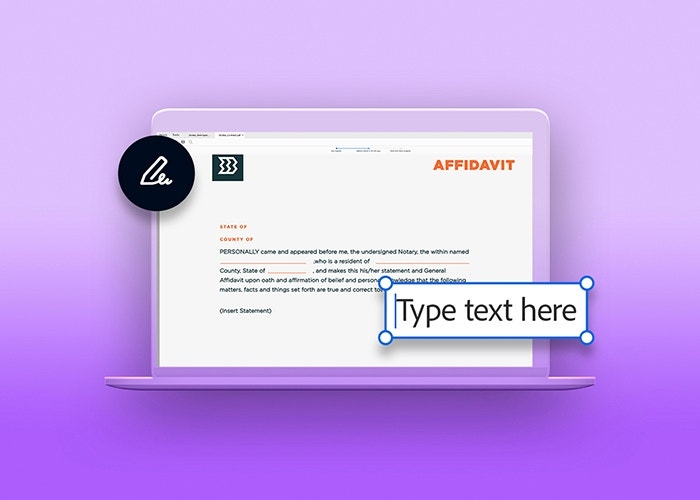
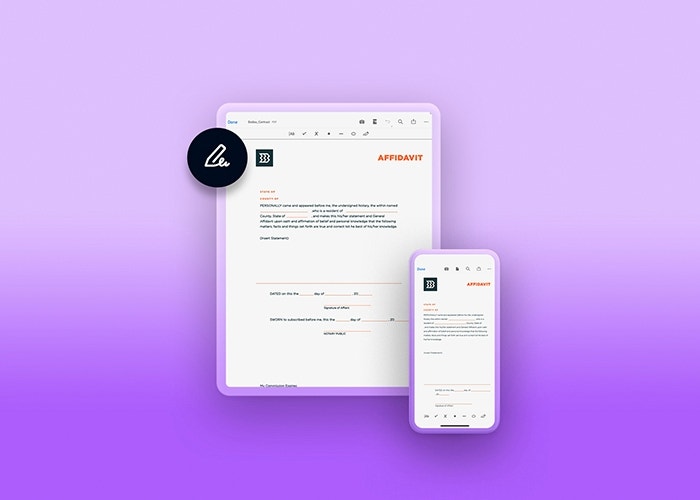
In some cases, an affidavit can save you a trip to court. If you’ve been called to testify in a case, you might be able to submit a sworn statement to be read in court instead of having to appear in person. However, affidavits have a wide variety of uses outside the courtroom as well.
Participants in judicial proceedings related to family law and estate planning often use affidavits to prove the validity of their statements and directions. A person who has decided to change their name also has to sign an affidavit swearing that they aren’t doing it for illegal purposes or to avoid paying a debt.
As mentioned above, these sworn statements are one of the most common types of documents used in court proceedings. Here are a few examples of what affidavits are used for:
An affidavit, like other legal documents, must adhere to a specific structure and include certain elements to be considered valid. The required format and content are generally straightforward and, therefore, easy to follow.
Requirements or conditions for an affidavit.
To be admissible as evidence in court, an affidavit must meet the following requirements or conditions:
The statements must be made voluntarily, with no coercion involved. Legal representatives must demonstrate that the affiant signed without pressure. If the court finds the affidavit was signed under duress, it will likely be deemed inadmissible.
For an affidavit to be legally binding, it must be signed by the affiant. In many cases, the signature must also be witnessed, often by a notary public, though any credible witness can verify the signature’s authenticity.
Signing an affidavit signifies that the information provided is true to the best of the affiant’s knowledge. Therefore, the individual signing must have the mental capacity to fully understand the contents and implications of the document.
Notarization is the most reliable way for courts to verify the authenticity of an affidavit. Requirements for notarization vary by jurisdiction. Remote online notarization is an option, offering enhanced security through a digital “paper trail.”

Adobe Acrobat is optimized for law firms, legal professionals, or anyone who needs to generate affidavits quickly and easily. With Acrobat, you can send affidavits for signatures directly from the app, assign signature fields to ensure that recipients complete the full document, and remotely track signatures so you know when they’re completed. In addition, you can protect every affidavit you create with a VPN or two-step authentication to ensure that it’s only viewed by the necessary parties.
More than a billion documents are notarized every year in the United States alone, most of them on paper and in person. The newest integration from Acrobat streamlines the labor-intensive process by integrating with the remote notary service Notarize to offer online notarization of documents. Once you’ve created your affidavit, you can enable the Remote Online Notarization option to have it notarized by video conference.