ACROBAT | 7-MINUTE READ
How to make a chore list.
Learn how to make a chore list that works for your household.


ACROBAT | 7-MINUTE READ
Learn how to make a chore list that works for your household.
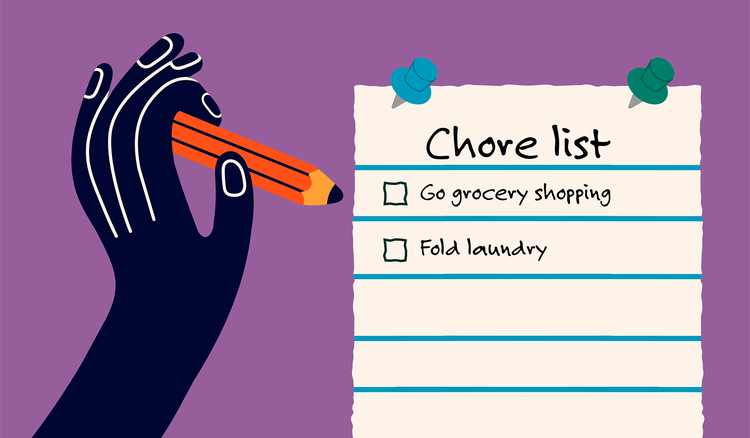
Are dirty dishes piling up in the sink and a week-old load of laundry sitting on the floor? If you’re at your wits’ end with household chores, discover a better way to manage your to-do list.
Breaking down your household tasks into a few different chores lists can make all the difference in the world. That long list of insurmountable chores is now tidy, just like your home. By starting small, you won’t bite off more than you can chew, making you more efficient and regaining time on your weekends.
Don’t let the chores get the best of you. Learn how to make a chore list, so tackling your chores is easy and painless.
Writing a well-organized chores list can help minimize the household tasks that often feel overwhelming. Additionally, a chore list can help resolve family disputes by assigning tasks that work best for each individual. Whether you need a roommate agreement or to divide chores between you and your partner, a chore list saves everyone time — and guarantees clean laundry, too.
A daily chores list includes the tasks that keep your household running. These tasks shouldn’t take up too much of your time, and they set the foundation for a clean home.
You can make this list by thinking through your day-to-day routine. For example, do you make dinner every night? How about coffee in the morning? Do you bathe the kids after dinner? Your list should include whatever is part of your routine.
Another hack to writing a daily chore list is thinking through the order in which you encounter these chores. For example, making your bed right after you wake up is the quickest way to check off that task. Another example is taking out the trash at the end of the night. This tactic means you cross off chores as you encounter them.
An example of a daily chore list includes:
Remember that staying on top of your daily chores makes completing your other chore lists much more manageable.
The best way to write a weekly chores list is to create a master list of all your household chores and errands. You can break this list into the following categories with various tasks:
Household chores
Errands
Schedule each of these tasks by day of the week. For example, Monday could be your day to vacuum and go grocery shopping.
A different approach to tackling household chores, specifically, is to consider each room in the house. Writing your list by room determines their priority and which chores can get out of hand if ignored. For example, the bathroom sink and toilet can build up grime if left uncleaned, in addition to other high-traffic areas, like dust in the living room.
These chores may be more time-consuming than daily tasks. So, you can tackle them on a specific day or assign a room to a different day. For example, on Fridays you can clean the bathrooms, and on Sundays you can clean the living room.
Remember to assign different tasks to different household members. So, one person vacuums, another goes to get groceries, and so on, to make sure everyone is involved in cleaning the house.
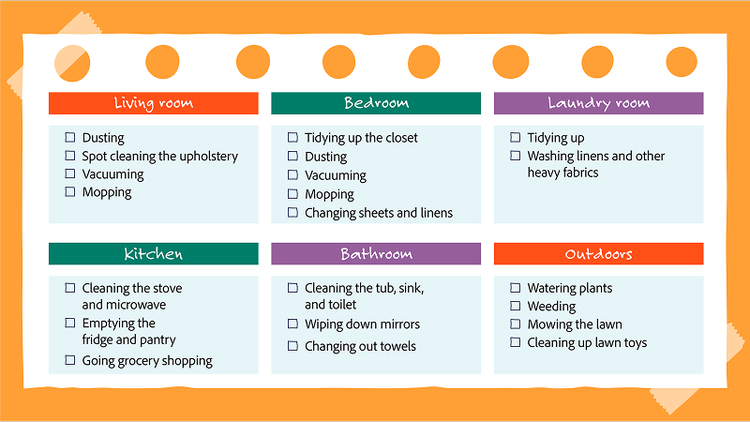
Here are some examples of a weekly chore list by room:
Writing your monthly chores list means paying attention to those tucked-away spaces in your home. These chores can snowball if they go entirely ignored. However, they don’t require consistent attention, like washing the dishes. Maybe they’re rooms you don’t go into often, or areas that get overlooked. Even if they’re easy to let slide, these chores should be assigned and completed once a month to keep your home sparkling.
Here is an example of a monthly chores list:
You can designate a specific time of month, like the first Saturday, to tackle your monthly chore list. Remember that if you use a chore list PDF you can use a free online PDF editor to update and add chores or remove them.
The seasonal chores list should be a long-standing project list. These larger household tasks need to be done seasonally, such as spring cleaning, donating old clothes, or emptying out the garage — significant projects that are best tackled at a particular time of year. Many seasonal chore lists are associated with the springtime, but back-to-school organizing in the fall or washing winter coats are also applicable.
With your seasonal chore list, break down a larger task into multiple subtasks. This trick can break down an insurmountable task into a few smaller ones. Plus, subtasks are easier to assign to others in the household.
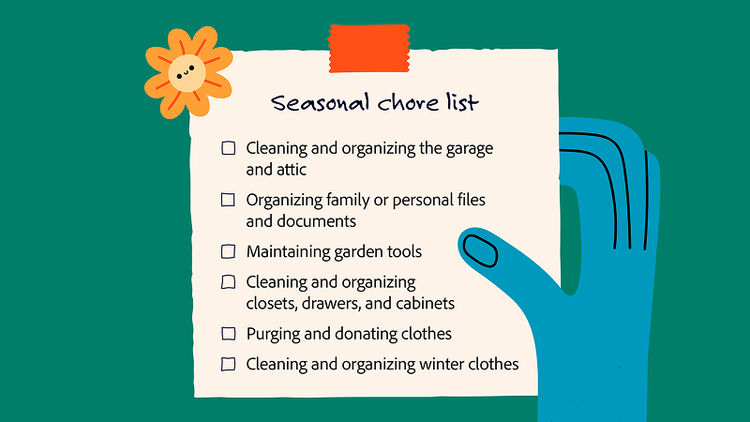
Here is an example of a seasonal chore list:
Creating a good chore list isn’t rocket science, but tasks will vary from household to household. A clean house standard may differ depending on household members, so consult with roommates or your partner to capture everyone’s preferences. Here are some tips on how to make a chore list so nothing slips through the cracks.
The most common chores are the ones that you encounter daily. These are high-priority chores because they keep your house clean and presentable. The most common chores include:


