
Content as a Service v2 - b2b - Wednesday, September 25, 2024 at 15:13



A performance review is a formal evaluation between managers and employees. The process is typically used to review job performance, discuss achievements, identify areas for improvement, and define future objectives. This structured assessment provides a dedicated opportunity to reflect on contributions, celebrate successes, and establish a clear path forward.
The purpose and value of performance reviews extend far beyond simple evaluation. These conversations provide structured feedback that helps employees understand how their work contributes to broader organizational goals. Regular reviews align individual objectives with company priorities, creating clarity around expectations and career development opportunities. When conducted thoughtfully, performance reviews become powerful tools for supporting professional growth and building stronger teams. Organizations that prioritize meaningful feedback conversations often see improvements in their employee retention strategies, as employees feel valued and understand their path for advancement.
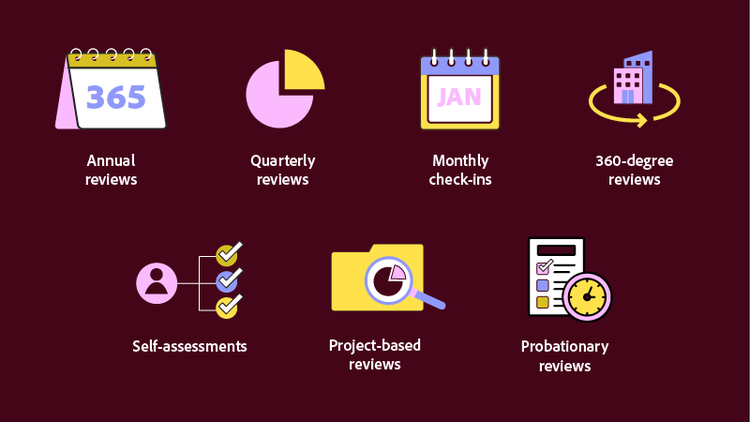
Performance reviews come in several formats, each serving different organizational needs:
The frequency and type of review depends largely on organizational culture, industry norms, and individual employee roles. Some companies prefer the comprehensive nature of annual reviews, while others embrace continuous feedback models that incorporate regular check-ins throughout the year. The most effective approach often combines formal periodic reviews with ongoing informal feedback conversations.
Effective performance reviews share several key characteristics. They are honest, grounded in data-driven conclusions, balanced in their feedback, and focused on actionable recommendations. A well-written review helps employees clearly understand their contributions to the organization while identifying meaningful growth opportunities. Learning how to write an employee review that accomplishes these goals requires attention to both structure and substance.
Thorough preparation is essential for writing accurate, fair, and constructive reviews. Managers who invest time in gathering information and organizing their thoughts before writing produce reviews that are more meaningful and actionable for employees.
Effective preparation includes the following steps:
This preparation ensures that when you sit down to write the review, you have concrete evidence and examples to support your assessments rather than relying on general impressions or recent memory alone.
Tips and best practices
Following best practices ensures performance reviews are effective and well-received by employees.
Strong performance reviews typically include the following elements:
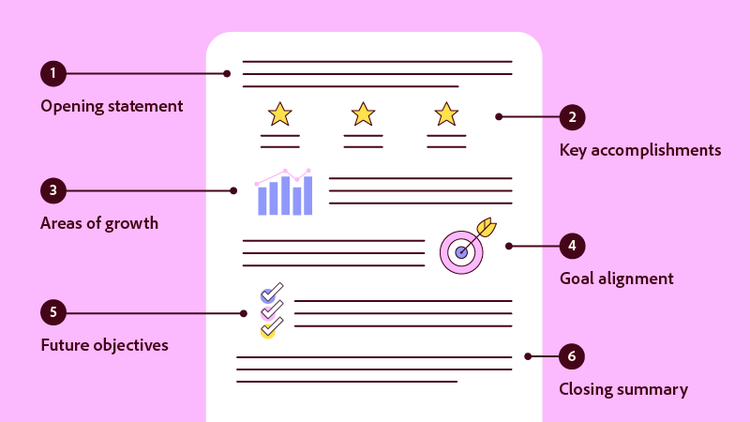
Using a consistent performance review template ensures all essential elements are covered systematically across your team. Templates also help maintain fairness and consistency, making it easier to compare performance across employees and identify patterns over time.
Artificial intelligence (AI) can significantly support the performance review writing process, from gathering and analyzing employee data to generating draft content and refining language. AI tools help managers create professional, consistent reviews more efficiently while maintaining the personal touch that makes feedback meaningful. Acrobat AI Assistant serves as a powerful resource for managers looking to streamline their review workflow without sacrificing quality.
Two established frameworks provide excellent structures for AI-assisted review writing. The CARE framework organizes feedback around Context, Action, Result, and Effect, helping you describe employee contributions in a comprehensive way. The Situation, Behavior, Impact (SBI) framework offers a method for delivering specific, behavior-focused feedback that employees can act upon. When using AI to generate review content, priming your prompts with these frameworks produces more structured, professional outputs.
For example, when using the CARE framework, you might structure your prompt to address: the Context in which the employee was working, the Action they took, the Result they achieved, and the broader Effect on the team or organization. Similarly, the SBI framework helps you describe the specific Situation, the observable Behavior demonstrated, and the Impact that behavior had on outcomes. These frameworks give AI tools clear guidance for generating well-organized feedback.
Gathering and organizing employee data represents one of the most time-consuming aspects of review preparation. AI tools can help analyze documents, summarize project reports, and extract key performance insights from various file formats. Using generative AI for PDFs allows managers to quickly process documentation from the review period, identifying relevant accomplishments and challenges without manually reviewing every document.
Creating effective prompts is essential for generating useful AI drafts. A well-crafted prompt provides context about the employee's role, the review period, and the specific type of feedback needed. For example, a prompt might read: "Write a performance review paragraph for a marketing coordinator who exceeded campaign engagement targets by 20 percent, successfully launched three new social media initiatives, and demonstrated strong collaboration with the design team during Q3."
After generating initial drafts, paraphrasing tools can help refine AI-generated language to better match your personal voice or organizational tone. This refinement step ensures that reviews feel authentic rather than generic. Acrobat AI Assistant makes this refinement process seamless, allowing you to iterate on language until it matches your intended message.
Different AI tools and prompts serve different purposes throughout the review process. Understanding how to craft prompts for various scenarios helps managers produce well-rounded, comprehensive reviews.
Conversational AI for refining and customizing reviews
Conversational AI enables managers to interact with review drafts directly, asking follow-up questions, requesting rewrites, or adjusting tone and emphasis. When used within PDF documents, this approach supports real-time iteration and refinement that static prompts can’t offer.
Acrobat AI Assistant enables this conversational workflow, allowing managers to evolve drafts until they align with individual performance details, organizational standards, and cultural expectations.
Customizing prompts to match your organization’s review format and language further improves results. The more context you provide—such as role expectations, competency models, or prior feedback—the more useful the AI output becomes. Acrobat AI Assistant supports this by allowing managers to reuse, refine, and build a library of effective prompts tailored to different review scenarios.
Generative AI for writing positive feedback
What this AI does:
Generative AI creates original written content based on the context and criteria you provide. It’s well suited for drafting recognition, summaries, and narrative feedback.
Example prompt:
“Using the SBI framework, write a performance review paragraph recognizing an employee who consistently exceeded sales quotas, mentored two new team members, and received positive feedback from clients throughout the year.”
Sample output:
“This year marked outstanding achievement in sales performance, with consistent quota attainment that exceeded expectations quarter after quarter. Beyond individual success, a genuine commitment to team development emerged through dedicated mentorship of two new team members, accelerating their onboarding and contributing to overall team performance. Client relationships flourished as well, with multiple positive feedback notes highlighting professionalism and responsiveness. The impact of these contributions extended beyond individual metrics to strengthen the entire team’s capabilities and client satisfaction scores.”
Goal-setting AI for planning future development
What this AI does:
Goal-setting AI focuses on generating specific, measurable, and time-bound objectives. It’s particularly useful during the forward-looking portion of a review.
Example prompt:
“Generate three specific, measurable goals for a customer service representative preparing for a team lead position over the next review period.”
Sample output:
“First, complete the company’s leadership development program by the end of Q2 to build foundational management skills. Second, achieve a customer satisfaction score of 95 percent or higher consistently for three consecutive months. Third, shadow current team leads for at least 10 hours total and document key learnings to demonstrate readiness for increased responsibility.”

