



Key findings:
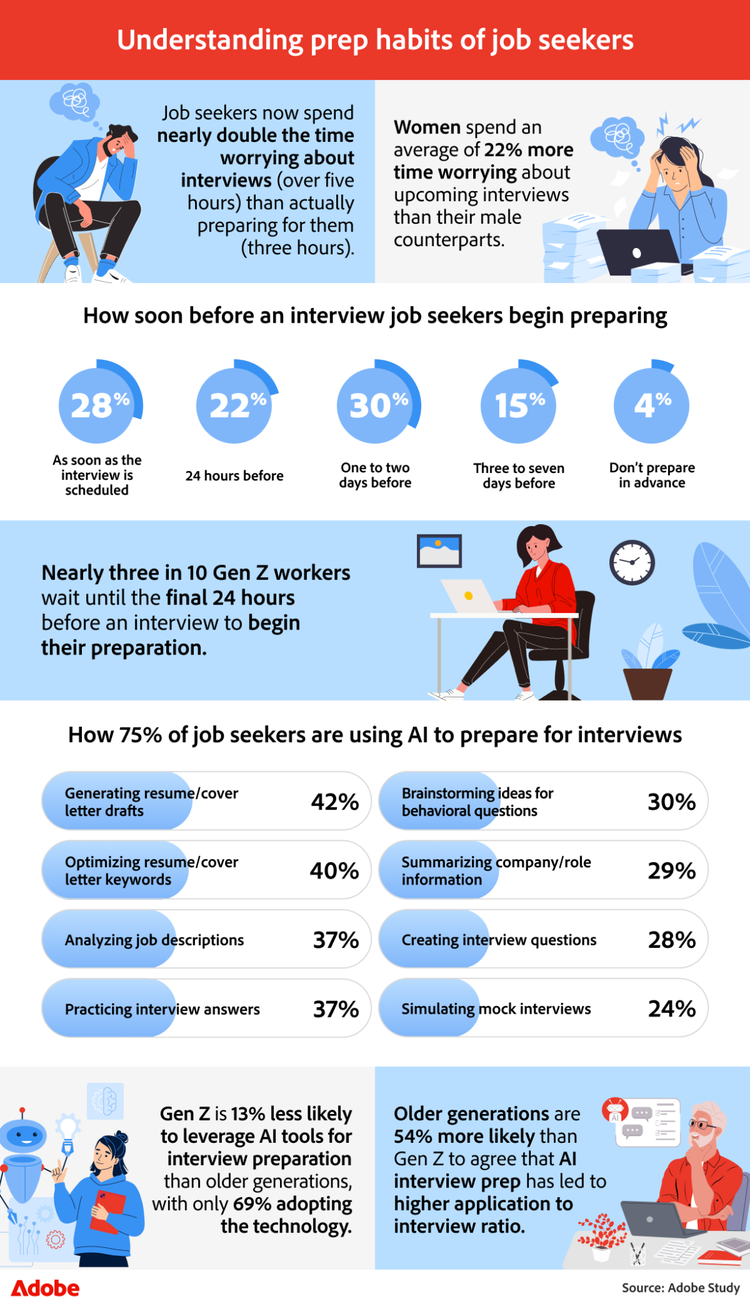
- Job seekers surveyed now spend nearly twice as much time worrying about interviews (over five hours) as preparing for them (three hours).
- Nearly three-quarters of job seekers surveyed now leverage AI for interview preparation, yet Gen Z respondents are actually 13% less likely to adopt these tools than older generations.
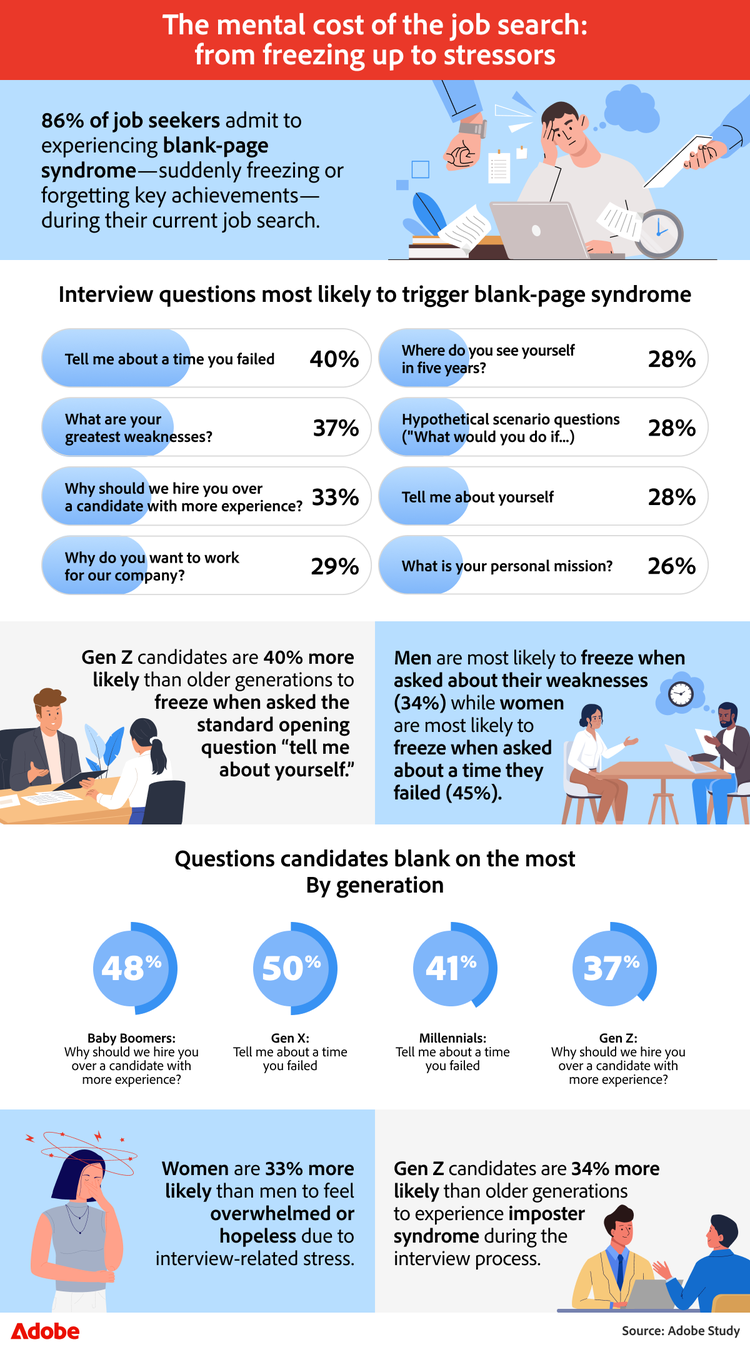
- Eighty-six percent of surveyed job seekers admit to experiencing blank-page syndrome or freezing from nerves during interviews, often triggered by high-pressure questions such as "Tell me about a time you failed" (40%), "What are your greatest weaknesses?" (37%), and "Why should we hire you over a candidate with more experience?" (33%).
- Men are most likely to freeze when asked about their weaknesses (34%) while women are most likely to freeze when asked about a time they failed (45%).
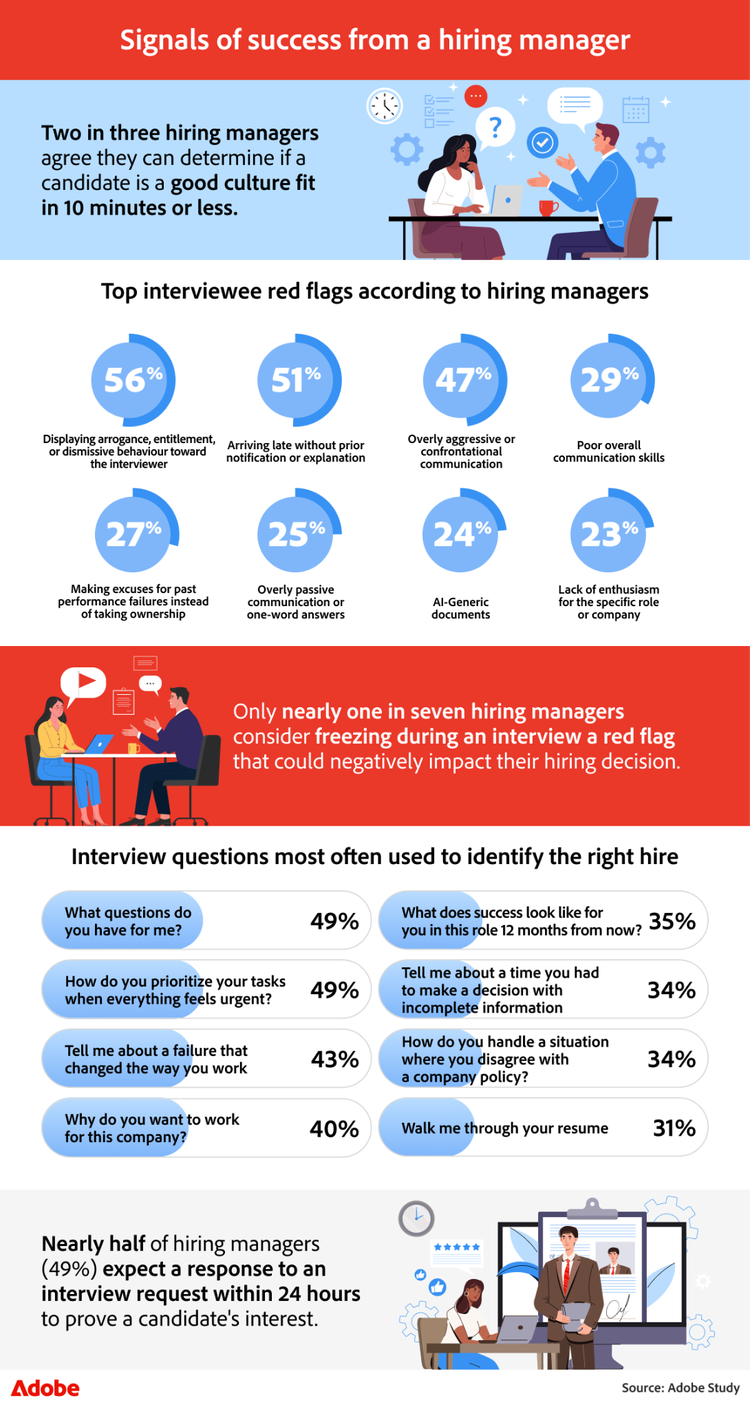
- Two in three hiring managers surveyed (66%) claim they can determine if a candidate is a culture fit in 10 minutes or less.
- Nearly half of surveyed hiring managers (49%) expect a response to an interview request within 24 hours to prove the candidate's interest.
For many job seekers, interviews are the most unpredictable part of landing a new role. From knowing how to prepare to communicating your experience clearly under pressure, even the most qualified candidates can find themselves second-guessing their approach.
To better understand how people prepare for interviews, we surveyed over 1,000 Americans, including 756 job seekers and 251 hiring managers. Our results show a clear gap between how candidates think they should prepare, what helps them feel confident and perform well in the moment, and what hiring managers are actually looking for during interviews.
Rethinking interview prep
Preparing for an interview doesn’t always look the way we expect. For many candidates, time is often split between preparing and managing pre-interview nerves.
Why candidates spend more time worrying than preparing
Preparing for an interview doesn’t always mean sitting down with notes or practicing answers. For many candidates, it starts with overthinking. Job seekers surveyed reported spending, on average per interview, nearly twice as much time worrying about interviews (over five hours) as they do actively preparing (three hours).
How interview anxiety varies by generation and industry
This pattern is even more noticeable across generations. Gen Z respondents reported the highest levels of pre-interview worry (6.1 hours), while Baby Boomers reported significantly lower levels (3.6 hours), suggesting that confidence tends to grow with experience.
This trend also varies by industry. Of those surveyed, respondents in the following fields reported spending the most time worrying per interview:
- Tech: 6.0 hours
- Retail: 5.6 hours
- Creative arts: 5.4 hours
- Education: 5.4 hours
- Health: 4.9 hours
- Finance: 4.7 hours
When candidates actually start preparing
While many job seekers worry ahead of an interview, how they prepare varies. Although 28% of respondents said they begin preparing as soon as an interview is scheduled, many wait until much later. Gen Z respondents are 40% more likely than older generations to leave preparation until the final 24 hours, and men are 25% more likely than women to delay prep into that same window. Rather than a lack of effort, this points to a last-minute approach that can make interviews feel more high-pressure than they need to be.
How job seekers are using AI for interview prep
At the same time, many job seekers are already using AI to support their preparation. According to respondents, the three most common ways AI tools are being used include:
- Generating resume/cover letter drafts: 42%
- Optimizing resume/cover letter keywords: 40%
- Analyzing job descriptions: 37%
The real impact of AI on job search success
Many respondents see a real benefit from these AI tools. Nearly one-third of job seekers surveyed (32%) say AI has helped them apply faster while improving the relevance of roles they pursue. Thirty-one percent of respondents report feeling more confident in their materials while seeing increased recruiter outreach. Additionally, 18% of job seekers surveyed say their application-to-interview ratio has improved after using AI to tailor their materials, and 14% report securing more interviews and higher-quality offers.
Generational differences add another layer to how candidates are using AI in their interview preparation:
- Baby Boomers: Analyzing job descriptions 59%
- Gen X: Generating resume/cover letter drafts 55%
- Millennials: Generating resume/cover letter drafts 41%
- Gen Z: Practicing interview answers 35%
Older generations are also 54% more likely than Gen Z to say AI has improved their application-to-interview ratio, highlighting a gap in how effectively these tools are being used.
Which interview prep methods build the most confidence
Ultimately, not all preparation has the same impact. Respondents reported gaining 17% more confidence from researching the company and role than from practicing answers aloud, with research ranking highest for confidence (7.4/10), followed by preparing documents (6.7/10) and practicing interview questions (6.3/10). Using structured tools like an online PDF editor can help turn that preparation into something more tangible, whether that’s tailoring your resume to fit the job description before converting it to a PDF or using a PDF converter to combine PDF materials into a single, clear, easy-to-use resource ahead of the interview.
How to handle blank-page moments
Even the most prepared candidates can experience a moment where their mind goes blank mid-interview. It’s a common occurrence in interviews, especially when trying to recall specific examples or respond to an unfamiliar question on the spot.
What causes candidates to freeze in interviews
Of those surveyed, 86% of respondents said they’ve experienced “blank-page syndrome,” where they suddenly freeze or have difficulty recalling key achievements during an interview. Rather than being a sign of poor preparation, these situations are often a natural response to pressure. Many hiring managers recognize this, too, and don’t automatically count brief pauses or hesitation against a candidate. In many cases, how someone regroups and communicates can leave just as strong an impression, helping to humanize the interview experience.
The most difficult interview questions to answer
According to respondents, questions that require self-reflection or storytelling, such as discussing past failures, personal strengths and weaknesses, or long-term goals, are the most likely to cause candidates to freeze. Prompts like “Tell me about a time you failed” (40%) and “What are your greatest weaknesses?” (37%) rank among the most challenging, alongside broader questions like “Tell me about yourself.”
Because these questions come up so frequently, they also present a clear opportunity. Preparing for them in advance may help reduce the chances of freezing. Practicing responses independently or through AI-powered mock interviews can help make even high-pressure questions feel more familiar and manageable. Organizing these responses in one place, using tools like Adobe Acrobat’s online PDF editor, can also make it easier to review, refine, and revisit answers ahead of time.
Which candidates are mostly likely to experience ‘blank-page syndrome’
Some groups are more likely to freeze during an interview than others. Gen Z respondents are the most likely overall at 93%, which is 13% more likely than older generations. They’re also 40% more likely to freeze on the opening question “Tell me about yourself,” showing how even common prompts can feel challenging without structured preparation.
Notably, older generations are 33% more likely than Gen Z to freeze when asked about failure, showing how confidence can vary by experience and question type.
Industry trends in interview pressure and performance
The possibility of experiencing blank-page moments also varies by industry. Of those surveyed, respondents in the following sectors reported the highest rates:
- Technology: 91%
- Finance and Banking: 89%
- Creative Arts and Design: 86%
- Retail and E-commerce: 85%
- Healthcare: 81%
- Education: 80%
How interview-related stressors impact daily life
Beyond the industry-specific pressures, the psychological and physical toll of the job search is significant for many candidates. Surveyed job seekers reported experiencing the following stressors:
- Feeling overwhelmed or hopeless: 52%
- Ghosting Fatigue (Emotional exhaustion from lack of recruiter feedback): 43%
- Losing sleep: 39%
- Physical symptoms of anxiety: 39%
- Compulsive checking of notifications: 37%
The encouraging takeaway is that these are some of the most addressable parts of the interview process. Using structured tools, such as an online PDF editor, candidates can prepare clear, organized responses to common questions in advance. For example, they might use a PDF converter to convert their notesand polish their materials, or combine PDF documents into a single, easy-to-review prep guide.
What hiring managers really look for
Although interviews can feel high-pressure from a candidate’s perspective, hiring managers are often looking for something much simpler: a clear sense of who you are, how you think, and how you would work with their team.
First impressions matter more than perfect answers
Regardless of whether this is your first job interview or you’re looking at a career change, two in three hiring managers surveyed said they can determine whether a candidate is a good culture fit within the first 10 minutes. This means interviews are more about how answers are delivered than they are about having the “right” answers. Qualities like enthusiasm, clarity, and self-awareness often have a greater impact than perfectly polished responses.
Common interview red flags to avoid
At the same time, the data shows that the most common red flags are often rooted in communication and attitude. According to hiring managers, the biggest turn-offs include:
- Arrogance or dismissiveness (56%): This includes displaying entitlement or being dismissive toward the interviewer or the interview process itself.
- Unexplained lateness (51%): Arriving late without prior notification or a valid explanation is a top concern.
- Aggressive communication (47%): This is characterized by confrontational or overly aggressive tones during the conversation.
- Lack of ownership (27%): Rather than showing self-awareness, some candidates make excuses for past performance failures instead of taking ownership.
- Poor communication and low engagement: This ranges from poor overall clarity and rambling (29%) to overly passive, one-word answers (25%) or a general lack of enthusiasm for the role (23%).
Encouragingly, freezing in an interview is far less of a concern than many candidates might expect. Only a small proportion of one in seven hiring managers consider it a major red flag, reinforcing that brief moments of faltering don’t define a candidate’s overall performance. In many cases, showing composure and recovering thoughtfully can leave a stronger impression than delivering a perfectly rehearsed answer.
Top green flags that help candidates stand out
Instead, hiring managers tend to focus on signals that display real interest, preparation, and alignment. According to respondents, the top “green flags” include:
- Clear enthusiasm and energy for the role: 42%
- A self-aware or humble approach when discussing past experiences: 40%
- Coming prepared with thoughtful, role-specific questions: 33%
- Active listening cues, such as taking notes or referencing earlier points: 32%
- Arriving early or being prompt to virtual interviews: 29%
- Strong eye contact and engaged body language: 27%
- A confident, proactive introduction: 27%
- Asking clarifying questions to better understand the role: 27%
These green flags show that standing out in an interview is often less about technical perfection and more about demonstrating curiosity, communication, and intent.
Differences between remote and in-person interviews
There are also notable differences depending on how and where interviews take place:
- Remote hiring managers
- 41% more likely to prioritize enthusiasm and energy
- 30% more likely to be turned off by poor communication
- 64% more likely to flag typos or errors in application materials
- On-site hiring managers
- 19% more likely to value active listening
- 366% more likely to be put off by a lack of alignment with company values.
The most important interview questions hiring managers ask
The types of questions hiring managers rely on most add to this focus on real-world thinking over rehearsed responses. Prompts like “What questions do you have for me?” (49%) and “How do you prioritize tasks when everything feels urgent?” are among the most commonly used to assess curiosity and decision-making. This varies slightly by industry, for example:
- Healthcare: “How do you prioritize tasks when everything feels urgent?” - 57%
- Technology: “Why do you want to work for this company?” - 46%
- Education: “How do you prioritize tasks when everything feels urgent?” - 70%
How to align your answers with hiring expectations
These questions closely mirror the ones candidates frequently find challenging, showing a clear opportunity: the same prompts that cause candidates to freeze are often the ones that matter most in hiring decisions.
Preparing for these moments in a structured way can make a big difference. Using tools like free online PDF editors, candidates can organize key examples, perfect their resumes, and create clear, easy-to-reference materials in advance.
How to prep for your interview with Adobe Acrobat
Strong interview prep doesn’t have to feel overwhelming. Focusing on a few key areas, like structuring your answers, understanding the role, and practicing delivery, can help you feel more confident in an interview.
Here are a few practical ways to prepare more effectively:
- Prepare answers to common questions:
-
Draft and refine your answers in advance
-
Focus on clear, structured storytelling
-
Use AI tools to generate and improve responses
Tip: Store your answers in a single, organized document using an online PDF editor so they’re easy to review and revisit.
-
- Turn job descriptions into a prep tool:
-
Highlight key responsibilities and required skills.
-
Match your experience in your resume to the job description.
-
Tailor answers to questions like “Why do you want to work here?”
Tip: Use a PDF converter to convert job listings to PDF and annotate them as part of your prep.
-
- Organize your key examples:
-
List key projects, achievements, and results.
-
Prepare examples for common scenarios.
-
Keep everything in one structured document.
Tip: Use a free PDF editor to build your prep materials, or combine multiple PDFs into a single easy reference.
-
- Practice with AI and mock interviews:
-
Simulate mock interviews.
-
Practice answering questions out loud.
-
Use AI to generate follow-up questions or feedback.
Tip: Many job seekers are already using AI to practice interview answers, making this one of the most effective ways to reduce “blank-page” moments.
-
- Focus on clarity instead of perfection:
-
Keep answers concise and relevant.
-
Take a moment to pause and think if needed.
-
Focus on how you communicate, not just what you say.
Tip: Preparing structured notes ahead of time, using tools like a PDF editor, can help you stay on track during the interview.
-
Turning preparation into confidence
Succeeding in an interview is about feeling prepared to communicate your experience clearly and confidently. By focusing on structured preparation, practicing key responses, and organizing your materials in a way that’s easy to revisit, candidates can take much of the pressure out of the process.
Bringing your interview materials together effectively
With tools like Adobe Acrobat, it’s easier to bring everything together, whether that’s using an online PDF editor to polish notes, a PDF converter to convert to PDF and annotate job descriptions, or tools to combine PDF documents into one streamlined prep guide. Taking a more organized approach may help turn uncertainty into confidence, giving candidates a stronger foundation to perform at their best.
Methodology
To explore interviewing in today’s job market, we surveyed 756 job seekers across the U.S. The data has a 95% confidence level and a low 4% margin of error. We also surveyed 251 hiring managers at a 95% confidence level and a 6% margin of error. Because this exploratory research relied on self-reported data, respondents may have biases, and discrepancies may exist between their answers and their actual experiences.
You may also like
title
Interview Prep Tips: What Candidates & Hiring Managers Want
cardImageAltText
We surveyed 1,000+ Americans on interview prep and performance. Discover the insights and tips to boost confidence and stand out.
cardImage

