
Key findings :
- Ninety-four percent of Gen Z surveyed are already considering a career swap.
- Nearly three in four Americans surveyed would take a pay cut for a more fulfilling career with future salary growth.
- Two-thirds of full-time employees surveyed are willing to pay for online courses out of pocket to invest in their skill development.
- The top hard skills Americans surveyed regret not further developing are foreign languages, programming languages, and data analytics (32 percent).
- Nearly one in 10 entry-level employees surveyed wish they had further developed essential document-related skills such as merging PDF’s.
- Women surveyed are 44 percent more likely than men to agree imposter syndrome had held them back in their careers.
It isn't unusual for workers to think about the what-ifs in their careers: the opportunities they didn't take, the jobs they stayed in too long, or the skills they wished they'd picked up along the way. It's that familiar feeling of "If only I had…" that's pushing many to rethink what they want to do next. And while regret plays a role, it's not just about looking back; many workers are using those reflections as motivation to make changes and move forward with greater clarity and confidence. In a survey of over 1,000 full-time U.S. employees, we explored these career crossroads to reveal how workers across industries are reassessing their paths.
How career regret leads to career reset
More people are starting to look back at their careers and wonder what might've happened if they'd made different choices. Whether it's sticking with a job too long or passing up something new, many workers are ready to make changes that feel more right for them now.
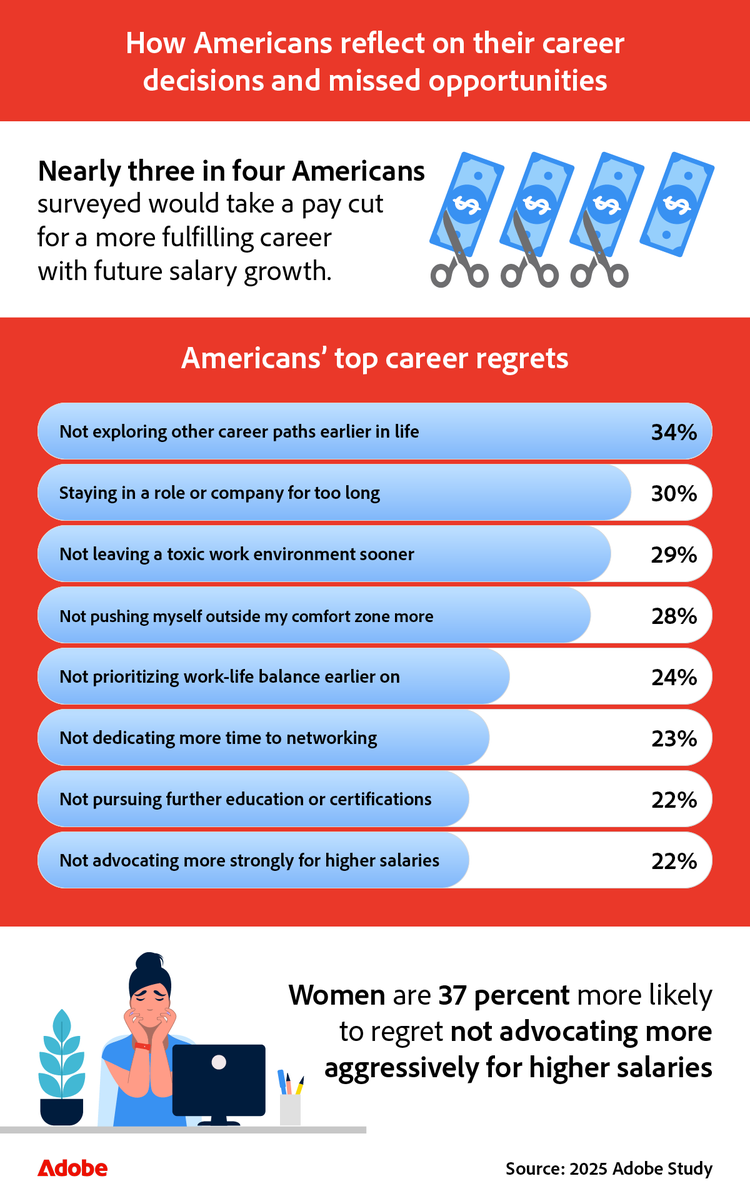
Career regrets are more common than you might think, and in 2025, many full-time workers are reflecting on the paths they didn't take. The top regret from those surveyed? Not exploring different career options earlier in life (34 percent). Thirty percent of respondents wish they hadn't stayed in one role or company for too long. Similarly, 29 percent regret not leaving toxic work environments sooner (29 percent), which is a sentiment especially strong among women surveyed, who were 37 percent more likely than men surveyed to regret not making that move. For nearly one in three surveyed Gen Z members, not networking more effectively also stands out as a regret.
Meanwhile, Gen X stands out as the only generation whose biggest regret isn't about missed opportunities but about not walking away from harmful workplaces. On the other hand, men surveyed are 10 percent more likely than women surveyed to say they'd take a pay cut for a more fulfilling career with future salary growth, a prospect that nearly three in four Americans say they'd consider overall.
That desire for change is translating into real action. Over one in three full-time workers surveyed are considering changing industries altogether. This might involve learning new digital skills, like how to edit PDF documents or convert PDF to Word files quickly to adapt to new roles. Others surveyed are considering starting a business (25 percent), pursuing a higher degree (23 percent), or taking a break from the workforce (20 percent).
Gen Z are especially eager, with 40 percent of respondents already considering returning to school for a higher degree and 21 percent open to taking a temporary leave from their current job. It may be surprising, given they are just starting in the workforce, but this reflects a growing trend among Gen Z: a desire to break away from traditional career paths in favor of roles that offer more flexibility, purpose, and room to explore. In fact, 94 percent of Gen Z respondents said they're already considering a career swap, signaling a shift in priorities towards the freedom to redefine what work looks like.
Rethinking what's next in your career
Workers are seeking to switch roles to achieve a career path that better aligns with their needs.
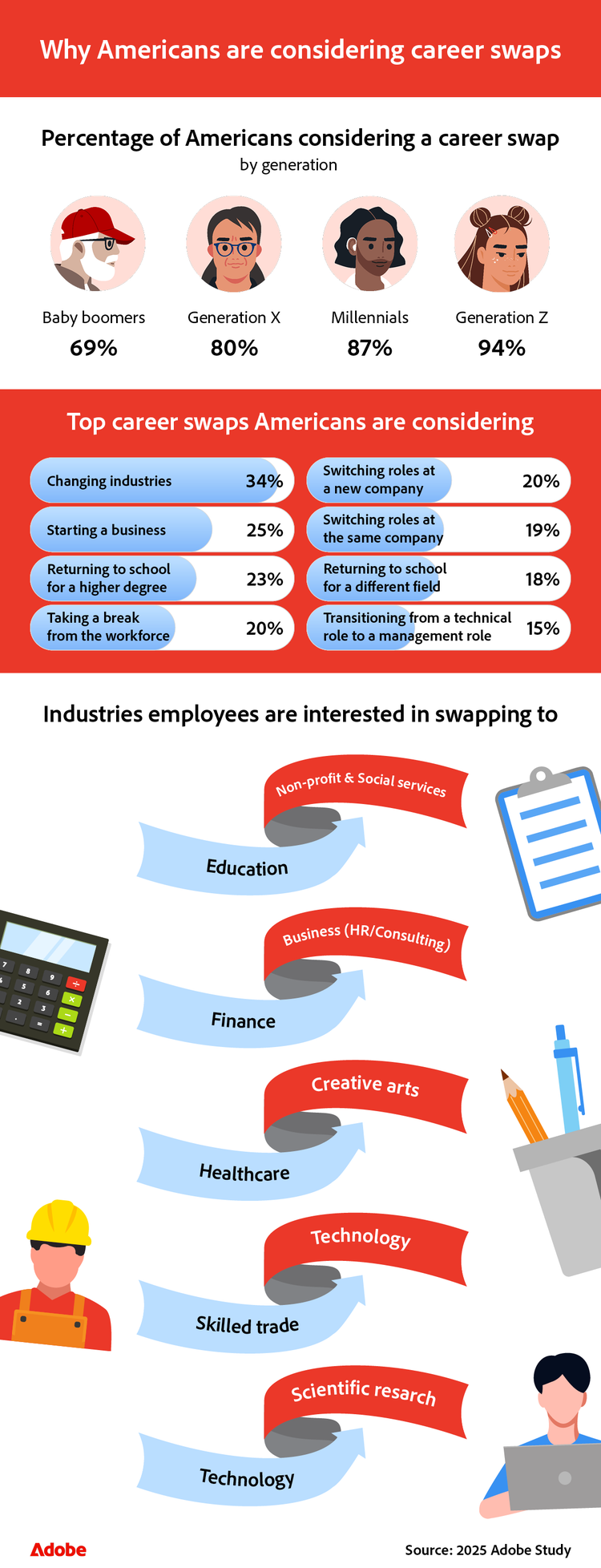
As for where they want to go, the most considered industries among respondents include business and management roles, such as HR and consulting (27 percent), tech (23 percent), creative arts and design (22 percent), and nonprofit or social services (17 percent). Gen Z respondents, especially, seem ready to break from the standard 9-to-5 routine. Many are drawn to more flexible roles and even take short breaks between jobs, aiming to prioritize balance and find more meaning in their work.
What skills workers wish they'd developed earlier
From technical know-how to communication and leadership, many full-time employees are looking back at the skills they wish they'd spent more time developing and how those regrets are driving what their goals are today.
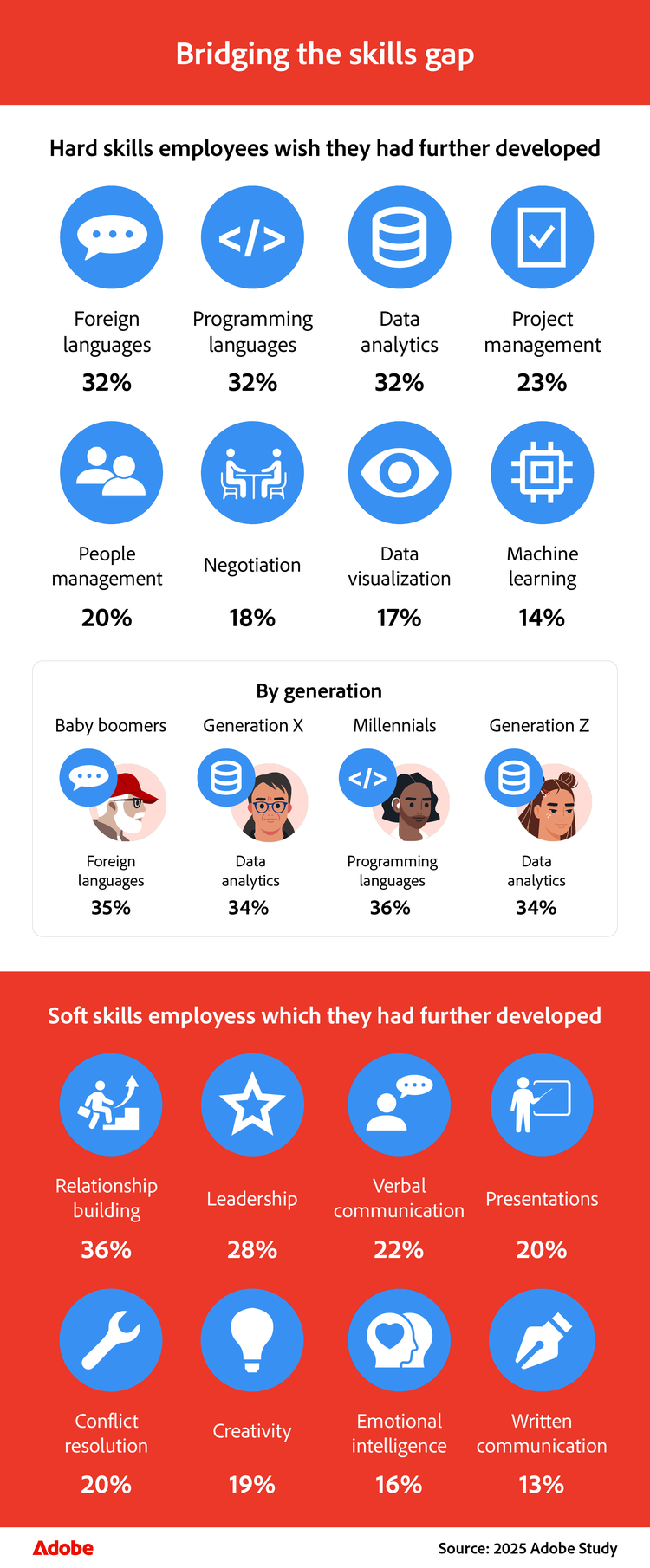
Many full-time workers have taken a closer look at the skills they wish they'd added to their resumes earlier in their careers. The top hard skills respondents said they wish they had further built include foreign languages, programming languages, and data analytics (all 32 percent). Gen Z respondents most wish they had prioritized data analytics (34 percent), a skill valued across industries for its ability to support better decision-making and improve performance. Among Millennials surveyed, programming languages ranked first at 36 percent. These distinctions reflect how different generations have responded to changing workplace demands and where each group sees room for growth looking back. For example, fewer than one in four respondents in tech roles know how to create interactive PDFs, highlighting a specific skill gap within the tech industry.
It isn't just hard skills that workers wish they had developed more; employees surveyed are also looking to improve their soft skills. Across all generations, relationship building and networking ranked as the top soft skill respondents wish they had focused on more, an area that can play a significant role in career growth, mentorship, and finding new opportunities.
Among entry-level employees surveyed, 44 percent were more likely than senior-level professionals to report regretting not developing stronger conflict resolution skills, and 52 percent were more likely to wish they had improved their verbal communication skills. Without these skills, navigating team dynamics, building professional connections, and gaining visibility in the workplace can be even more challenging.
For many workers, building confidence and advancing in their careers comes down to access to learning and development opportunities. Not everyone is getting the support they need, however, with 43 percent of employees saying their employer doesn't offer any learning and development resources. This gap isn't slowing workers down, though, with 66 percent of those surveyed saying they'd be willing to pay out of pocket for online courses to grow their skills.
Gen Z leads the charge, with 69 percent of those surveyed saying they'd invest their own money in professional development. Whether it's gaining technical expertise or sharpening their communication skills, employees are eager to learn; they need the right tools and access to do it.
What's holding workers back in their careers
Career growth rarely goes exactly as you planned. Many employees are taking a moment to reflect on what has held them back and what they can do now to move forward with greater purpose.
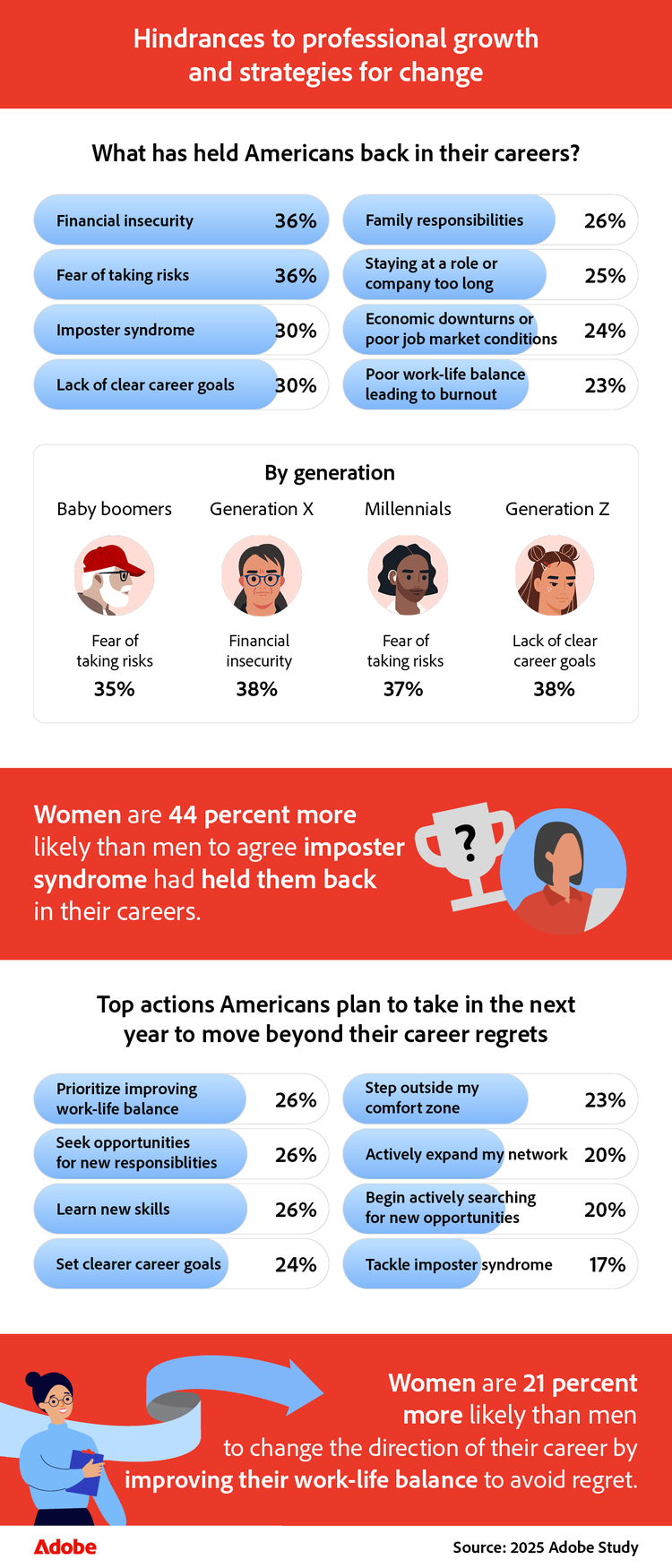
Many full-time workers are looking back and realizing what has held them back. Of those surveyed, the most common roadblocks were financial insecurity and fear of taking risks (36 percent), which can feel especially real for Gen Xers approaching retirement, facing growing economic pressure and uncertainty. At the other end of the career journey, Gen Z is navigating a lack of clear goals while just getting started, often questioning whether they're on the right path.
One in three Gen Z respondents said self-doubt has stalled their progress, showing how imposter syndrome can weigh heavily early on. Women were also more likely to feel this way, with women respondents 44 percent more likely than men to say imposter syndrome has been a barrier and 27 percent more likely to say they're planning to work on it this year.
But workers aren't just sitting with regret; they're deciding to make a change. In the year ahead, over a quarter of respondents plan to focus on improving their work-life balance, taking on new responsibilities, and/or learning new skills. Of those surveyed, workers in healthcare (33 percent) and technology (30 percent) reported that finding a better balance is a top priority. In comparison, those in business roles are most likely to seek growth in their current jobs (27 percent).
Ready for what’s next?
Whether you're rethinking your path, building new skills, or preparing to write a resignation letter, having an up-to-date, well-formatted resume is a good place to start. Whether you need to edit a PDF, make quick changes using a free online PDF editor, or convert your PDF to Word for easier formatting, Adobe Acrobat has the tools to help you improve your resume while saving time.
Once your edits are complete, you can convert it back to PDF, retaining the format that many hiring managers prefer. A refreshed resume is the first step to pursuing a career change, and Adobe Acrobat is here to help you get that fresh start.
Methodology
To explore career regrets, we surveyed 1,012 full-time employees in the U.S. The data has a 95 percent confidence level and a low three percent margin of error. Because this exploratory research relied on self-reported data, respondents may have biases, and discrepancies may exist between their answers and their actual experiences.
