Premiere Pro CC has many, many enhancements to improve the editing experience, and I suppose it's inevitable that many of them will just not get out there and be announced as much as some of the really big deal special effects workflows or the integration with SpeedGrade and so on, but some of them are really impactful if you are an editor and I'd like to just run through some of my favorites.
So the first on my list here is that most people know about Match Frame.
So I can press the F key on my keyboard and locate the same frame as the one I'm seeing on the timeline in the original master clip.
This is very useful if you're cutting too-short reversal dialogue and you want to see what the last line was.
But now we also have Reverse Match Frame.
So if I'm looking at a particular frame in my source monitor in the original master clip, I can press Shift R for reverse, and Premiere Pro will locate that frame within my sequence.
You have a similar kind of option in terms of locating the clip in the timeline inside the bin.
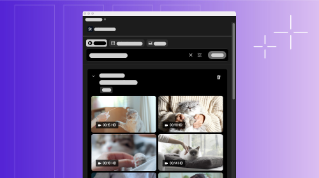
If you look, for example, at any of these clips in the Icon view, the little orange marker indicates that a clip is being used, and if you click on that marker, Premiere Pro will take you to the clip in the sequence.
But now we can also locate content to the frame by pressing Shift R— this is a really big deal.
Another little thing that's kind of awesome if you need it is that sometimes you're going to have items that are out of sync in the way that the material's being captured.
Here, for example, I've got some media that, let's say, there was a problem with the capturing process and we took the audio in from a different source, and it's out of sync, so I've had to break the link between the two and separate them.
Well, now, if I pull this clip into a bin— I'll just make a new bin to do this— let's call this Sync Media, and let's open that up— if I pull this clip in, well, just to illustrate, if I pull it back again from the bin, you'll notice that separation between the two has been maintained.
In fact, I'm just going to press the Grave key to go full screen for the bin here.
I'm going to go into the List view, and I'm going to go to my Panel menu and Metadata Display, and I'm just going to type in the word Sync, and you can see we've got this new Sync Offset option.
There's a new heading available in the bin.
So I've just turned this on and click OK, and then if I scroll along, you can see—here it is.
Sync Offset—so I can actually get Premiere Pro to tell me what adjustment I've made, and that can be pretty helpful to identify what's going on with my media.
Just press the Grave key again to come out of full screen.
Another small, but significant, feature is this—if I go to Edit and choose Keyboard Shortcuts— this is the Premiere Pro menu on Mac OS— I'm on a Windows machine here— and let's say, for example, I'm looking for some of the advanced trimming options, so Set Nearest Edit Point as Trim In or Nearest Edit Point as Trim Out— this is actually really useful for a keyboard-only workflow for trimming.
If I click into this— if I double-click to add a keyboard shortcut, you will notice that—let me just put something in here, Control-Alt-Shift-S, and then another one here, and then you see, I've got the option to add multiple keyboard shortcuts for each item on the list.
Now, this is one of those things that editors have been asking for for a long time, and the reason is that perhaps when you're engaged in one type of workflow you're tending towards using one end of the keyboard.
Perhaps in another, you're using the shift key a lot as a modifier key— whatever the reason, we can now have multiple keyboard shortcuts for each item on the list.
Very, very useful.
While we're in our preferences— if I go back in— this is Edit Preferences on Windows.
This would be the Premiere Pro menu on Mac OS.
And I go to Playback— we now have an option to specify how many frames you move forwards or backwards in a timeline when you use the Shift key with the arrows.
So if I just cancel out of here, you can see if I press the left or right arrows— let me just turn off the audio for a second.
If I press the right arrow I'm going one frame at a time.
If I hold the shift key down now, I'm going five—that's great, but maybe that isn't how many frames you want to move.
Maybe you want to make it something like 20 frames.
So I'm going to put in 20 and click OK.
And now when I press the Shift key and use the left and right arrows, I'm going 20 frames at a time.
Now, it seems really tiny, I suppose, as a feature, but as an editor, as you become more and more experienced, you end up having more and more nuanced demands of the interface, and this is just one small example.
Premiere Pro also has the option to export multiple items in a single step.
So if I just make a shift selection here— I'm selecting one item in the Project panel and holding down Shift and clicking on the last— if I now go File, Export, Media, you'll notice that I get a slightly abbreviated dialog box.
I can't do the cropping now, but I can specify a standard to export to and each of those items will be exported.
So if you're working on a low power machine, you can export all of your media as something low res and easy to play back and then re-link very easily because the Link and Locate functionality of Premiere Pro has the option to ignore file extensions.
And certainly, I've worked that way in the past when using very, very high resolution media, like 4k or even 6k media, on a system that just isn't powerful enough to play it back.
You can always re-link later very, very easily to the full resolution media.
Another little feature that stands out, if I go to my Preferences and choose Audio, is this one— Maintain Pitch While Shuttling.
This is really useful.
So if I go to my timeline and use J-K-L to play back, [♪ music ♪] Oh, it's fantastic— I can now hear clearly without it getting very, very, very high-pitched.
In fact, by the by, the J-K-L playback speeds have also been increased so you can go even faster if you need to through a very, very long sequence.
Speaking of sequences, if you're collaborating, you can use the media browser to browse to existing sequences, and let's have a look.
If I go in here, editing finesse, you can see how I've got individual sequences, so it's very easy for you to access other projects.
Notice another little detail— there's a Back button now in the media browser.
There's also the option to add favorites.
So if I have a folder I want to work with, I can add that to favorites and I can come back to it whenever I like.
In fact, I can also have multiple Media Browser panels.
There we go.
Let's have three.
And this means that I can jump between regular locations on my hard drive— it just makes it easier for you to find your media.
You also have the option now— if I select a sequence in the bin— to go to File, Export, Selection as Premiere Project, and Premiere Pro will create a new Premiere Pro project that just contains that sequence and associated media.
Very useful for collaboration.
So that's my short list of standout features in Premiere Pro that'll help with the editing finesse, with the speed at which you can work, giving you more flexibility, more freedom, and more time to focus on your creative choices.