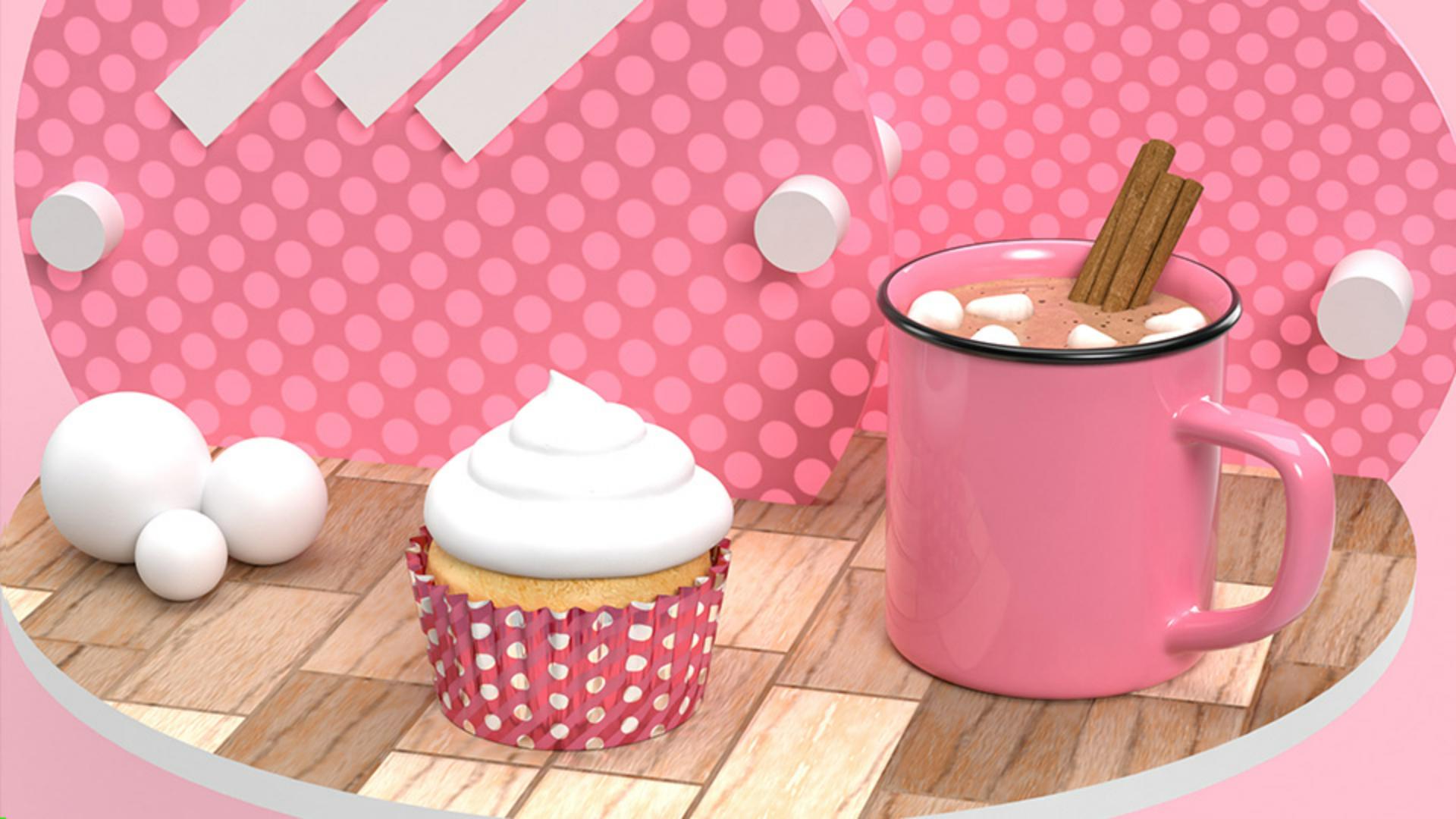
In this video, we'll start looking at how you can customize the appearance of a model using materials.
Many models will come with their own materials.
When importing an asset, Dimension will look for associated material information and import the material at the same time.
These materials are usually made for a particular model and can't be reused easily on other models.
There are also materials that are standalone and can be used on any model like plastic, wood, glass, water, and much more.
To apply a material, simply drag and drop it into the canvas or Scene panel targeting whichever object you want to apply it to.
If you don't have any selected assets, the material will be applied to the targeted object beneath your cursor.
If you have a selection, then the material will be applied to all selected objects.
You can use the Sampler Tool to quickly sample and reuse materials through your scene.
Activate the Sampler Tool with the default shortcut key I click in the canvas to sample a material from an object.
Hold the Alt button to change the tool to Apply mode.
Click in the canvas to apply the material to another object.
When a material is applied to multiple objects at the same time, or applied from the Sampler Tool, a linked material is created.
Editing a linked material will edit its appearance everywhere in the scene.
You can break this connection using the Unlink Material action, which will separate the material for the selected object and allow it to be edited independently.
If you want to apply a material to part of a model, you can use the Magic Wand Tool.
Activate the Magic Wand Tool with the default shortcut key W.
Set the tool options whether you want a small, medium or large selection.
Click in the canvas on the part of the model you want to select.
Once the selection is active, you can apply a new material using drag and drop or the Sampler Tool to create a material region.
To select a material, simply double click in the canvas.
You can also select a model and then use the Select Material action.
Once a material is selected, you can edit its Properties to customize the look and feel or create your own variations.
Dimension supports importing two material formats, the Adobe Standard Materials, and Substance Materials.
The properties for the two formats are different.
The Adobe Standard Material will always have the same properties.
It's the variations of the properties and the images that create different material looks.
You can hover over a particular property to learn more about what each property does.
You can also use images to control many properties Base Color can use a colored image, while other properties use black and white to create masks of the property effect.
Substance Materials are a special material format.
Each Substance Material has unique properties that generate texture images.
For example, add the Striped Substance Material.
This material has properties to control how many stripes there are.
Whether the stripes are embossed, the color, the roughness and metallic values of each stripe can be controlled independently.
Looking at a different Substance Material like wood, you'll see properties like woodgrain, warping, plank count, and other wood specific properties.
We hope this video has been helpful in seeing the flexibility and how you can customize the look of your models.
You can learn about applying your own images in another video.
We can't wait to see what you make.



