Este arquivo de exemplo inclui ativos do Adobe Stock que você pode usar para praticar o que aprendeu neste tutorial. Se quiser usar o arquivo de exemplo fora deste tutorial, você pode comprar uma licença noAdobe Stock . Consulte o arquivo ReadMe na pasta para ver os termos referentes ao uso desse arquivo de exemplo..
Selecione a ferramenta Curvatura na barra de ferramentas. Antes de começar a usá-la, defina sua cor de preenchimento como Nenhuma e selecione uma cor de traçado no painel Propriedades.
Exercício 1
Clique uma vez no centro de cada guia circular. São necessários apenas quatro cliques para fazer um círculo perfeito.

Exercício 2
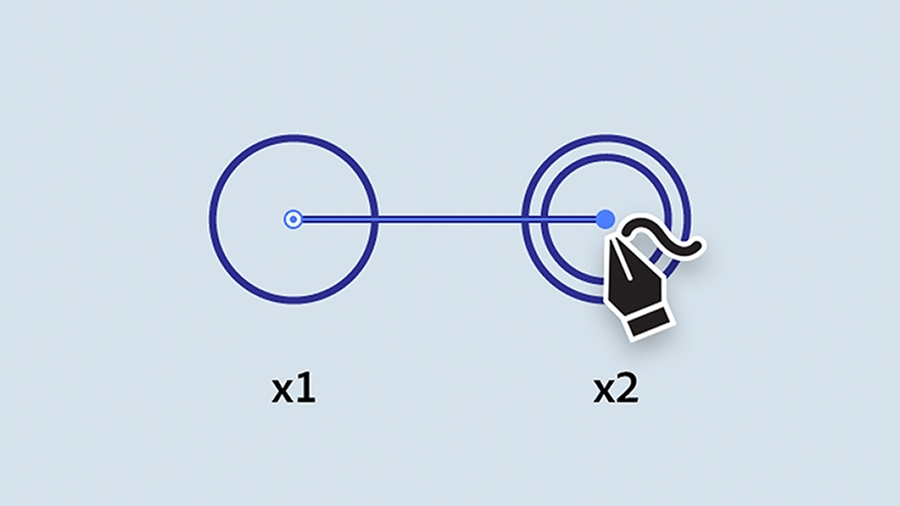
Clique uma vez para criar seu primeiro ponto. Clique duas vezes no centro de cada guia circular. Cada clique duplo cria um ponto de vértice com uma linha reta no meio. Para completar a forma, clique duas vezes sobre o primeiro ponto que você adicionou.
Exercício 3
Complete a forma do corpo do violão usando apenas cliques simples para desenhar todo o caminho.
Exercício 4
No Exercício 4, o caminho já foi criado. Primeiro use a ferramenta Seleção para selecionar o caminho. Em seguida, mude para a ferramenta Curvatura e dê um clique duplo no ponto central na parte inferior para fazer uma curva suave. Para praticar, clique no segmento de linha reta diretamente acima e arraste para criar uma curva suave. Para excluir o ponto, clique para selecionar e pressione Delete.
Exercício 5
No Exercício 5, o caminho já foi criado. Use a ferramenta Seleção para escolher o caminho e depois mude para a ferramenta Curvatura. Arraste os pontos médios para ajustar as curvas, como mostrado.
Você está pegando o jeito! Continue praticando. Trace a ilustração na prancheta abaixo e tente mudar as cores de preenchimento e do traçado do seu desenho. Depois, use essas técnicas para desenhar curvas e linhas elegantes nos seus próprios desenhos.

You can control how Adobe websites use cookies and similar technologies by making choices below. But note that if you disable cookies and similar technologies entirely, Adobe websites may not function properly.
Cookies are small text files stored by your web browser when you use websites. There are also other technologies that can be used for similar purposes like HTML5 Local Storage and local shared objects, web beacons, and embedded scripts. These technologies help us do things like remembering you and your preferences when you return to our sites, measure how you use the website, conduct market research, and gather information about the ads you see and interact with.
You can make choices in the menu below about what cookies and other technologies you want us to use on Adobe sites when you visit them from this browser. You can always change those choices later by clicking on the Cookie Preferences link at the bottom of the page.
If enabled:
We can improve your experience by tailoring the site and the content to things we think might be of interest
We can better keep track of your preferences — like what language you prefer to use
We will better understand your likely interests so we can provide you more relevant Adobe ads and content on non-Adobe websites and in non-Adobe apps
It will help us improve the performance of our website and those of our partners who use the Adobe Experience Cloud
If disabled:
We won’t be able to remember you from session to session so the experience may not be tailored to your interests
You’ll still have access to the content of the site but certain features that depend on cookies may not function
You’ll still see ads, they just may not be as relevant to you
General information
You can control how Adobe websites use cookies and similar technologies by making choices below. But note that if you disable cookies and similar technologies entirely, Adobe websites may not function properly.
Cookies are small text files stored by your web browser when you use websites. There are also other technologies that can be used for similar purposes like HTML5 Local Storage, web beacons, and embedded scripts. These technologies help us do things like remembering you and your preferences when you return to our sites, measure how you use the website, conduct market research, and gather information about the ads you see and interact with.
You can make choices in the menu below about what cookies and other technologies you want us to use on Adobe sites when you visit them from this browser. You can always change those choices later by clicking on the Cookie Preferences link at the bottom of the page.
If enabled:
We can improve your experience by tailoring the site and the content to things we think might be of interest
We can better keep track of your preferences — like what language you prefer to use
We will better understand your likely interests so we can provide you more relevant Adobe ads and content on non-Adobe websites and in non-Adobe apps
It will help us improve the performance of our website and those of our partners who use the Adobe Experience Cloud
If disabled:
We won’t be able to remember you from session to session so the experience may not be tailored to your interests
We’ll still count your use of our site and services
You’ll still have access to the content of the site but certain features that depend on cookies may not function
You’ll still see ads, they just may not be as relevant to you
Operate the site and core servicesOperate site and measure engagement
Always active
These cookies are required, and they are used to enable the site and related services core functionality. Without them the site could not operate, so they cannot be disabled.
These cookies enable the site and related services’ core functionality and collect statistics about user engagement, such as counting active use to help us understand trends. These cookies cannot be disabled.
Measure performance
These cookies are used to analyze site usage to measure and improve performance. Without them Adobe cannot know what content is most valued and how often unique visitors return to the site, making it hard to improve information we offer to you.
These cookies are used to analyze site usage to measure and improve performance. Without them Adobe cannot know what content is most valued, making it hard to improve information we offer to you.
Extend functionality
These cookies are used to enhance the functionality of Adobe sites such as remembering your settings and preferences to deliver a personalized experience; for example, your username, your repeated visits, preferred language, your country, or any other saved preference.
Personalize advertising
These cookies are used to enable Adobe and our partners to serve ads more relevant to your interests. Without them you will still see ads, but they might not be as relevant to you.
Personalize advertising
These cookies are used to enable Adobe and our partners to serve ads more relevant to your interests. Without them you will still see ads, but they might not be as relevant to you.