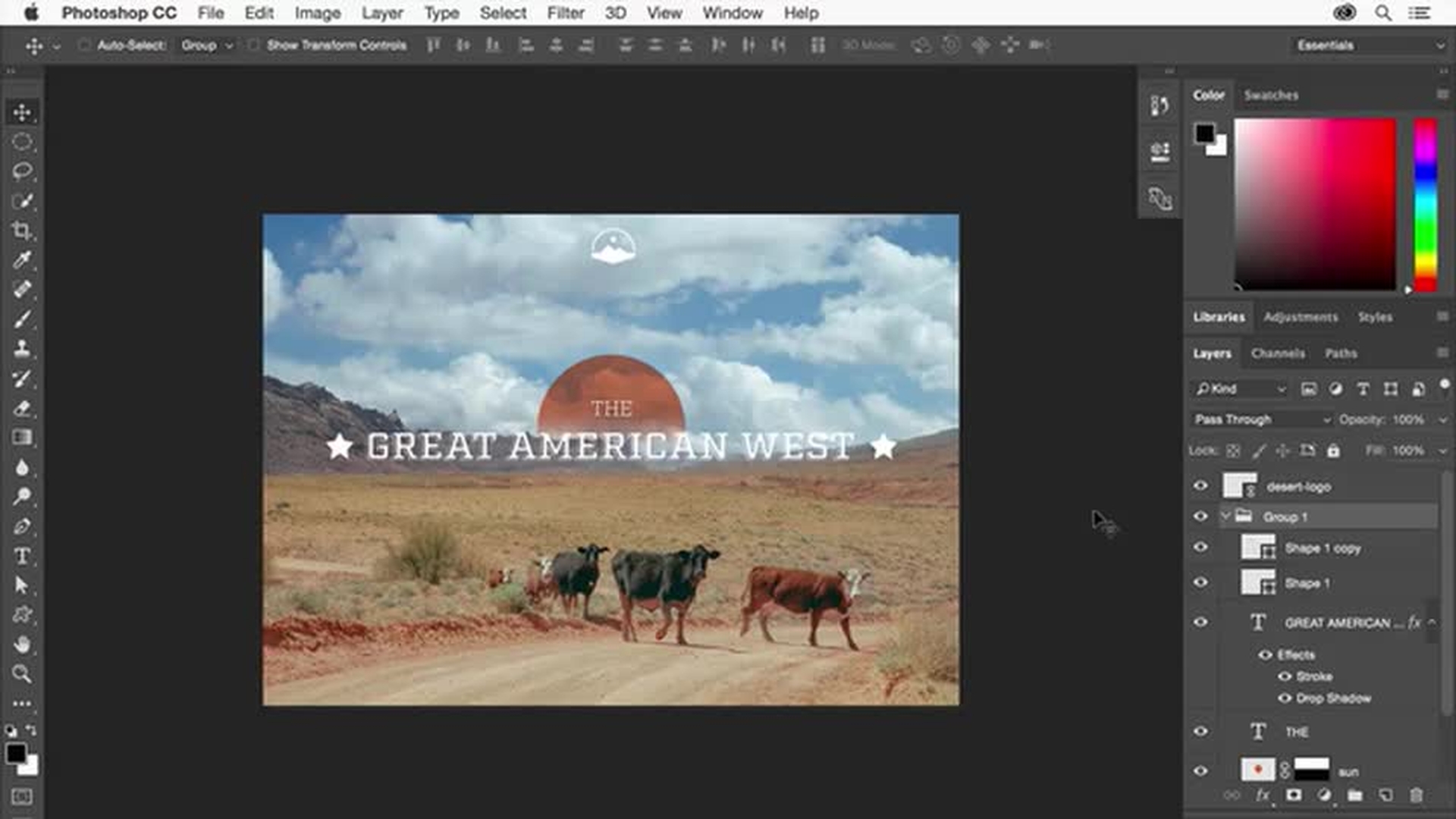
In dieser Videoreihe werden grundlegende Techniken zum Designen in Photoshop vorgestellt. Du erfährst, wie du mit Ebenen und Ebenenmasken arbeitest, Bilder kombinierst sowie Grafiken, Text und Effekte zu deinem Design hinzufügst. Im Rahmen dieses Tutorials führst du verschiedene Kreativinhalte zu einer Komposition zusammen, die du für ein Print- oder Web-Projekt weiterverwenden kannst. Verwende dafür dein eigenes Bildmaterial, oder lade die bereitgestellten Beispieldateien herunter.
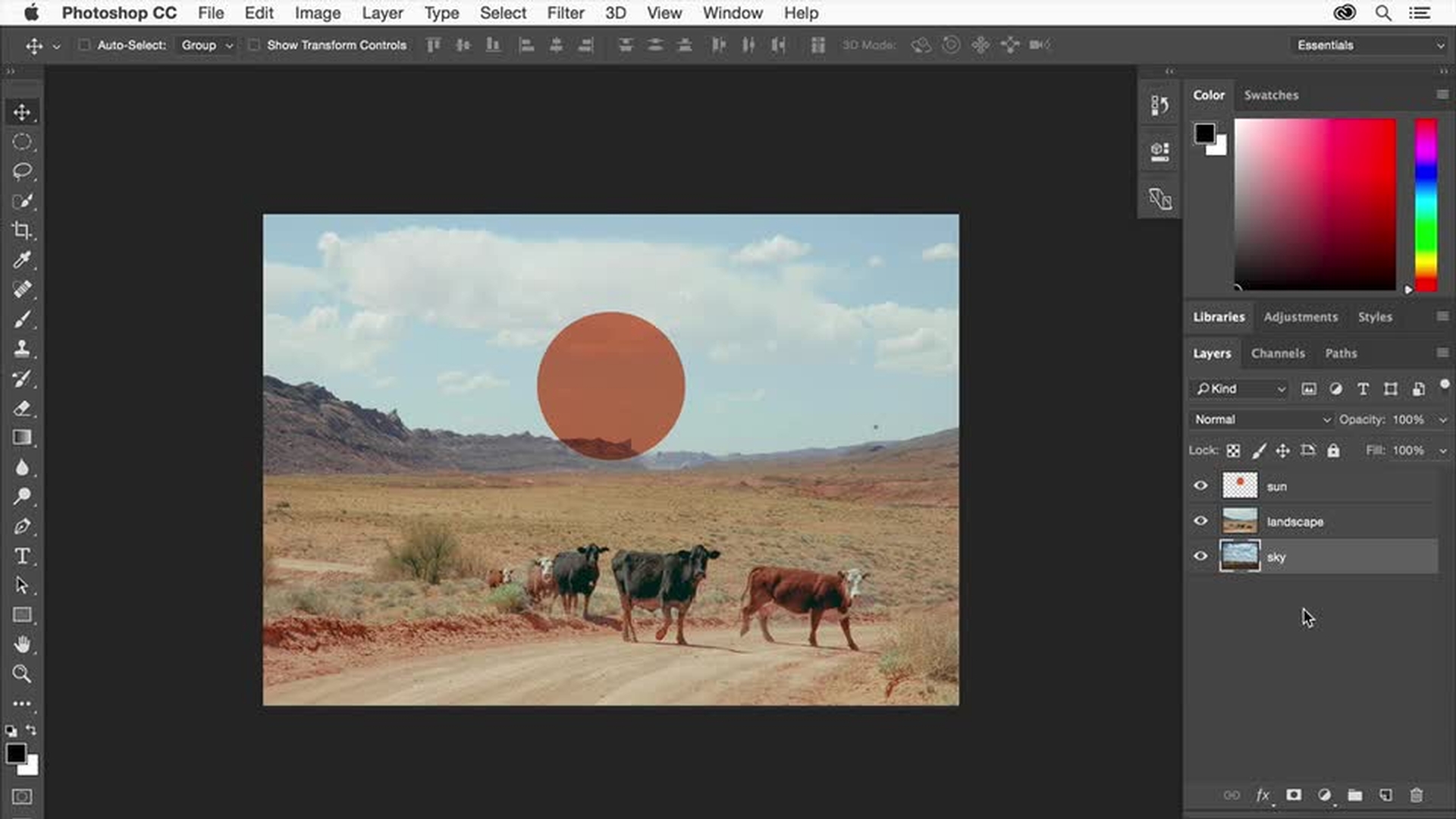
Jedes Photoshop-Design setzt sich aus Ebenen zusammen. Lege nacheinander Ebenen für die Inhalte an, die du in deinem Design verwenden möchtest. In diesem Video werden die Funktionen des Bedienfelds „Ebenen“ und die Grundlagen zur Arbeit mit Ebenen erläutert.
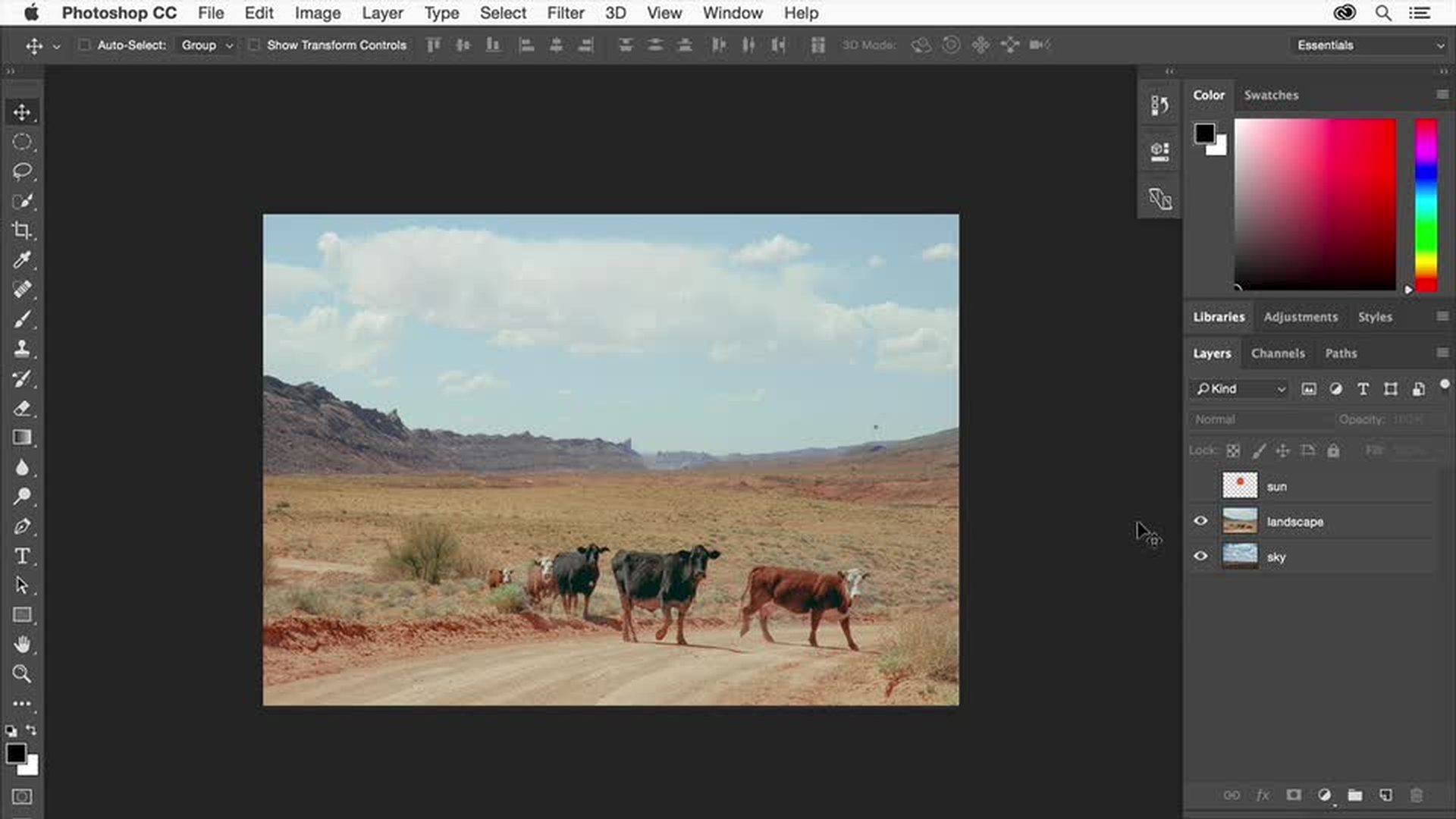
Bilder mithilfe von Ebenenmasken kombinieren.
Ebenenmasken stellen die flexibelste Methode dar, um Bilder zu kombinieren. Eine Ebenenmaske verbirgt einen Teil einer Ebene, damit die Inhalte der darunterliegenden Ebenen sichtbar werden. Mithilfe von Ebenenmasken ersetzt du in deinem Beispiel-Design den ausdruckslosen Himmel auf einem Bild durch ein dramatisches Wolkenspiel aus einem anderen Bild und arbeitest nach und nach weitere Elemente ein.
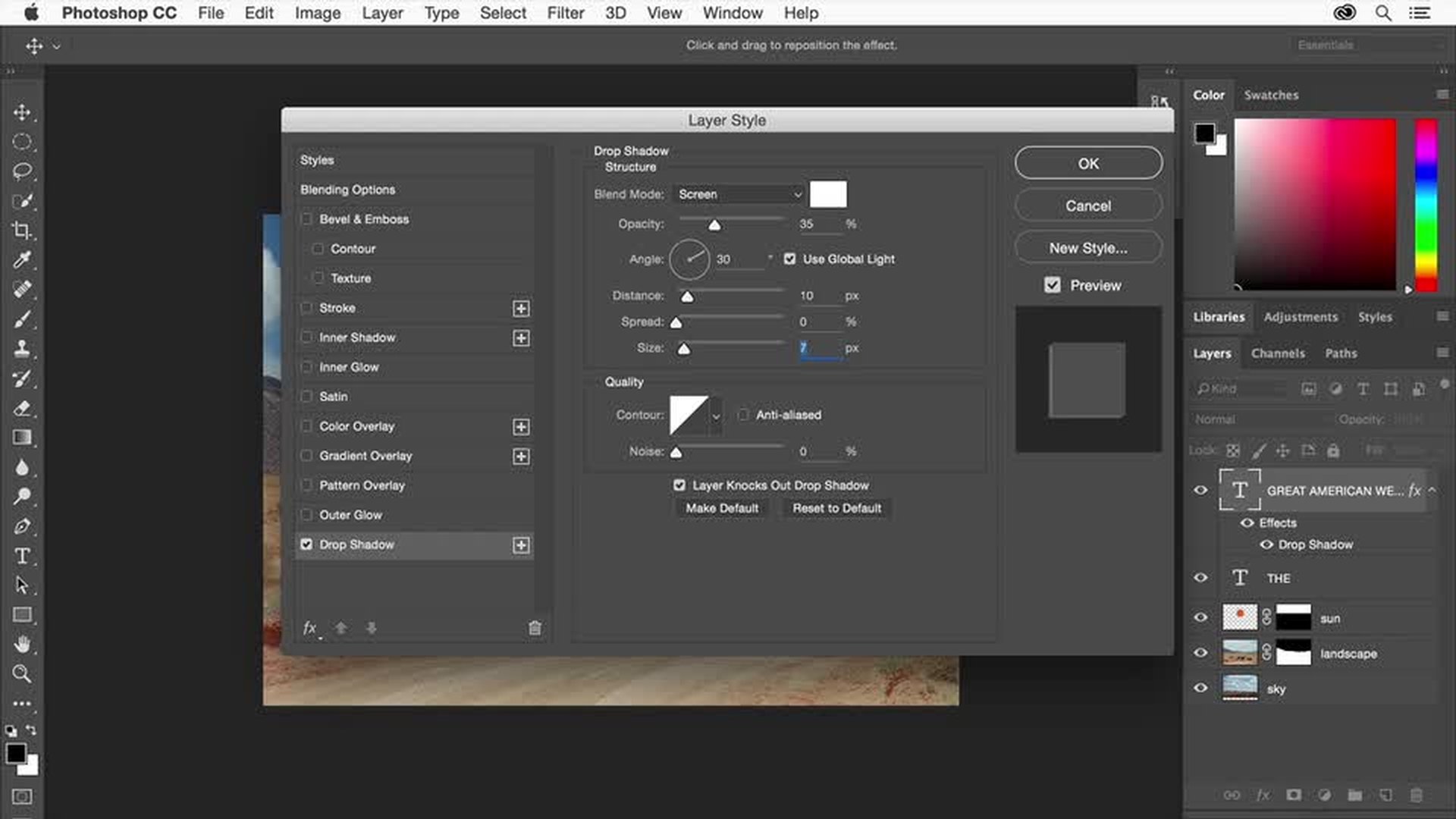
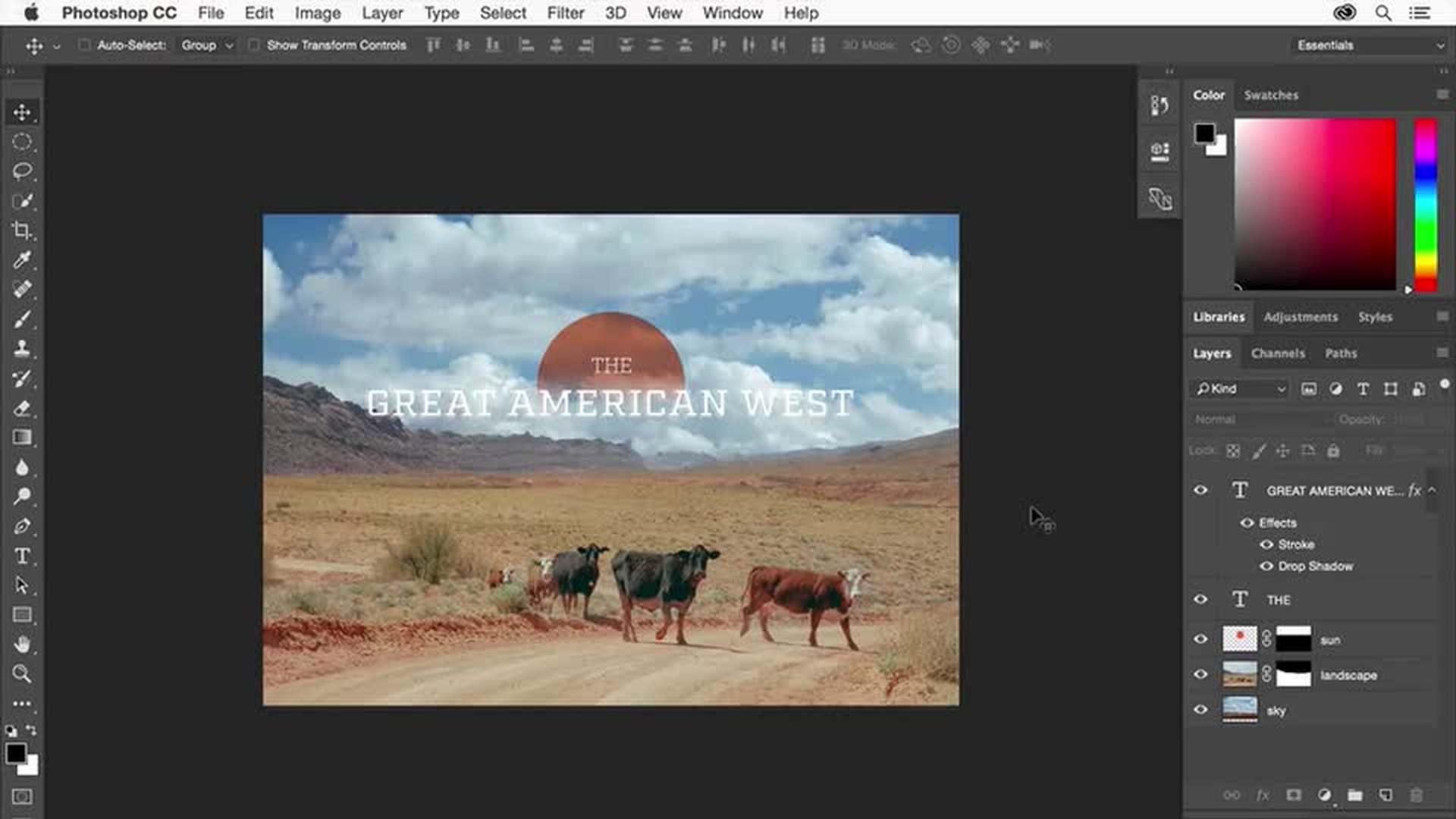
Text und Effekte hinzufügen.
Füge zu deinem Design Text hinzu. Gestalte ihn mit kreativen Ebeneneffekten. Erfahre, wie du mit Textebenen arbeitest und über Adobe Fonts auf eine riesige Schriftensammlung zugreifst.
Vektorgrafiken hinzufügen.
Photoshop ist nicht nur zum Bearbeiten von Fotos konzipiert. Erweitere dein Design z. B. durch benutzerdefinierte Formen. Platziere ein Logo, das mit Adobe Illustrator erstellt wurde. Vektorgrafiken wie dieses Logo lassen sich beliebig skalieren und verfeinern.
Design exportieren und speichern.
Speichere das Ergebnis im PSD-Format, um alle Ebenen und Effekte beizubehalten, falls du das Design später nachbearbeiten möchtest. Speichere eine Kopie als PDF-Datei, um sie an andere weiterzugeben. Mit den Exportfunktionen von Photoshop kannst du das Design komplett oder teilweise in Web-kompatible Formate exportieren.

You can control how Adobe websites use cookies and similar technologies by making choices below. But note that if you disable cookies and similar technologies entirely, Adobe websites may not function properly.
Cookies are small text files stored by your web browser when you use websites. There are also other technologies that can be used for similar purposes like HTML5 Local Storage and local shared objects, web beacons, and embedded scripts. These technologies help us do things like remembering you and your preferences when you return to our sites, measure how you use the website, conduct market research, and gather information about the ads you see and interact with.
You can make choices in the menu below about what cookies and other technologies you want us to use on Adobe sites when you visit them from this browser. You can always change those choices later by clicking on the Cookie Preferences link at the bottom of the page.
If enabled:
We can improve your experience by tailoring the site and the content to things we think might be of interest
We can better keep track of your preferences — like what language you prefer to use
We will better understand your likely interests so we can provide you more relevant Adobe ads and content on non-Adobe websites and in non-Adobe apps
It will help us improve the performance of our website and those of our partners who use the Adobe Experience Cloud
If disabled:
We won’t be able to remember you from session to session so the experience may not be tailored to your interests
You’ll still have access to the content of the site but certain features that depend on cookies may not function
You’ll still see ads, they just may not be as relevant to you
General information
You can control how Adobe websites use cookies and similar technologies by making choices below. But note that if you disable cookies and similar technologies entirely, Adobe websites may not function properly.
Cookies are small text files stored by your web browser when you use websites. There are also other technologies that can be used for similar purposes like HTML5 Local Storage, web beacons, and embedded scripts. These technologies help us do things like remembering you and your preferences when you return to our sites, measure how you use the website, conduct market research, and gather information about the ads you see and interact with.
You can make choices in the menu below about what cookies and other technologies you want us to use on Adobe sites when you visit them from this browser. You can always change those choices later by clicking on the Cookie Preferences link at the bottom of the page.
If enabled:
We can improve your experience by tailoring the site and the content to things we think might be of interest
We can better keep track of your preferences — like what language you prefer to use
We will better understand your likely interests so we can provide you more relevant Adobe ads and content on non-Adobe websites and in non-Adobe apps
It will help us improve the performance of our website and those of our partners who use the Adobe Experience Cloud
If disabled:
We won’t be able to remember you from session to session so the experience may not be tailored to your interests
We’ll still count your use of our site and services
You’ll still have access to the content of the site but certain features that depend on cookies may not function
You’ll still see ads, they just may not be as relevant to you
Operate the site and core servicesOperate site and measure engagement
Always active
These cookies are required, and they are used to enable the site and related services core functionality. Without them the site could not operate, so they cannot be disabled.
These cookies enable the site and related services’ core functionality and collect statistics about user engagement, such as counting active use to help us understand trends. These cookies cannot be disabled.
Measure performance
These cookies are used to analyze site usage to measure and improve performance. Without them Adobe cannot know what content is most valued and how often unique visitors return to the site, making it hard to improve information we offer to you.
These cookies are used to analyze site usage to measure and improve performance. Without them Adobe cannot know what content is most valued, making it hard to improve information we offer to you.
Extend functionality
These cookies are used to enhance the functionality of Adobe sites such as remembering your settings and preferences to deliver a personalized experience; for example, your username, your repeated visits, preferred language, your country, or any other saved preference.
Personalize advertising
These cookies are used to enable Adobe and our partners to serve ads more relevant to your interests. Without them you will still see ads, but they might not be as relevant to you.
Personalize advertising
These cookies are used to enable Adobe and our partners to serve ads more relevant to your interests. Without them you will still see ads, but they might not be as relevant to you.