Questo file di esempio include risorse Adobe Stock che potete utilizzare per esercitarvi con ciò che avete appreso in questo tutorial. Se desiderate utilizzare il file di esempio oltre questo tutorial, potete acquistare una licenza suAdobe Stock . Controllate il file ReadMe nella cartella per i termini che si applicano all'utilizzo di questo file di esempio.
Selezionate lo strumento Curvatura dalla barra degli strumenti. Prima di iniziare a usarlo, impostate il colore di riempimento su Nessuno e selezionate un colore del tratto nel pannello Proprietà.
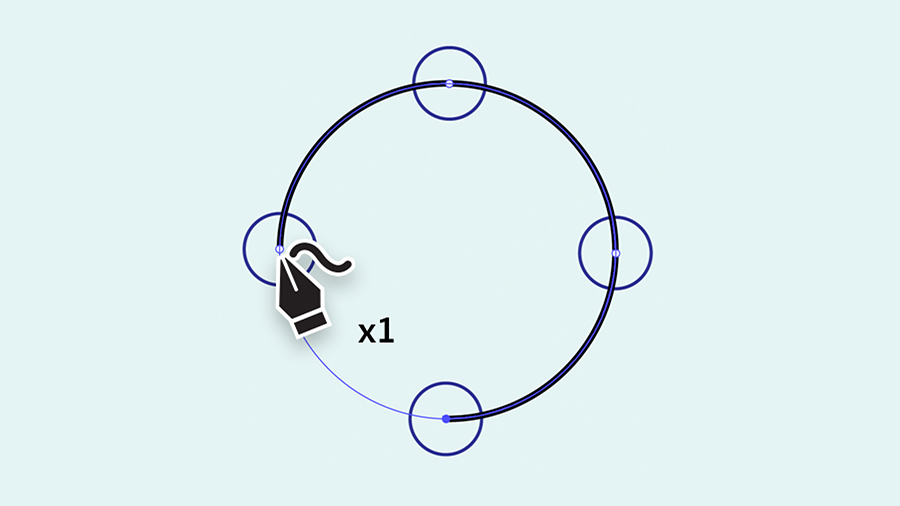
Esercizio 1
Fate clic una volta al centro di ciascuna guida circolare. Bastano quattro clic per creare un cerchio perfetto.
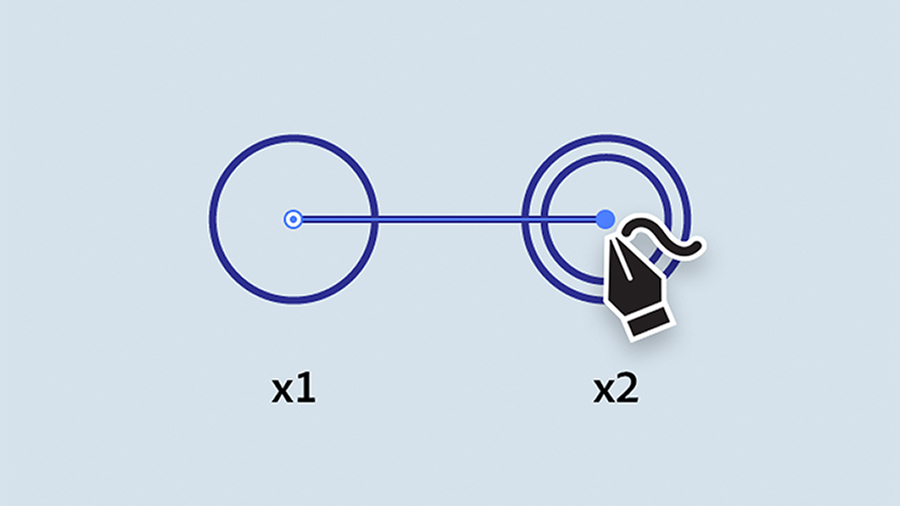
Esercizio 2
Fate clic una volta per creare il primo punto. Quindi fate doppio clic al centro di ciascuna delle altre guide circolari. Ogni doppio clic crea un punto d'angolo con una linea retta in mezzo. Per completare la forma, fate doppio clic sul primo punto che avete posizionato.
Esercizio 3
Completate la forma del corpo della chitarra usando solo clic singoli per disegnare l'intero tracciato.
Esercizio 4
Nell'esercizio 4, il tracciato è già stato creato. Per prima cosa utilizzate lo strumento Selezione per selezionare il tracciato. Quindi passate allo strumento Curvatura e fate doppio clic sul punto centrale in basso per rendere l'angolo una curva morbida. Per esercitarvi, fate clic sul segmento di linea retta direttamente sopra e trascinate una curva arrotondata. Per eliminare il punto, fate clic per selezionare e premete Elimina.
Esercizio 5
Nell'esercizio 5, il tracciato è già stato creato. Utilizzate lo strumento Selezione per selezionare il tracciato, quindi passate allo strumento Curvatura. Trascinate i punti centrali per regolare le loro curve come mostrato.
State capendo come funziona, continuate a esercitarvi! Tracciate la grafica sulla tavola da disegno qui sotto e provate a cambiare i colori di riempimento e tratto del vostro disegno. Quindi usate queste tecniche per disegnare curve e linee eleganti nei vostri progetti.

You can control how Adobe websites use cookies and similar technologies by making choices below. But note that if you disable cookies and similar technologies entirely, Adobe websites may not function properly.
Cookies are small text files stored by your web browser when you use websites. There are also other technologies that can be used for similar purposes like HTML5 Local Storage and local shared objects, web beacons, and embedded scripts. These technologies help us do things like remembering you and your preferences when you return to our sites, measure how you use the website, conduct market research, and gather information about the ads you see and interact with.
You can make choices in the menu below about what cookies and other technologies you want us to use on Adobe sites when you visit them from this browser. You can always change those choices later by clicking on the Cookie Preferences link at the bottom of the page.
If enabled:
We can improve your experience by tailoring the site and the content to things we think might be of interest
We can better keep track of your preferences — like what language you prefer to use
We will better understand your likely interests so we can provide you more relevant Adobe ads and content on non-Adobe websites and in non-Adobe apps
It will help us improve the performance of our website and those of our partners who use the Adobe Experience Cloud
If disabled:
We won’t be able to remember you from session to session so the experience may not be tailored to your interests
You’ll still have access to the content of the site but certain features that depend on cookies may not function
You’ll still see ads, they just may not be as relevant to you
General information
You can control how Adobe websites use cookies and similar technologies by making choices below. But note that if you disable cookies and similar technologies entirely, Adobe websites may not function properly.
Cookies are small text files stored by your web browser when you use websites. There are also other technologies that can be used for similar purposes like HTML5 Local Storage, web beacons, and embedded scripts. These technologies help us do things like remembering you and your preferences when you return to our sites, measure how you use the website, conduct market research, and gather information about the ads you see and interact with.
You can make choices in the menu below about what cookies and other technologies you want us to use on Adobe sites when you visit them from this browser. You can always change those choices later by clicking on the Cookie Preferences link at the bottom of the page.
If enabled:
We can improve your experience by tailoring the site and the content to things we think might be of interest
We can better keep track of your preferences — like what language you prefer to use
We will better understand your likely interests so we can provide you more relevant Adobe ads and content on non-Adobe websites and in non-Adobe apps
It will help us improve the performance of our website and those of our partners who use the Adobe Experience Cloud
If disabled:
We won’t be able to remember you from session to session so the experience may not be tailored to your interests
We’ll still count your use of our site and services
You’ll still have access to the content of the site but certain features that depend on cookies may not function
You’ll still see ads, they just may not be as relevant to you
Operate the site and core servicesOperate site and measure engagement
Always active
These cookies are required, and they are used to enable the site and related services core functionality. Without them the site could not operate, so they cannot be disabled.
These cookies enable the site and related services’ core functionality and collect statistics about user engagement, such as counting active use to help us understand trends. These cookies cannot be disabled.
Measure performance
These cookies are used to analyze site usage to measure and improve performance. Without them Adobe cannot know what content is most valued and how often unique visitors return to the site, making it hard to improve information we offer to you.
These cookies are used to analyze site usage to measure and improve performance. Without them Adobe cannot know what content is most valued, making it hard to improve information we offer to you.
Extend functionality
These cookies are used to enhance the functionality of Adobe sites such as remembering your settings and preferences to deliver a personalized experience; for example, your username, your repeated visits, preferred language, your country, or any other saved preference.
Personalize advertising
These cookies are used to enable Adobe and our partners to serve ads more relevant to your interests. Without them you will still see ads, but they might not be as relevant to you.
Personalize advertising
These cookies are used to enable Adobe and our partners to serve ads more relevant to your interests. Without them you will still see ads, but they might not be as relevant to you.