Le forme geometriche ripetute sono intrinsecamente moderne. Scopri come trasformare una o più forme semplici in un logo elegante in stile mandala con Adobe Illustrator.

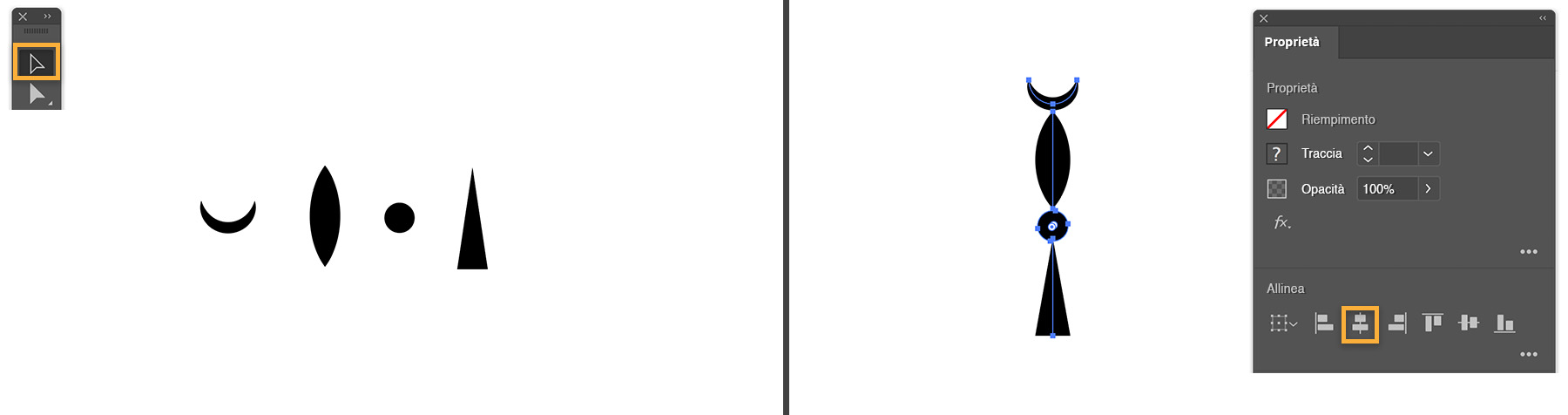
Scarica le nostre grafiche di esempio per seguire il tutorial oppure crea delle forme personalizzate. Usa lo strumento Selezione per trascinare le forme e impilarle in verticale, poi selezionale tutte e fai clic su Allineamento orizzontale al centro nel pannello Proprietà.
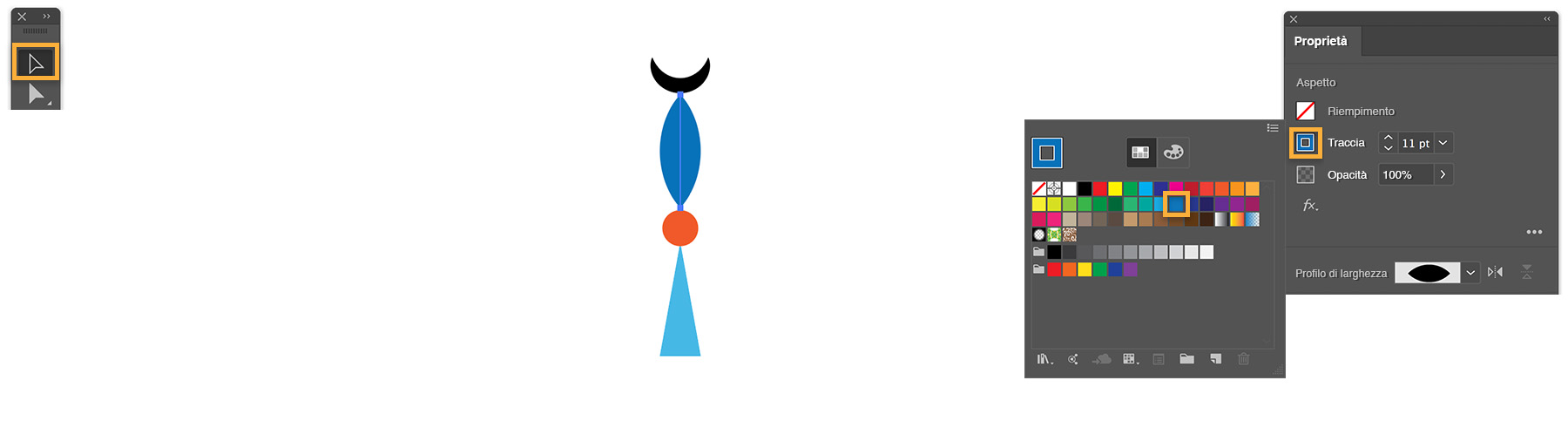
Seleziona ciascun oggetto e cambia il colore di riempimento o della traccia, poi seleziona tutti gli elementi e fai clic su Raggruppa nel pannello Proprietà.
Seleziona lo strumento Rotazione e, tenendo premuto il tasto Alt/Opzione, fai clic sul punto attorno al quale vuoi ruotare la forma. Digita un angolo di rotazione. Seleziona Anteprima e fai clic su Copia per creare una copia della forma, poi premi Ctrl/Comando+D tutte le volte necessarie per completare il mandala. Suggerimento:
se non hai ben chiaro quale angolo di rotazione utilizzare, puoi farlo calcolare a Illustrator. Ti basterà digitare 360/n, dove n sta per il numero di forme duplicate che vuoi creare. Ad esempio, prova a digitare 360/18 (per 18 forme ripetute).
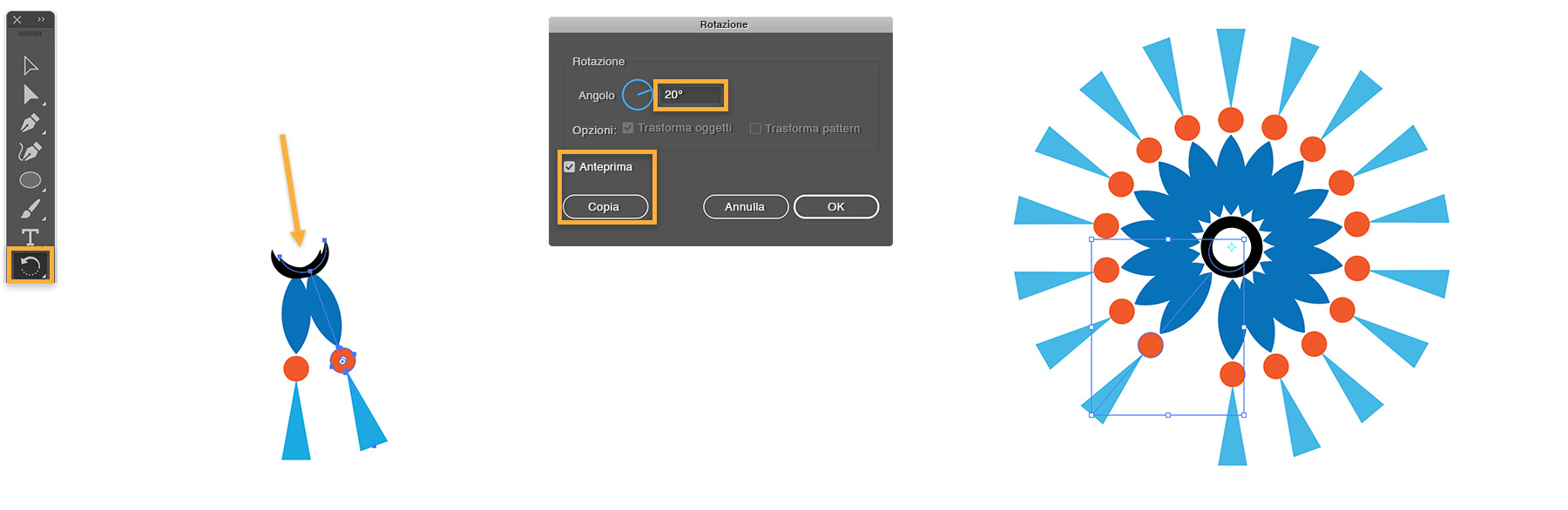
L’aspetto del mandala può variare a seconda di dove posizioni il punto di rotazione, ma puoi modificarlo anche alterando i colori e applicando effetti alle singole forme.

È facile modificare il mandala dopo averlo creato. Usa lo strumento Selezione diretta per selezionare l’oggetto da modificare, poi fai clic su Avvia modifica globale nel pannello Proprietà. Puoi modificare il colore di riempimento, la traccia, l’opacità o altre caratteristiche. Tutte le istanze della forma verranno modificate contemporaneamente. Quando hai finito di apportare le modifiche, fai clic su Interrompi modifica globale.
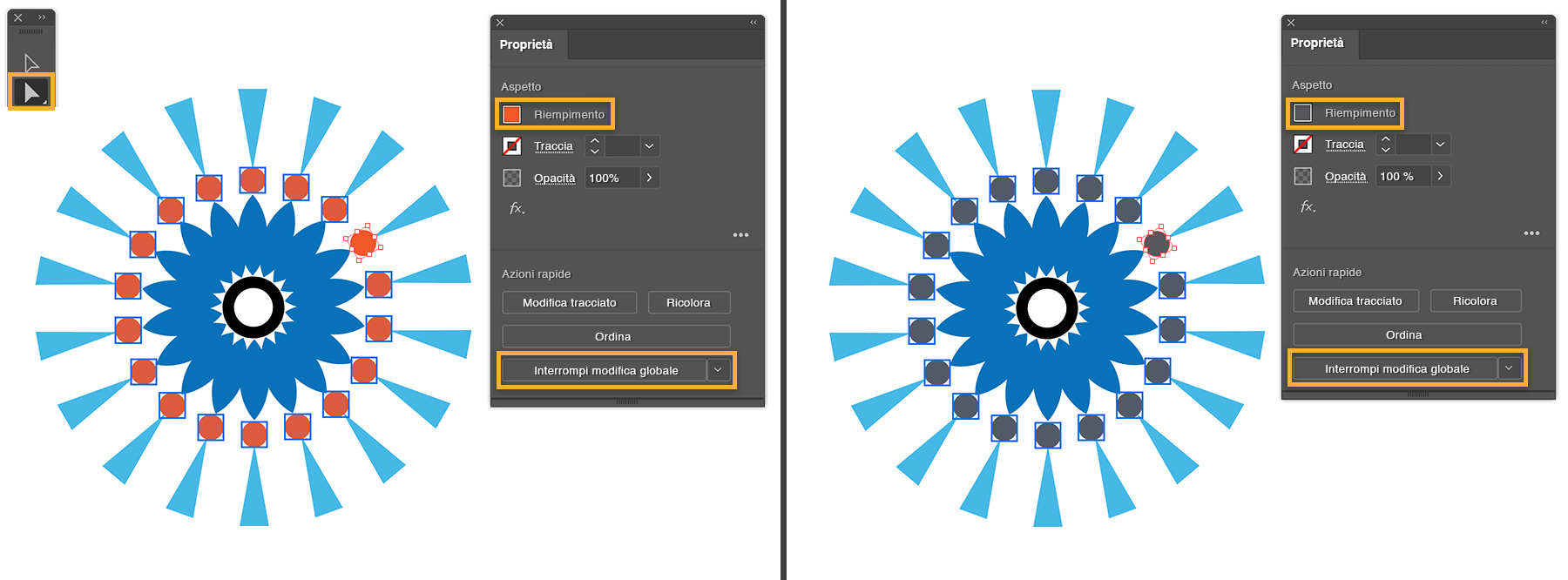
È un po’ come costruire un caleidoscopio personalizzato. Prova queste tecniche per creare tante varianti colorate del tuo logo.

You can control how Adobe websites use cookies and similar technologies by making choices below. But note that if you disable cookies and similar technologies entirely, Adobe websites may not function properly.
Cookies are small text files stored by your web browser when you use websites. There are also other technologies that can be used for similar purposes like HTML5 Local Storage and local shared objects, web beacons, and embedded scripts. These technologies help us do things like remembering you and your preferences when you return to our sites, measure how you use the website, conduct market research, and gather information about the ads you see and interact with.
You can make choices in the menu below about what cookies and other technologies you want us to use on Adobe sites when you visit them from this browser. You can always change those choices later by clicking on the Cookie Preferences link at the bottom of the page.
If enabled:
We can improve your experience by tailoring the site and the content to things we think might be of interest
We can better keep track of your preferences — like what language you prefer to use
We will better understand your likely interests so we can provide you more relevant Adobe ads and content on non-Adobe websites and in non-Adobe apps
It will help us improve the performance of our website and those of our partners who use the Adobe Experience Cloud
If disabled:
We won’t be able to remember you from session to session so the experience may not be tailored to your interests
You’ll still have access to the content of the site but certain features that depend on cookies may not function
You’ll still see ads, they just may not be as relevant to you
General information
You can control how Adobe websites use cookies and similar technologies by making choices below. But note that if you disable cookies and similar technologies entirely, Adobe websites may not function properly.
Cookies are small text files stored by your web browser when you use websites. There are also other technologies that can be used for similar purposes like HTML5 Local Storage, web beacons, and embedded scripts. These technologies help us do things like remembering you and your preferences when you return to our sites, measure how you use the website, conduct market research, and gather information about the ads you see and interact with.
You can make choices in the menu below about what cookies and other technologies you want us to use on Adobe sites when you visit them from this browser. You can always change those choices later by clicking on the Cookie Preferences link at the bottom of the page.
If enabled:
We can improve your experience by tailoring the site and the content to things we think might be of interest
We can better keep track of your preferences — like what language you prefer to use
We will better understand your likely interests so we can provide you more relevant Adobe ads and content on non-Adobe websites and in non-Adobe apps
It will help us improve the performance of our website and those of our partners who use the Adobe Experience Cloud
If disabled:
We won’t be able to remember you from session to session so the experience may not be tailored to your interests
We’ll still count your use of our site and services
You’ll still have access to the content of the site but certain features that depend on cookies may not function
You’ll still see ads, they just may not be as relevant to you
Operate the site and core servicesOperate site and measure engagement
Always active
These cookies are required, and they are used to enable the site and related services core functionality. Without them the site could not operate, so they cannot be disabled.
These cookies enable the site and related services’ core functionality and collect statistics about user engagement, such as counting active use to help us understand trends. These cookies cannot be disabled.
Measure performance
These cookies are used to analyze site usage to measure and improve performance. Without them Adobe cannot know what content is most valued and how often unique visitors return to the site, making it hard to improve information we offer to you.
These cookies are used to analyze site usage to measure and improve performance. Without them Adobe cannot know what content is most valued, making it hard to improve information we offer to you.
Extend functionality
These cookies are used to enhance the functionality of Adobe sites such as remembering your settings and preferences to deliver a personalized experience; for example, your username, your repeated visits, preferred language, your country, or any other saved preference.
Personalize advertising
These cookies are used to enable Adobe and our partners to serve ads more relevant to your interests. Without them you will still see ads, but they might not be as relevant to you.
Personalize advertising
These cookies are used to enable Adobe and our partners to serve ads more relevant to your interests. Without them you will still see ads, but they might not be as relevant to you.