„Mit Lightroom und Photoshop bin ich viel produktiver. Ich kann einfach von Lightroom nach Photoshop exportieren, statt die Datei erst zu speichern und sie dann in Photoshop wieder zu öffnen. Das spart eine Menge Zeit.“
So holst du mit den Retuschierfunktionen für Fotos das Beste aus einem Porträt heraus.
Dana verrät dir, wie du mit Adobe Photoshop und Lightroom ein makelloses Porträt erstellst.
Transkript nicht verfügbar
Ein Porträt bearbeiten.
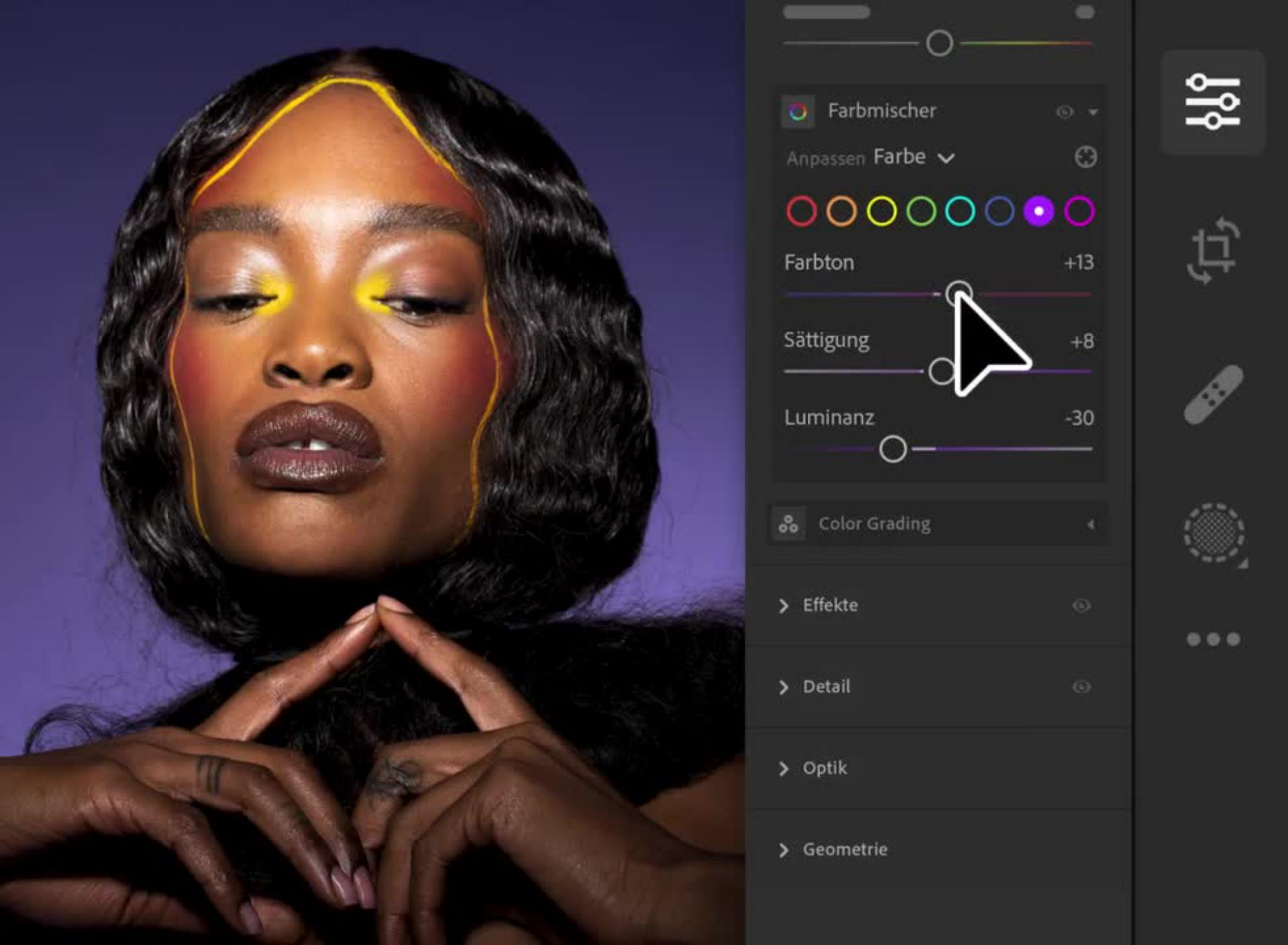
Öffne in Lightroom Danas Beispieldatei oder ein eigenes Foto. Passe im Bedienfeld „Bearbeiten“ Licht und Farbe an, um der Aufnahme mehr Tiefe zu verleihen und die Farbe besser zur Geltung zu bringen. Orientiere dich dabei an Danas Einstellungen oder experimentiere mit den Schiebereglern, um einen eigenen Look zu erstellen.
Transkript nicht verfügbar
Zu Photoshop wechseln.
Wenn du mit der Bearbeitung in Lightroom fertig bist, klicke rechts auf das Menüsymbol mit den drei Punkten und wähle die Option „In Photoshop bearbeiten“ aus.
Transkript nicht verfügbar
Das Motiv isolieren.
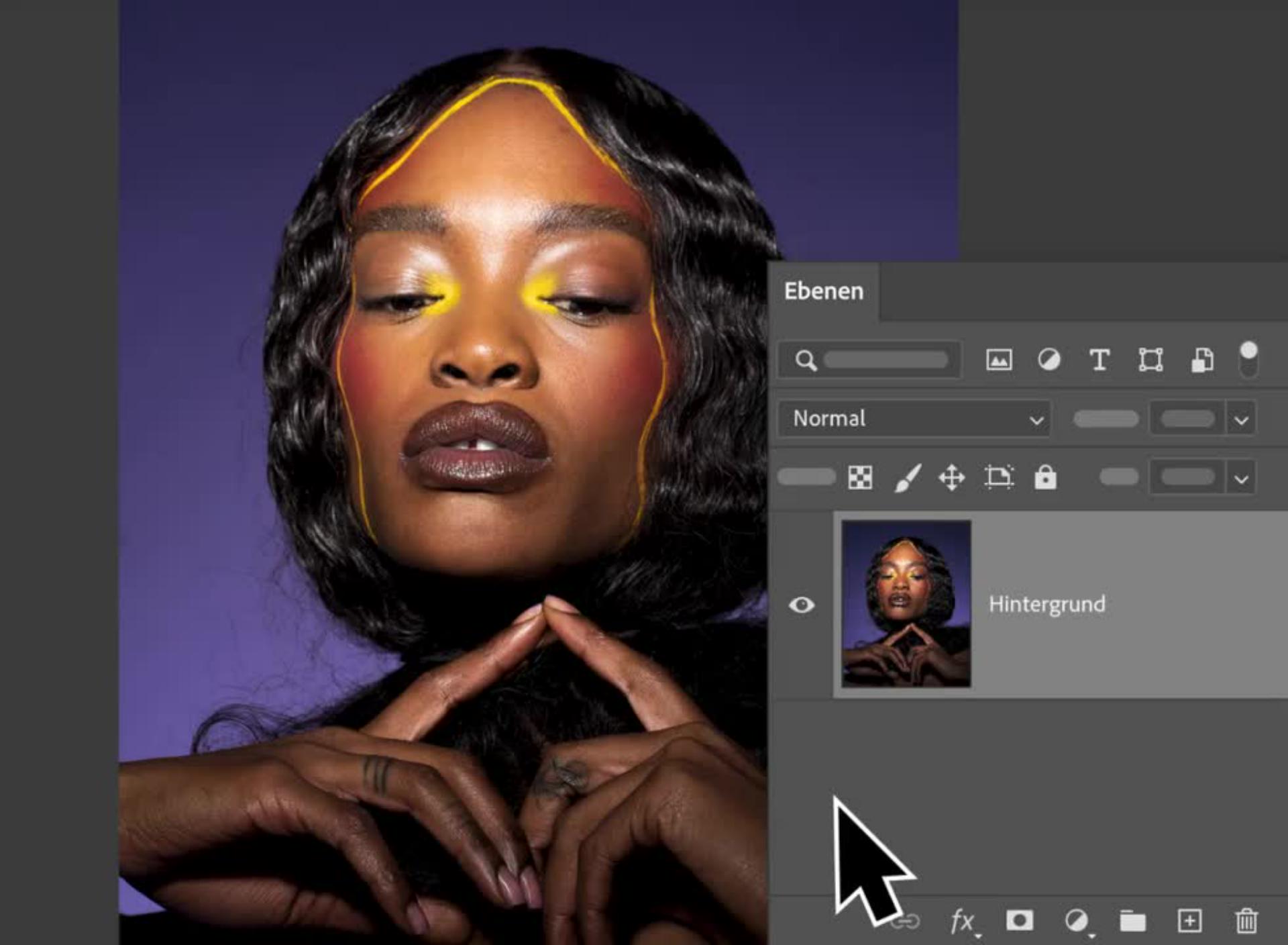
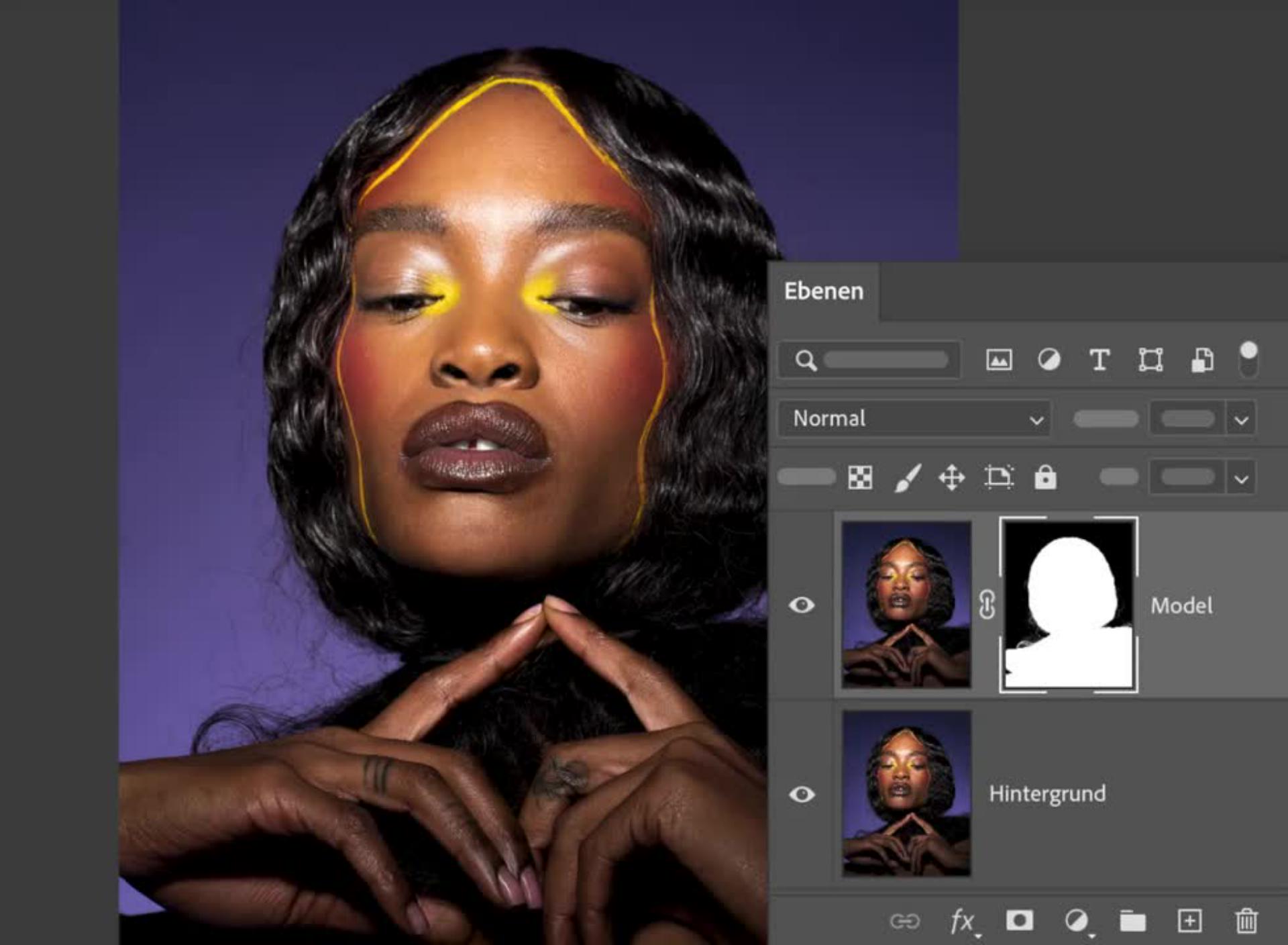
Dupliziere in Photoshop die Ebene „Background“ und benenne sie neu. Klicke mit dem Objektauswahl-Werkzeug auf das Bild in der Ebene „Model“, um eine Auswahl zu treffen. Klicke dann im Bedienfeld „Ebenen“ auf die Schaltfläche „Maskieren“, um den Hintergrund in der Ebene „Model“ auszublenden.
Profi-Tipp: Beim Maskieren wird das Motiv vom Hintergrund getrennt. So lassen sich beide Elemente getrennt voneinander bearbeiten – das ist nützlich, wenn du mehr Rauschen zum Hintergrund hinzufügen willst.
Transkript nicht verfügbar
Kleine Unregelmäßigkeiten bereinigen.
Wähle auf der Werkzeugleiste den Bereichsreparatur-Pinsel. Klicke dann auf die Stellen, die du entfernen möchtest, oder fahre mit dem Pinsel darüber. Mit Ö und # auf der Tastatur änderst du die Pinselgröße. Der Bereichsreparatur-Pinsel analysiert die Pixel um den betreffenden Bereich und passt Farbe und Textur entsprechend an.
Profi-Tipp: Wenn du größere Bereiche retuschieren musst, kannst du das Kopier-Werkzeug verwenden oder mit einem weichen Pinsel in einer ähnlichen Farbe über den Bereich malen.
Video kann nicht geladen werden
Sieh den Unterschied.
Mit wenigen Korrekturen und den geeigneten Retuschierwerkzeugen in Lightroom und Photoshop holst du das Beste aus deinen Fotos heraus.
Cookie Settings
General information
You can control how Adobe websites use cookies and similar technologies by making choices below. But note that if you disable cookies and similar technologies entirely, Adobe websites may not function properly.
Cookies are small text files stored by your web browser when you use websites. There are also other technologies that can be used for similar purposes like HTML5 Local Storage and local shared objects, web beacons, and embedded scripts. These technologies help us do things like remembering you and your preferences when you return to our sites, measure how you use the website, conduct market research, and gather information about the ads you see and interact with.
You can make choices in the menu below about what cookies and other technologies you want us to use on Adobe sites when you visit them from this browser. You can always change those choices later by clicking on the Cookie Preferences link at the bottom of the page.
If enabled:
We can improve your experience by tailoring the site and the content to things we think might be of interest
We can better keep track of your preferences — like what language you prefer to use
We will better understand your likely interests so we can provide you more relevant Adobe ads and content on non-Adobe websites and in non-Adobe apps
It will help us improve the performance of our website and those of our partners who use the Adobe Experience Cloud
If disabled:
We won’t be able to remember you from session to session so the experience may not be tailored to your interests
You’ll still have access to the content of the site but certain features that depend on cookies may not function
You’ll still see ads, they just may not be as relevant to you
General information
You can control how Adobe websites use cookies and similar technologies by making choices below. But note that if you disable cookies and similar technologies entirely, Adobe websites may not function properly.
Cookies are small text files stored by your web browser when you use websites. There are also other technologies that can be used for similar purposes like HTML5 Local Storage, web beacons, and embedded scripts. These technologies help us do things like remembering you and your preferences when you return to our sites, measure how you use the website, conduct market research, and gather information about the ads you see and interact with.
You can make choices in the menu below about what cookies and other technologies you want us to use on Adobe sites when you visit them from this browser. You can always change those choices later by clicking on the Cookie Preferences link at the bottom of the page.
If enabled:
We can improve your experience by tailoring the site and the content to things we think might be of interest
We can better keep track of your preferences — like what language you prefer to use
We will better understand your likely interests so we can provide you more relevant Adobe ads and content on non-Adobe websites and in non-Adobe apps
It will help us improve the performance of our website and those of our partners who use the Adobe Experience Cloud
If disabled:
We won’t be able to remember you from session to session so the experience may not be tailored to your interests
We’ll still count your use of our site and services
You’ll still have access to the content of the site but certain features that depend on cookies may not function
You’ll still see ads, they just may not be as relevant to you
Operate the site and core servicesOperate site and measure engagement
Always active
These cookies are required, and they are used to enable the site and related services core functionality. Without them the site could not operate, so they cannot be disabled.
These cookies enable the site and related services’ core functionality and collect statistics about user engagement, such as counting active use to help us understand trends. These cookies cannot be disabled.
Measure performance
These cookies are used to analyze site usage to measure and improve performance. Without them Adobe cannot know what content is most valued and how often unique visitors return to the site, making it hard to improve information we offer to you.
These cookies are used to analyze site usage to measure and improve performance. Without them Adobe cannot know what content is most valued, making it hard to improve information we offer to you.
Extend functionality
These cookies are used to enhance the functionality of Adobe sites such as remembering your settings and preferences to deliver a personalized experience; for example, your username, your repeated visits, preferred language, your country, or any other saved preference.
Personalize advertising
These cookies are used to enable Adobe and our partners to serve ads more relevant to your interests. Without them you will still see ads, but they might not be as relevant to you.
Personalize advertising
These cookies are used to enable Adobe and our partners to serve ads more relevant to your interests. Without them you will still see ads, but they might not be as relevant to you.