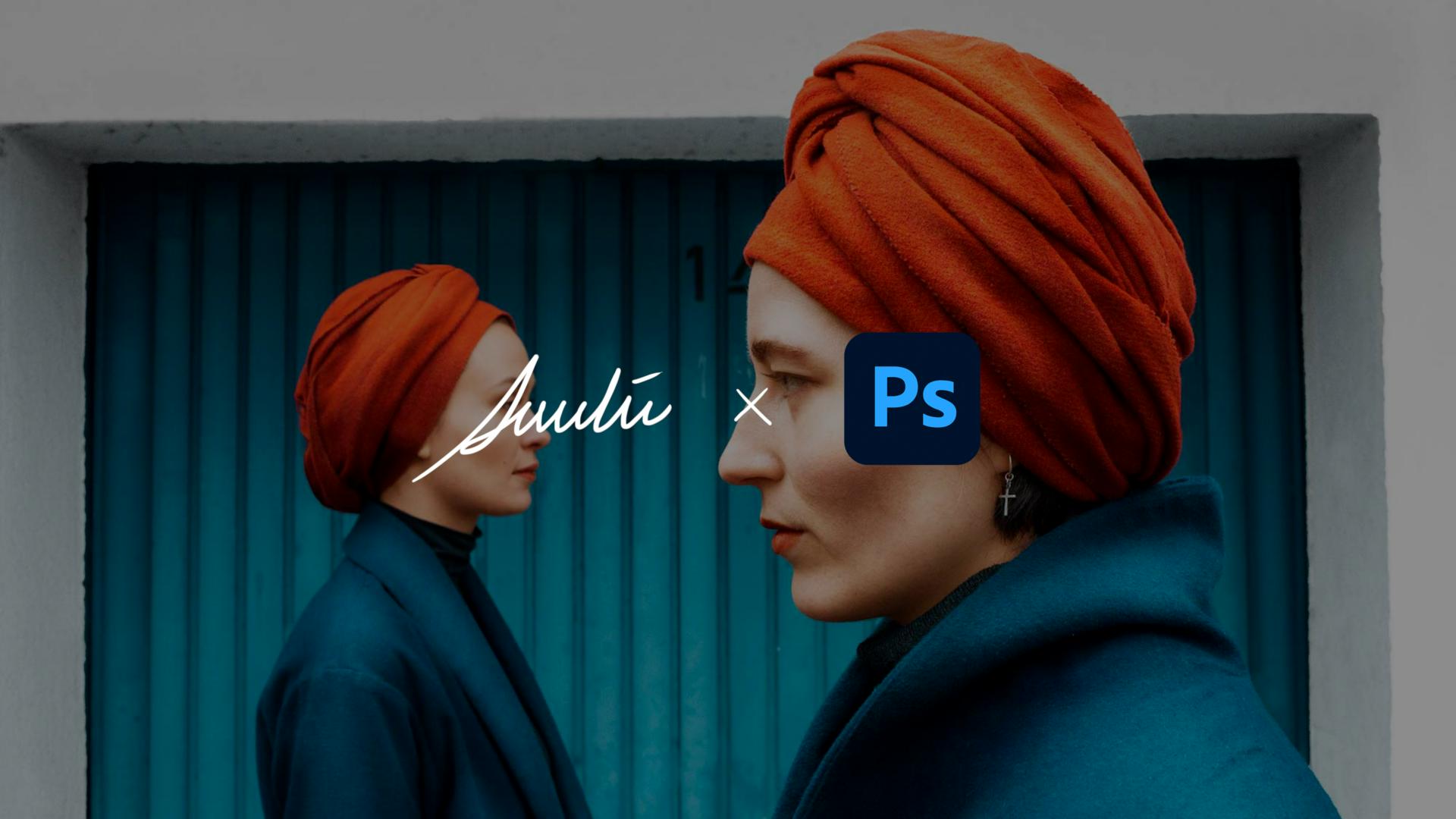
Lerne in diesem Tutorial, wie du mit Gradiationskurven Farben gezielt abstimmst, um ein Bild ausdruckstärker zu machen.
Veröffentlicht am
In diesem Tutorial zeigt dir Fotokünstlerin Amelie Satzger, wie du Farben gezielt aufeinander abstimmen kannst, um harmonische Farblooks zu erzeugen. Du lernst störende Elemente zu korrigieren, einzelne Farbbereiche zu verstärken und Haut- sowie Komplementärfarben anzupassen.
Farben können das Gefühl von einem Bild komplett verändern und extrem aufwerten.
In diesem Tutorial zeige ich dir, wie du Farben harmonisch aufeinander abstimmst.
Hi, mein Name ist Amelie Satzger.
Ich bin eine Selbstporträt-Fotografin und ich kreiere surrealistische, farbenfrohe Bilder für Marken wie Nikon, Apple und Zino Davidoff.
In diesem Tutorial zeige ich dir, wie man ganz einfach mithilfe von Mischmodi eine dreckige Wand weiß bekommt, wie man mit dem neuen Personen-Auswahlwerkzeug Bereiche von Personen wie die Lippen auswählen und einfärben kann und wie man durch gezielte Anpassungen ein harmonisches Farbbild erstellt.
Probiere dich selber ein bisschen in Farbharmonien und teste sie in diesem Tutorial aus!
Das lernst du in Amelies interaktivem Tutorial:
Eine verschmutzte Wand im Hintergrund aufhellen und neutralisieren
Rottöne gezielt intensivieren
Haut- und Blautöne harmonisch abstimmen
Sobald du das Tutorial in Photoshop öffnest, kannst du alle Punkte Schritt für Schritt durchgehen: Zuerst reinigst du die verschmutzte Wand im Hintergrund mithilfe des Schnellauswahl-Werkzeugs, Ebenenmasken, einer Füllebene im Modus „Aufhellen“ und Gradationskurven. Anschließend zeigt dir Amelie, wie du mit dem Schnellauswahl-Werkzeug, der selektiven Farbkorrektur und Gradationskurven die Rottöne im Bild verstärkst. Die Turbane erhalten mehr Sättigung, während die Lippen gezielt angepasst werden. Zum Schluss nutzt du erneut das Auswahlwerkzeug, Gradationskurven und die selektive Farbkorrektur, um die Hauttöne wärmer wirken zu lassen und die Blautöne im Foto zu intensivieren.
Über die Fotokünstlerin
Amelie Satzger ist eine interdisziplinäre Fotokünstlerin und Videografin, die mit ihren surreal inszenierten Bildern in visuelle Welten entführt. Sie versteht es wie keine andere, Texte und Emotionen in visuelle Narrative zu übersetzen – fast immer anhand kreativer Selbstporträts, die regelmäßig international ausgestellt werden. Ihre Werke kombinieren traditionelle Handwerkskunst mit modernen digitalen Techniken: Für die Umsetzung ihrer kreativen Konzepte gestaltet Amelie aufwändige Requisiten, um anschließend ihre abstrakten Ideen zu inszenieren.
In ihren interaktiven Photoshop Tutorials für Adobe zeigt sie nicht nur den Entstehungsprozess ihrer kreativen Ideen, sondern vermittelt praxisnah, wie sich Photoshop-Funktionen, Smartobjekte, Ebenenmasken und Farbkorrekturen nutzen lassen, um surreale, professionelle Bildbearbeitung umzusetzen. Du lernst Schritt für Schritt, wie die Fotokünstlerin mit Adobe Photoshop arbeitet.
You can control how Adobe websites use cookies and similar technologies by making choices below. But note that if you disable cookies and similar technologies entirely, Adobe websites may not function properly.
Cookies are small text files stored by your web browser when you use websites. There are also other technologies that can be used for similar purposes like HTML5 Local Storage and local shared objects, web beacons, and embedded scripts. These technologies help us do things like remembering you and your preferences when you return to our sites, measure how you use the website, conduct market research, and gather information about the ads you see and interact with.
You can make choices in the menu below about what cookies and other technologies you want us to use on Adobe sites when you visit them from this browser. You can always change those choices later by clicking on the Cookie Preferences link at the bottom of the page.
If enabled:
We can improve your experience by tailoring the site and the content to things we think might be of interest
We can better keep track of your preferences — like what language you prefer to use
We will better understand your likely interests so we can provide you more relevant Adobe ads and content on non-Adobe websites and in non-Adobe apps
It will help us improve the performance of our website and those of our partners who use the Adobe Experience Cloud
If disabled:
We won’t be able to remember you from session to session so the experience may not be tailored to your interests
You’ll still have access to the content of the site but certain features that depend on cookies may not function
You’ll still see ads, they just may not be as relevant to you
General information
You can control how Adobe websites use cookies and similar technologies by making choices below. But note that if you disable cookies and similar technologies entirely, Adobe websites may not function properly.
Cookies are small text files stored by your web browser when you use websites. There are also other technologies that can be used for similar purposes like HTML5 Local Storage, web beacons, and embedded scripts. These technologies help us do things like remembering you and your preferences when you return to our sites, measure how you use the website, conduct market research, and gather information about the ads you see and interact with.
You can make choices in the menu below about what cookies and other technologies you want us to use on Adobe sites when you visit them from this browser. You can always change those choices later by clicking on the Cookie Preferences link at the bottom of the page.
If enabled:
We can improve your experience by tailoring the site and the content to things we think might be of interest
We can better keep track of your preferences — like what language you prefer to use
We will better understand your likely interests so we can provide you more relevant Adobe ads and content on non-Adobe websites and in non-Adobe apps
It will help us improve the performance of our website and those of our partners who use the Adobe Experience Cloud
If disabled:
We won’t be able to remember you from session to session so the experience may not be tailored to your interests
We’ll still count your use of our site and services
You’ll still have access to the content of the site but certain features that depend on cookies may not function
You’ll still see ads, they just may not be as relevant to you
Operate the site and core servicesOperate site and measure engagement
Always active
These cookies are required, and they are used to enable the site and related services core functionality. Without them the site could not operate, so they cannot be disabled.
These cookies enable the site and related services’ core functionality and collect statistics about user engagement, such as counting active use to help us understand trends. These cookies cannot be disabled.
Measure performance
These cookies are used to analyze site usage to measure and improve performance. Without them Adobe cannot know what content is most valued and how often unique visitors return to the site, making it hard to improve information we offer to you.
These cookies are used to analyze site usage to measure and improve performance. Without them Adobe cannot know what content is most valued, making it hard to improve information we offer to you.
Extend functionality
These cookies are used to enhance the functionality of Adobe sites such as remembering your settings and preferences to deliver a personalized experience; for example, your username, your repeated visits, preferred language, your country, or any other saved preference.
Personalize advertising
These cookies are used to enable Adobe and our partners to serve ads more relevant to your interests. Without them you will still see ads, but they might not be as relevant to you.
Personalize advertising
These cookies are used to enable Adobe and our partners to serve ads more relevant to your interests. Without them you will still see ads, but they might not be as relevant to you.