What makes a business card work?

Even in a time when networking is often just a quick click away, handing someone a physical business card still carries weight. To understand why, Adobe Express designed multiple business card mockups and surveyed over 1,000 consumers and business owners to find out which styles build trust, inspire action, and stay on people's minds.

From fonts to finishes, the results show that small design decisions have a big impact. Whether you're rebranding or launching a side hustle, these insights will help you design a business card that works.

Key takeaways

Summary/Overview

Levels
1

Design elements consumers trust most

To explore which design elements make a difference to consumers, we created a series of mock business cards grouped into four categories: style, materials & finishes, features, and format. Each set highlighted distinct design choices, from minimalist white cards with clean sans-serif fonts to luxe versions with foil accents on deep navy backgrounds.

We also tested physical elements like textured paper and eco-friendly stock, alongside tech-forward features like QR codes and NFC icons. To top it off, we varied the format between horizontal, vertical, and custom-cut shapes. These mockups were then shown to respondents to find out which cards earned the most trust and attention.

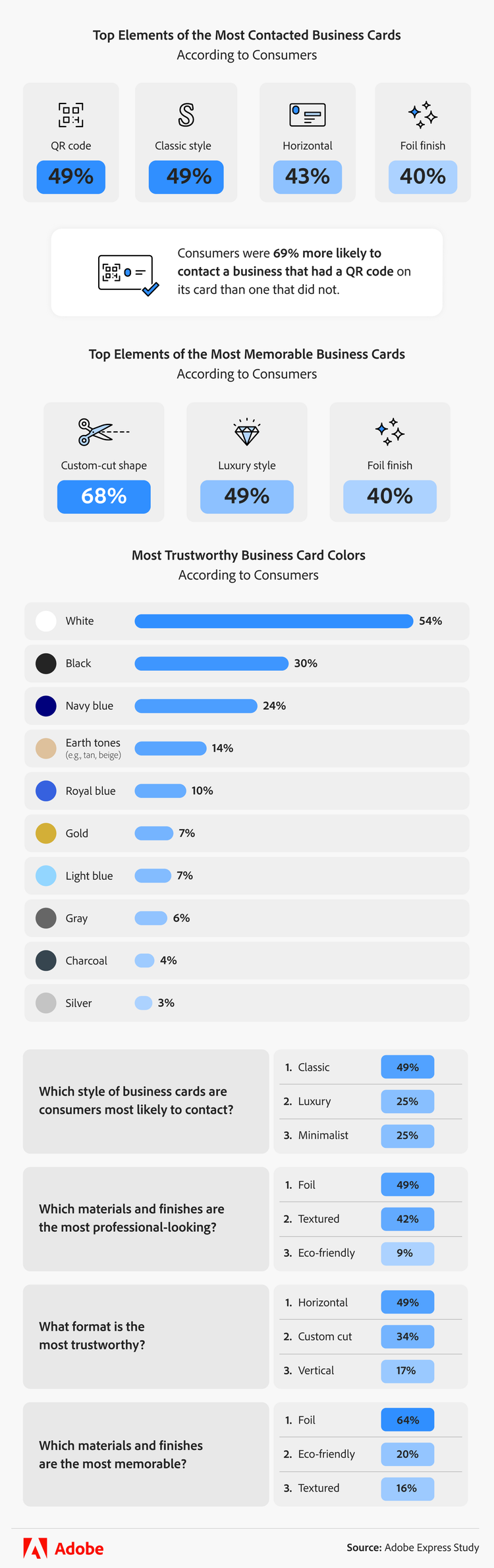
infographic showing elements of what makes a business card work

The top elements of a business card that would make consumers most likely to contact the business were a QR code (49%), classic style (49%), horizontal layout (43%), and foil finish (40%). Adding a QR code to your business card could increase the likelihood of being contacted by 69%, according to consumer responses.

More than half of consumers surveyed (54%) said white business cards were the most trustworthy, followed by black (30%) and navy blue (24%). These classic colors communicated reliability more clearly than bolder or trendier options. As for layout, 49% found horizontal layouts more trustworthy, while only 17% said the same about vertical cards.

Why physical cards still matter in a digital world

While QR codes and virtual profiles are on the rise, printed business cards continue to lead when it comes to memorability and connection.

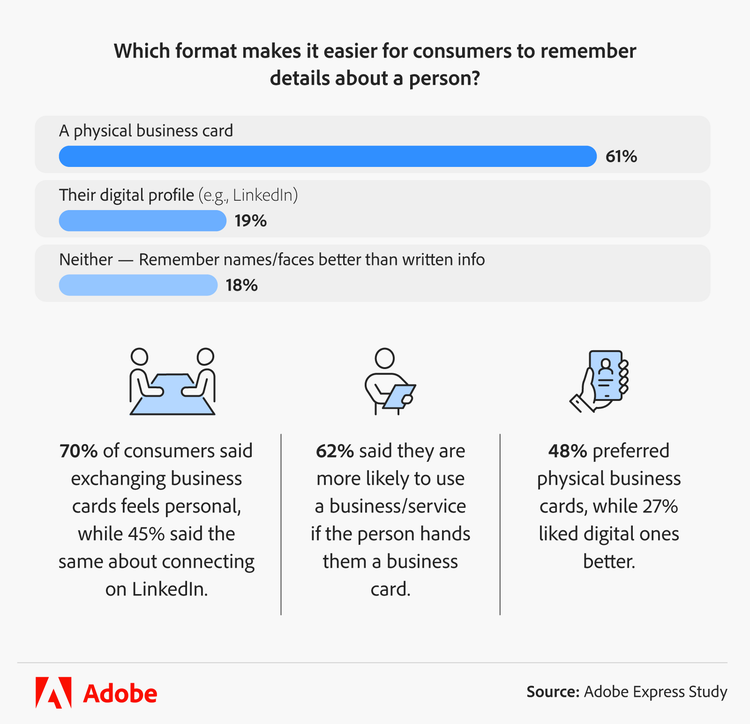
infographic showing which business card's format makes easier for consumers to remember details about a person

Fifty-eight percent of consumers have received someone's contact info through a QR code or digital business card, but that hasn't replaced the appeal of physical cards. Just over three in five (61%) said paper cards make it easier to remember details about someone they met.

That's likely because the experience feels more personal. Seventy percent of respondents said exchanging a business card felt more meaningful than connecting on LinkedIn, where only 45% felt a personal connection.

Another 62% of consumers said they would be more likely to use a business or service if they were given a physical card. Even among younger audiences, traditional business cards still hold value, with 38% of Gen Z preferring them over digital options.

What business owners value in card design

Business owners have their own priorities when it comes to crafting a card that represents their brand.

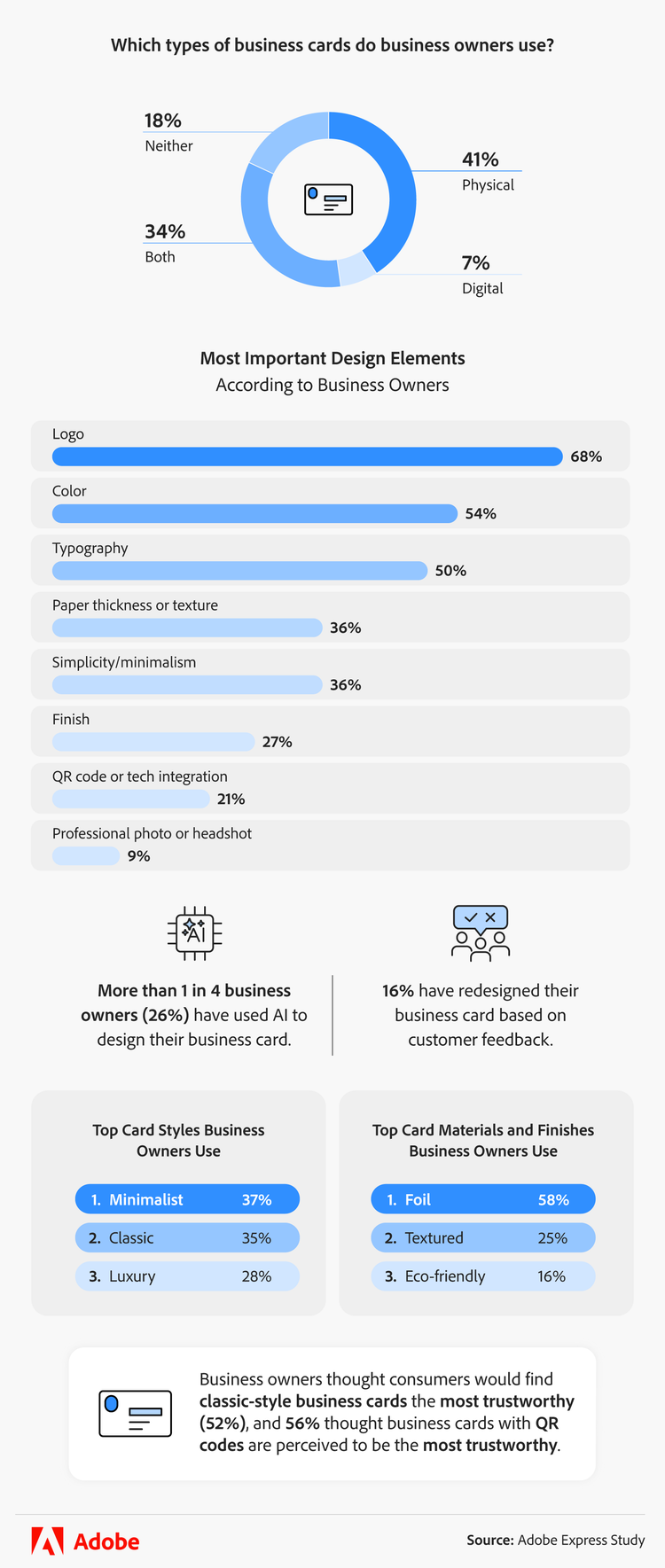
infographic showing which types of business cards do business owners use

When asked which design elements mattered most, 68% of business owners said their logo was the top priority. Color followed next at 54%, and 50% emphasized typography, showing just how crucial visuals are in building brand recognition. Overall, 37% said they preferred a minimalist style, and the most popular finishing touch to add was foil (58%).

Only 21% of business owners thought QR codes or other tech integrations were important card elements, which means that many are unaware of how important they are in making connections with consumers. More than a quarter of business owners had used AI to help design their business cards.

Tools to design an impactful business card

The right tools help you turn trust-building design choices into a polished, professional card. With Adobe Express, it's easy to create, customize, and share business cards that leave a lasting impression.

Try these tools in Adobe Express to design your next business card:

Design tips for your next business card

In a world full of digital connections, a well-designed business card helps you stand out and be remembered. Focus on classic, trustworthy colors like white, black, or navy, and keep your layout clean and easy to read. Add a QR code to make it easy for people to follow up, and don't forget to display your logo and brand colors to build recognition. Whether you're designing from scratch or refreshing an old card, tools like Adobe Express will help you create something that feels both personal and professional.

Methodology

To uncover which business card elements work best, Adobe Express created distinct business card mockups in four design categories and surveyed 210 business owners and 790 consumers via SurveyMonkey. Of respondents, 20% were Gen Z, 51% were millennials, 22% were Gen X, and 7% were baby boomers. The goal was to understand which card styles built the most trust, inspired action, and made a lasting impression.

Fair use statement

If you'd like to share these insights, you're welcome to do so for noncommercial purposes. If you do, please include a link back to this page and credit Adobe Express appropriately.

Try Adobe Express today