Using TikTok as a search engine: Consumer and business perspectives

Search is continuing to evolve. Nearly half of US consumers now use TikTok as a search engine, drawn to its short-form videos, personalized content, and authentic storytelling, and that number has jumped nearly 20% in just two years.
To understand how this shift is affecting marketing, Adobe Express surveyed over 800 consumers and 200 small business owners across the US, exploring how consumers are using emerging platforms like TikTok and AI-powered tools to search for information online and how brands are keeping up.
Key takeaways
- Nearly one in two consumers (49%) use TikTok as a search engine.
- 14% of consumers are more likely to rely on ChatGPT than Google as a search engine.
- 38% of business owners use TikTok influencers for product sales or promotions.
- Business owners said their biggest challenge is converting TikTok engagement into sales (38%), followed by increasing follower counts and engagement rates (36%).
- 38% of business owners plan to increase investment in TikTok affiliate marketing next year, compared to 31% for influencer marketing.
Summary/Overview
Where consumers actually search
While Google remains the dominant tool for search, other platforms continue to earn a place in everyday discovery.
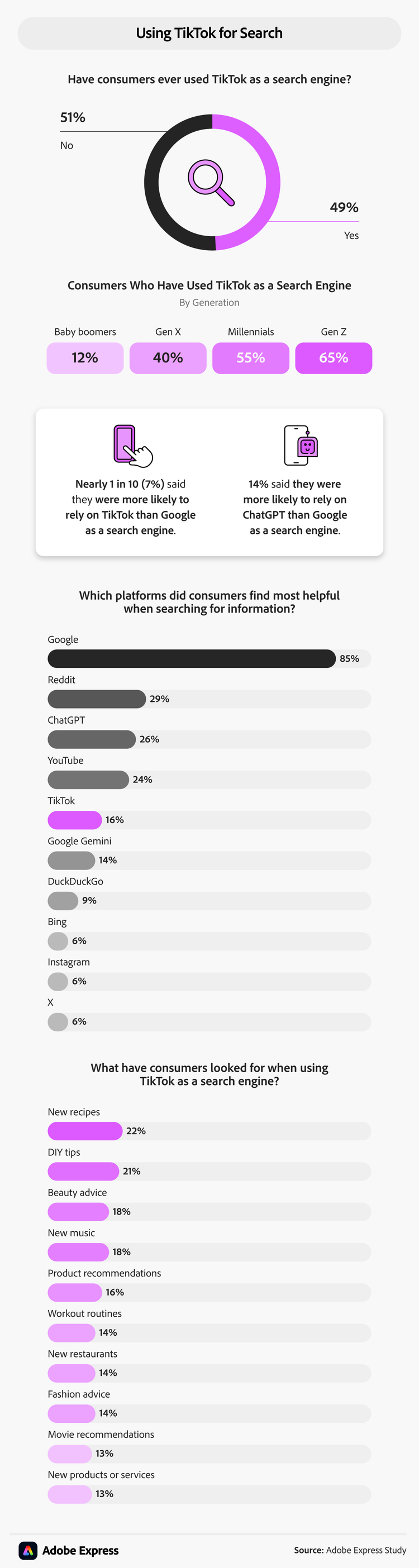
Video-first platforms are becoming part of routine information seeking for many consumers. Nearly half of consumers surveyed (49%) used TikTok as a search engine in 2026. This is up from 41% of consumers in our 2024 survey — a 19.5% increase in adoption in just two years.
A quarter of Gen Z consumers (25%) found TikTok effective for finding information, compared to 17% of millennials, 12% of Gen X, and 5% of baby boomers. Gen Z consumers were also the most likely to find Reddit useful as a search engine (38%) and the most likely to prefer Google over all other platforms (89%).
More than one in 10 consumers (14%) said they are more likely to rely on ChatGPT than on Google as a search engine. Here's how that looks by generation:
- Gen Z: 12%
- Millennials: 15%
- Gen X: 15%
- Baby boomers: 14%
Smaller shares of each group said they are more likely to rely on TikTok than Google:
- Gen Z: 4%
- Millennials: 8%
- Gen X: 7%
- Baby boomers: 2%
Among Gen Z, the preference for TikTok over Google has declined, from nearly one in 10 (8%) in 2024 to just 4% by 2026.
Drivers of TikTok search behavior
People turn to TikTok for more than answers. They're looking for videos, stories, and interaction.
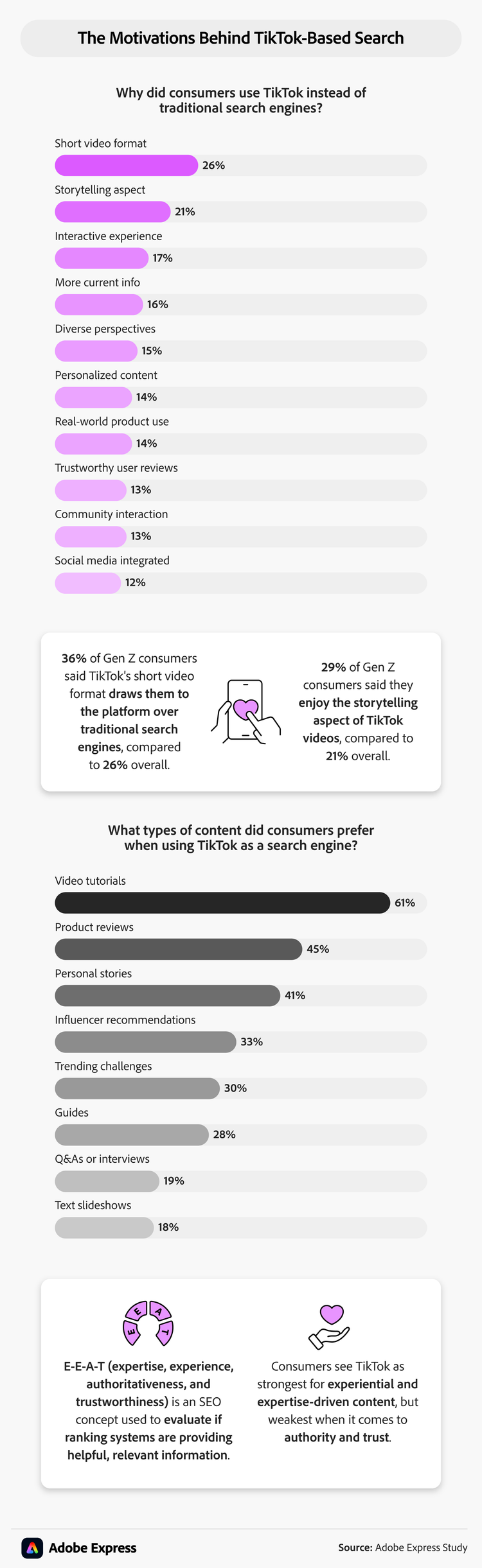
Consumers most often used TikTok instead of traditional search engines for its short video format (26%), storytelling aspects (21%), and interactive experiences (17%). Twenty-one percent of Gen Z said TikTok's personalized content drew them to the platform, compared to 14% of consumers overall.
Of all the content on TikTok, consumers said they prefer video tutorials (61%) the most, followed by product reviews (45%), personal stories (41%), and influencer recommendations (33%). Gen Z (31%) and millennials (32%) were the most likely to prefer trending challenges or meme content when using TikTok as a search engine.
What's next for TikTok marketers?
As search behavior shifts, businesses are adjusting where they invest time and budget. TikTok is both an opportunity and a challenge for turning attention into measurable results.
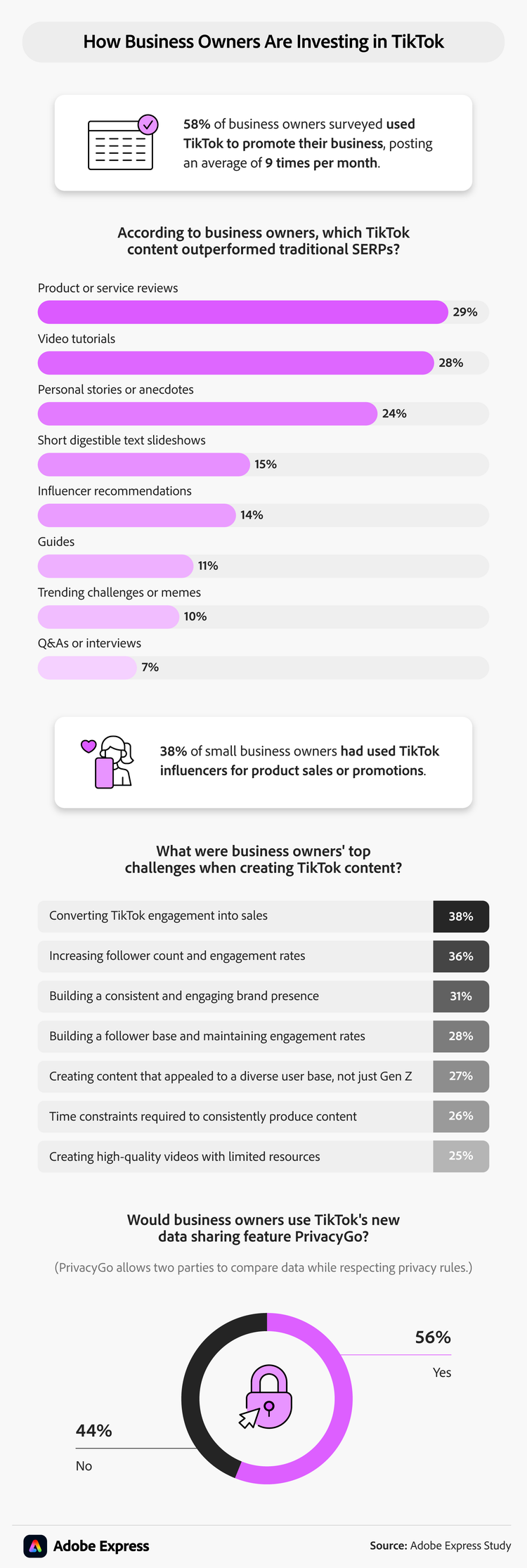
Among small business owners surveyed, 58% had used TikTok for business promotions. Over a third (38%) relied on TikTok influencers for product sales or promotions in 2026 (up from 25% in 2024). Owners believed that their TikTok content did better than traditional search results when it came to:
- Produce or service reviews: 29%
- Video tutorials: 28%
- Personal stories or anecdotes: 24%
Business owners had allocated an average of 16% of their marketing budget to creating TikTok content, and 15% of their SEO budget toward TikTok search optimization.
Thirty-eight percent said they are likely to increase investment in TikTok affiliate marketing within the next year (down from 53% in 2024). Another 31% planned to increase investment in TikTok influencer marketing.
Small businesses' biggest challenges when creating TikTok content were:
- Converting TikTok engagement into sales: 38%
- Increasing follower count and engagement rates: 36%
- Building a consistent and engaging brand presence: 31%
- Building a follower base and maintaining engagement: 28%
- Creating content that appealed to a diverse user base: 27%
Helpful tools for making TikTok content
Creating scroll-stopping videos doesn't have to feel overwhelming. Adobe Express makes it easier to plan, design, and publish TikTok content, whether you're starting from scratch or repurposing existing footage.
Here are three tools that can help you move from idea to upload faster:
- TikTok video creator: Create videos sized perfectly for TikTok in just a few clicks. Choose from ready-made templates, add text, music, animations, and brand elements, and customize every scene with simple drag-and-drop tools. You can quickly resize visuals, trim clips, and export high-quality videos designed to stand out in the feed.
- AI Assistant (beta): Prompt, create, and edit anything. Make quick edits and refine every layer, all while keeping the parts you love intact. Describe what you need and get quick content ideas, templates, and design help all in one place.
- Online video editor: Edit videos directly in your browser with simple tools for trimming, cropping, resizing, merging clips, and adjusting speed. Add text overlays, transitions, music, and effects to polish your content without advanced editing skills.
The bottom line for content creators
The way people search is changing, and TikTok is now part of that journey for many consumers. As a content creator, this means thinking beyond traditional SEO and leaning into what makes TikTok unique: short, engaging videos that tell stories and spark interaction. With tools like Adobe Express making it easier to create and edit TikTok content, there's never been a better time to meet your audience where they're already searching.
Methodology
Adobe Express surveyed 807 consumers and 200 small business owners in the US for this report. The consumer generational breakdown was Gen Z (15%), millennials (53%), Gen X (25%), and baby boomers (7%). The objective of this study was to understand how consumers use TikTok as a search engine and how small business owners have adapted or plan to adapt their marketing strategies to address search intent on the platform. Data was collected in January 2026. The survey was conducted via SurveyMonkey in February 2026.
Fair use statement
The information in this article may be used for noncommercial purposes only. If shared, please include a link with proper attribution to Adobe Express.