Feb. 18, 2021, by Nicolas Paulhac
Now You Can’t See Me (Because I’m Wearing Camouflage!)
Discover how to disappear in the wilderness with these 280 camouflage materials.
Feb. 18, 2021, by Nicolas Paulhac
Discover how to disappear in the wilderness with these 280 camouflage materials.
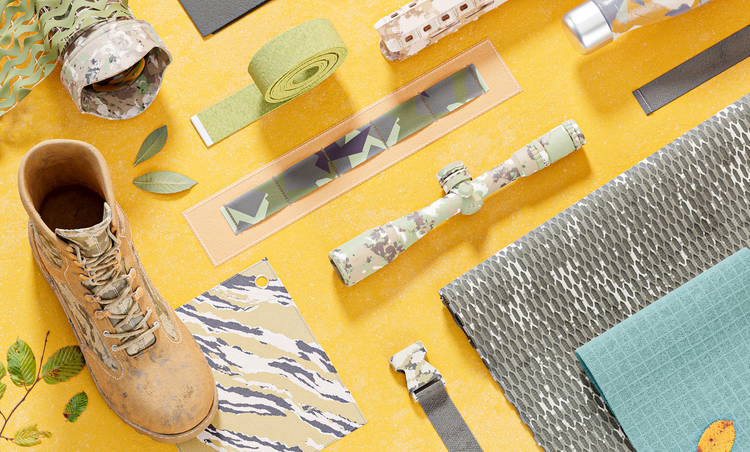
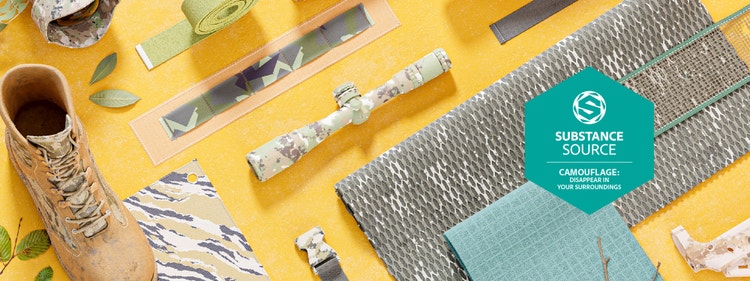
While military usage of camouflage comes to mind most easily, we designed this collection with a broader intention. There are plenty of non-military uses of camouflage — such as making mobile phone towers appear less prominent, for instance. Patterns derived from military camouflage are frequently used in fashion clothing, because of their strong design, and sometimes their symbolism, or simply to mimic natural biomes. Camouflage themes are recurrent in modern art, both figuratively and literally, as well as in science fiction.
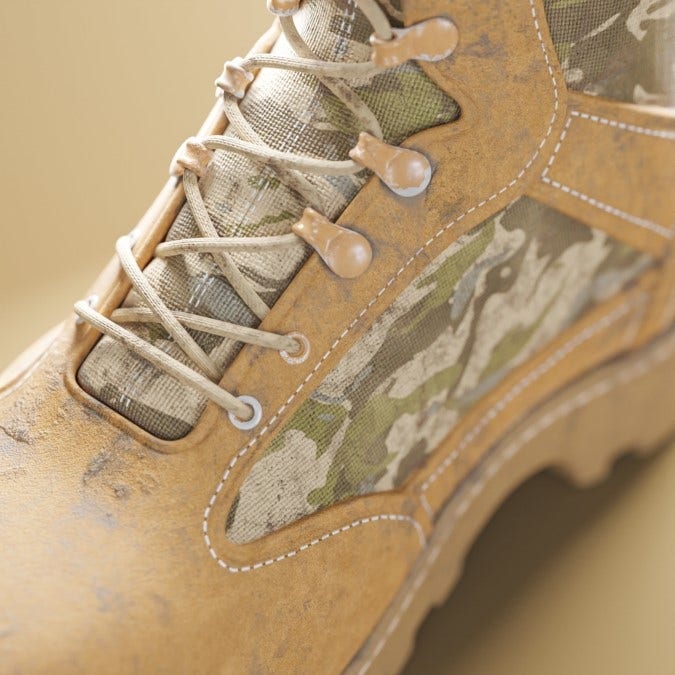
The camouflage collection on Substance Source isn’t only about patterns. Our objective is to deliver materials that are both ready to use and photorealistic, which implies close consideration of these various applications. Therefore, we focus first on the base material structures and surfaces on which the patterns will be applied, printed, or painted.
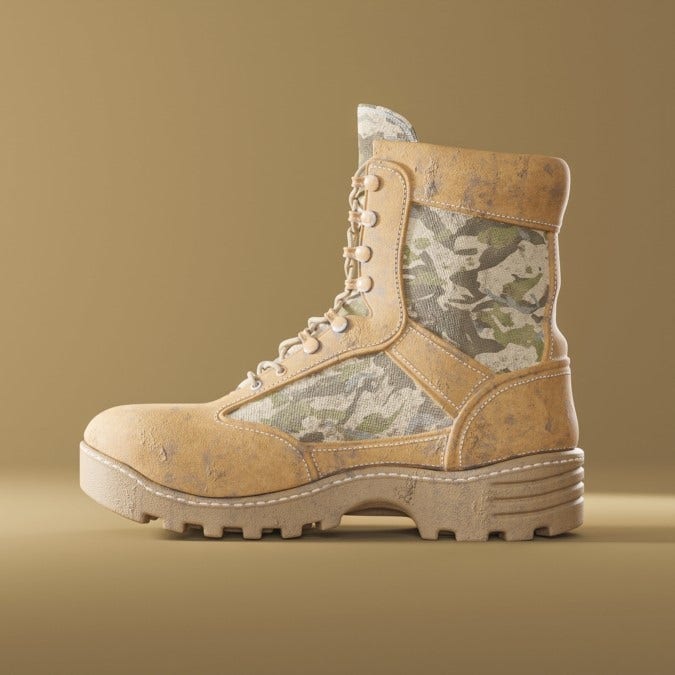
We designed 9 parametric base materials for this collection, ranging from technical textiles to rugged polymer and paint, to create a toolkit that will help you texture tactical gear and trekking equipment from head to toe.
Performance fabrics are designed with built-in parameters enabling users to tweak the visual properties of the textile independently from the printed pattern. In addition to color and roughness, we also focused on visually simulating the wear and tear of the different fibers.
Damage parameters will act on the wearing properties of the fabric, simulating the abrasion of the yarns due to heavy friction. Cut sliders will randomly apply and rotate tears and cuts over the entire surface of the textile. The dedicated length and width of the cut will give you the freedom to design the cuts exactly as you want them: clean cuts, wear holes, wide tears and even bullet holes.
And if we don’t have the base material you are looking for? Make your own. Just dig into the Substance Source .sbs files, and extract the effect you need to customize your own creation.
Here are the types of fabrics in the collection (and a few ideas about how you can apply them on performance outfits).
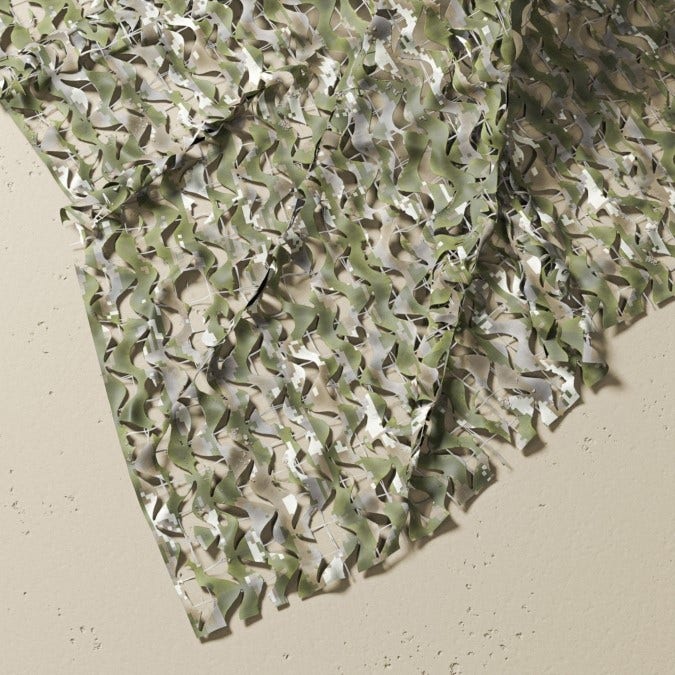
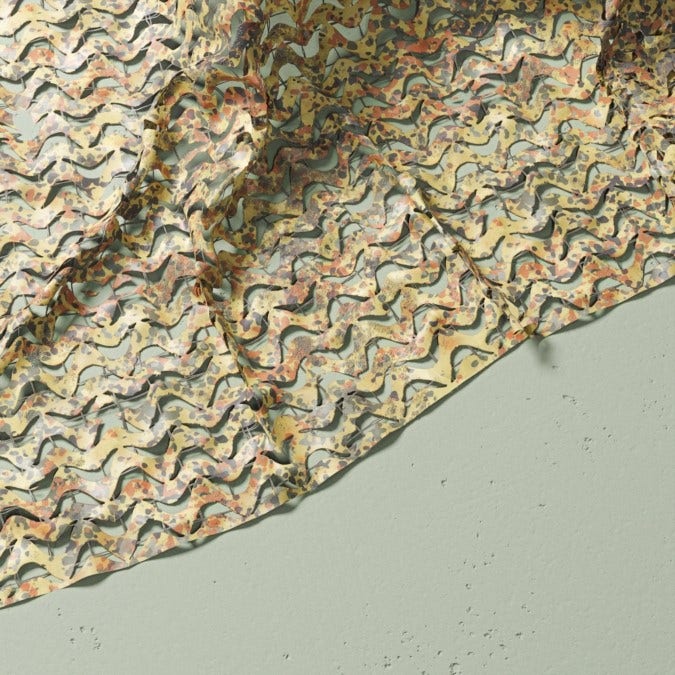

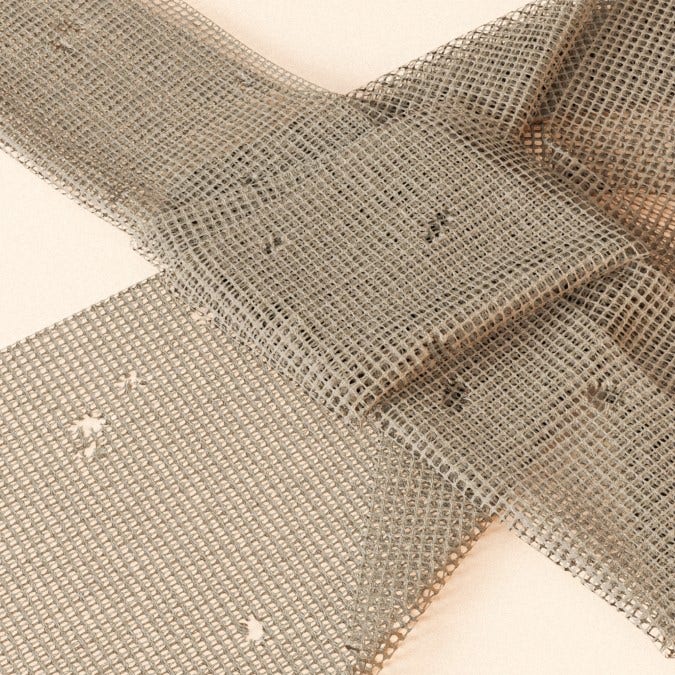
Camo net has a covering power that imitates tree foliage perfectly. Nets replace curtains and veils, limiting the view of observers and offering protection from the sun. They have become very trendy for the decoration of home interiors, as well as for terraces and gardens.
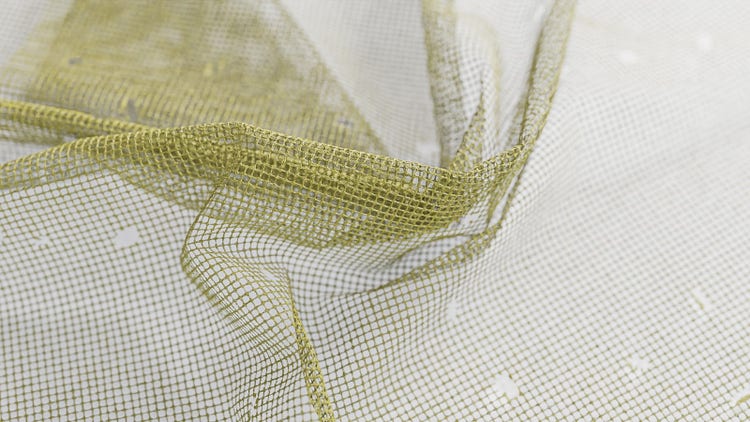
But wait — there’s more! Wear and tear is only a subset of the torture that fabrics can go through in extreme conditions! Crawling through muddy waters and desert storms collects a lot of grime in the fibers. We designed a whole set of parameters dedicated to getting your trousers dirty (so you don’t have to do it yourselves).
We came up with two types of dirtying parameters:
The dirt sliders simulate the type of smear that will accumulate in between the fibers. Tweaking the color of the dirt will define the nature of the soiling like sand, mud, or even greenery, whilst the roughness and the roughness variation will make it dry or moist. These parameters will take care of the stains on the fabric to visually reproduce oil, sweat and even blood.
Animate these parameters and you get materials that dynamically wear and tear according to your needs; this sort of process would be particularly useful for projects such as video games based around war, or combat. Imagine an outfit that gets dirty according to its environment — and, if need be… bloody!
In addition to the fabrics, we’ve created two other types of procedural material: a reinforced grained plastic grip and a painted version of the camouflages. The use of these materials is obvious for applying patterns on rigid objects whether by printing process, by hydro transfer, or simply by painting them on.
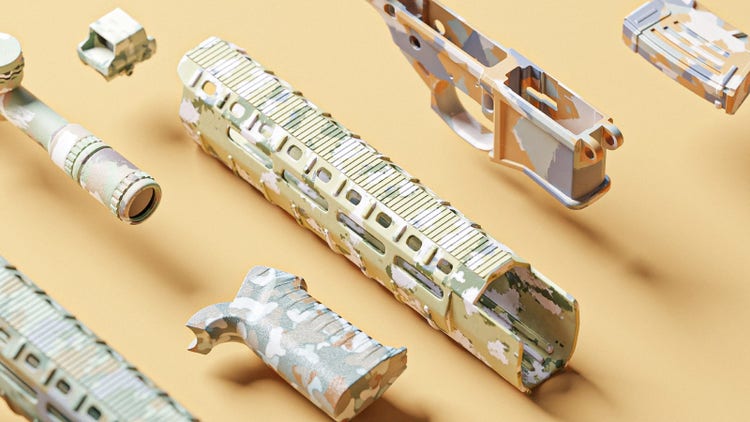
Camouflage can be achieved via different methods. Most allow a person or object to hide against a static background, but there are active methods where protection relies on concealment through the pattern when it moves. Both methods can be applied separately or in combination.
The design has three objectives:

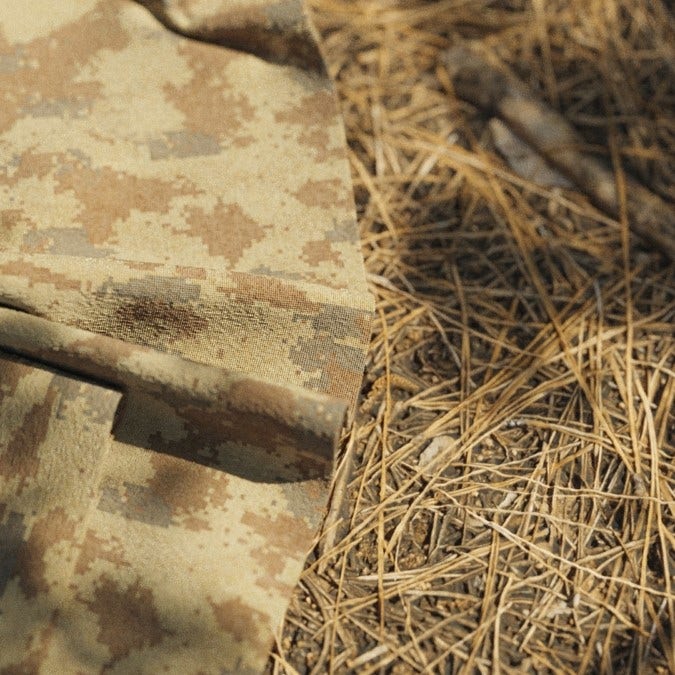
Resemblance to the environment: the colors and patterns resemble a particular natural background. This is an important element of camouflage in all environments.
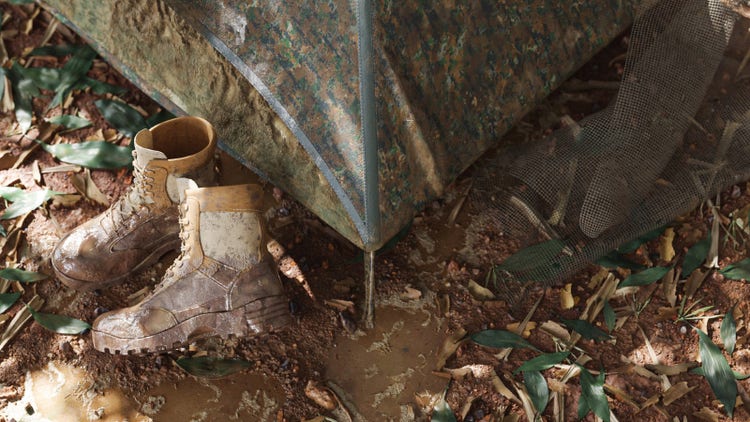
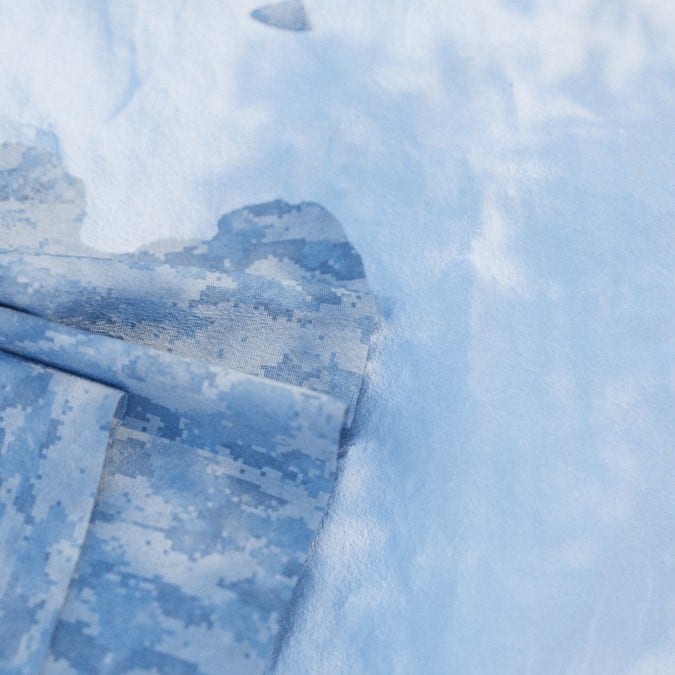
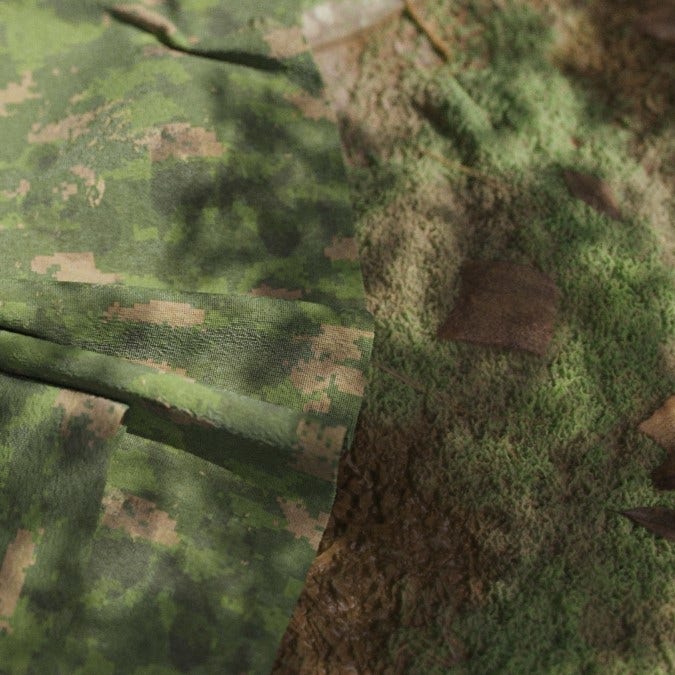
Self-decoration consists of breaking up contours, hiding body features and matching the background.
Mix the fabric with the camouflage patterns in Substance Painter, and add fine details in your texture instead of the model: like this, you can be more efficient but also more flexible by quickly generating several variations of the same artistic concept.
Enhance your digital artistry by making the most of the 2D – 3D workflow to go beyond your custom graphic elements with material effects in 3D . Simulate surface finishes and volume effects in a photorealistic way.
Bring Substance 3D Assets decals into this mix to add localized elements. Add stickers, print executions, or ready-to-use aging elements to damage and wear out certain parts of the object.
Now, to the patterns. Following the principles above and inspired by existing models, the team has generated over 30 genuine and fully procedural camouflage patterns. If you are an expert of the genre, you know that actual camouflage patterns are very technical products engineered to obtain the optimum optical concealment. For this collection, we chose to focus mainly on the graphic appearance to outline 6 distinctive styles.
Each pattern from the collection includes several parameters for customization:
First, and probably the most important: colors! Our goal here was to provide for each motif the freedom to change each color independently. You can thus tweak up to 5 colors in a single pattern to create custom combinations. In addition, you can choose to disable the background color of the pattern in order to reveal the base material color information underneath.
The roughness parameter allows you to change the glossiness level of the pattern from the base color. This lets you simulate selective printing effects, such as for example a PCV printing that would make the printed areas shinier than the rest of the material.
The scale parameter allows you to vary the overall scale of the shapes, from small to large, in order to adapt the proportion of the motif to the base material. It therefore helps vary the density of the pattern on the map.
Finally, the color fading option helps you create a subtler blending of the printed pattern with the substrate by creating a soft fading effect to the shapes.
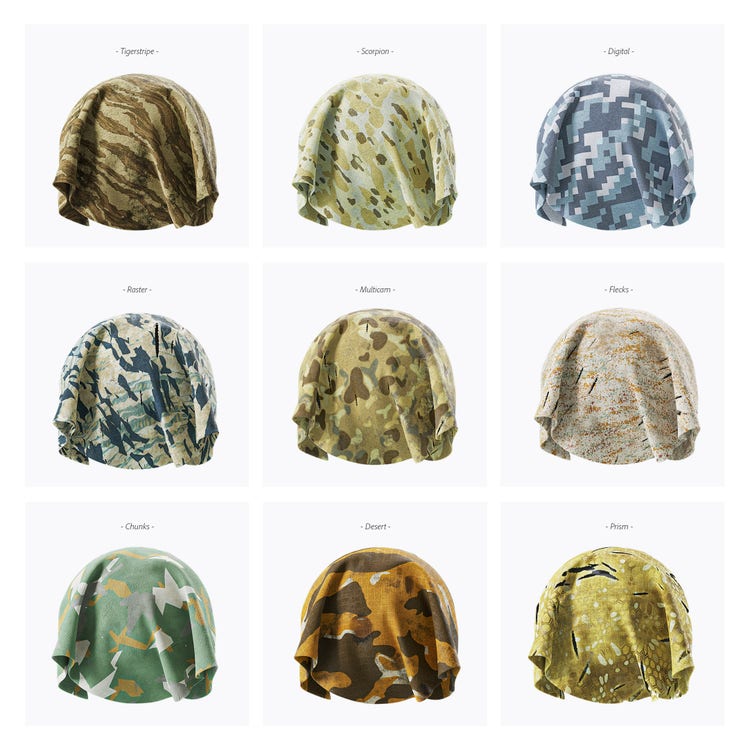
Brushstrokes are directly extracted from paintbrushes, in the manner of first artists and theater decorators who hand-painted on canvas in the early 20th century. This style refers to the painted strokes of the large brushes, which create wide swathes of color, usually with thinner trails leading off where the strokes began.
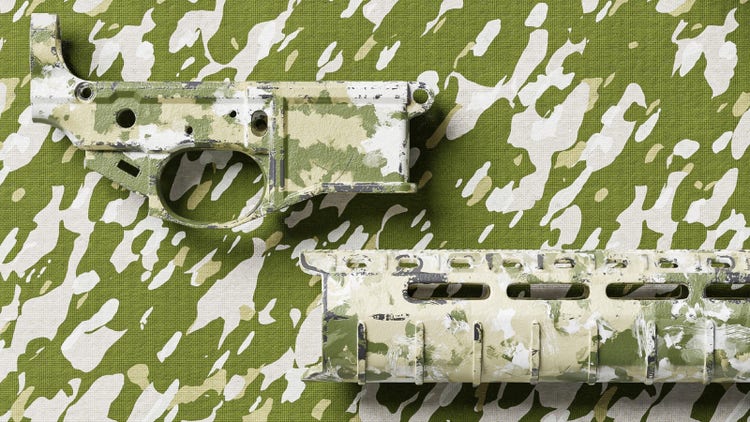
The models of flecks follow the principles of perceptual psychology. It is a speckle pattern in which up to six colors interact to provide sufficient visual disturbance through dithering. More precisely, it causes the wearer’s contours to be broken and integrated into his environment . The pattern uses spots to eliminate the hard boundaries between different colors of varying sizes scattered in a seemingly random arrangement.
The chunks or splinter pattern consists of a disruptive pattern of hard-edged polygons with sharp angles between the colored patches to create an effective camouflage pattern in temperate forests and plains.
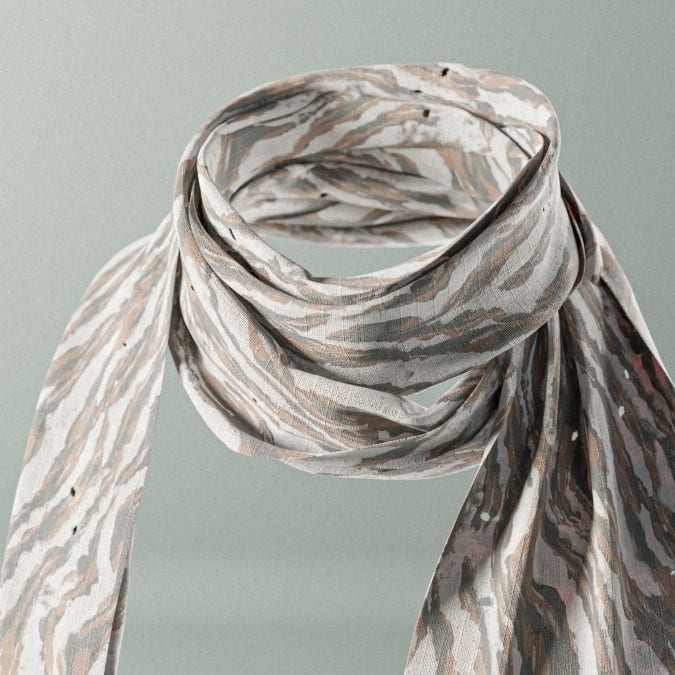
The tigerstripe or lizard is a group of camouflage patterns designed to blend into jungle-like environments. It takes its name from its resemblance to the stripes of a tiger: narrow stripes that resemble brushstrokes, and wider black brushstrokes printed on a lighter shade. The brushstrokes interlock rather than overlap.
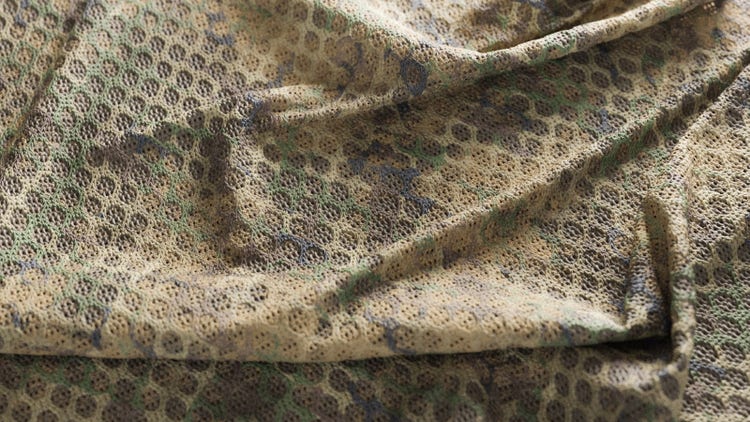
The multicam design takes advantage of the way the eye and the brain work. Only a very small part of the eye perceives color, shape and volume. It relies heavily on the brain to complement what is left out to blend everything into the environment. The variety of shapes and sizes work hand in hand with a unique color profile to disrupt the wearer’s visual trace.
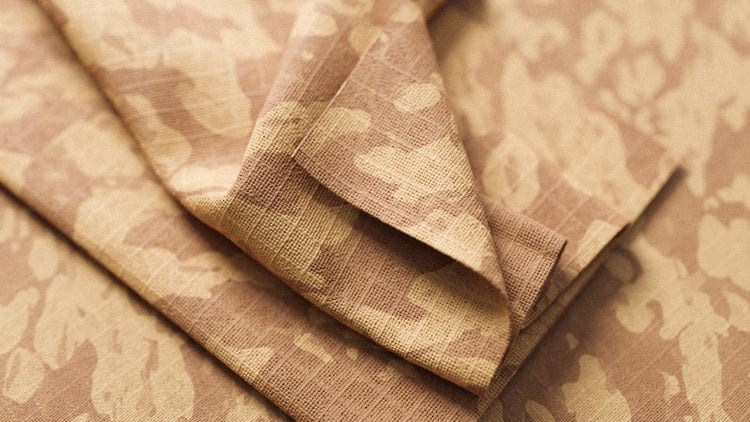
The confusion pattern produces several layers of perceptible depth from a limited quantity of colors arranged in a set of specifically configured shapes and shades.
Digital camouflage allows natural-looking patterns to be obtained at more varied distances, such as pointillism; they use computers and algorithms to achieve this ‘scale variance’ advantage. The theory behind micro-patterns is that large color patches with sharp contours are easier to see, while ‘blurring’ or ‘dithering’ the edges of colored patches makes the contours harder to discern.
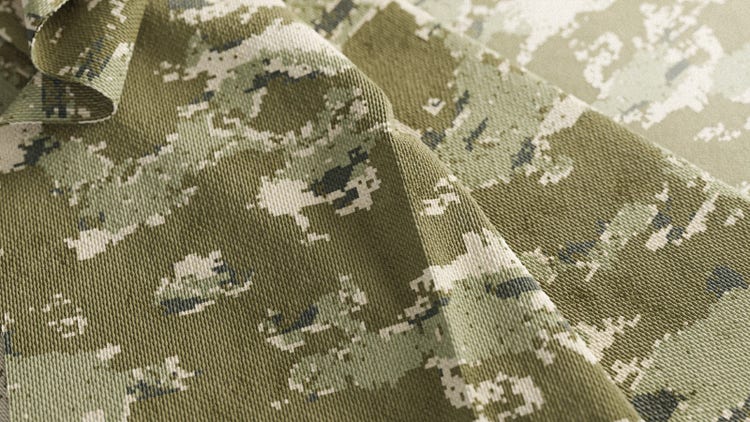
In common usage, however, the term digital has come to refer to any camouflage design that incorporates pixels rather than organic shapes to create the design. It may seem counter-intuitive, but the ‘Minecraft’ aspect of pixelated camos is actually more effective than previous designs that sought to imitate nature.
The actual pixelated military patterns were introduced in early 2000s and were fully computer generated. Similarly, we fully relied on Substance Designer’s procedural approach to design our generic digital patterns.
Stay safe, stay healthy and if we can’t see you it means we’ve done our job well!
3D models designed with Marvelous Designer.