How to use the STAR method for interviews
Job interviews are often the deciding factor between progressing your career and missing out on an opportunity. So how can you prepare for questions and make a good impression?

JUMP TO SECTION
- What is the STAR method?
- Why use the STAR method in interviews?
- How to practice STAR interview questions and answers with AI.
- Common STAR interview questions and answers.
- Tips for using AI to prepare for STAR method interview questions.
- Best practices and benefits of using AI for your STAR interview prep.
- Frequently asked questions.
The STAR method is just one interview technique that can help. When you’re asked a question, you can use the STAR framework to split each answer into a Situation, Task, Action and Result. This makes it easier to structure your responses during the interview.
Learn more about how this technique works and discover tips to help you prepare for your own interviews. You can even make the most of Adobe’s AI-powered tools to practise, refine and improve your responses before the real thing.
What is the STAR method?
The STAR method is a structured approach to answering questions as part of an interview or job application. Instead of vague or unfocused responses, the STAR interview technique helps candidates deliver clear, relevant answers that highlight their skills and experience.
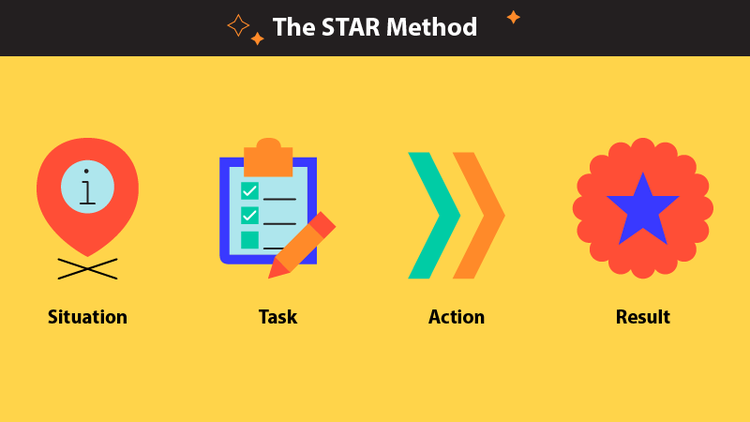
The acronym “STAR” stands for:
- Situation – Set the context.
- Task – Explain your responsibility.
- Action – Describe the steps you took.
- Result – Share the outcome and impact.
Some UK organisations, like the Civil Service, specifically request that you use the STAR format to demonstrate your skills and experience against their set behaviours. But it can also be a useful framework for other industries and roles.
In an interview setting, the STAR method is best used for answering behavioural interview questions. These questions typically begin with phrases such as “Tell me about a time when…” or “Describe a situation where…”
You can then respond using the STAR structure to make sure your answers are logical, concise and easy for interviewers to assess.
Why use the STAR method in interviews?
Employers rely on the STAR method for interviews because past behaviour is one of the most reliable indicators of future performance. It helps interviewers understand how candidates handle real workplace situations rather than hypothetical scenarios.
For candidates, the STAR approach to interviews also offers clear benefits as it:
- Keeps answers focused and well‑structured
- Prevents rambling
- Makes it easier to demonstrate soft skills
- Ensures interviewers get the full picture.
The STAR interview format is also particularly effective for demonstrating leadership, communication, problem‑solving, and adaptability.
How to practice STAR interview questions and answers with AI.
Preparing for STAR method interview questions used to involve guesswork, but AI can now remove that uncertainty. You can now use artificial intelligence tools to chat with your documents and practice for certain interview scenarios.
For example, with Adobe Acrobat AI tools, you can:
- Analyse job descriptions
- Generate STAR-based interview questions
- Practise STAR interview answers
- Convert job experiences from your CV into STAR examples
- Get feedback on structure, clarity and results.
Below are some common STAR interview question and answer examples to help you practise.
Question 1: Can you tell me about a time you led a team through a difficult project?
Sample answer:
During a system rollout with a tight deadline, I was asked to lead a cross‑functional team of six. My task was to ensure delivery without sacrificing quality.
I introduced daily check‑ins, created a shared progress tracker, and reallocated resources where needed. As a result, the project launched on time and achieved a 92% satisfaction score.
Question 2: Can you describe a situation where you solved a complex problem?
Sample answer:
Just days before launch, we discovered a critical payment issue. I led the investigation, identified a third‑party integration failure, and developed a secure workaround.
We launched on schedule and processed over £1.5 million in transactions in the first week without incident.
Question 3: Do you have an example of how you handled conflict at work?
Sample answer:
A colleague and I disagreed on campaign direction. I arranged a meeting to review performance data together and proposed a compromise.
The final campaign exceeded lead targets by 23%, demonstrating the effectiveness of a balanced approach.
Tips for using AI to prep for STAR method interview questions.
AI works best as a practice partner, not a shortcut. Used well, it can simulate interviews, refine STAR answers, and highlight gaps. This could help you prepare more confidently and communicate your experience clearly.
To get the most from AI when preparing for STAR interview questions, try:
- Sharing the job description and role requirements
- Asking the AI to act as a hiring manager
- Requesting follow‑up STAR questions for interviews
- Ask for feedback on each part of the STAR format interview.
Example prompt:
I’m interviewing for a marketing role. Please ask me a STAR interview question focused on collaboration, and then review my response using the STAR framework interview structure.
Best practices and benefits of using AI for your STAR interview prep.

Best practices for the STAR technique for interviews.
- Aim for one to two-minute answers
- Use “I” instead of “we”
- Quantify results
- Match examples to the competency being tested.
Benefits of AI‑powered STAR interview preparation.
- Unlimited practice sessions
- Immediate feedback on your STAR interview technique
- Role‑specific STAR job interview questions
- Increased confidence across phone, video and in‑person interviews.
Frequently asked questions
What are the 5 STAR questions in an interview?
Most STAR interview questions fall into five broad categories:
- leadership and teamwork
- problem solving
- conflict resolution
- time management
- learning from failure.
UK interviewers use these categories to assess your behaviour in real situations. Preparing one adaptable STAR example for each category helps you respond confidently without memorising answers or sounding overly rehearsed.
How do you pass the STAR method interview?
Success in a STAR method interview comes from preparation and clarity rather than memorisation. Build five to seven flexible examples from your experience and practise structuring them clearly.
During the interview, choose the most relevant example, focus on your individual actions, quantify results where possible, and keep answers concise.
What are common STAR mistakes?
Common STAR interview mistakes include spending too long describing the situation, using “we” instead of “I”, and failing to quantify results. Some candidates also choose examples that do not match the competency being tested.
In UK interviews, concise, relevant answers with clear outcomes are valued far more than background explanations.
Can I use the STAR method for phone or video interviews?
You may also like
What is a Cover Letter
Find out how to write a successful cover letter and learn from top cover letter examples with our guide. Learn more professional skills with Adobe Acrobat.

How to Format a Cover Letter
Learn how to format a cover letter the right way with Adobe. Get the full lowdown on formatting your cover lever and impress a hiring manager today.
Internship Cover Letter
Craft an internship cover letter to land your new role. This Adobe guide will help you craft the perfect cover letter.
Useful PDF tools.