|
Show me:
|
|
Work smoothly with the enhanced 64-bit Adobe® Mercury Playback Engine, now on workstations and laptops; GPU acceleration; and the ability to adjust playback resolution in the Source or Program Monitor in Adobe Premiere® Pro CS5.5 software.

Get amazing performance from the Mercury Playback Engine on both desktops and laptops (Windows® and Mac OS). Natively 64-bit and optimized for modern CPUs, Mercury delivers astounding performance with or without GPU acceleration.

Edit high-resolution projects on lower spec computers with the ability to adjust the playback resolution in the Source or Program Monitor. Separate Playback and Pause resolutions give you more control over monitoring.

Speed up your creative workflow by seeing the results of even more effects without having to render them first, thanks to GPU acceleration and the enhanced 64-bit Adobe Mercury Playback Engine, now on workstations and laptops.

Adjust the video preview format and resolution to promote smooth playback when your computer's hardware is unable to play back the full sequence frame size in real time.
Take advantage of GPU-accelerated effects to control frame rate, aspect ratio, field order, alpha channels, pull-down removal, real-time keying, time remapping, transitions, and more.
Easily achieve complex keys on challenging footage with GPU-accelerated Ultra®, which typically keys in real time (using NVIDIA® graphics cards, depending on system configuration and file types).
Use the Interpret Footage command before encoding to override automatic interpretation of the frame rate, pixel aspect ratio, field order, or alpha channel settings of items you import into Adobe Media Encoder.
Quickly add blur to large areas of your clips using GPU-accelerated Fast Blur, create the illusion of motion using Directional Blur, and see the results in real time thanks to GPU acceleration.
Maximize quality and eliminate time-consuming transcoding and rewrapping. Adobe Premiere Pro provides native support for P2; XDCAM EX, HD, and HD50; JVC ProHD, AVCHD, and AVCCAM; DPX; and Canon and Nikon DSLR cameras as well as enhanced RED R3D and Canon XF support.

Edit up to 5K footage shot from RED EPIC™ cameras without transcoding or rewrapping, and access RED parameters directly from the enhanced Source Settings dialog box. Download the RED EPIC camera importer for native support in CS5.5.

Work natively with RED footage, with support for RED Rocket, Mysterium X™, and the latest Color Science and Firmware for RED ONE™ cameras. The Source Settings dialog box gives you full control over RED parameters and allows RMD files to be imported and exported.

Eliminate time-consuming transcoding and rewrapping and maximize quality thanks to native support for P2; XDCAM EX, HD, and HD50; JVC ProHD, AVCHD, and AVCCAM; DPX; and Canon and Nikon DSLR cameras as well as enhanced support for RED R3D, Canon XF, and more.

Easily import and edit video shot with Nikon D90, D300s, and D3000 DSLR cameras. Native format support preserves the original file's pristine quality by eliminating transcoding and rewrapping, allowing you to start working immediately.

Preview Canon XF footage in the Media Browser panel and utilize camera metadata throughout your preproduction and post-production workflows. Spanned clips are displayed as a single asset in the Media Browser, reducing clutter.
Export content in Panasonic P2 format, either to P2 media for use in a P2 workflow or to hard disk for archiving. Choose from DVCPRO HD and AVC-Intra codecs.
Edit content natively from Sony HDV cameras that record directly to removable media. Use the Media Browser to find clips and organize them using metadata, and then import content directly without transcoding or rewrapping.
Import and natively edit AVCHD content from Sony, Panasonic, and Canon cameras without transcoding or rewrapping the content. Use the Media Browser to browse clips and view metadata — including metadata from Panasonic AVCCAM cameras.
Edit all types of Sony XDCAM content natively, without rewrapping or transcoding. Browse and organize clips using the Media Browser. Edit from the SxS card via the camera or card reader (XDCAM EX only), or transfer to hard disk for best performance.
Work with DPX frame sequences that include embedded timecode as footage in Adobe Premiere Pro CS5.5. Full control over parameters like black point, bit depth, and log/linear space allows nondestructive changes to be made at any time.
Import, play back, and edit AVC-Intra clips natively with no transcoding or rewrapping. A true file-based workflow supports both 50Mbps and 100Mbps bitrates at all common frame rates. The Media Browser lets you view clips directly.
Edit footage shot on JVC ProHD video cameras and stored as either MOV or MP4 files. Native support eliminates time-consuming transcoding or rewrapping and preserves the original pristine quality of the source footage.
Import and export major video, audio, and graphic file formats, and combine them all in the Adobe Premiere Pro timeline. Adobe Premiere Pro also supports a wide range of hardware, so you can build the editing system that meets your needs and budget.

Work natively with RED footage, with support for RED Rocket, Mysterium X™, and the latest Color Science and Firmware for RED ONE™ cameras. The Source Settings dialog box gives you full control over RED parameters and allows RMD files to be imported and exported.
Use native DPX file import and export to create a 10-bit uncompressed DI workflow. Timecode is preserved throughout import, editing, and export.
Effortlessly move assets between Adobe Premiere Pro and other Adobe applications, including Adobe After Effects®, Photoshop® Extended, Illustrator®, Flash® Catalyst®, Adobe Audition®, and Adobe OnLocation™.

Effortlessly move assets between Adobe Premiere Pro and other Adobe Creative Suite® Production Premium components — Adobe After Effects, Photoshop Extended, Illustrator, Flash Catalyst, and, new in CS5.5, Adobe Audition.

Get a fast, flexible roundtrip audio workflow with Adobe Audition® CS5.5 software. Pass individual audio clips and multitrack mixes or complete video sequences between Adobe Premiere Pro CS5.5 and Adobe Audition for editing and sweetening.
Speed up your editing workflow by importing scripts with metadata from Adobe Story, an Adobe CS Live online service,1,2 into Adobe Premiere Pro CS5.5. Eliminate hours of routine work using Speech Search and other metadata to quickly find footage.

Record SD and HD video to hard disk and log metadata while shooting using Adobe OnLocation™. Transfer content directly to Adobe Premiere Pro, maintaining all metadata and clip information, including in and out points set in Adobe OnLocation.

Get ongoing access to Adobe Premiere Pro CS5.5 software for an affordable monthly fee. Choose a one-year plan for lower payments or a flexible month-to-month plan you can stop and restart as needed. See how subscriptions work ›
Use Adobe Dynamic Link to open sequences "live" in Adobe Encore® software without rendering first. Any changes made in Adobe Premiere Pro are automatically reflected in Encore. Native 64-bit support improves Dynamic Link performance.
Drag and drop or copy and paste clips and timelines between Adobe Premiere Pro and After Effects. Open complete Adobe Premiere Pro projects, including nested sequences, in After Effects.
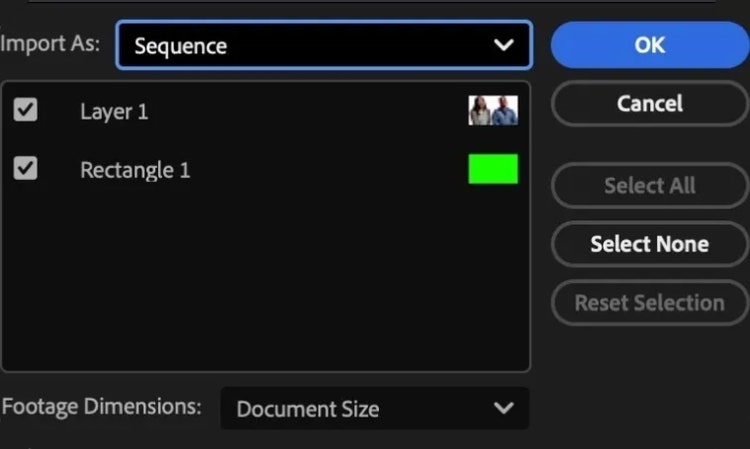
Import Photoshop files that contain video without rendering them first. Control how they look by choosing which layers to import and how to import them. Apply keyframeable Photoshop blend modes to clips on the timeline.
Realize your creative vision with Adobe Premiere Pro CS 5.5, taking advantage of real-time stereoscopic 3D editing, support for closed captioning, time remapping, precise keyframe controls, and more.

Play back and display 608 and 708 closed captions, synced to your video sequence and viewable in the Program Monitor.
Edit 3D content in real time thanks to 64-bit performance and world-class integration with CineForm Neo 3D, which provides a smoother workflow than Final Cut Pro.
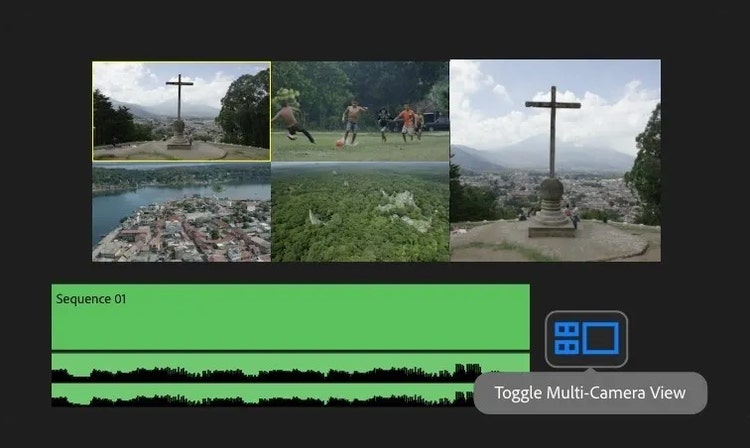
View multiple-camera shoot tracks, easily sync via timecode, and edit by switching between tracks in real time. Rerecord sections of your edit, make fine editing adjustments, and adjust color across multiple shots, even after editing.
Use high-quality slow motion to create dramatic effects that focus on the action. With a streamlined, on-clip interface, the time remapping feature makes it easy to speed up, slow down, reverse, and hold frames with precision.
Instantly improve your video image quality with effects like those in Adobe Photoshop, including Auto Color, Auto Contrast, and Shadows/Highlights.
Add a spot, directional, or omni light to your video footage. Create multiple lights to see different looks on different parts of a scene.
Easily create traveling mattes by applying effects and animation to individual track-matte clips.
Apply powerful, built-in visual and motion effects to clips. Create custom effects presets. Increase your options with an extensive range of After Effects compatible plug-ins. Get GPU-accelerated real-time feedback for many effects.
Create smooth audio crossfades and other audio changes with a minimal number of keyframes. By creating fewer audio keyframes over a given time interval, Adobe Premiere Pro simplifies the editing process.
Work in an open, extensible production environment. Write scripts collaboratively. Efficiently gather feedback from clients and teammates. Easily exchange projects with Final Cut Pro and Avid software, as well as other Adobe software.

Collaborate more easily thanks to enhanced integration with Final Cut Pro and Avid Media Composer, and with Adobe CS Review, a separate CS Live online service1,2. Save time by background encoding files for CS Review using new presets in Adobe Media Encoder.
Import and edit all the popular QuickTime formats natively (including Apple ProRes and MOV files captured by Canon 5D and 7D cameras), with full access to clip metadata — no transcoding, rewrapping, logging, or transferring required.
Roundtrip projects between Adobe Premiere Pro and Final Cut Pro without conversion or re-rendering, preserving commonly used effects and transitions. Bring the creative benefits of Adobe tools to any post-production workflow.
Use AAF import and export to share projects with Avid NLEs without conversion or re-rendering, preserving commonly used effects and transitions. You can also import and export CMX3600 format Edit Decision Lists (EDLs).
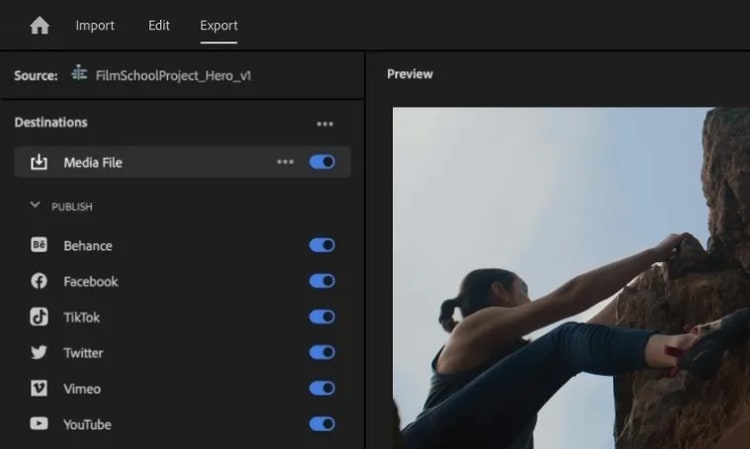
Create output more quickly for any video format or device, including web, phone, and tablet, with 64-bit Adobe Media Encoder. Use intuitive presets and context menus to configure multiple outputs from Adobe Premiere Pro and batch encode.
Output your work for computers, smartphones, tablets, and television with Adobe Media Encoder CS5.5. Use intuitive presets and contextual menus to set up sequences once for multiple formats, and batch encode while you keep editing.
Save time and encode content more easily by using Adobe Media Encoder CS5.5 presets that help ensure your video looks great on widely used output formats and devices, including mobile devices and HDTV.
Make encoding settings match the original Adobe Premiere Pro source sequence or After Effects composition. With Match Sequence Settings, you save time by not having to recheck all encoding options even when you aren't changing them.
Drag and drop sequences from Adobe Premiere Pro and compositions from After Effects® directly into Adobe Media Encoder CS5.5, which can then encode them immediately. This saves many steps compared with Adobe Media Encoder CS5.
Help ensure video looks great on screens of all sizes by automatically setting the encoding bitrate level based on source (instead of destination) frame dimensions in Adobe Media Encoder for selected Adobe Flash and Blu-ray Disc output formats.
Use the Interpret Footage command before encoding to override automatic interpretation of the frame rate, pixel aspect ratio, field order, or alpha channel settings of items you import into Adobe Media Encoder.
Easily crop the frame size and trim the in and out points of a clip or sequence in Adobe Media Encoder.
Automatically encode still images as a video sequence. When you import a numbered series of still images into Adobe Media Encoder CS5.5, it intelligently recognizes them as stills and offers to encode them as one video sequence.
Add XMP cue points in Adobe Media Encoder read from metadata in FLV or F4V source files, as well as manually prior to encoding.
Hear alerts when Adobe Media Encoder finishes jobs in the background, so you can keep working without having to watch the queue. Different sounds indicate whether jobs have been completed successfully or with errors.
Get more visual feedback using the Settings Summary dialog box in Adobe Media Encoder. Show information for output and source content, and use tool tips to see the output settings for items being encoded.
Save time with new Adobe Media Encoder presets that are optimized for output to Adobe CS Review, a CS Live online service1,2.
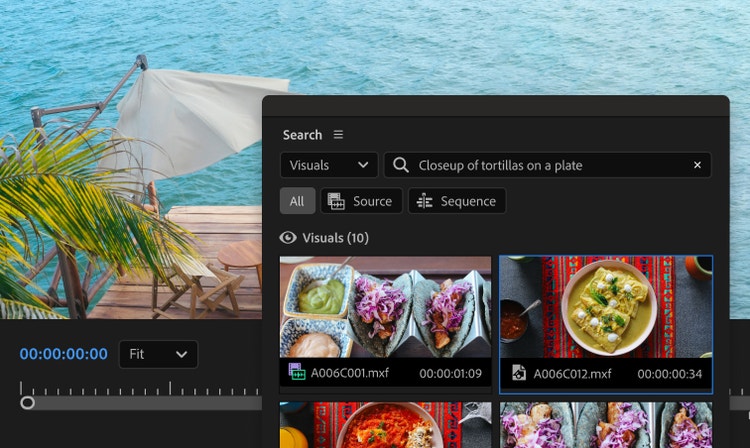
Make the most of your metadata, whether you’re turning spoken dialogue into written transcripts with RapidFind, synchronizing scripts to footage, or finding clips with human faces. Customize the way metadata is displayed to match your workflow.
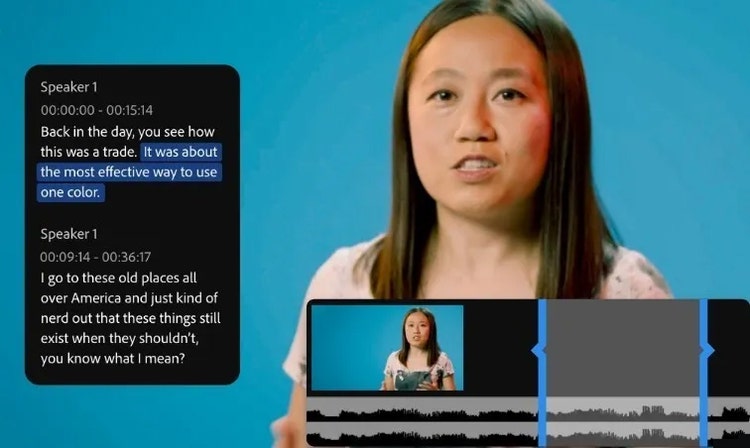
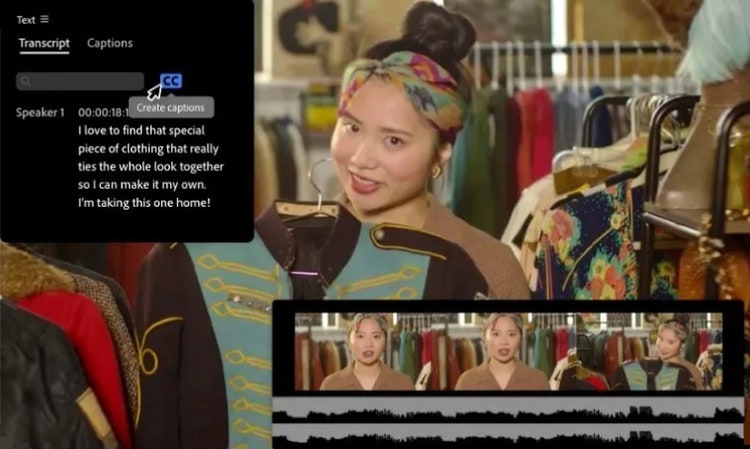
Turn spoken dialogue into timecode-accurate transcripts. Use RapidFind to jump to a specific area by searching for keywords within the dialogue, or even cut video based on the transcript. Reference scripts, such as an Adobe Story script, increase accuracy.
Take control of your footage with powerful shot logging and management features and the fast, intuitive Adobe OnLocation interface. Easily place comment markers during recording, and manage metadata across assets.
Find the files you need quickly by opening any supported media files directly in the Adobe OnLocation monitor window. Play and scrub files, and add in and out points using the fast, intuitive Adobe OnLocation interface.
Save time using powerful options to break out scenes into multiple clips and camera angles. Import Adobe Story scripts to create complete shot lists in Adobe OnLocation that retain metadata, including dialogue, characters, and more.
Accomplish more while you’re recording or importing footage. Log live action accurately while recording, and analyze imported files quickly. Check the contents of tapeless camera media without importing it, and browse project contents in the Media Browser.

Maximize camera image quality during shoots by using Adobe OnLocation to quickly calibrate your camera, check levels, and monitor signals. The virtual waveform monitor and vectorscope help you avoid problems and improve quality.
Analyze imported files with the same alert system used during live disk recording. Adobe OnLocation quickly scans imported media for problems with audio pops and clipping and video overbrights.
While recording, add frequently used words — cast names and so on — with a single key press to log live action accurately and efficiently. Adobe OnLocation lets you store up to nine comments with shortcuts for timecode-accurate recall.
View and edit the comment markers for each clip in your project using a sortable list view that makes it easy to find specific logged issues and view them in the Adobe OnLocation monitor window.
Work with tapeless cameras using all the Adobe OnLocation™ capabilities for on-set logging and clip analysis. Import Sony XDCAM, XDCAM HD, XDCAM EX, Panasonic P2, AVCHD, AVC-Intra, and HDV media without transcoding or rewrapping.
Position the playhead exactly where you need it using timecode controls that allow scrubbing of timecode or direct entry of specific values.
Find the section you need more quickly by listening to audio during scrubbing and frame advance.
Add comments and metadata to clips being recorded on a tapeless camera that’s not connected to Adobe OnLocation. Specify which shot is recording and log comments. Data is automatically merged with the corresponding clips on import.
Export the takes that are tagged "wanted" in the Adobe OnLocation Shot List. Access the sub-project's folder from the Media Browser panel in Adobe Premiere Pro. Clips with in and out points form a rough cut when added to a sequence.
Reconnect broken file references in your Adobe OnLocation project quickly and easily.
Keep everyone up to date during production by publishing your Adobe OnLocation Shot List as a CSV file that can be viewed on a variety of software and devices, including iPod touch and iPhone.
Bypass tape completely during shooting with Adobe OnLocation. Connect your camera to your laptop and start recording directly to hard disk. Review footage immediately, and then quickly bring it into Adobe Premiere Pro for editing.
Send Adobe Premiere Pro projects directly to Adobe Encore without rendering. In Encore, efficiently create DVDs, Blu-ray discs, and web DVDs, all from a single project. Use flowcharts to define and view the navigation of your project.
Offer viewers a more engaging experience with the ability to search by keyword within a web DVD. Encore uses metadata from speech analysis, subtitles, and menu and button names to make web DVD titles automatically searchable.
Efficiently create DVDs, Blu-ray discs, and web DVDs, all from a single Encore project file. With support for pop-up menus and subtitles, viewers of web DVD titles enjoy all the benefits of the Blu-ray experience delivered online.
Create video optimized for smartphone, tablet, and PC screens. From capture to delivery, use metadata to make assets easier to find in production, create engaging experiences, and make online content easier for audiences to discover through search engines.

Automate the process of creating multiple encoded versions of your content using the batch features in Adobe Media Encoder. Maximize your productivity by continuing to work while files encode in the background.
Incorporate metadata that makes your content more discoverable online and the viewing experience more engaging. Metadata stays with the assets you create in Creative Suite Production Premium components.
Create FLV/F4V cue points with name/value pairs using markers directly in the timeline. With Adobe Media Encoder, create, check, and adjust cue point information and then use it for further interactive design in Adobe Flash Professional.
Optimize video for viewing on the latest delivery platforms with Adobe Device Central CS5.5. Find the best settings for encoding as well as information about device capabilities, and then simulate playback on those devices to check quality.
Boost your productivity with the industry's best cross-platform, native file–based workflows. With the 64-bit, GPU-accelerated Adobe Mercury Playback Engine and an unparalleled toolset, Adobe Premiere Pro CS5.5 sets a new standard in editing efficiency.
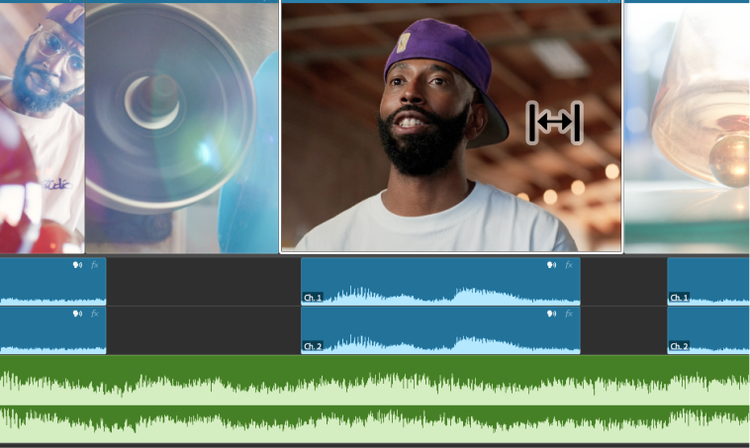
Get more done in less time with features that make your work more efficient, whether you’re removing gaps between clips, placing effects keyframes, applying a transition to multiple clips, or extending the duration of a clip.
Set the Source and Program Monitors to display the first field, second field, or both fields for interlaced footage.
Keep your projects running smoothly with fast RapidFind search results, clip instances that are updated automatically when you update the asset they reference, nested sequence, immediate playback, and more.
Take control of your audio with sample-level audio editing, direct waveform scrubbing, and flexible audio channel mapping for offline clips. View audio waveforms in greater detail.
Speed up editing and collaboration thanks to Adobe Premiere Pro integration with Adobe Story, Acrobat.com, Adobe CS Review, and other CS Live online services.1, 2
Speed up your editing workflow by importing scripts with metadata from Adobe Story, an Adobe CS Live online service,1,2 into Adobe Premiere Pro CS5.5. Eliminate hours of routine work using Speech Search and other metadata to quickly find footage.
Save time using powerful options to break out scenes into multiple clips and camera angles. Import Adobe Story scripts to create complete shot lists in Adobe OnLocation that retain metadata, including dialogue, characters, and more.
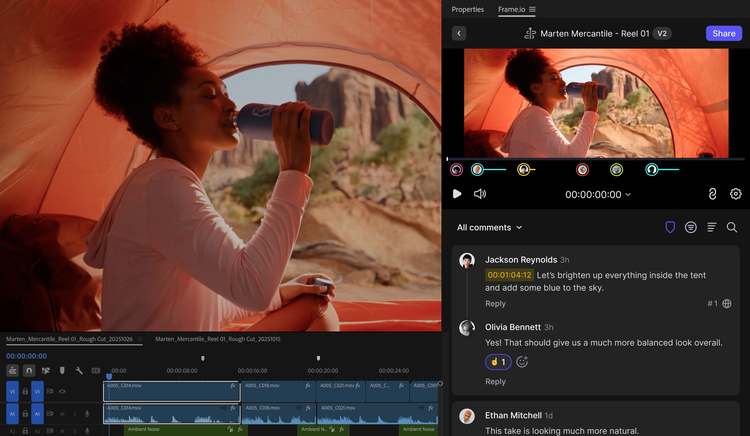
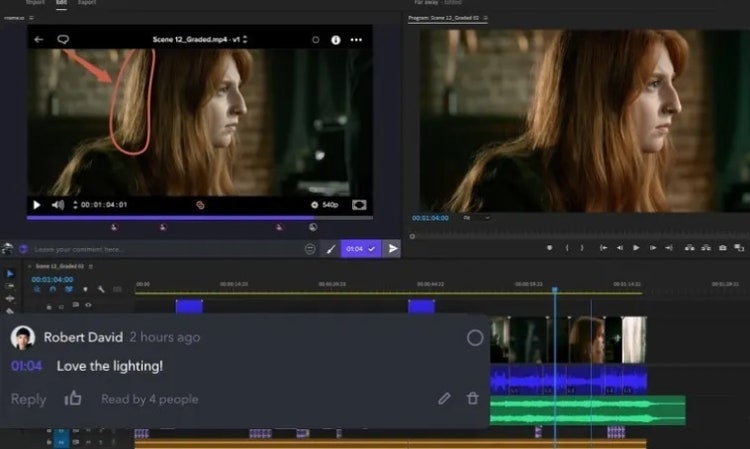
Collaborate more efficiently on works in progress using Adobe CS Review, a CS Live online service1,2 that allows you to share video sequences for review without burning discs or sending large files back and forth.
Resources |
1CS Live online services are complimentary until April 12, 2012. Learn more.
2Adobe online services, including Adobe CS Live Services, are available only to users 13 and older and require agreement to additional terms and Adobe’s online privacy policy. Online services are not available in all countries or languages, may require user registration and may be subject to change or discontinuation without notice. Additional fees or subscription charges may apply.