
Facebook timing study reveals the hours that drive the most engagement
Discover the best days and times to post on Facebook for more likes, views, and shares from your audience
The timing of your Facebook post can make or break its performance. To help creators, marketers, and brands boost their reach and results, we analyzed over 40,000 Facebook posts from the top 100 creators ranked on Social Blade. By studying when posts were published — and how many views, likes, shares, and comments they earned — we uncovered the best windows to post for maximum impact. Whether you're growing a brand or trying to go viral, these findings can guide your content calendar.
Key takeaways
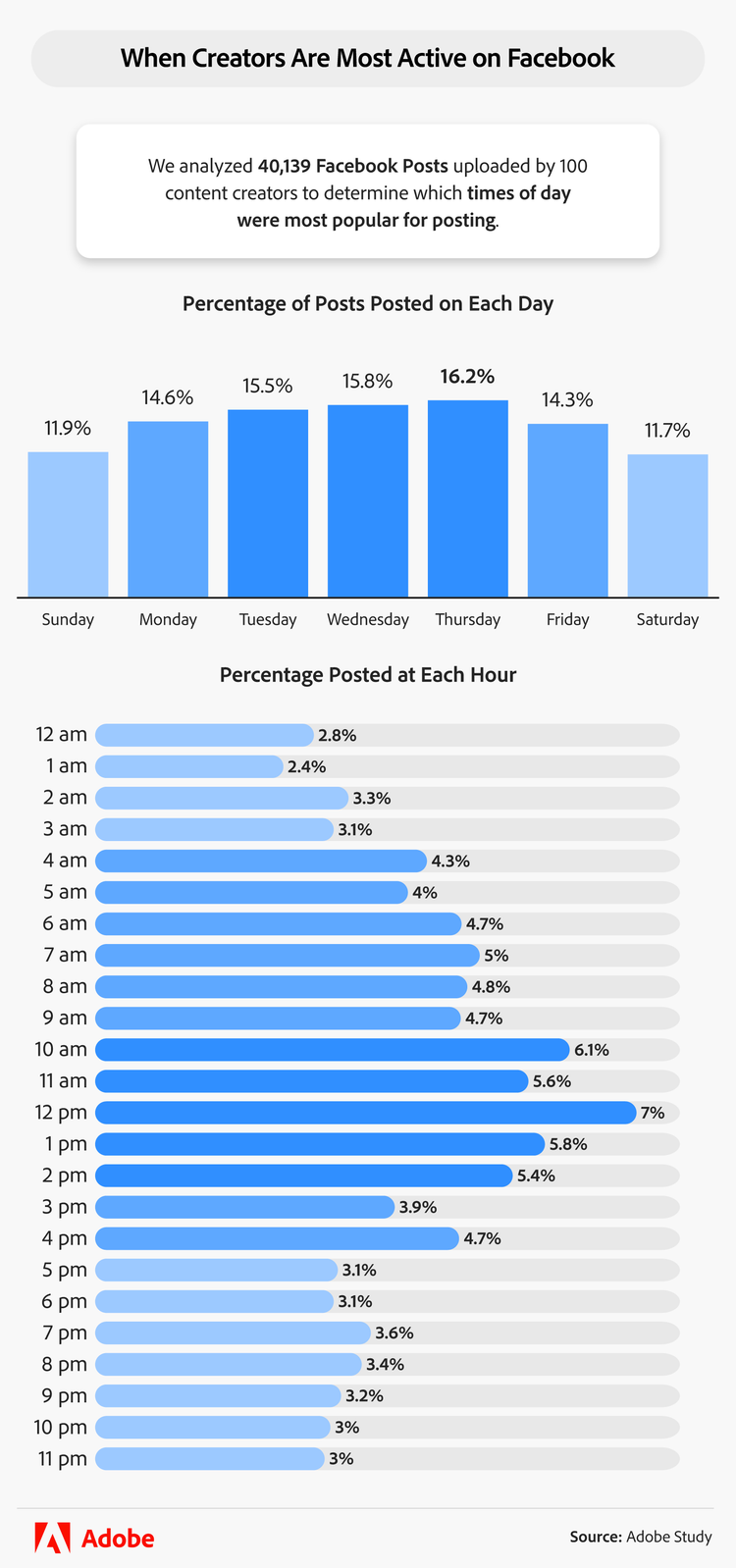
- 12 p.m. is the most popular hour to post on Facebook, with about one in 14 posts (7%) uploaded at that time.
- Nearly one in six Facebook posts are published on Thursdays — making it the most popular day for content uploads.
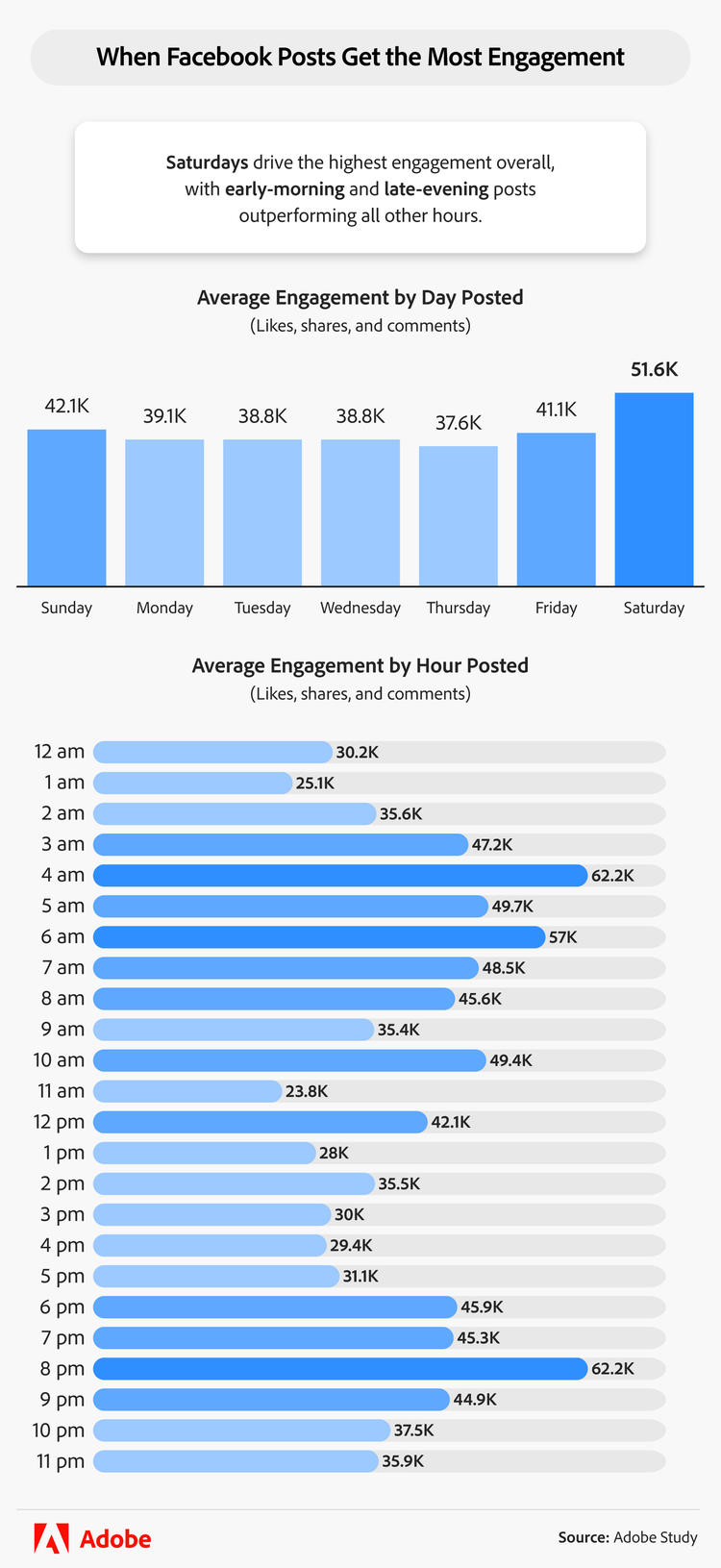
- Facebook posts published on Saturdays earn the highest average engagement, with early-morning uploads around 4 a.m. and evening posts around 8 p.m. performing best overall.
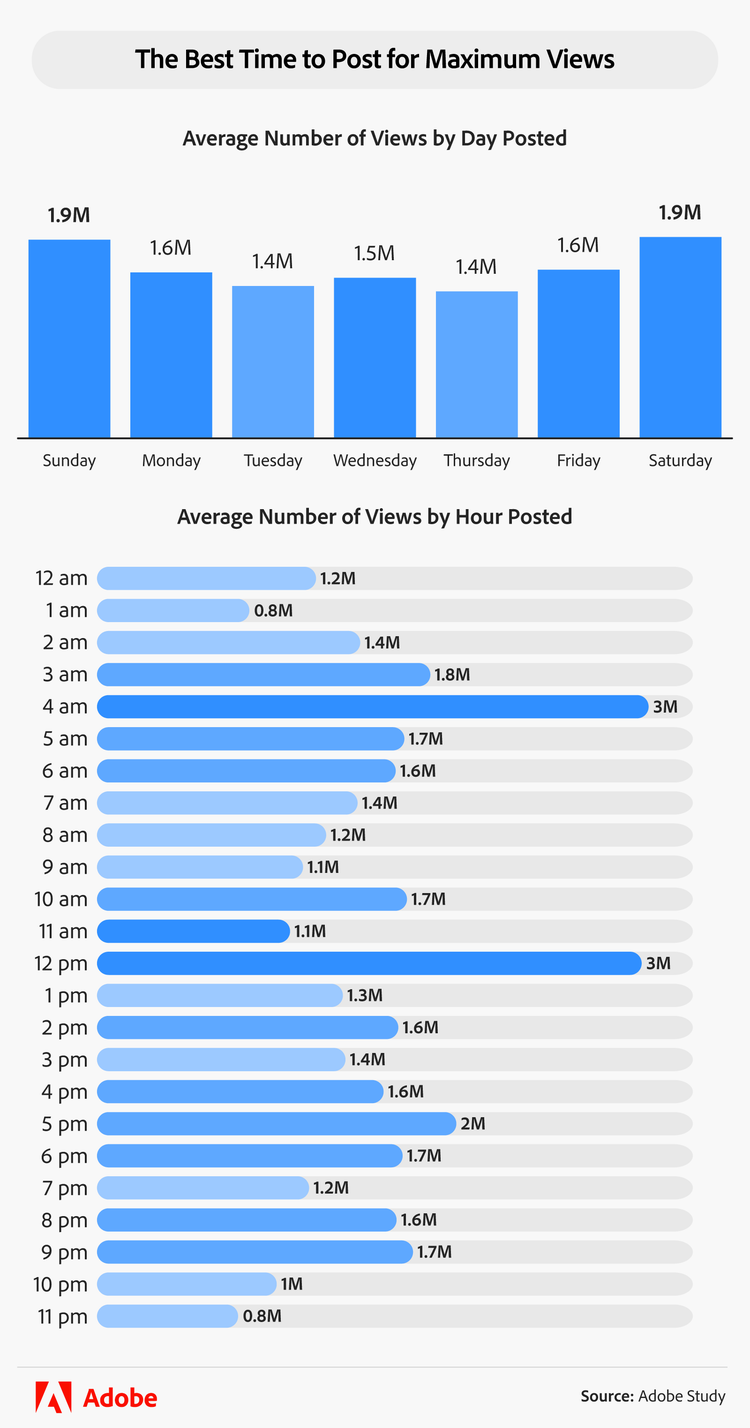
- Facebook posts published on Saturdays receive the highest average number of views, with early-morning posts around 4 a.m. and midday uploads around 12 p.m. performing best overall.
Summary/Overview
Posting frequency
Understanding when creators most frequently post can help you spot trends and identify opportunities to stand out.
Thursday emerged as the most popular day for posting content on Facebook with nearly one in six posts going live on that day. On the other hand, creators posted least frequently on weekends, with 11.9% of uploads going live on Sundays and 11.7% on Saturdays.
Noon (12 p.m.) also stood out as the most common posting hour. Around 7% of all posts were published at this time, possibly aiming to catch users during midday scrolling sessions or lunch-break browsing.
By contrast, upload activity dropped significantly between 1–3 a.m., with fewer than 3% of posts published during these early-morning hours. This suggests it's a time when fewer creators are active — and possibly fewer users as well.
Engagement (likes, shares, comments)
When it comes to sparking interactions, timing your post well can lead to more likes, shares, and comments.
While posting occurred most during the week, Saturdays proved to be the best day for engagement. On average, posts shared on Saturday earned 51,600 combined likes, shares, and comments.
Sunday and Friday followed, with 42,100 and 41,100 average engagements, respectively. These patterns show that weekends and the lead-up to the weekend are prime times for connecting with audiences.
Drilling down further, posts that went live at around 4 a.m. or 8 p.m. performed especially well, highlighting that both early risers and evening browsers were highly engaged on the platform.
The hours that earn the highest average views
If your goal is to maximize reach, posting at the right time of day can significantly increase the number of people who see your content.
Posts shared on Saturdays and Sundays earned the highest average views, a strong sign that weekend audiences are actively watching. On both days, average views reached an impressive 1.9 million per post.
The best-performing hours overall were 4 a.m. and 12 p.m. Posts shared at these times earned an average of three million views, the highest of any posting window. Early-morning and midday moments may be ideal for catching viewers during their morning routines or lunch breaks.
Is it better to post when everyone else does?
Knowing when the crowd posts and when audiences engage, the next question is whether to follow the crowd. Figuring this out can be key to crafting your strategy.
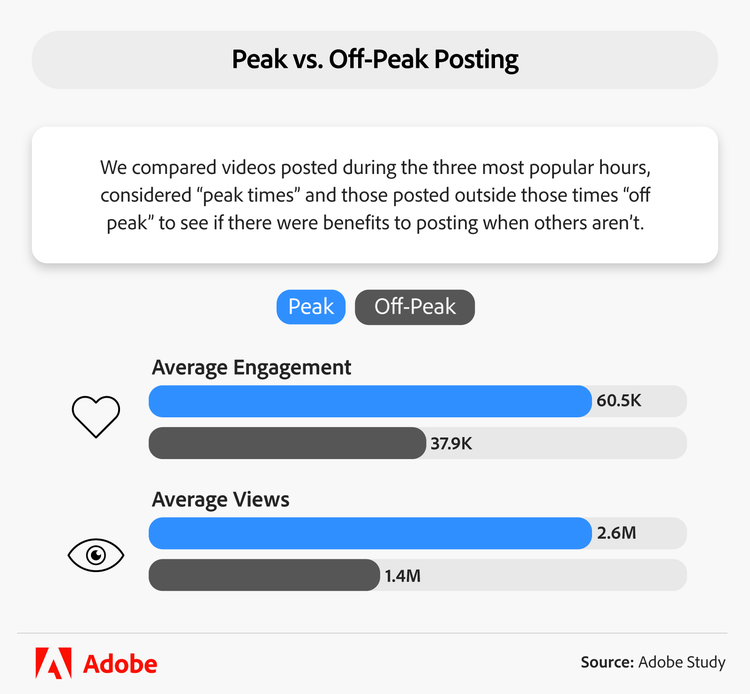
Interestingly, posting during peak hours didn't lead to content getting lost in the noise. In fact, videos shared during the top three busiest posting hours earned noticeably more engagement than those posted during off-peak times.
This finding confirms that timing continues to play a major role in Facebook performance, and that posting during high-traffic hours can help your content ride the wave of audience activity.
Top times to post by content category
What works best for one type of content might also work well across the board.
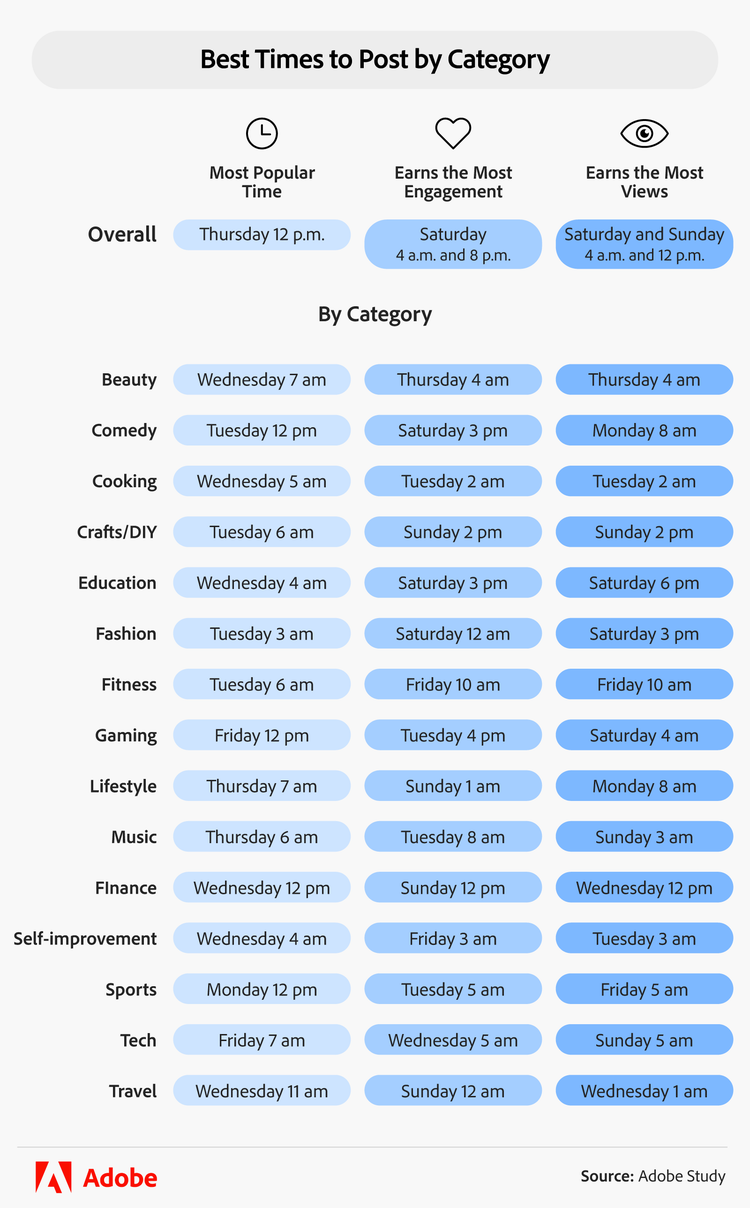
Across all content categories, Thursday at 12 p.m. was the most popular time to post. Whether creators were sharing comedy, lifestyle, gaming, or news, noon on Thursdays attracted the most uploads.
However, when it came to results, Saturday remained the standout. Posts published at 4 a.m. and 8 p.m. on Saturday earned the highest engagement, regardless of category. If you're looking to post when your audience is most responsive, these windows may be your sweet spot.
Top tools for Facebook content
If you’re trying to post when your audience is most active, the right tools can make it easier to plan and stay consistent. Adobe Express can help you keep things simple with:
- Social posts: Quickly create Facebook content that fits your brand and gets to the point.
- Content Scheduler: Set your posts to go live at the best times, all from one place.
- Brand kits: Save your logo, colors, and fonts so everything you share looks consistent.
- Videos: Edit short clips or combine photos into videos that work well in the Facebook feed
Key takeaways for Facebook creators
These timing trends reveal that not all posting windows are created equal. While Thursday at noon is the most popular time to post, Saturday morning and evening consistently deliver the best engagement and views. Posting during peak hours, especially on weekends, can significantly boost your content’s visibility.
If you're planning your next round of Facebook content, let these patterns guide your schedule. With a little timing finesse, you can meet your audience where (and when) they're most ready to engage.
Methodology
Adobe analyzed 40,138 Facebook posts published by the top 100 Facebook creators (as ranked on Social Blade), collecting the time and day of each post along with its likes, shares, comments, and views to identify the best times to post for maximum engagement and reach.
Fair use statement
If you’d like to share these findings, you’re welcome to do so for noncommercial purposes. Just be sure to include a link back to Adobe Express with proper attribution.