The state of live shopping: What drives sales and spontaneous buys
Explore how livestream events influence product discovery, impulse purchases, and brand trust across the US.
Adobe Express
03/04/2026
Live shopping has been gaining traction as a new way to sell online, blending entertainment, community, and commerce in real time. To better understand whether it truly delivers value, Adobe Express surveyed consumers, business owners, and content creators across the United States about their live shopping habits, motivations, and outcomes. The results reveal how often consumers participate, what pushes them to buy in the moment, and how live commerce shapes brand discovery.
Key takeaways
37% of consumers surveyed have purchased a product during or shortly after a live shopping stream.
One in five livestream shoppers spent more than $500 on products purchased through live shopping in the past year.
80% of livestream shoppers discovered new brands or products through live shopping.
68% of consumers surveyed said they're more likely to buy during a live shopping event when others in the chat are making purchases or recommending the product.
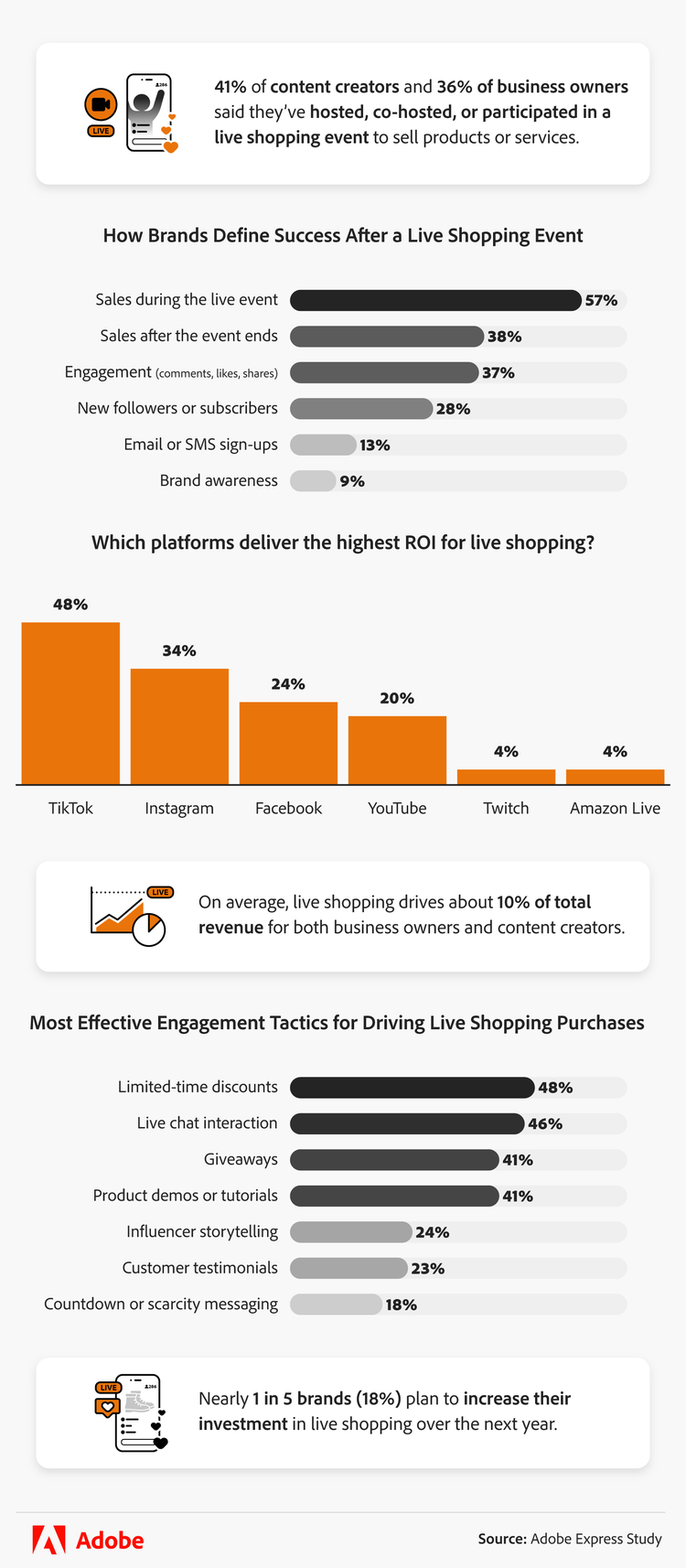
41% of content creators and 36% of business owners hosted, co-hosted, or participated in a live shopping event to sell products or services.
On average, livestream shopping accounts for about 10% of total revenue for both business owners and content creators.
Live shopping has moved beyond novelty and into regular viewing habits for many consumers in the US. Watching livestreams where products are sold and making purchases has gone mainstream.
More than four in five consumers surveyed in the US (83%) said they have watched a live shopping event or livestream where products were being sold, with 33% watching live shopping streams at least once a month. This steady exposure creates frequent opportunities for discovery and buying.
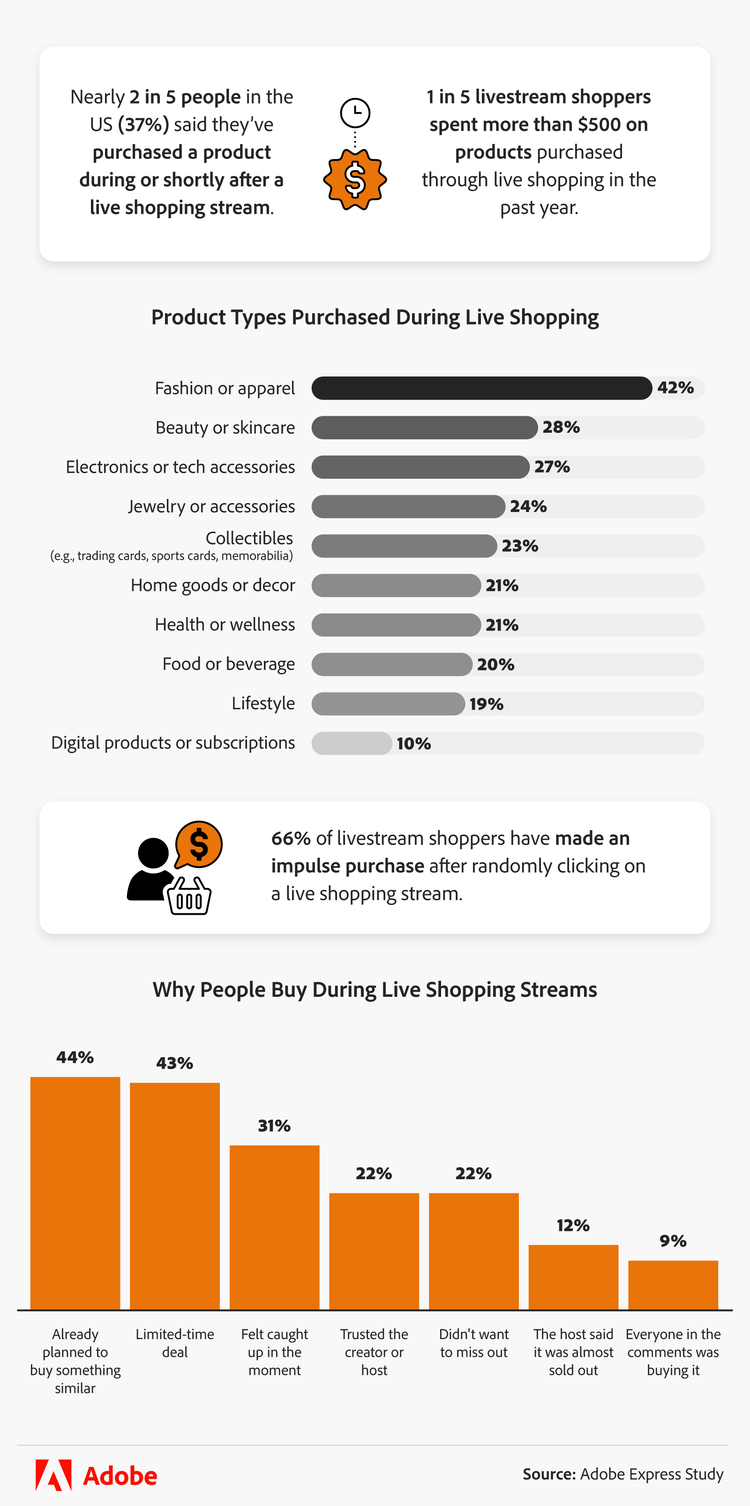
Nearly two in five consumers surveyed (37%) reported buying a product during or shortly after a live shopping event. One in five of these livestream shoppers said they spent more than $500 on these purchases in the past year.
Among live-shopping buyers, 66% had made an impulsive purchase after randomly clicking on a live shopping stream. This behavior was fairly even across generations as it included 67% of Gen Z, 66% of millennials, and 66% of Gen X and older generations.
The platforms driving the most livestream impulse purchases overall are:
Product categories purchased during live shopping reflect both entertainment value and everyday needs. Fashion or apparel (42%) led overall, followed by beauty or skincare (28%), electronics or tech accessories (27%), and jewelry or accessories (24%).
Live shopping also became a way to buy for others. More than half of consumers surveyed (57%) said they purchased an item during a live shopping stream as a gift for someone else.
Not every viewer converted into a buyer, however. Among consumers who watched live shopping events but chose not to purchase, the most common reasons included:
Watching for entertainment only (34%)
Not seeing anything relevant (29%)
Preferring to research products independently (29%)
Prices or deals not feeling compelling (29%)
Not trusting the product or seller (18%)
Feeling pressured (9%)
Not shopping online often (6%)
Among those who made purchases, they most likely either already had plans to buy something similar (44%) or wanted to take advantage of a limited-time deal (43%).
Brand discovery and trust during live shopping
Live shopping is a powerful brand discovery tool, but it also comes with emotional highs and lows for buyers.
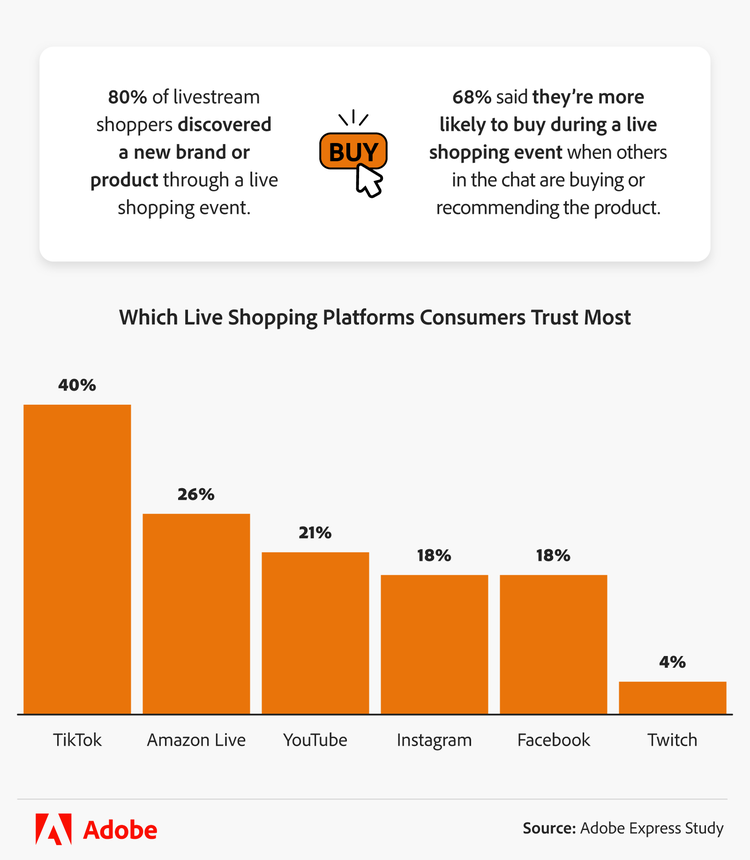
Many livestream shoppers (80%) said they discovered a new brand or product through a live shopping event. This trend was strongest among Gen Z, with 85% saying live shopping helped them discover something new. More than three in five consumers in the US (68%) said social proof — when others in the chat are making purchases or recommending the product — during a live shopping event would make them more likely to buy.
Livestream shoppers were most likely to trust these platforms the most for live shopping:
Who hosted the event also mattered. Purchasing decisions were most often influenced by:
A combination of hosts, such as creators, brands, and customers (30%)
A fellow customer or fan (21%)
An influencer or content creator (19%)
A brand representative (18%)
A celebrity (3%)
The emotions most commonly associated with live shopping included excitement (57%), impulsiveness (47%), entertainment (43%), and fear of missing out (34%). Gen Z was the most likely to be dealing with FOMO (50%) during livestream shopping, compared to millennials (30%) and Gen X and older generations (27%).
Buyer's remorse, however, was not uncommon. Over half of millennials (57%) and 50% of Gen Z shoppers said they experienced buyer's remorse after a live shopping purchase, compared with 37% of Gen X and older generations. The most common reasons included:
Spending more than intended (53%)
Not really needing the item (44%)
Products not matching how they were presented (30%)
Excitement wearing off after purchase (30%)
Feeling pressured to buy quickly (28%)
How businesses and creators use live shopping
On the business side, live shopping contributes meaningfully to revenue and engagement, even when it's not the primary sales channel.
Over two in five content creators (41%) and more than a third of business owners (36%) said they have hosted, co-hosted, or participated in a live shopping event to sell products or services. On average, live shopping drove about 10% of total revenue for both groups, and over two in five brands (43%) said live shopping performed stronger than their other sales channels.
Fashion or apparel was the most commonly sold category through live shopping (29%), followed by collectibles (25%) and beauty or skincare products (24%). Brands most often hosted live shopping events a few times per year (55%), though some ran them monthly (28%) or more frequently (17%).
When asked which platforms delivered the highest return on investment for live shopping, brands most often cited:
Influencer or creator hosts were seen as the most effective at driving sales (34%), followed by co-hosted events featuring both a creator and a brand (18%).
Sales did not stop when the stream ended. About one in four live shopping purchases (24%) happened after the live event. The most effective post-stream strategies included:
Promo codes shared after the event (47%)
Product links pinned or reposted (39%)
Follow-up emails or texts (39%)
Looking ahead, nearly one in five brands (18%) planned to increase their investment in live shopping over the next year. Among brands that had not yet adopted live shopping, the most common reasons included lack of interest (42%), limited expertise or confidence (40%), and uncertainty about whether it would convert into sales (23%).
Why live shopping matters and what to do next
Live shopping reflects a broader shift toward more social, interactive ways to buy. Consumers are discovering new brands, making faster decisions, and spending more when trust, timing, and real-time feedback come together. For creators and businesses, even a few well-planned live events can drive meaningful sales and engagement.
What to do next depends on where you are today. If you already use live shopping, refine your approach by focusing on the platforms your audience trusts, leaning into social proof, and extending sales beyond the live moment. If you are new to live shopping, start small and use simple, consistent visuals and promotions to test what resonates, with tools from Adobe Express helping you create and share assets quickly.
Tools for creating and promoting live shopping content
Ready to plan, promote, and extend your live shopping events with less guesswork? These Adobe Express tools can help you create polished videos and visuals that support product discovery, real-time engagement, and post-event sales:
Online video editor: Create and edit livestream promos, product demos, and post-event highlights with easy trimming, transitions, music, and voiceovers.
AI tools: Speed up creative tasks like thumbnail design, text effects, background removal, and visual polish so your content looks professional on every platform.
AI Clip maker: Turn full livestream recordings into short, social-ready clips you can share after the event to keep products visible and drive additional purchases.
AI Assistant (beta): Prompt, create, and edit anything. Make quick edits and refine every layer, all while keeping the parts you love intact. Describe what you need and get quick content ideas, templates, and design help all in one place.
With Adobe Express, you can move faster, stay on brand, and turn live shopping moments into content that keeps working long after the stream ends.
Methodology
Adobe Express surveyed 1,000 consumers in the US to explore their experiences with live shopping events. The sample included Gen Z (14%), millennials (54%), and Gen X and baby boomers (32% combined). Data was collected in December 2025. The survey was conducted via SurveyMonkey, and all responses are self-reported.
Fair use statement
If you'd like to share insights from this article, you're welcome to do so for noncommercial purposes. Please include a link back to Adobe Express for proper attribution.