
.

Preparing for AI-powered shopping

How teams are preparing for a future where AI tools recommend products

Adobe Express
10/23/2025
Black Friday offer - Get Premium access for 30-days, on us. No credit card required. Ends Dec 07.
Claim offer

What happens when AI becomes the first stop in the customer journey? As tools like ChatGPT, Google's Search Generative Experience, and Meta AI become trusted shopping assistants, the rules of product discovery are changing fast.

To understand how businesses are preparing for this shift, Adobe Express surveyed 1,000 marketers and business owners across the United States. Their responses reveal a growing urgency to optimize for AI-driven search and an opportunity for forward-thinking brands to get ahead.

Key takeaways

  • 43% of business owners and marketers say their companies are already optimizing for AI-driven product search, while another 26% plan to do so within the next year.
  • On average, marketers and business owners currently allocate 21% of their marketing budgets to AI readiness, and they expect this to grow to 29% by 2026.
  • 50% of business owners and marketers are concerned their products won't surface in AI search results due to poor data hygiene.
  • 66% believe ChatGPT will be the leading driver of product discovery in 2026, followed by Google's Search Generative Experience (45%) and Meta AI (26%).
  • More than half of marketers and business owners (54%) expect customers to discover products equally through AI and traditional search in the next two years, while 36% believe AI platforms will take the lead.
Summary/Overview

Preparing for AI-first shopping

Even though AI-driven shopping is still emerging, many businesses are already adapting their strategies.

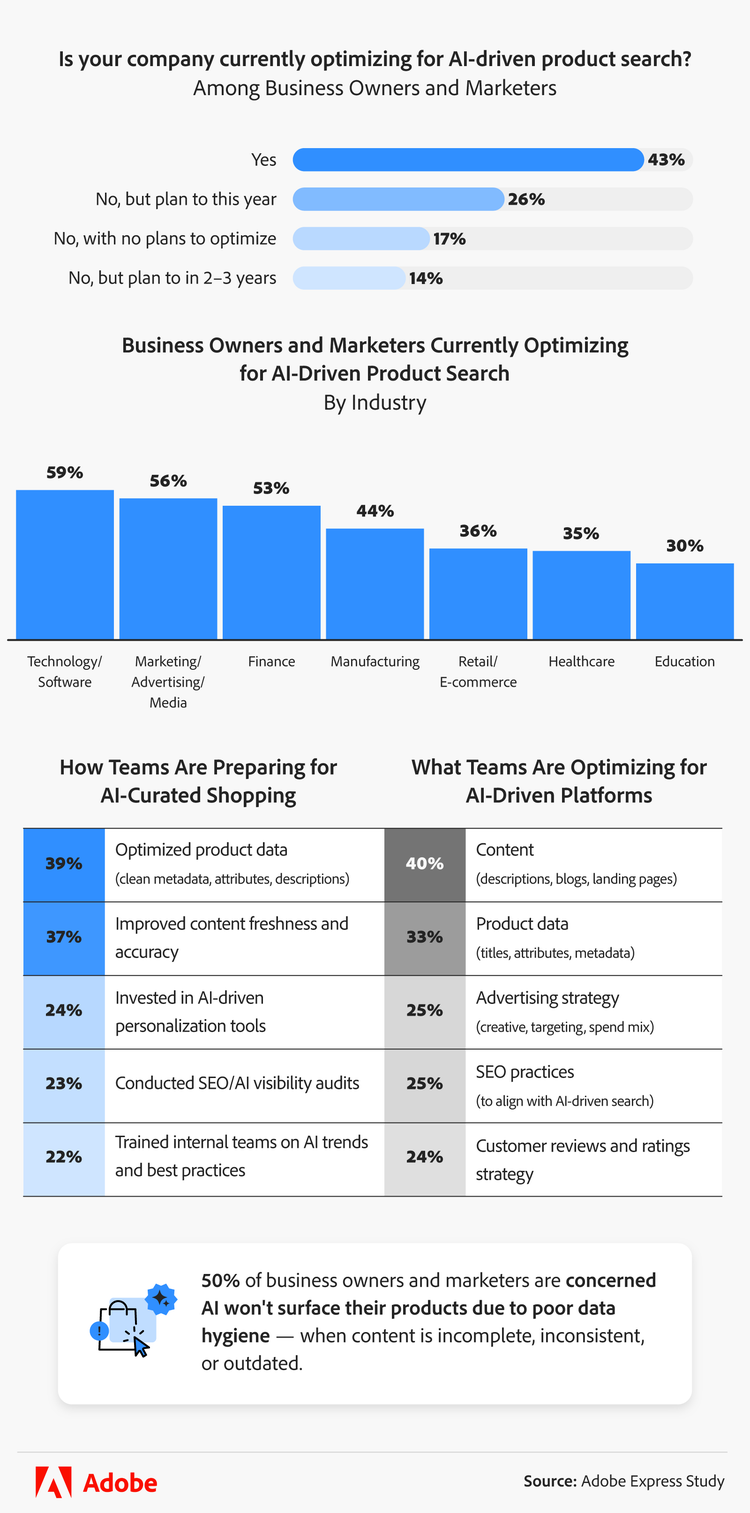
infographic showing data of companies optimizing for AI-driven product search

More than four in ten marketers and business owners (43%) said their companies are actively optimizing for AI-driven product search today. This includes over half of respondents working on technology, marketing, and finance teams, at 59%, 56%, and 53%, respectively.

Another 26% of marketers and business owners said they plan to follow suit within the next year. That means more than two-thirds are moving toward an AI-ready future. The most common changes brands are making include optimizing product data (39%) and improving content freshness (37%), two keys to better AI visibility.

Half of all marketers and business owners were concerned that their products may not surface in AI-driven results due to poor data hygiene. This refers to the accuracy, consistency, and structure of product information across digital platforms. Without good data hygiene, even well-designed content may be overlooked by AI-powered search tools.

Where AI fits into future budgets and discovery channels

As AI's role in shopping grows, so does its share of the marketing budget.

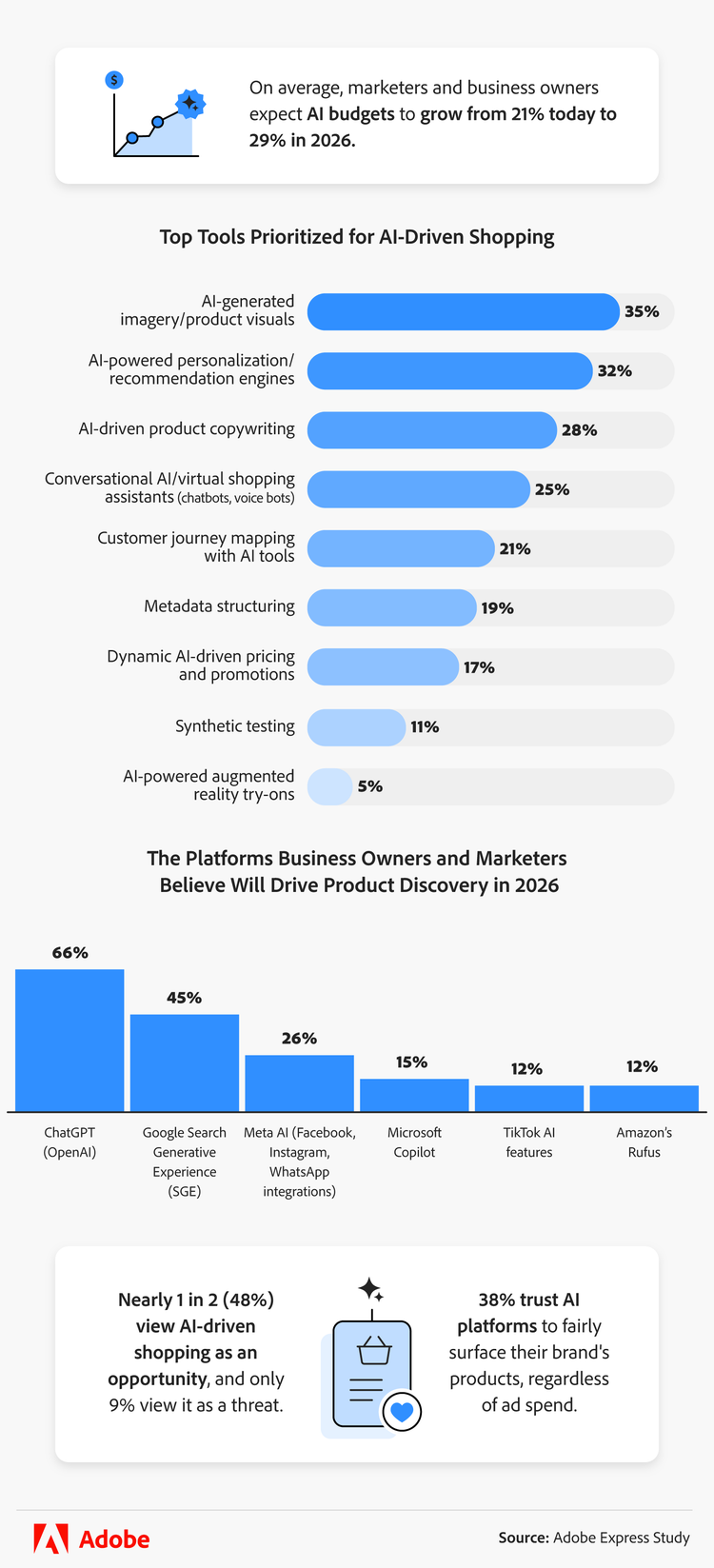
infographic displaying top tools and platforms that will drive product discovery

On average, business owners and marketers reported that their companies allocated 21% of their marketing budget to AI readiness. They also projected this to rise to 29% by 2026, a 38% increase over today. Most respondents said they trust AI platforms to fairly surface their brand's products in search results without ad spend, though 23% said they don’t.

When asked which platforms they believe would drive product discovery in the next few years, 66% pointed to ChatGPT, followed by 45% for Google's Search Generative Experience, and 26% for Meta AI.

Nearly half (48%) said they see AI shopping as an opportunity for their business. Only 9% viewed it as a threat, indicating that optimism outweighs fear, even as technology rapidly changes.

How marketers expect customers to search and trust

With so much change on the horizon, how do marketers think customers will adapt?

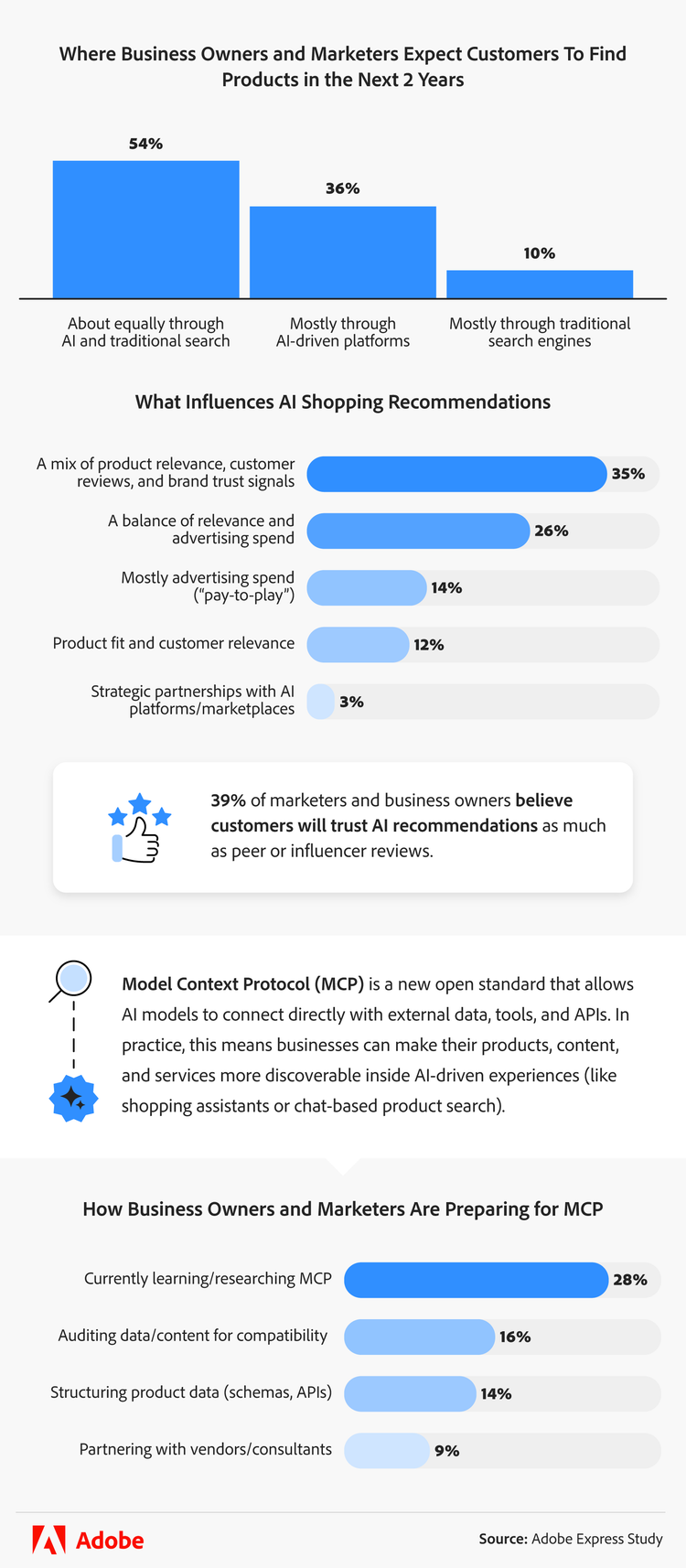
Infographic showing what influences AI shopping recommendaitons and where business owners and marketers expect customers to find products in the next 2 years

More than half of survey respondents (54%) said they expect product discovery to happen equally through AI and traditional search in the next two years. Another 36% believe AI platforms will take the lead, signaling a strong expectation for a hybrid or AI-first discovery model.

When it comes to how AI tools will display recommended products, 35% of respondents believe a mix of product relevance, reviews, and brand trust signals will matter most. Others expect relevance will be weighed alongside ad spend (26%), while 14% believe AI results will mostly follow a pay-to-play model, where paid promotion outweighs organic visibility.

Marketers and business owners are also considering how consumers will feel about AI recommendations. About two in five (39%) believed customers will trust these suggestions as much as they do peer or influencer reviews, marking a major shift in digital word-of-mouth.

Still, knowledge gaps remain. Half of all respondents said they haven't yet considered Model Context Protocol (MCP), a key emerging standard in AI product surfacing. But among early adopters, 28% are researching, 16% have audited their data, 14% have structured their product information, and 9% have partnered with vendors, laying the groundwork for the next wave of AI shopping.

Tools for AI product discovery

In a world where product discovery is increasingly powered by AI, having the right creative tools can make your content more visible, relevant, and engaging. Adobe Express offers marketers and business owners powerful ways to prepare for this shift, including:

  • AI tools: Use generative fill, text-to-image, and background removal to create high-quality, on-brand product content fast.
  • Templates: Design polished visuals for listings, social posts, and ads that help products stand out in AI-powered search results.
  • Content Scheduler: Plan and schedule product-focused posts across platforms like Instagram and TikTok to stay visible and consistent.
  • Brand kits: Keep logos, fonts, and colors organized to ensure every product asset aligns with your brand identity.

These tools help ensure your product content is clean, consistent, and ready for AI-powered experiences, whether your customer is browsing a marketplace, chatting with an AI assistant, or discovering you in search.

Marketers and business owners are no longer asking if AI will change the way people shop — they're figuring out how to keep up. As product discovery shifts from search bars to smart assistants and algorithms, teams are rethinking everything from data quality to content strategy.

Success in AI-powered shopping will depend on being prepared, with the right content, clean data, and a strategy built for where discovery is heading next.

Methodology

Adobe Express surveyed 1,000 business owners and marketers across the United States to understand how they're preparing for AI-powered shopping. The goal was to explore how companies are adapting their marketing strategies, budget allocations, and data practices in response to emerging tools like ChatGPT, Google's SGE, and Meta AI. The survey was conducted via SurveyMonkey, and all responses are self-reported.

Fair use statement

We welcome you to share the findings from this article for noncommercial purposes. Please link back to Adobe Express and provide proper attribution when referencing this content.