Las formas geométricas repetidas resultan intrínsecamente modernas. Aprende a transformar una o varias formas simples en un elegante logotipo de estilo mandala en Adobe Illustrator.

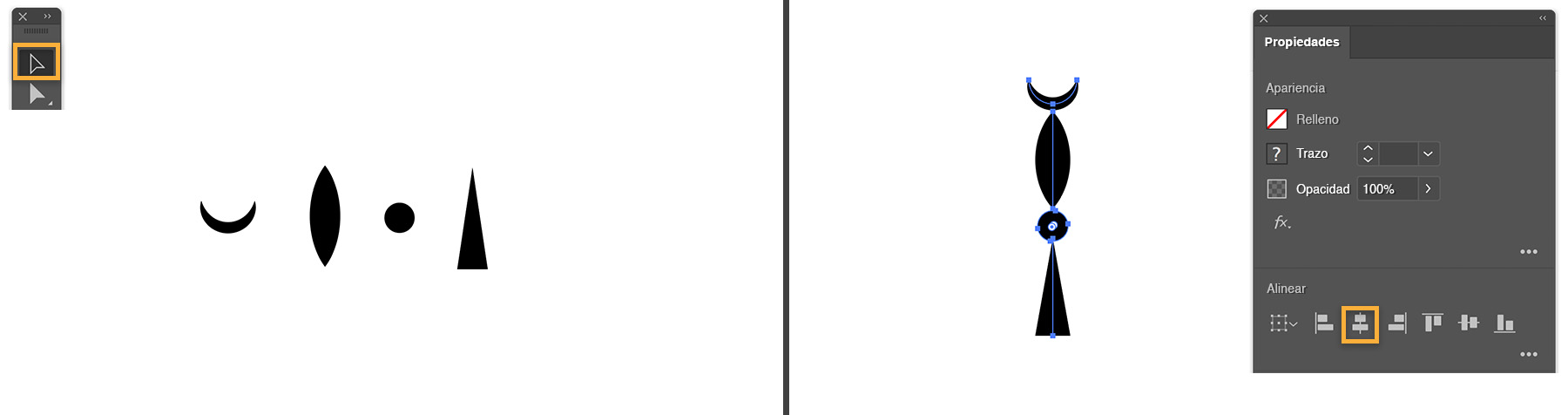
Descarga nuestro archivo de muestra para seguir los pasos del tutorial y crear tus propias formas. Utiliza la herramienta Selección para arrastrar y apilar las formas en vertical. A continuación, selecciona todas las formas y haz clic en Centrar, en el panel Propiedades.
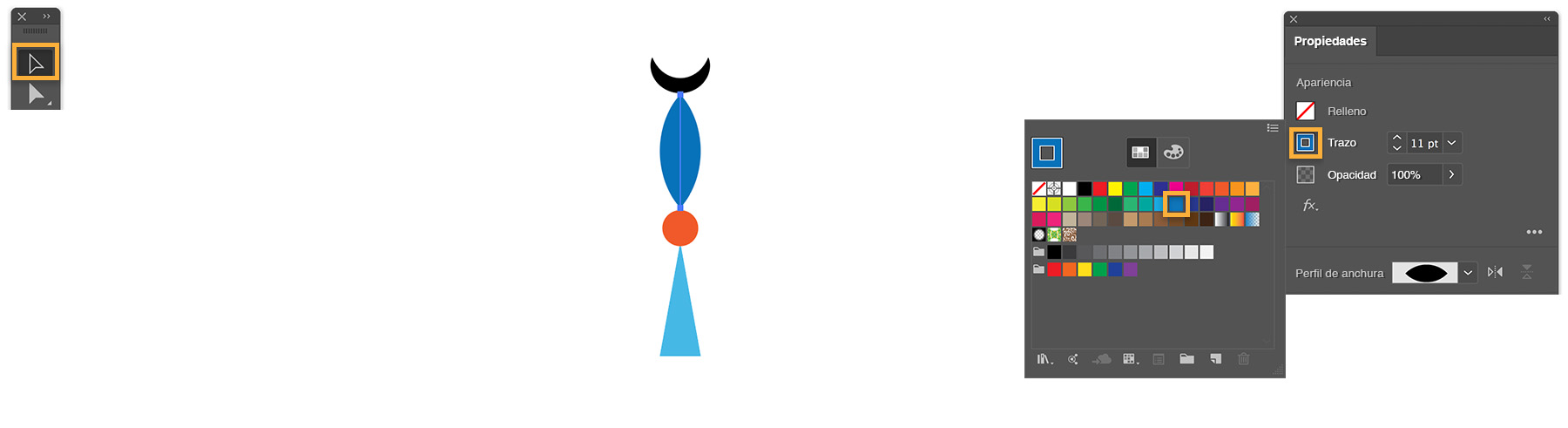
Selecciona cada objeto y cambia el color de su relleno o trazo. Después, selecciónalos todos y haz clic en Agrupar, en el panel Propiedades.
Selecciona la herramienta Rotar y haz clic pulsando la tecla Alt u Opción para colocar el punto sobre el que rotará la forma. Introduce un ángulo de rotación. Selecciona Vista previa y haz clic en Copiar para crear una copia de la forma. A continuación, pulsa Control/Comando+D las veces que sean necesarias para completar el mandala. Consejo: Si no sabes qué ángulo de rotación elegir, deja que Illustrator lo calcule por ti: escribe 360/n (n = número de formas duplicadas que quieres crear). Por ejemplo, escribe 360/18 para obtener 18 formas repetidas.
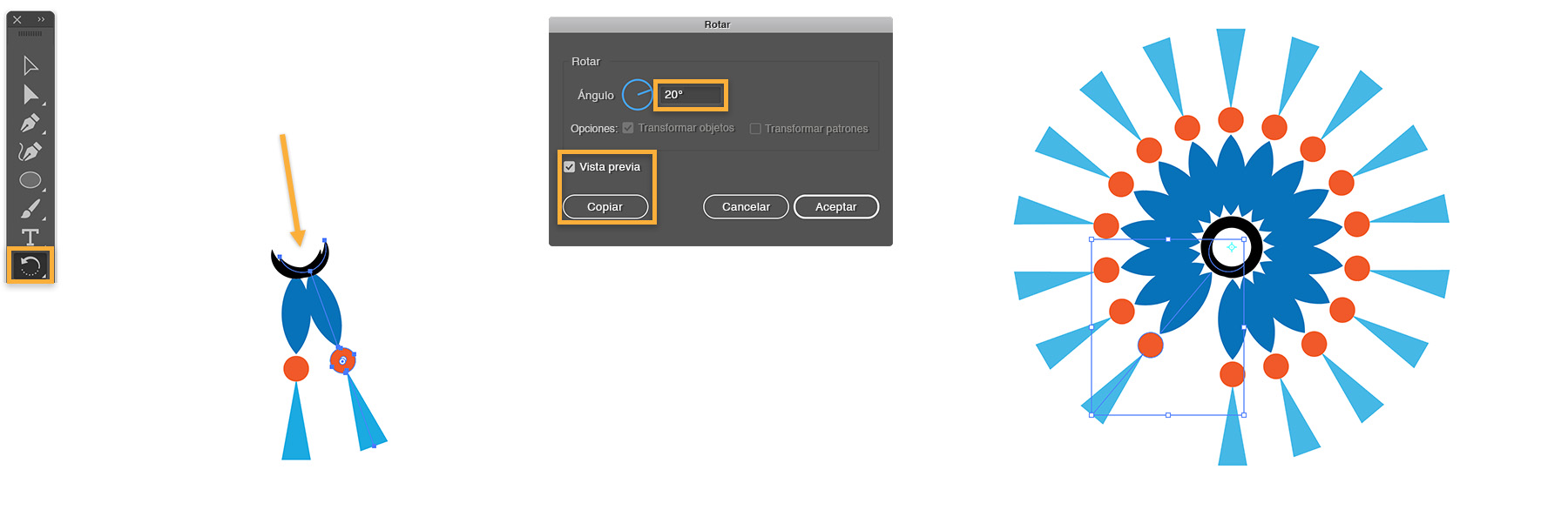
Puedes cambiar el aspecto del mandala colocando el punto de rotación en distintos lugares, modificando los colores y aplicando efectos a formas individuales.

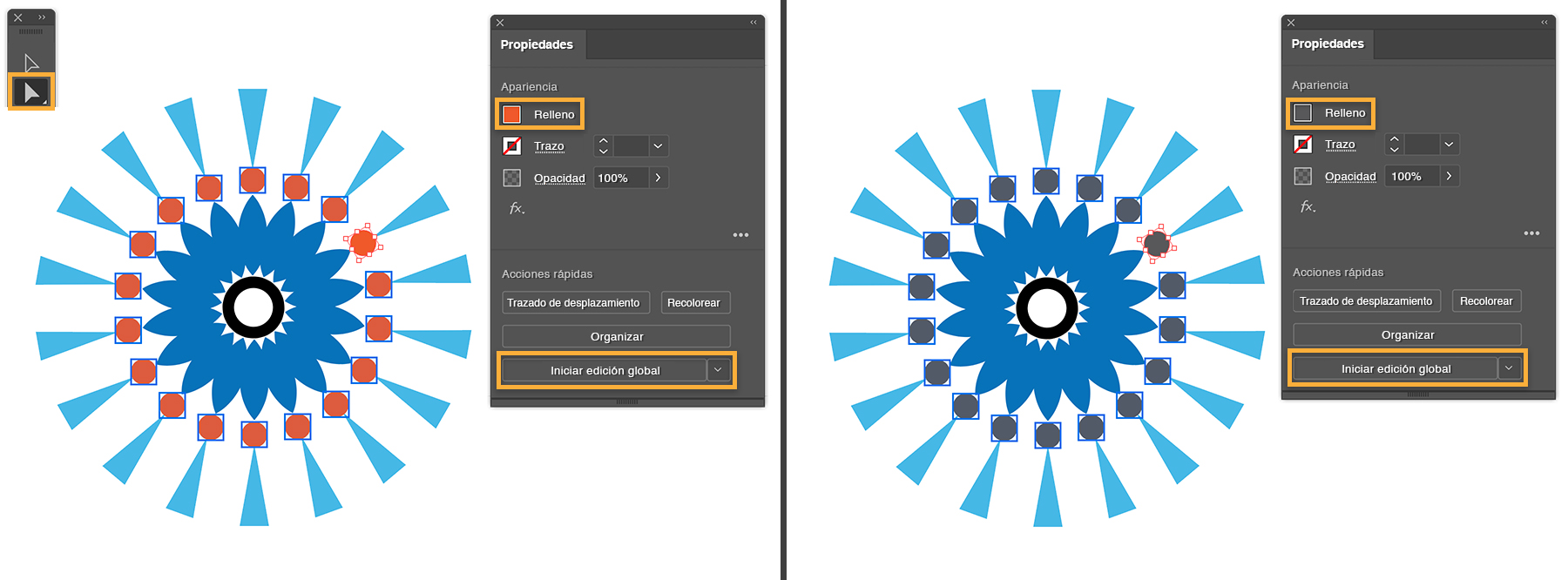
Es muy fácil editar el mandala tras crearlo. Utiliza la herramienta Selección directa para seleccionar el objeto que quieres cambiar y haz clic en Iniciar edición global, en el panel Propiedades. Puedes cambiar el color de relleno, el trazo, la opacidad y demás atributos. Todas las repeticiones de las formas se editarán de manera simultánea. Haz clic en Detener edición global cuando termines de hacer los cambios.
Esta técnica es algo parecido a crear tu propio caleidoscopio. Pruébala para crear distintas y coloridas versiones de tu logotipo.

You can control how Adobe websites use cookies and similar technologies by making choices below. But note that if you disable cookies and similar technologies entirely, Adobe websites may not function properly.
Cookies are small text files stored by your web browser when you use websites. There are also other technologies that can be used for similar purposes like HTML5 Local Storage and local shared objects, web beacons, and embedded scripts. These technologies help us do things like remembering you and your preferences when you return to our sites, measure how you use the website, conduct market research, and gather information about the ads you see and interact with.
You can make choices in the menu below about what cookies and other technologies you want us to use on Adobe sites when you visit them from this browser. You can always change those choices later by clicking on the Cookie Preferences link at the bottom of the page.
If enabled:
We can improve your experience by tailoring the site and the content to things we think might be of interest
We can better keep track of your preferences — like what language you prefer to use
We will better understand your likely interests so we can provide you more relevant Adobe ads and content on non-Adobe websites and in non-Adobe apps
It will help us improve the performance of our website and those of our partners who use the Adobe Experience Cloud
If disabled:
We won’t be able to remember you from session to session so the experience may not be tailored to your interests
You’ll still have access to the content of the site but certain features that depend on cookies may not function
You’ll still see ads, they just may not be as relevant to you
General information
You can control how Adobe websites use cookies and similar technologies by making choices below. But note that if you disable cookies and similar technologies entirely, Adobe websites may not function properly.
Cookies are small text files stored by your web browser when you use websites. There are also other technologies that can be used for similar purposes like HTML5 Local Storage, web beacons, and embedded scripts. These technologies help us do things like remembering you and your preferences when you return to our sites, measure how you use the website, conduct market research, and gather information about the ads you see and interact with.
You can make choices in the menu below about what cookies and other technologies you want us to use on Adobe sites when you visit them from this browser. You can always change those choices later by clicking on the Cookie Preferences link at the bottom of the page.
If enabled:
We can improve your experience by tailoring the site and the content to things we think might be of interest
We can better keep track of your preferences — like what language you prefer to use
We will better understand your likely interests so we can provide you more relevant Adobe ads and content on non-Adobe websites and in non-Adobe apps
It will help us improve the performance of our website and those of our partners who use the Adobe Experience Cloud
If disabled:
We won’t be able to remember you from session to session so the experience may not be tailored to your interests
We’ll still count your use of our site and services
You’ll still have access to the content of the site but certain features that depend on cookies may not function
You’ll still see ads, they just may not be as relevant to you
Operate the site and core servicesOperate site and measure engagement
Always active
These cookies are required, and they are used to enable the site and related services core functionality. Without them the site could not operate, so they cannot be disabled.
These cookies enable the site and related services’ core functionality and collect statistics about user engagement, such as counting active use to help us understand trends. These cookies cannot be disabled.
Measure performance
These cookies are used to analyze site usage to measure and improve performance. Without them Adobe cannot know what content is most valued and how often unique visitors return to the site, making it hard to improve information we offer to you.
These cookies are used to analyze site usage to measure and improve performance. Without them Adobe cannot know what content is most valued, making it hard to improve information we offer to you.
Extend functionality
These cookies are used to enhance the functionality of Adobe sites such as remembering your settings and preferences to deliver a personalized experience; for example, your username, your repeated visits, preferred language, your country, or any other saved preference.
Personalize advertising
These cookies are used to enable Adobe and our partners to serve ads more relevant to your interests. Without them you will still see ads, but they might not be as relevant to you.
Personalize advertising
These cookies are used to enable Adobe and our partners to serve ads more relevant to your interests. Without them you will still see ads, but they might not be as relevant to you.