ACROBAT | 10-MINUTE READ
Free Proposal Templates To Seal The Deal.
Learn how to write a proposal with our free, easy-to-use templates. Get your idea over the line today.
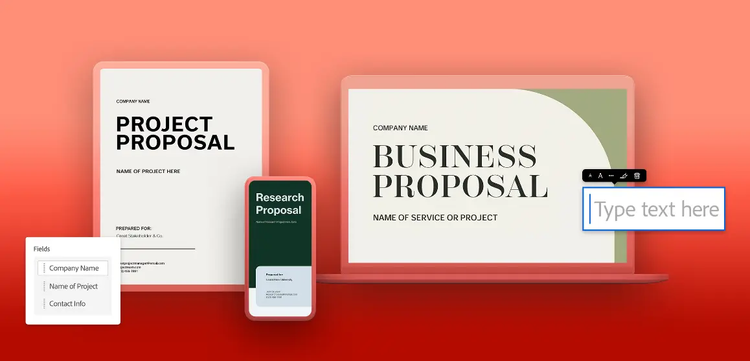
If you need to pitch an idea, project, or plan, you’ll likely have to write a proposal—a document designed to persuade someone to approve, fund, or support what you’re offering.
Proposal templates can make the process much easier. With the structure and formatting already in place, you can focus on crafting your message instead of worrying about layout or forgetting key details Read on to find out more about what a proposal template is, why it comes in handy, and learn about five different types of proposal templates.
What is a proposal template?
A proposal template gives you a ready-made framework for creating professional, well-structured proposals quickly. It provides a clear layout with prompts for each section—such as the introduction, problem statement, proposed solution, deliverables, timeline, and budget—so nothing is missed.
Templates also ensure consistency in style and tone, which is especially helpful for teams. By streamlining the process, they save time, reduce errors, and let you focus on refining your ideas and making a compelling case.
Why do you need a proposal template?
A proposal template comes in handy when you need to propose an idea – whether it’s in business, research or academia. It’s a way to confidently express your thoughts in a clear, concise, and potentially persuasive way. A good template also supports resource planning, timelines, and progress tracking.
You may need a proposal template to:
- Submit a business proposal. You may need a proposal to secure funding and grow your business.
- Apply for academic funding. If you’re applying for funding for academic purposes, you may need a document to outline what you plan to spend the money on.
- Reveal a research proposal. Similarly, you may need to submit a proposal for research, like for a dissertation or PHD study.
Five different types of proposal templates.
You may need different proposal templates for different scenarios, like special projects and research assignments.
Here are five of the main forms of proposal templates:
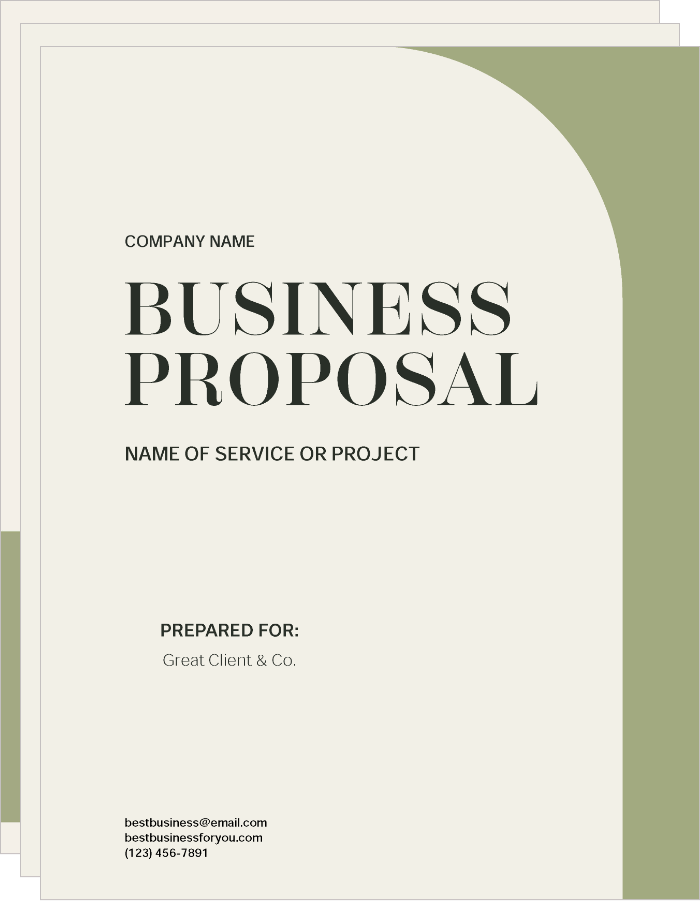
1. Business proposal template example.
A business proposal will include the specifics of what you can do for your client. It’s your chance to sell your team and convince the client that hiring you is the right decision. In some cases, you may be reacting to a request for a proposal (RFP). If it’s an unsolicited proposal, you’ll need to include more information about your company.
A business proposal template typically includes:
- Title page. This is where you need your contact information and the name of the person or company you’re pitching too. Make sure you have a simple but descriptive title of what you’re offering.
- Executive summary. Next, introduce your company in a short, engaging paragraph. Think about your business’ triumphs and give them a flavour of your brand. Try to avoid being too generic. Tailor your executive summary to the client you’re targeting, while always reflecting your own brand. The second half of the executive summary needs to go into detail on what you’re offering, and what benefits you can provide the client.
- Project details. Now it’s time for your project to shine. Start by identifying the problem you’re hoping to address. Your client needs to feel confident that you understand the issue they’re facing. Then, explain your solution/s. This is where you can really highlight the value of what you’re offering.
- Qualifications. Give your potential client peace of mind by listing your track record. Be sure to include success stories or examples of how you have solved these problems for other clients.
- Steps and deliverables. Concisely and accurately detail the steps, timeline, and budget of what you’re offering. Try to be as specific as you can so the client can have the best picture of what it’ll be like to work with you.
- Call to action and team introduction. Lastly, thank the client for listening and provide them with a call to action – a clear way to reach out with you. You may also decide to add a personal touch; with names and photographs of the team they’d be working with.
There’s also scope to expand this business portfolio example. Other sections you may wish to include are:
- Terms and conditions – This section outlines the legal aspects of the deal. It may include price, payment, privacy and cancellation information.
- Field for signature – An area to record typed, or handwritten signatures.
- Appendix – An additional section containing additional, relevant but non-essential information. Usually found after the references.
- Competitive analysis – This section may detail information on the strength and weaknesses of the client’s competitors to reveal how they are currently performing in comparison, and where you could help them to improve.
- Graphs or charts – A section where you could include visual aids to display information in an engaging and eye-catching way.
2. Project proposal template example.
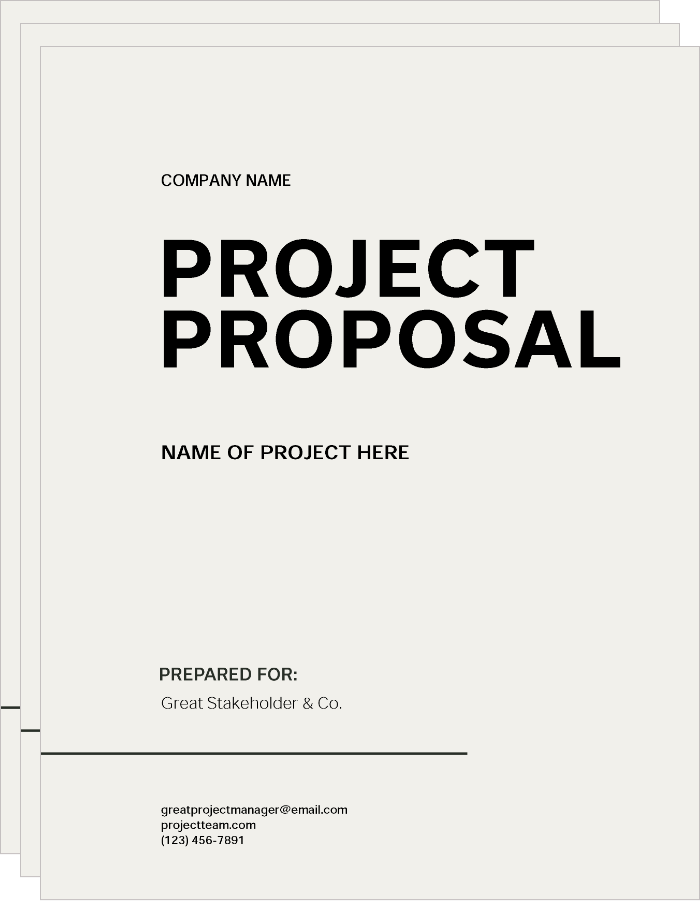
A project proposal can be similar to a business proposal. It should be designed to convince stakeholders to take on or continue with a project. It may be unsolicited or specifically solicited, and could be a renewal, continuation, or even as a supplemental project proposal if you’re changing project scope.
Get started with this project proposal template:
- Title page. Same as above, this first section will detail your contact information and the name of the stakeholder(s) you’re pitching to. You’ll need to include the project title, too.
- Executive summary. The executive summary should be relatively short but cover important ground. Include the problem that your project is aiming to solve, who it will benefit and how your solutions will work. Then, provide a roadmap of the project timeline and provide an idea of budget. You can give the reader an overview of what the successful product will look like, so they can get excited about what you’re aiming to accomplish. In essence, you’re promising a return on investment (ROI) for your stakeholders. You also need a short and compelling title for the executive summary page.
- Background. Take a deep dive into the problem behind the project. Explain your research, and the gap that this project is going to fill. It’s possible that others have attempted to tackle this problem before – you could try and demonstrate why there isn’t an adequate solution yet. Title this page in a way that summarises the background of the project.
- Plan of action. Clarify your solution to the problem in question, and show how you will measure and report success. Then provide an action plan, using titles for the different milestones you plan on achieving. Then, add the deliverables and timelines in the description for those milestones. Remember to stay realistic, and not over promise.
- Requests. Here, supply your budget and resource requests. You’ll also need to break down allocation for the budget and include a total.
- Conclusion. Title your conclusion in a way that demonstrates the benefit the project will bring to stakeholders. Then, briefly review what you’ve promised and the resources you’ll need to complete it. If the project is internal, you could turn it into a presentation by converting PDF to PPT with Adobe Acrobat online services.
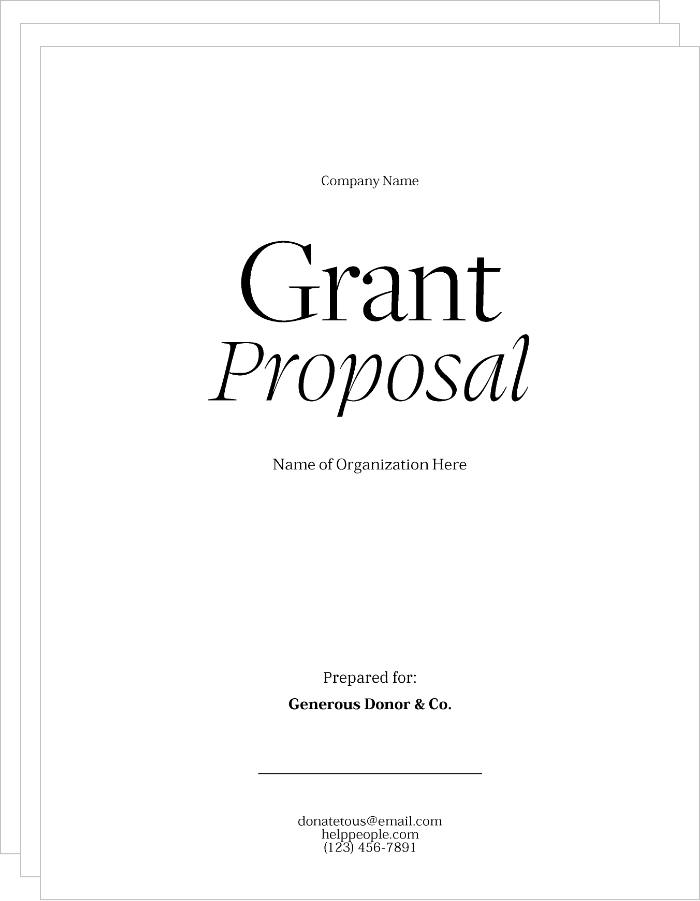
3. Grant proposal template.
A grant proposal is a donation request, sometimes coming from a non-profit organisation or even an individual. It is unique as the donor does not expect to receive anything in return.
The nature of applying for grants means you may be applying for multiple at once. But luckily, a grant proposal template can speed things up for you.
- Title page. Same as above, this first section will detail your contact information and the name of the stakeholder(s) you’re pitching to. You’ll need to include the project title, too.
- Executive summary. The executive summary should be relatively short but cover important ground. Include the problem that your project is aiming to solve, who it will benefit and how your solutions will work. Then, provide a roadmap of the project timeline and provide an idea of budget. You can give the reader an overview of what the successful product will look like, so they can get excited about what you’re aiming to accomplish. In essence, you’re promising a return on investment (ROI) for your stakeholders. You also need a short and compelling title for the executive summary page.
- Background. Take a deep dive into the problem behind the project. Explain your research, and the gap that this project is going to fill. It’s possible that others have attempted to tackle this problem before – you could try and demonstrate why there isn’t an adequate solution yet. Title this page in a way that summarises the background of the project.
- Plan of action. Clarify your solution to the problem in question, and show how you will measure and report success. Then provide an action plan, using titles for the different milestones you plan on achieving. Then, add the deliverables and timelines in the description for those milestones. Remember to stay realistic, and not over promise.
- Requests. Here, supply your budget and resource requests. You’ll also need to break down allocation for the budget and include a total.
- Conclusion. Title your conclusion in a way that demonstrates the benefit the project will bring to stakeholders. Then, briefly review what you’ve promised and the resources you’ll need to complete it. If the project is internal, you could turn it into a presentation by converting PDF to PPT with Adobe Acrobat online services.
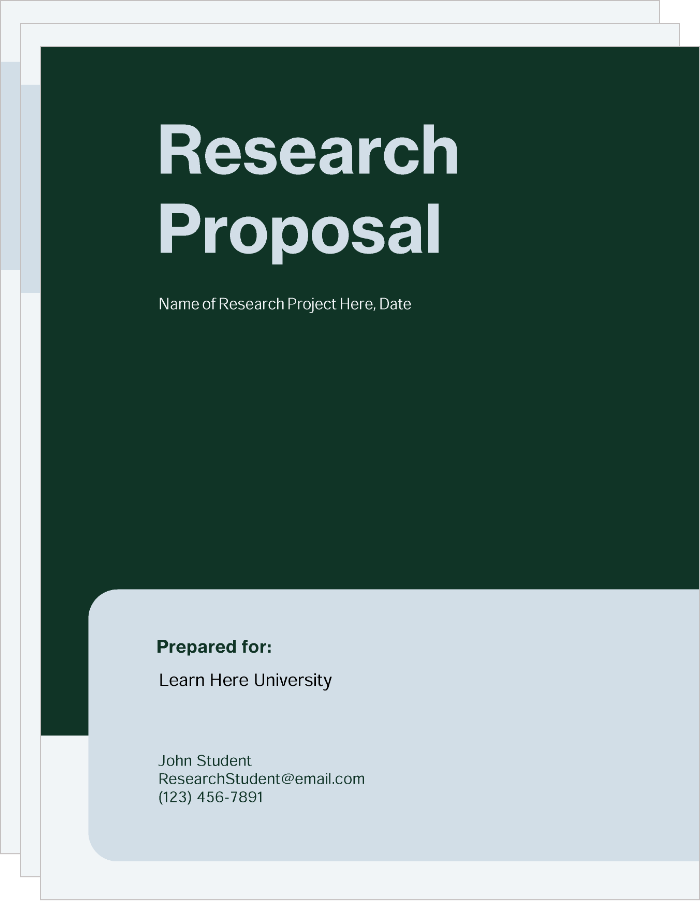
4. Research proposal template
A research proposal could have a few different purposes. You may need to write one to convince a professor to allow you to focus on a particular subject for a thesis. You may also need to know how to write a PHD proposal to get research funding or support from a university.
Work from our research proposal template:
- Title page. Add your contact information, the name of your research, and the name of the school or individual you’re pitching to.
- Introduction. In your introduction, you want to make sure your reader understands why this research is interesting and relevant. Give an overview of existing information known about the subject, and then highlight the gap in the research that you’re trying to fill.
- Research questions. Next, share your research questions.
- Problem statement. Your problem statement will anticipate the results and how they’ll make a difference.
- Literature review. The literature review will focus on other research and sources associated with your topic. Summarise the findings of the other literature and talk about how you may agree with or challenge them.
- Research methodologies. This space in the research proposal template enables you to briefly explain the reasoning behind your methodologies, as well as the practical considerations that you anticipate. You can also include a simple version of the timeline and budget.
- Conclusion. Circle back to the purpose of your research and the problem you’re trying to solve. Summarise the key context and your methods.
Here are some additional sections you can include in a research proposal template:
- Abstract
- Bibliography
- Budget
- Timeline
- Contribution
If you do find yourself needing to customise your template, you can edit the PDF template with Acrobat online services.
5. Investment proposal template
An investment proposal is a carefully crafted presentation created for potential investors to describe your organisation’s purpose and goals. It’s a tool that aims to secure financial support. Proposal templates like this may come in handy if you’re seeking investment to grow and scale your business – or even start one from scratch.
Take inspiration from this investment proposal template:
- Title page. Start with a name that describes the value of the product or service. Keep it simple, and to the point.
- Executive summary. As above, the body of your proposal should begin with an executive summary. This can concisely detail information on your target customer, the problem and the solution you’re offering, as well as the benefits you’ll offer both the customer and investor.
- Information about project. Here’s your chance to shine as an entrepreneur – include facts about yourself and your business.
- Company performance. In this section, you can provide a business description and detail your past and current financial data. Or if you haven’t established your company yet, you can provide market research and statistics which highlight the viability and growth potential of your business idea.
- Marketing and sales strategies. In this section, outline your planned marketing budget, channels and map out your sales strategy.
- Team information. Including some information about your team may help your case. Consider adding your business location, the number of employees you have (or plan to hire) and the resources you need.
- Financing. This section of the investment proposal template focuses on sources of funding, timeframes and expected ROI.
Frequently asked questions.
What is the format for a proposal?
How do I make my own proposal?
How to write a dissertation proposal?