ACROBAT
5 offer letter templates for any type of job.
Secure the talent you need with a professional and effective offer letter.
What is an offer letter?
Once you’ve found the person you want to hire, it’s customary to offer them the job verbally (known as a verbal offer) before following up with an offer letter either in the post or via email.
It’s important to note that this offer letter is not the same as an employment contract, even if it’s a formal offer letter. The reason you send an offer letter is to inform the candidate that you want to hire them and, should they accept, provide the next steps in the process.
You might then require your employee to sign their offer letter, or, if you prefer, simply confirm that they’d like to accept the position. You can then move on to gathering the final information as part of the hiring process. This might include background or reference checks, for example, the position may require security clearance or DBS checks, and negotiations over their salary, working hours or other terms of employment. On the other hand, they may reject the job offer. And if they do you can revisit other people you interviewed for the role.
What should an offer letter include?
The wait between being offered a job verbally and receiving written confirmation can be an uncertain time. The verbal offer may have left your candidate with unanswered questions. Try to anticipate these in your offer letter. Include all the information you think your candidate will need as they decide whether to formally accept the offer. Make sure your offer letter includes these things:
- Company letterhead. Help to orient the candidate with a clear letterhead that shows where the comms have come from as soon as they open the document. A high-resolution letterhead featuring the company logo can suggest professionalism and is commonly found at the top of offer letters.
- Job title and brief description. You will no doubt have covered this in-depth already, both in the job description and during the interview. But you should still include some brief details on what the job entails in the offer letter, a few bullet points and an introductory sentence should suffice
- Compensation and benefits. Getting paid is the main reason most people go to work, right? So, clearly outline compensation and benefits in the offer letter. Detail the hourly wage or annual salary, the pay period and frequency, annual leave entitlements, pension, and any other benefits. Your offer letter doesn’t have to be as thorough as the employment contract or onboarding process, though.
- Contingencies and termination conditions. Many employers will carry out additional checks on a candidate before they confirm their appointment. You can use your offer letter to inform them of any background checks that will be conducted and to include any relevant forms you need them to complete. These areas of the offer letter may benefit from a review by and input from your HR or legal teams.
- Contact information. Be sure to provide, and clearly signpost, your contact details in the offer letter so they know who to contact and how if they have any questions. Include a phone number or email and make it clear that they can ask questions should they need to.
- Deadline. If you have things that you need the candidate to do within the offer letter, for example, providing official acceptance or submitting forms, then setting deadlines can prompt them to do so quickly.
- Signature line. This is where the candidate will sign the offer letter once they’re happy with its contents. You can use Adobe Acrobat to edit your PDFs, and Adobe’s online e-signature tools can make it easier for your prospective employee to sign and return the offer letter.
These are just examples of what an offer letter should include. You’ll find more examples of what an offer letter contains in our selection of sample letters further down this article.
Tips for writing a job offer letter.
With a solid template and rigorous editing, creating and finalising a job offer letter is a straightforward process. But we’ve gathered some tips to make things even simpler.
- Always verbally offer the job first.
A phone call is the conventional way to let a candidate know you’re offering them the role. As part of this, you may explain what you liked about them and why you’re offering them the job. But remember to tell them that they can expect the formal offer letter via email or the post and that they will need to read it and accept or reject the offer. - Provide information but keep it concise.
An offer letter shouldn’t be overly complex and complicated. Instead, tell your candidate what they need to know in simple, plain English. Read back the letter and consider whether you’re overloading them with unnecessary information. Every sentence should earn its place. And any critical information requiring actions from them should be clearly marked up. - Keep your letter professional.
Your offer letter is part of a formal process and could potentially be cited in an employment tribunal one day. So, it’s important that your letter is professional and reflects the serious nature of employing someone, even if the interviews have been relatively laidback. That said, it can also reflect the tone of your company culture.
Whether this is the first offer letter you’ve written, or you’re wanting to streamline your process, our templates can help. Simply download an employment offer letter template from the selection below and edit it to fill in the appropriate information. Open your PDF letter sample with Adobe Acrobat online services to edit and fill out the PDF for free.
General offer letter template.
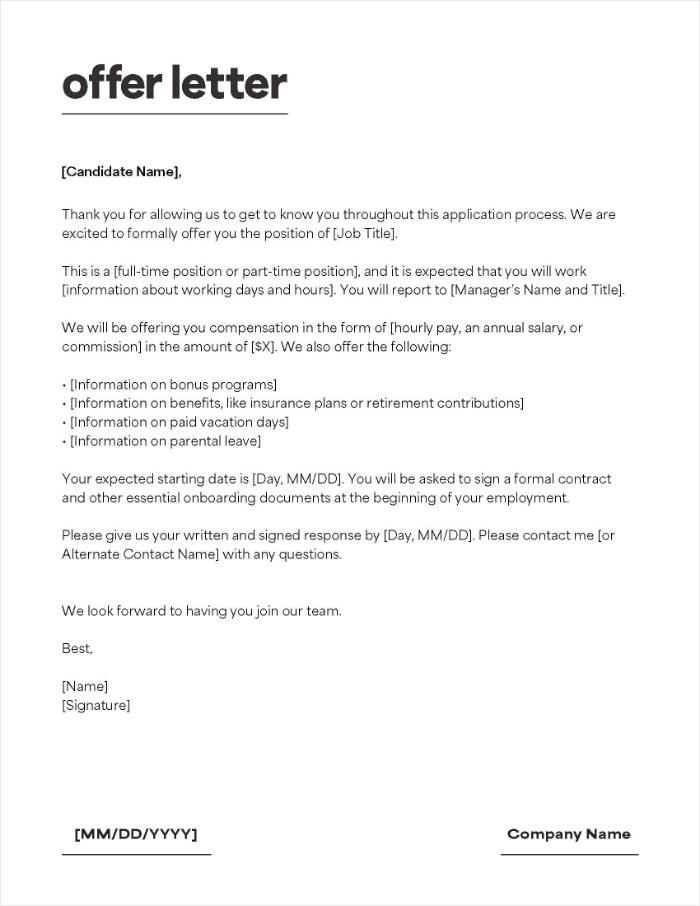
This nuts-and-bolts template covers all the basic components of a standard offer letter. You can use this as a jumping-off point and customise any part of it, or you can keep scrolling to see more specific samples.
Formal offer letter template.
A formal job offer letter template is useful for companies requiring a serious business tone. Some organisations, such as professional services like law and finance, prefer this to demonstrate a serious or traditional approach to the role. As always, you can adjust the wording to best suit your needs.
Casual offer letter template.
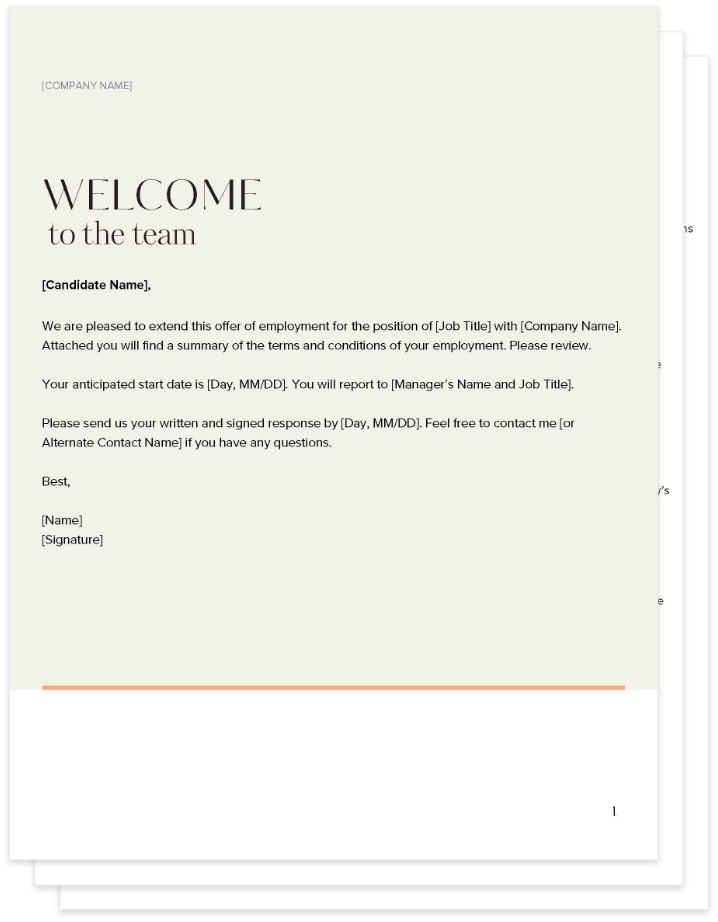
If your company culture is relaxed, for example, an advertising agency with a casual dress code and a contemporary office space, this template gives you an offer letter that suits the vibe. This should match their experience of being interviewed and set the tone for future comms once they become an employee.
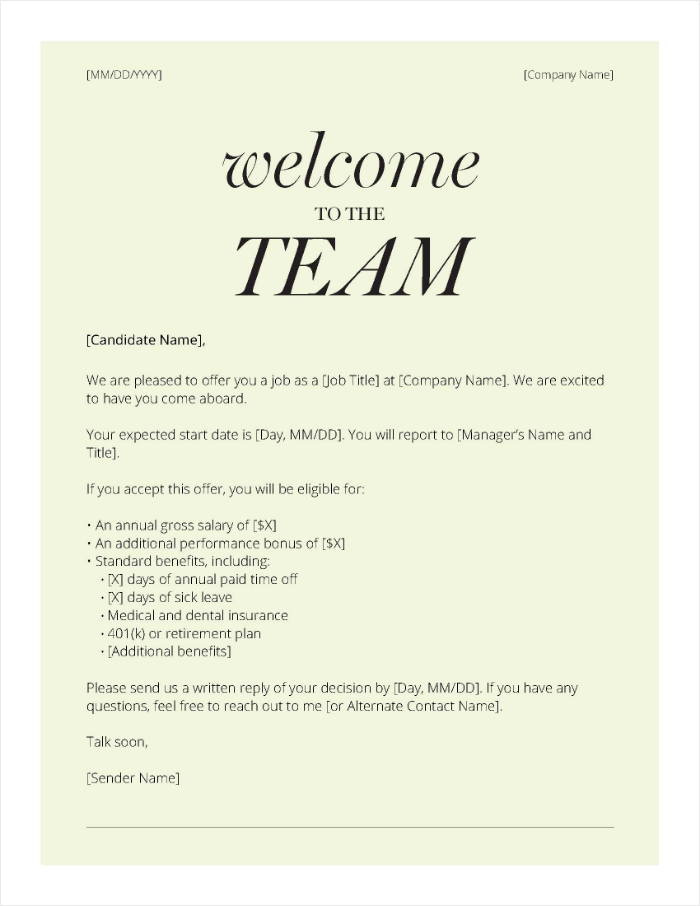
Internal offer letter template.
When hiring an existing employee, they’re already familiar with your policies and benefits, and likely won’t need additional background checks. This means internal offer letters can be simpler and shorter than those for external candidates.
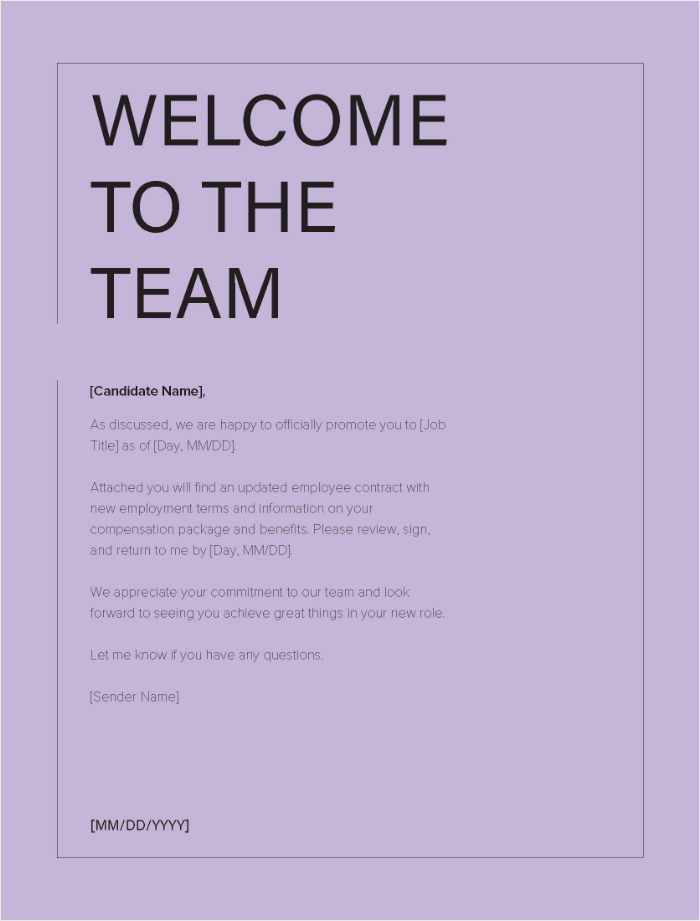
Part- to full-time offer letter template.
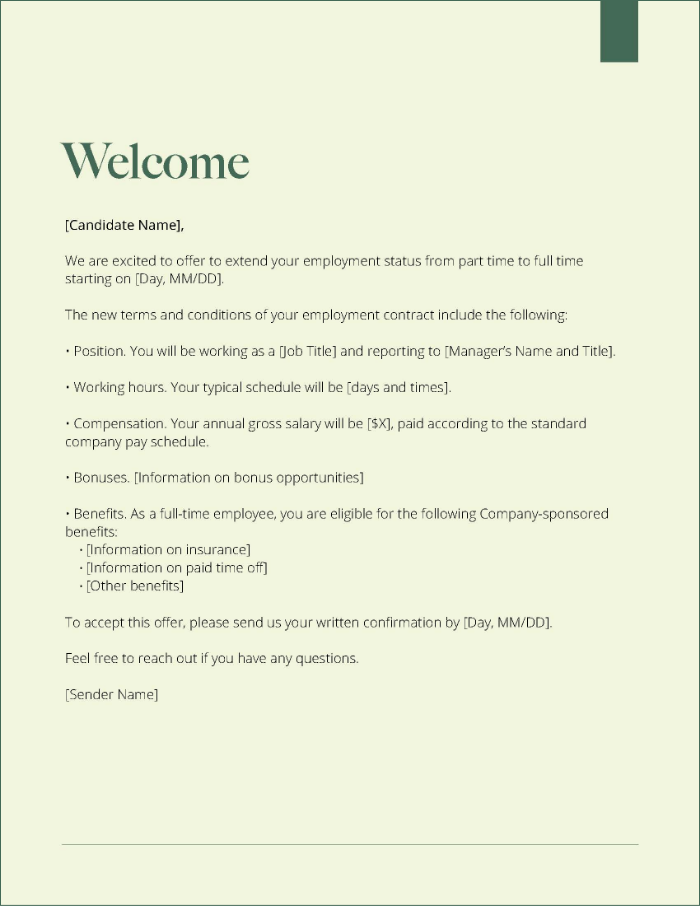
This is the template to use for an offer letter where an existing employee is going from a part time contract to a full time one. The key information here is what’s changing regarding their working hours and their pay, as well as any changes in responsibilities or benefits.
Offer letter FAQs.
An offer letter is the first step to bringing your chosen candidate onto your team. Find answers to your most common questions below.
What is an offer letter?
Is an offer letter as good as a contract?
How do I write a simple job offer letter?
A simple job offer letter should include:
- brief congratulations
- confirmation the recipient is being offered the position
- job type, and description
- compensation, benefits, and contact information.
You don’t need much more than this, and once happy, you can attach your letter as a PDF for them to sign.
Can a job offer be withdrawn?
Does a job offer letter mean I have the job?
What is the best format for a job offer letter?