ACROBAT | 8-MINUTE READ
How to write a reference letter: Free templates and examples.
Create a reference letter for a colleague or employee with these free templates and quick tips.
JUMP TO SECTION
- What is a reference letter?
- What are the different types of reference letters?
- Customisable reference letter template.
- How to write and structure a reference letter.
- Reference letter tips.
- The benefits of using a reference letter sample.
- Explore and create reference letter templates with Adobe Acrobat.
- Frequently asked questions.
Providing a reference letter for someone is an important task that can affect the outcome of a job application. With this in mind, it’s important to cover all bases. Using a reference letter template helps make sure that you’ve included all the necessary information.
In this guide, we’ll provide tips on how to write a reference letter, as well as some examples and templates to get you started.
What is a reference letter?
A reference letter is a formal document that highlights a person’s strengths and qualifications in relation to the job they’re applying for. Potential employers may request them from a candidate’s current employer or educational institutions to help aid their evaluation of an applicant – both professionally and of their character. They also help to verify claims made by applicants, such as their qualifications and work history.
Reference letters are an important part of the hiring process. They provide employers with additional information and further insight into someone’s character and work ethic. They can be a useful and accurate reflection of a candidate, outside of the usual requested cover letter or CV.
What are the different types of reference letters?
There are generally considered to be three different types of reference letters. It’s a good idea to make sure you know which type of reference letter is expected from you before you begin writing, so you know everything will be covered.
1. Professional reference letters.
Professional reference letters are requested during the job application process, usually as one of the final steps. They ask for further detail on a candidate’s work history, qualifications, experience, strengths and character.
For example, a hopeful candidate for a management position might want to receive a reference letter that highlights their leadership qualities, relevant professional achievements and any management qualifications.
2. Academic reference letters.
Some degree programmes, universities and schools often ask for an academic reference letter. This helps organisations to further evaluate whether a candidate is a good fit, both in terms of achievements and character.
Unlike professional reference letters, this type of letter tends to emphasise people’s soft skills – for example, organisation, problem-solving, research skills, and passions.
3. Character reference letters.
Character reference letters are typically the most subjective type. They’re often written by people who know the applicant well, or who have worked alongside them. They focus on a person’s personality, temperament, demeanour and attitude towards work.
They help prospective employers or organisations gain a better understanding of who a person is, as opposed to what they can do.
Customisable reference letter template.
Whatever the type of reference letter required, they all need to provide relevant, accurate and detailed information. And while you may have plenty of great things to say about someone, getting started writing a reference letter may feel daunting.
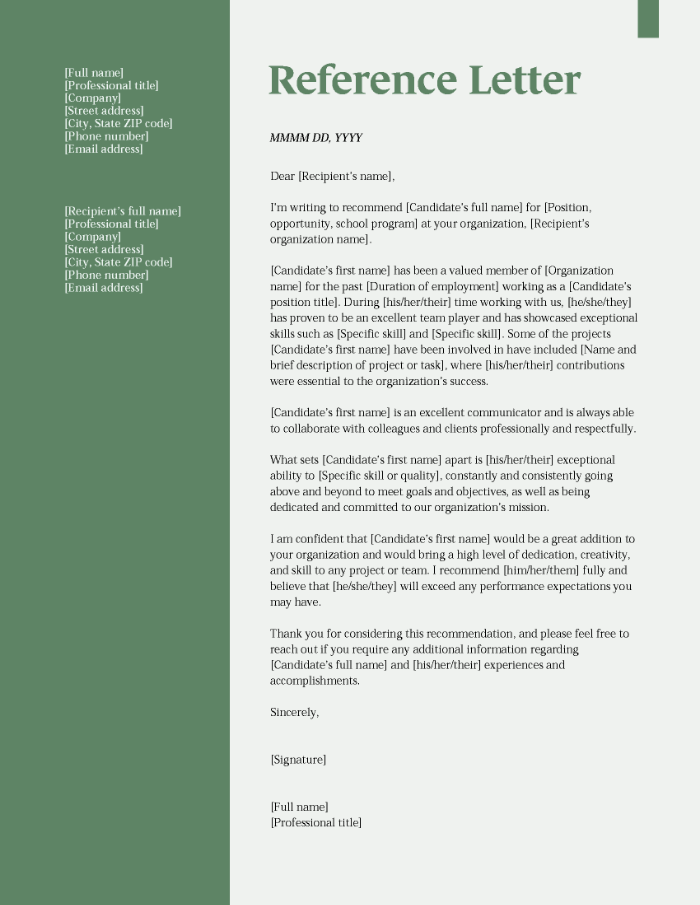
Professional reference letter templates can give you the head start you need. While, of course, you’ll need to customise the content, Adobe Acrobat templates provide the foundations in terms of consistent formatting and categories.
Take a look at the reference letter template example below to get started.
How to write and structure a reference letter.
One of the key things to consider when writing a reference letter, is highlighting your relationship and personal experience with the candidate. The reason why these letters are so important to the application process is that you’re essentially providing a different, reliable angle on the person. Your opinion is valued – so make it count.
When you get started, it doesn’t necessarily matter what format a reference letter is written in. You can start on Word and convert it to a PDF later, or vice versa. Just make sure you send it as the required format. The important thing is to get the content down.
When structuring the letter, just remember that each section serves a purpose. Let’s take a look at this in more detail:
- Include the necessary contact details. A reference letter is a formal document, so you need to address it like you would a CV or cover letter. Whether you’re providing it directly to the candidate to include in their application, or to the employer themselves, it needs to be addressed formally.
- Start with the context and purpose. Begin by stating the important contextual information. For example, their name, who you are to them, and reiterate the purpose of your writing your letter. You’ll need to give information about the role they’re applying for, too.
- Make your relationship clear. You’ll need to explain who you are and how you know the candidate – what is your professional relationship to them? This helps provide the necessary context to the reference you’re about to give.
- Discuss their relevant qualifications. Now you’ve determined your relationship to the candidate, you need to determine their relationship to the role in question. Discuss any qualifications and skills you think are relevant to the position they’ve applied for, making sure to relay your claims back to role specifics.
- Emphasise their relevant skills. This is where you demonstrate how the candidate could excel in their specific role. Take some time to give an honest appraisal of their hard and soft skills (technical abilities and personality traits). This will give the hiring team a clearer idea of whether these skills – and this candidate – match their requirements.
- Make your final recommendation statement. Finally, it’s time to write a statement about whether you recommend the candidate for the job. You’ll also want to let the receiver know you’re available to contact if they need to discuss things further.
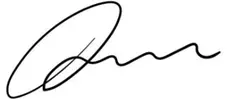
- Sign the reference letter. Sign and date the latter. Don’t forget to add your contact details.
Reference letter tips.
You’ve got the basic structure down – it’s almost time to start building your reference letter. Before you begin, however, here are a few things to keep in mind:
- Keep things brief. You’ll need to keep things as succinct as possible to get your message across in just a few paragraphs.
- Stay honest and candid. Try not to oversell candidates – even though you may want them to get the job. Always be honest and balanced. They may be asked to verify any statement you make.
- Be specific. Include facts, dates and specific pieces of information to help support and verify any statements you make about their suitability for the role.
- Remain relevant. Although they may have many qualities you want to highlight, try to keep your reference letter focused on those relevant to the job they’ve applied for.
- Keep the formatting consistent. Generally, a professional reference letter template should use left-text alignment, one-inch margins, and a standard, easy-to-read font and size. Remember that if you need to create a new reference letter, you can always edit an existing PDF and customise it with new copy.
The benefits of using a reference letter sample.
Using reference letter sample templates can help you save a lot of time when writing – so you can focus on the content itself. Once you’ve built one that you’re happy with, you can re-use it quickly and easily for future reference requests. Besides this, using a reference letter sample can:
- Keep things consistent
- Ensure accuracy for every reference
- Keep processes organised
- Make sure your feedback is thorough and focused
- Encourage quicker turnaround times.
Below is a reference letter sample you could use to help keep things efficient. Keep in mind that the specific information will need to be thoroughly customised to suit each individual candidate.
July 15, 2025
John Doe
ABC Company
123 Main Road
Anywhere, London, AB1 CD2
Dear Mr. Doe,
I understand that Jane Smith is being considered for a position within your organisation. I am pleased to share my general impressions based on my experience working with her.
Jane was employed at our company for several years and, during that time, I had the opportunity to observe her contributions in a professional capacity. She fulfilled her responsibilities and interacted well with colleagues and team members. Jane approached her work with a sense of professionalism and maintained a positive attitude in a variety of workplace situations.
While I was not directly involved in all aspects of her work, I can say that she was a consistent presence on our team and participated in several initiatives during her time with us. Her communication style was appropriate, and she maintained good working relationships across departments.
I wish Jane well in her future endeavours and trust that she will bring the same dedication to any new role she undertakes. Should you need additional insight, I am available by phone at 07123456789 or via email at mmanager@abccompany.com.
Sincerely,
Matthew Manager
Software Development Lead
ABC Company
123 Main Road
Anywhere, London, AB1 CD2
Explore and create reference letter templates with Adobe.
It’s time to start creating your template. With Adobe Acrobat, you can build reference letters that feel flexible but purposeful, and relevant to every individual you write one for. Once you’ve got the foundations in place, you can save it and reuse it for every candidate. Forget about starting from scratch each time.
Adobe can help you create, edit and finalise your reference letter with an official signature. You can even convert your PDF back into a Word doc if you need, or organise your files by adding or removing extra pages.
Try Adobe Acrobat today and take the stress out of writing professional reference letters.
Frequently asked questions.
What is an example of a good reference letter?
What are the best words to use in a reference letter?
While you want your reference letter to sound natural and customised to the individual, there are a few powerful words you can use when describing someone’s character and skills. For example:
- Delighted
- Dependable
- Driven
- Valuable
- Genuine
- Accomplished
- Adaptable
- Outstanding
- Resourceful
- Ambitious
What should be avoided in a reference letter?
While you may be focusing on what to do or what to include when writing a reference letter, it’s worth keeping in mind the things you should try not to do. For example, you should avoid:
- Being too vague or providing irrelevant information
- Overselling the candidate by failing to be balanced
- Forgetting to emphasise your relationship to the candidate
- Using some of the same information or claims as you have for other people
- Using passive voice – active voice helps keep people engaged
- Ignoring professional formalities – like using the correct letter format or submitting on time.