Sales funnel examples: What they are and how to build one.

Get your sales funnel together and offer your customers a smooth journey with Adobe Express.

Start designing with Adobe Express

Sales funnels are a way to ensure that your customer’s journey is falling into place the way you want it to. They ensure you’re aware of their journey, and any potential hurdles they might face along the way – from the moment they hear about you, to initial purchase – and everything that comes after.

Get sales funnel tips, templates and examples with Adobe Express today.

What is a sales funnel?

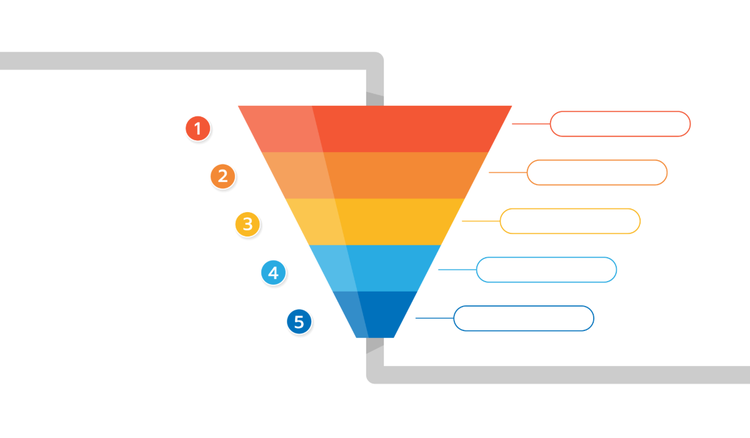
A sales funnel covers the steps that a customer takes as they progress through the buying process. It is the journey they go on from initial awareness to making a purchase (and beyond).

These sales funnel templates let you see the different stages of the buying journey and understand how customers engage with your brand at each one. With that information, businesses can make improvements to their customers’ experience.

Tasks
graphic-organizer
Topics
chart AND hierarchy

Template IDs

(To pull in manually curated templates if needed)

Orientation


(Horizontal/Vertical)

Vertical

Width


(Full, Std, sixcols)

sixcols

Limit


(number of templates to load each pagination. Min. 5)

6

Sort

Most Viewed

Rare & Original

Newest to Oldest

Oldest to Newest

Newest to Oldest
Locales
GB or EN
Animated
All

Premium


(true, false, all) true or false will limit to premium only or free only.

false

Sales funnel stages.

When you think about the customer journey, sadly, it isn’t as simple as they hear about you and then they buy. There are a few steps in the funnel – and, with a bit of thought, it doesn’t need to be a bumpy journey.

While individual sales funnels can vary, some general funnel stages work in most customer journeys:

1. Awareness.

Before a customer can buy from you, they must become aware of your business and the products, solutions, or services that you offer.

Awareness features at the top of the sales funnel, as it’s the first “contact point” between business and customer. Here, it’s all about piquing interest rather than immediately selling. You might garner awareness on your social media – either through online advertisements or posts, your website, or even in-person advertisements or flyers.

2. Interest.

Coming in second is the interest stage of the sales funnel, where potential buyers may actively seek or request more information about your products or services. That means they’ve identified a problem and are interested in exploring how you might offer a solution.

However, interest, again, doesn’t mean they’re customers yet. They still need to move along the sales funnel.

3. Consideration/evaluation.

Once your potential customers have been made aware of your product and have shown interest, we enter the consideration stage. At this point in the sales funnel, your potential customers are evaluating possible options that solve their needs.

Essentially, this is all about making an informed decision on a future purchase, so building trust here is essential. Product demos, white papers and studies, expert guides and reviews or comparisons can all be worthwhile tools.

4. Decision/action.

Once a customer is ready to make the purchase, they’ll have reached the decision and action stage of the sales funnel. At this point, they have done adequate research and decided whether to purchase (or not purchase) your product or service. Here, they’re a step away from becoming an actual customer. However, they may still be deciding, researching and comparing until the last moment.

Once they’ve made a decision, a customer will be ready to convert or walk away. This is the point where, if you win their business, you need to fulfil the customer’s expectations and provide the positive experience they are anticipating after all their consideration and research.

Remember, to move from decision to action, a customer may require nurturing, as they may not choose to purchase immediately.

5. Re-engagement.

The sales funnel doesn’t end once a customer has been converted – you want a customer for life, not for a one-off purchase where you rush them through the sales funnel as quickly as possible.

The re-engagement step is designed to enhance customer lifetime value. With repeat support, problem-solving products, and sufficient trust, a strong customer relationship means they may never need to approach the top of the funnel again.

How to build a sales funnel: Step-by-step.

Put the hard hat down. You can build a sales funnel from your chair. You’ll just need to map out a couple of things to get started:

Sales funnel examples.

Not sure where to start on your sales funnel? Here are some examples of commonly used sales funnels to get you started:

Basic sales funnel.

A basic sales funnel is your bread-and-butter/generic/fits-most type of sales funnel. It’s defined as a visual representation of the customer journey, typically comprising five or six stages. It can comfortably work for most business types and is commonly used across most industries that involve sales.

SaaS sales funnel.

The SaaS (software-as-a-service) sales funnel template focuses on the step-by-step process of selling software-as-a-service. Because of the nature of software, the sales funnel can look a bit different and may have some different stages and an even bigger focus on post-sales support and retention.

E-commerce sales funnel.

An e-commerce sales funnel template is a visual representation of a customer’s journey, as with the SaaS and basic funnels. However, it’s engineered to consider an e-commerce journey. While a basic sales funnel template could work, this may help you home in on some of the specific challenges or hurdles of an online-only journey.

Tasks
infographic
Topics
college, business, marketing AND value, content, market, strategy AND student, engagement, data AND undergrad, process, store AND university, sales, sale

Template IDs

(To pull in manually curated templates if needed)

Orientation


(Horizontal/Vertical)

Vertical

Width


(Full, Std, sixcols)

sixcols

Limit


(number of templates to load each pagination. Min. 5)

6
Animated
All

Sort

Most Viewed

Rare & Original

Newest to Oldest

Oldest to Newest

Newest to Oldest
Locales
GB or EN

Premium


(true, false, all) true or false will limit to premium only or free only.

false

How can Adobe Express help you build out your sales funnel?

Ready to build your own sales funnel? Start looking into your customer journey and make the right decisions. Don’t worry, we’re here to help:

1. Create your own sales funnel infographic.

Want to share your vision? With Adobe Express you can easily design and edit infographics. Create stunning visuals that are easy to understand, including your own sales funnels. Try the Adobe Express Infographic Creator today.

2. Make the most of existing templates.

Want to save time on the surface-level aspects of sales funnel graphic design? Make the most out of existing templates. Utilise flow-chart infographic templates and focus on the finer points of your sales funnel.

3. Create content for every stage of the sales funnel.

There’s a lot to do when it comes to sales, but with Adobe Express you can make content easier. It’s easier than ever to build awareness for your brand. Try our Advertisement and Blog Post creator tools and give your customer journey a kickstart.

Share your sales funnel strategy with the wider business using the AI presentation maker.

Want to share your sales funnel with colleagues? Compile your findings, explanations, plans and infographics into a coherent presentation – without the need to scramble to create a deck. Use the Adobe Express AI presentation maker for on-brand, on-point presentations in minutes. Share your sales funnel strategy today, with the AI presentation maker.

Try Adobe Express for free now

Good to know.

What is the workflow of a sales funnel?

A sales funnel workflow is the process by which customers journey through the stages of the buying process. It’s a visual representation of that journey, helping a business identify customer pain points. It’s often used interchangeably when discussing the sales funnel – but it’s essentially the representation of it, whereas the sales funnel is what the customer experiences.

How do you organise a sales funnel?

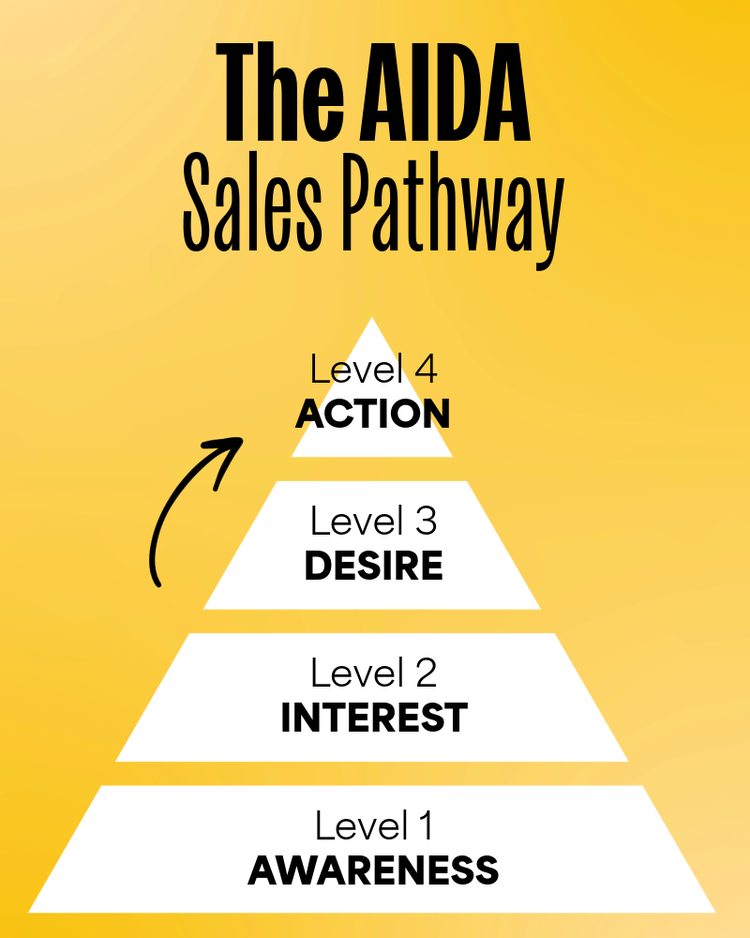
Typically, you should stick to the stages method as these represent most businesses. The stages to include are: awareness, interest, consideration/evaluation, decision/action, and retention or loyalty. By organising them top-down into these sections, you then have a chronological visualisation of your funnel to better understand the customer journey. Flow charts can be another way to organise your sales funnel.

How can you automate your sales funnel?

By using software, such as Adobe for Business, you can easily automate your sales funnel. By using technology to automate marketing tasks, manage leads and deliver relevant, personalised customer correspondence and journeys, you can leverage the power of a personalised sales funnel without the need to curate each journey along the way.

Is Adobe Express free?

Yes, our free plan offers many core features including thousands of templates, photo editing and effects, animation, and 5 GB of storage. See our pricing page for details and to compare plans.