How to create an email newsletter – with ideas and templates.
Discover how to create, design, and customise a fresh newsletter email with Adobe Express today.
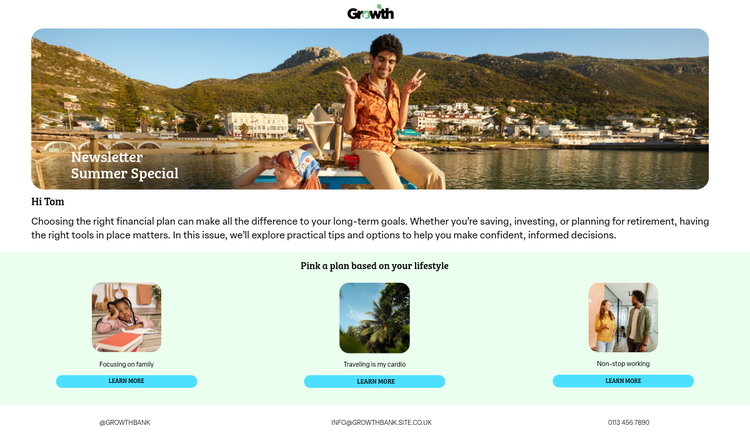



An email newsletter is a simple and convenient way for brands to keep in touch with customers, clients or followers. Chances are, you’ve received a branded email or two from businesses you’ve interacted with online. That’s email marketing at work. Brands use this powerful tool to keep their subscribers up to date with the latest news, useful tips, and new content that aligns with their customers’ interests.
This guide will show you how to create an email newsletter from scratch using Adobe Express – so you can stay connected and offer value to your clients directly through their inbox.
Key takeaways.
- Newsletters are an excellent way of engaging with your audience, helping them build a relationship with your brand.
- The best email newsletters will feature a compelling subject line, engaging content and clear CTAs.
- Adobe Express lets you customise professional email newsletter templates for free, saving you time and money.
What is an email newsletter?
An email newsletter is a type of email marketing that businesses use to regularly send content to their subscriber lists. In the UK, recipients have to voluntarily opt in to receive email newsletters – usually via a form, website, or sign-up offer – according to GDPR. Email subscribers can be categorised into specific audience groups such as:
- Loyal customers
- Potential leads
- Blog readers
This segmenting can help brands understand the best and most relevant content to share with them.
Common content for email newsletters includes:
- Announcements
- Tutorials
- Behind-the-scenes content
- Product features
- Discounts.
These can be sent out weekly, fortnightly, or monthly – depending on your business goals. Some may even go out reactively to a particular situation, such as industry news, trends, seasonal events, or company updates – helping your brand stay relevant to your audience.
Editable email newsletter ideas and examples.
recipe
What are the benefits of having an email newsletter?
Email newsletters have a wide range of benefits that most brands can take advantage of. They help build relationships, drive conversions, and keep your audience engaged over time.
Key benefits of an email newsletter include:
- Driving traffic by linking directly to your website, blog, or online shop to increase views and visits.
- Building customer loyalty by sharing valuable updates tailored to your audience’s interests. This can help to keep your brand relevant.
- Tracking and measuring performance by using reporting tools on email opens, clicks, unsubscribes, and conversion rates. These metrics can help you improve your overall email marketing strategy.
- Showcasing new launches, seasonal offers, or behind-the-scenes sneak peeks on products and services.
How to create an email newsletter in 7 steps with Adobe Express.
Whether you’re just starting out or refreshing your strategy, here’s how to make an engaging email newsletter that works for your brand.
1. Build out your email marketing strategy.
Your email marketing strategy should centre on your audience. When making strategy decisions, you’ll need to think about factors such as their:
- Age – Are they Gen Z, Gen X, Baby Boomers or Millennials? Different age groups can respond differently to certain messaging styles, offers and formats.
- Location – Where your audience live can influence how they understand and respond to language styles, cultural references and the time at which your email newsletter is sent.
- Behaviour – Understanding behaviour patterns like past purchases, browsing habits and engagement can help you understand your audience and personalise content.
- Interests – Aligning with your target market’s interests can help you create more relevant content and boost engagement.
Use this information to define your newsletter’s purpose. Are you focused on brand awareness, sales, lead nurturing, or something else?
Email newsletter frequency and performance tracking.
Another important factor for your email marketing strategy is the frequency of your newsletters. Weekly or monthly are the most popular options. But you might also prefer to send out ad-hoc updates around events or promotions.
Once you’ve formed your email strategy, you need to know how to measure success. KPIs like open rate, click-through rate, conversions, and unsubscribe rate are common ways to track the performance of an email campaign, and you can tweak your future newsletters based on these results.
2. Make the most of editable newsletter templates.
Save time by using professionally designed email newsletter templates from Adobe Express. With easy-to-use templates, you can quickly customise fonts, colours, and layouts to match your brand’s style.
Just be mindful not to switch up your templates too often. When your customers start to recognise your brand emails, consistency is key. A sudden change in design may cause confusion and potentially impact brand loyalty.
3. Apply your branding to the newsletter design.
Your branding should be consistent across all your marketing materials, and that includes your email newsletters. Set up a brand kit in Adobe Express to apply your own logo, colour palette, and fonts consistently across all your email templates. This will help reinforce recognition and build trust with each send.
4. Customise the template with other design elements.
Keep your email layouts clean and mobile-optimised, as nearly 59% of Millennials check email via their smartphone – increasing to 67% for Gen Z. But that doesn’t mean there’s no room to customise your newsletter templates. To make your email newsletter more appealing, you can add features such as:
- Icons
- Product images
- GIFs
- Text effects
- Short video clips
- Testimonials.
Always ensure your email is easy to scan and includes readable fonts, consistent headers, and clear CTAs that encourage readers to click through to your website. It’s also important to choose an engaging subject line to attract readers’ attention and encourage them to open your email in the first place.
5. Come up with some initial newsletter ideas.
To kickstart your email newsletters, decide on a set of themes that will be engaging for your audience. You can draw inspiration from earlier high-performing emails, or from content on your social channels that drove solid engagement. You should also align your email content with your business goals, whether that’s to drive website visits, announce events, or share tips.
Popular ideas for email newsletters include:
- Staff picks and recommendations
- Behind-the-scenes content that gives readers a glimpse into life at your company
- Expert or industry insights
- User-generated content that shows your customers using your products
- Seasonal offers to drive sales.
6. Save and share your newsletter template.
Once you’ve created your newsletter template, don’t forget to save it and share your designs with colleagues or collaborators to edit or get feedback. In most cases, your email marketing won’t be a solo project – so it’s important to collaborate with stakeholders to create the perfect newsletter for your brand before it’s sent to customers.
Plus, by saving and sharing your template, it’s easier to repurpose it for future newsletters to save time.
7. Send your email newsletter.
Happy with your email marketing template? Download your final design from Adobe Express and send it to your desired platform.
Before hitting send, test your email by first sending it to yourself and a few team members. This ensures everything looks right and all the links work as they should. Once you’re confident it’s ready to go, focus on crafting an engaging subject line that grabs attention, and choose the best time to send your email newsletter for maximum impact.
3 effective newsletter examples.
Looking at a few impactful industry examples of email newsletters that work can help you optimise your strategy and ensure you include everything you need in your emails to appeal to your customers.
Here are 3 effective email newsletter examples from brands you may know:
1. John Lewis – Mother’s Day.
As part of its Mother’s Day campaign, John Lewis sent out an email with the clear heading ‘Perfect gifts for Mother’s Day’, immediately highlighting the occasion and value to the reader.
Inside, it features a helpful gift guide with direct links to products, making it easy for readers to browse and shop. The visuals use storytelling to reference common experiences audiences will be able to identify with – like breakfast in bed paired with cosy pyjamas – showcasing emotional, real-life moments connected with the occasion.
The layout is clean and mobile-friendly, with clear calls to action, ensuring the newsletter is both engaging and easy to navigate.
2. Virgin Experience Days.
Virgin Experience Days are a great example of a company using strong brand identity to make its newsletters instantly recognisable.
They consistently feature its signature red brand colour throughout the layout, highlighting offers and calls to action. This level of visual consistency not only reinforces the brand but also helps readers quickly identify key content.
By making the layout visually appealing and consistent, Virgin Experience Days ensures that subscribers can easily navigate the newsletter while feeling immersed in the brand experience.
3. WeTransfer.
WeTransfer’s newsletter uses a unique image-based approach to provide people with a striking visual experience. The content immediately captures attention, which is fitting as a great deal of the audience are designers and creatives.
What works well for them is the combination of audience awareness and simplicity. Every visual is carefully chosen to inspire and engage, while the clean image-driven design ensures nothing distracts from the creative content. Subscribers are encouraged to “bring [their] ideas to life” using the service.
How to bring your email newsletter to life.

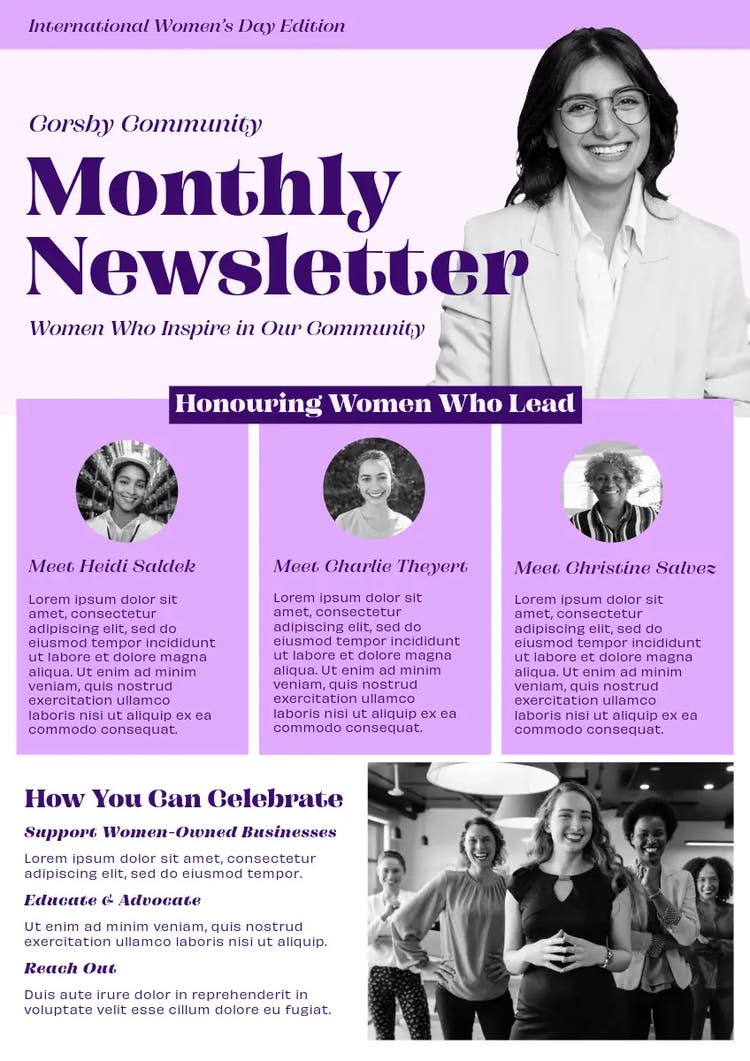
Free email newsletter ideas for your small business from Adobe Express.
recipe
Generate more email marketing templates with AI tools on Adobe Express.
New to email design? No problem. With the AI Template Generator, you can instantly create professional, on-brand layouts. Simply enter a few details about your brand, like your audience, style, and purpose.
It’s perfect for small businesses short on time and manpower, or anyone starting an email newsletter from scratch. In seconds, you’ll get fresh visuals, font pairings, colour combinations, and layout ideas. And if you want to make them even more personalised to your brand, you can add your unique touches to the generated design.
You might also like...