What is animation art? Meaning, history and art styles.
Summary/Overview
You may know of animation through the wonderful worlds you experience in films and TV shows. It’s a unique way of storytelling that captures the magic of the artist and the imagination of the viewer.
Simply put, art animation involves transforming still images into moving works of art. Art animation dates all the way back to the optical toys of the eighteenth century, evolving into cartoon strip illustrations at the start of the twentieth century. Modern digital art animation involves CGI (computed generated imagery), a technique seen in most animated movies today.
Discover more about what animation in art is, styles of art animation and tips for creating your own with Adobe Express.
What is animation?
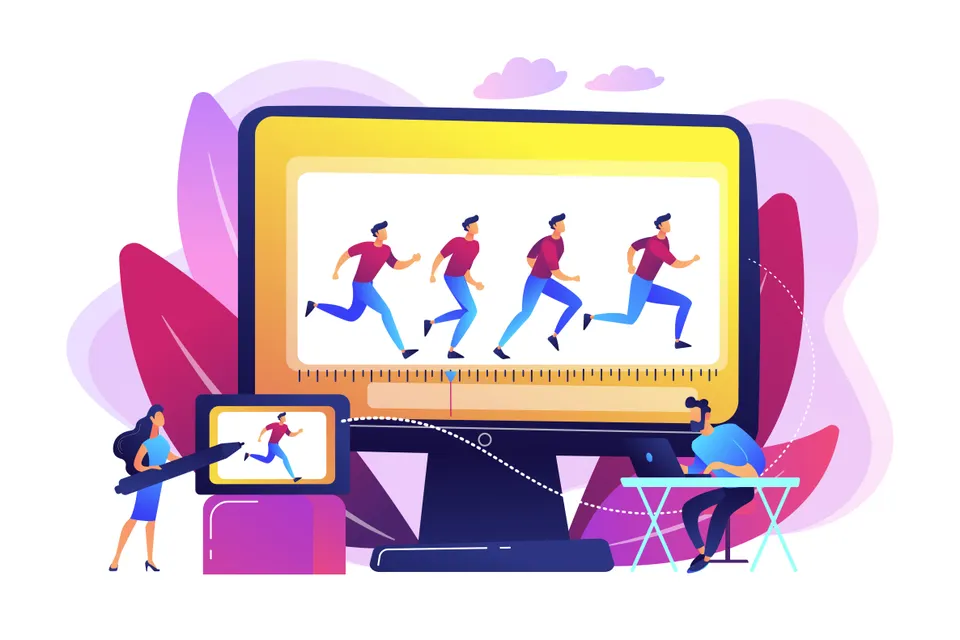
Animation is the art of making static objects look like they’re moving. It’s the process of displaying drawings, models or puppets in rapid succession to create the illusion of movement. As our eyes can only retain an image for around one tenth of a second, our brain blends multiple images together into one single moving picture. This is known as persistence of vision and is the core reason animation works.
Traditionally, images were drawn or painted on clear celluloid sheets and then photographed. Today, the animated films we watch are usually created using CGI, drawn and rendered within a digital platform.
A short history of animation art.
The concept of storytelling has existed for hundreds of years. In fact, storytelling through motion goes all the way back to shadow puppetry around 200 A.D.
Pre-20th century animation art.
In the 1830s, the Phenakistoscope was independently invented by Joseph Plateau and Simon von Stampfer (who called his version the Stroboscope). This device featured a spinning circular disc with a series of sequential drawings. When viewed through slits in the disc while it was in motion, it created the illusion of movement—thanks to the principle of persistence of vision.
A similar device, the Zoetrope, followed the same principle but used a cylindrical design. The term Zoetrope was coined in 1866 by American inventor William Lincoln.
Post-20th century animation art.
The first animated films appeared at the start of the twentieth century. Some of the earliest examples include James Stuart Blackton’s The Enchanted Drawing in 1900 and French caricaturist Émile Cohl’s Fantasmagorie in 1908.
Disney pioneered the traditional form of animation known as ‘cel animation’, which involved hand-drawing onto celluloid paper. In 1937, Snow White and the Seven Dwarfs was the first American full-length animated feature.
Modern advances in technology have made it possible to create more detailed and realistic animations. Fast forward to today, 3D and CGI animation are the most common forms.
Editable animation examples from Adobe Express.
Collection ID
(To pull in manually curated templates if needed)
Orientation
(Horizontal/Vertical)
Width
(Full, Std, sixcols)
Limit
(number of templates to load each pagination. Min. 5)
Sort
Most Viewed
Rare & Original
Newest to Oldest
Oldest to Newest
Premium
(true, false, all) true or false will limit to premium only or free only.
What are the main types of animation art styles?
Since the beginning of what we know as animation, various art styles and techniques have been established. Here are some of the main animation art styles you may have heard of:
Traditional.
With traditional animation, each frame is hand drawn and coloured with exceptional attention to detail. Examples include Disney’s Snow White and the Seven Dwarfs and Bambi. Studio Ghibli, the Japanese animation studio, is also well known for traditional animation films – including Spirited Away.
2D animation.
2D animation forms part of digital animation. Artists set key frames (images) that define the movement of characters or objects and then use computer technology to generate the images ones in-between. This ensures a smooth animation. This animation art style is evident in popular TV cartoons like Tom & Jerry and early episodes of The Simpsons.
3D animation.
3D animation enhances visual storytelling and brings animation it to a new dimension. Artists use this 3D animation to create three-dimensional worlds and characters, with lifelike movements, textures, lighting and shadows that could not exist within traditional or 2D animation. Think Toy Story, Avatar and Shrek.
Motion graphics.
Motion graphics are a blend of animation and graphic design. It combines various visual elements—such as text and graphics—to tell a story. Examples of this animation art style include film title sequences, TV adverts, music videos and more. Motion graphics are designed to capture the attention of the audience and convey information quickly.
Stop motion.
Stop motion is a unique form of animation that involves moving physical objects in small increments, capturing a photo at each step, and playing the images in rapid succession to create a film. It’s a painstaking process, and takes a lot of patience, as the objects need to be moved frame-by-frame. Wes Anderson’s Isle of Dogs used stop motion to create a whimsical effect.
Claymation is an example of stop motion that uses clay or plasticine figurines as character models and environments. Aardman productions is famous for its Claymation films, an iconic example of their animation style is Wallace and Gromit.
Rotoscope animation.
Rotoscoping utilises live action footage to create realistic movements. It involves drawing over each frame of film footage to seamlessly merge live action with hand-drawn animation. This creates a unique cinematic experience – the process can then be completed by hand or by using a specialised digital software.
A great example is A-ha’s 1985 music video for the hit Take On Me, which blends pencil-sketch animation with live action through frame-by-frame rotoscoping.
Free animation template ideas.
Collection ID
(To pull in manually curated templates if needed)
Orientation
(Horizontal/Vertical)
Width
(Full, Std, sixcols)
Limit
(number of templates to load each pagination. Min. 5)
Sort
Most Viewed
Rare & Original
Newest to Oldest
Oldest to Newest
Premium
(true, false, all) true or false will limit to premium only or free only.
Tips for creating your own animation art with Adobe Express.
Create new realities and try your hand at visual storytelling. Here are some tips to consider when stepping into the world of art animation:
Experiment with your own animation styles.
Dabble in different animation art styles. Whether you fancy traditional animation, comic strip ideas or want to combine hand-drawing with CGI and 3D effects for YouTube. No idea is a bad one at this stage, get creative and expand your animation portfolio using Adobe Express tools.
Storyboard your ideas.
Once you have a grasp on the animation style you’d like to use, it’s time to get your ideas down. A storyboard can help you to visualise your plan and consider how each aspect will fit together nicely. It’s essential to ensuring the flow of the story or narrative of your film.
Use a reference video.
A reference video can help keep your animation ideas on the right track – it can be harder than you expect to mimic real motions, particularly people. If you’re creating a scene of someone running, having a video of a runner for reference can help you consider posture, lighting, movement and more to make your animation look more realistic. You could even shoot your own video to work from with help from Adobe Express.
Home in on the key poses.
The key poses are the most important images of the shot. They’re the building blocks for the story, so it’s important to get this right. For example, if the character is walking, the animator would need to consider the full range of motion when creating the key poses – thinking about body position and how it changes between strides.
Don’t forget to add a bit of life.
Once you’ve finished the bulk of your animation, go back and add small imperfections to your character. No one is perfect, and that includes your animated character. Consider adding an extra blink or mouth twitch to take your animation to the next level.
Useful things to know.
What do artists use to make animations?
Artists use a variety of tools to create animations. Traditionally, animators used transparent celluloid paper to hand draw each frame. Now most animated blockbusters are created in 3D using CGI, so artists will need a computer with a powerful graphics card and animation programs like Adobe Animate. You can even create animations on Adobe Express.
What is the main purpose of an animation?
Animation brings static imagery to life – its purpose is to create the illusion of movement. Animation art is a way to visualise a story, convey information and create new worlds for viewers to escape to. Animation can turn ideas and drawings to life.
How can beginners get started with animation?
Get to grips with creating an animation with Adobe Express. With no prior experience needed, you can select a character and then upload or record your own dialogue. Don’t forget to add animated text and experiment with different effects to capture your audience’s attention.