Work more efficiently thanks to a completely redesigned user experience. Use floating toolbars and control bars, dock your most frequently used dialog boxes for quick access, and create workspaces customized to your workflow.

Effortlessly single source variations of the same document for different channels and purposes. Build and use complex Boolean expressions to define output filters in topic-based, structured, and unstructured modes.

Take advantage of support for multivalued attributes and the ability to import expressions from one document to another.

Easily automate time-consuming, repetitive tasks through advanced scripting support with Adobe® ExtendScript. Run scripts for simple tasks from within Adobe® FrameMaker® or through the ExtendScript Toolkit to eliminate manual effort and increase productivity.

Manage formats for paragraphs, characters, and tables from the existing catalog or create custom lists to be displayed. You can also create new formats and delete or override those that are unused or not useful.

Define and edit attributes for declarations in markup to perform multiple functions: record the status of content within elements, allow cross-referencing between elements, or specify how to format an element.
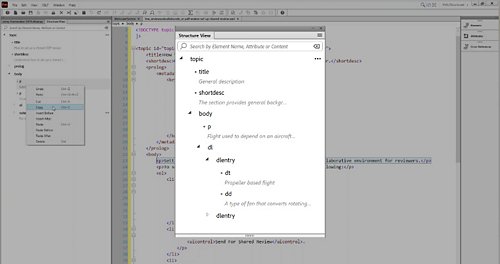
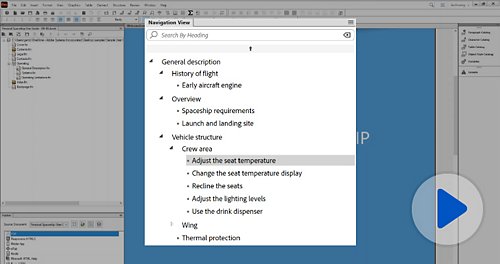
Easily view all elements in a collapsible format, even in document view; hide or collapse parent and child elements individually or simultaneously; and search through and open elements, including those that are collapsed.

Drag text, elements, and rows and columns from tables and drop them into new documents or applications to save time. Use the Background Color feature to emphasize and highlight important sections of text by adding color to the background, whether for sections of text or paragraphs.

Import comments with type highlights retained from PDF files into Adobe® FrameMaker® 10 with the Text Background Color feature.

Created compelling online content by incorporating 3D models, rich Adobe® Flash® Player compatible animations and simulations created with Adobe Captivate® software. Generate PDF files with live 3D models.
Select the right format and import a range of media files into Adobe® FrameMaker® 10. With comprehensive support for different video formats as well as SWF poster frame, you can easily add a slew of multimedia features to create more engaging, high-impact technical content.

Quickly redo or correct errors with the powerful Repeat Last Operation feature, which allows you to repeat the last operation performed, from current insertions to text or object selections.

Manage and apply table formats with enhanced table catalog creation. View all table formats present in your document and apply or delete them easily.

Generate conditional output using conditional tags combined with Boolean operators, and manage existing build expression.

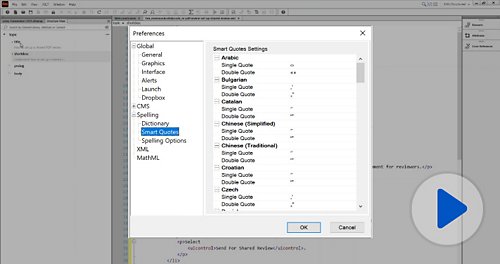
Choose from a select list of alerts to disable those that you do not wish to see repeated.
Work more efficiently with standards-compliant, prebuilt tools and templates designed for easier authoring. Use utilities like Auto Spell Check, Highlight Support, scrolling for lengthy dialogue, and enhanced Find and Replace to get the job done faster and smarter.

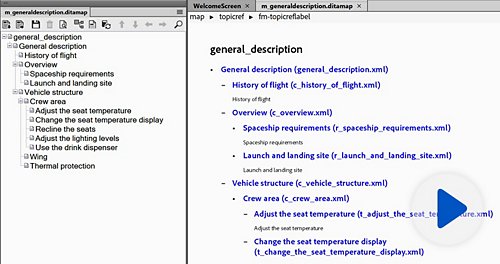
Simply drag and drop to cut elements from one DITA map and paste them into another.

Save time by inserting multiple topicrefs in one move.

Move back to the RM view in a single click, and take advantage of the support for additional child and sibling elements.

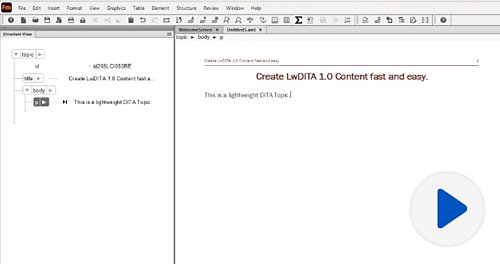
Benefit from a basic infrastructure for working with structured Adobe® FrameMaker®. With this highly intuitive, UI-based tool, users can start working with structured FrameMaker even if they don’t have any prior knowledge or training.

Compare any two documents through the Compare Documents user interface—changes will be marked through Track Text Edits in the composite document.

Easily view, navigate, and edit documents through new, dockable dialog boxes. Work more efficiently with markers, variables, fonts, conditional text, graphics, cross-references, and text insets.

Easily meet consistency and authoring needs as well as specific output requirements while retaining the advantages of your existing DITA architecture by specializing DITA to create customized information models.

Take advantage of comprehensive support for DITA 1.2 elements, and DITA 1.1, including Bookmap, Indexing, and Glossary specifications.

Employ a new user interface for books, as well as tools for hierarchical books and books within books. Incorporate XML files and other structured Adobe® FrameMaker® documents, and reference DITA maps or bookmaps.
Save time with a host of powerful features to review and track changes across an entire book. Use review icons to navigate through a review by accepting individual changes or all changes, and view and edit changes from selected users.

Create multiple build and automated publication tasks and schedule them to run at specified intervals. Select from one-time, daily, weekly or monthly high-volume publication tasks.

Easily create PDF output for long documents and books. Aggregate topic-based, structured, and unstructured content including XML and DITA files, and generate tables of contents, indexes, and pristine PDF output.

Output to multiple formats including PDF, EPUB, WebHelp, Adobe® AIR®, Eclipse Help, and Oracle Help from a single source document.