What is college burnout and how to prevent it?
College burnout has become an increasingly common challenge for students navigating demanding academic environments.

What is college burnout?
College burnout is a state of chronic physical, emotional, and mental exhaustion that results from prolonged academic stress. Unlike the temporary tiredness that comes after a challenging exam week, burnout represents a deeper depletion that affects every aspect of a student's life. According to research published in the Journal of American College Health, approximately 40% of college students report experiencing significant burnout symptoms during their academic careers, making this a widespread concern across campuses nationwide.
At its core, academic burnout develops when the demands placed on students consistently exceed their capacity to cope. This imbalance creates a cumulative effect where stress compounds over time, eventually overwhelming even the most dedicated learners. The American Psychological Association notes that chronic stress significantly impairs cognitive function, memory retention, and academic performance - the very skills students need most.
Recognizing the signs of college burnout
Burnout manifests in multiple ways and understanding these warning signs is the first step toward addressing the problem. Student burnout doesn't appear overnight; it develops gradually through accumulating stress and depleted resources. Here are a few signs to look out for:
- Physical symptoms: these often appear first. You might notice persistent fatigue that doesn't improve with rest, frequent headaches or muscle tension, disrupted sleep patterns, and a weakened immune system that leaves you catching every cold that circulates through your dorm. Some students experience changes in appetite, digestive issues, or unexplained aches and pains. Research indicates that students experiencing burnout report physical health complaints at nearly twice the rate of their non-burned-out peers.
- Emotional symptoms: these can be equally debilitating. Feelings of cynicism and detachment from your studies become common. You may find yourself questioning whether your degree matters or feeling disconnected from classmates and professors who once inspired you. Anxiety and irritability increase, while your capacity for joy and enthusiasm diminishes. Some students describe feeling emotionally numb or hollow, going through the motions of college life without genuine engagement.
- Academic symptoms: these directly impact your performance. Grades begin to slip as concentration becomes difficult. Deadlines get missed not because you forgot them or due to poor time management, but because you simply couldn't muster the energy to complete assignments. The motivation that once drove you to pursue higher education fades, replaced by a sense of going through the motions without purpose or direction.
How to avoid academic burnout
Prevention is always more effective than recovery. By implementing proactive strategies, you can protect yourself from the downward spiral of college burnout while still achieving your academic goals. These approaches require intentional effort but pay dividends in sustained energy and performance throughout your college years.
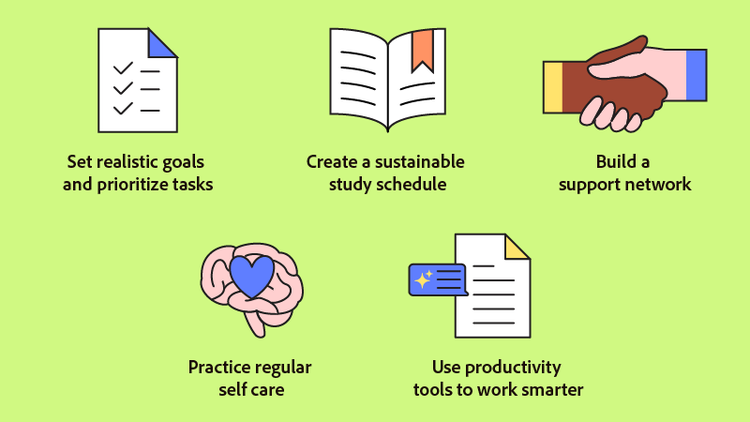
1. Set realistic goals and prioritize tasks
One of the most powerful burnout prevention strategies involves setting achievable expectations for yourself. Instead of viewing your semester as one overwhelming mountain to climb, break large projects and long-term goals into smaller, manageable milestones. Completing a research paper becomes less daunting when you focus on one section at a time rather than the entire document.
Prioritization frameworks help you direct energy where it matters most. Not every assignment carries equal weight, and not every task deserves your best hours. Learn to distinguish between urgent and important responsibilities and give yourself permission to do "good enough" work on lower-stakes assignments so you can excel where it counts.
Avoid the perfectionism trap that ensnares many high-achieving students. Pursuing excellence is admirable, but demanding perfection from yourself in every endeavor is a recipe for exhaustion. Accept that some days will be more productive than others, and progress matters more than flawlessness.
2. Create a sustainable study schedule
Your study schedule should work with your natural rhythms rather than against them. Some students focus best in early morning hours, while others hit their stride late at night. Design your schedule around your peak performance times, saving challenging tasks for when your concentration is strongest.
Balance intensive study sessions with genuine breaks. The Pomodoro Technique, which alternates focused work periods with short rest intervals, can help maintain productivity without depleting your mental resources. During breaks, step away from screens, move your body, and give your brain a chance to process what you've learned.
Avoid cramming and all-nighters whenever possible. While these strategies might feel necessary in the moment, they create a cycle of sleep deprivation and catch-up that compounds over time. Consistent, moderate study sessions spread across days and weeks produce better retention and require less overall energy than frantic last-minute efforts. Research from UCLA confirms that students who maintain regular study schedules outperform those who rely on intensive cramming sessions.
3. Build a support network
Isolation intensifies stress and accelerates burnout. Make deliberate efforts to connect with classmates who understand your academic challenges. Study groups provide both practical support and emotional camaraderie that can sustain you through difficult periods.
Don't hesitate to reach out to academic advisors, professors during office hours, and campus counseling services. These resources exist specifically to support student success, and using them demonstrates wisdom rather than weakness. Many students wait until they're in crisis to seek help, but early intervention prevents problems from escalating.
Maintain relationships outside academia as well. Friends and family who aren't immersed in your academic world can provide perspective and remind you that your identity extends beyond your grades and accomplishments. Social connection is a fundamental human need, and neglecting it in favor of constant study ultimately undermines the performance you're trying to optimize.
4. Practice regular self-care
Self-care isn't a luxury or an indulgence, it's a necessity for sustainable performance. Prioritize sleep, aiming for seven to nine hours per night. Sleep deprivation impairs memory consolidation, emotional regulation, and cognitive function, making every academic task harder than it needs to be.
Nutrition matters more than many students realize. Fueling your brain with balanced meals rather than caffeine and convenience foods supports concentration and mood stability. Regular physical activity, even brief walks between classes, releases tension and boosts mental clarity. The Centers for Disease Control and Prevention recommends at least 150 minutes of moderate physical activity weekly for optimal health.
Tend to your mental health with the same attention you'd give a physical illness. Practices like mindfulness, journaling, or simply spending time in nature can help process stress before it accumulates. Consider creating a self care checklist to ensure you're addressing all dimensions of your wellbeing consistently. Tracking your self-care habits helps identify patterns and ensures important practices don't fall through the cracks during busy periods.
5. Use productivity tools to work smarter
Technology offers powerful solutions for reducing the workload stress that contributes to student burnout. Rather than spending hours on tasks that could be automated or streamlined, explore the best AI tools for students designed specifically for academic success.
Modern productivity applications can help you organize assignments, track deadlines, and manage your time more effectively. Digital tools for note-taking, citation management, and collaborative projects reduce friction in everyday academic tasks, freeing mental energy for actual learning.
AI-powered study tools represent a significant advancement in academic efficiency. These applications can summarize lengthy readings, generate study materials, and help you extract key information from complex documents in a fraction of the time manual methods require. Acrobat AI Assistant exemplifies this capability, allowing students to interact with their academic documents in entirely new ways. Instead of reading every word of a dense textbook chapter, you can ask questions and receive targeted responses that focus your attention on what matters most.

How to fight burnout
If you're already experiencing burnout, recovery is possible. The path back to engagement and energy requires patience and intentional action, but countless students have navigated this challenge successfully. Recognizing where you are and taking appropriate steps can restore your capacity for learning and enjoyment of college life.
Recognizing burnout versus normal stress
Understanding the difference between regular academic stress and true burnout helps you respond appropriately. Normal stress feels challenging but manageable. You might feel anxious before an exam or tired after a long week, but you can still find moments of satisfaction and look forward to breaks or enjoyable activities.
Burnout feels fundamentally different. The exhaustion persists even after rest. Activities that once brought you joy now feel empty or burdensome. You may notice yourself becoming increasingly cynical about your education, questioning whether any of it matters. Physical symptoms like chronic fatigue, frequent illness, or persistent headaches accompany the emotional depletion.
Early awareness matters because burnout is easier to address before it becomes severe. If you recognize these patterns developing, take them seriously rather than pushing through in hopes they'll resolve on their own. The World Health Organization officially recognizes burnout as an occupational phenomenon, validating what students experience as a real and significant health concern.
Implementing recovery strategies
Recovery begins with rest, genuine, guilt-free rest. This might mean taking a mental health day, reducing your course load for a semester, or temporarily stepping back from extracurricular commitments. Rest isn't laziness; it's the foundation for sustainable performance. Here are a few strategies to try:
- Reassess your current workload honestly. Are you carrying more than is reasonable? Are there commitments you can release or delegate? Sometimes burnout signals that your life structure needs adjustment, not just a brief pause before returning to the same unsustainable pattern. Consider whether your current path aligns with your values and goals, or whether you've been pursuing expectations that don't actually serve your wellbeing.
- Seek professional support when needed. Campus counseling centers, student health services, and academic advisors can provide guidance tailored to your specific situation. Therapists who specialize in academic stress can help you develop coping strategies and address underlying patterns that contribute to burnout. Asking for help is a sign of strength and self-awareness, not weakness or failure.
Using AI tools to reduce overwhelm
When you're recovering from burnout, reducing the cognitive load of academic tasks can accelerate your return to wellness. Smart study applications offer practical solutions for accomplishing more with less effort, giving you breathing room during recovery.
An AI summary generator can condense lengthy readings into digestible overviews, helping you keep up with coursework without spending hours on each assigned text. This proves especially valuable when you're rebuilding your capacity and can't yet handle the volume of reading you managed before burnout. Acrobat AI Assistant excels at this task, transforming dense academic papers into clear summaries that capture essential points.
A flashcard maker can automatically generate study materials from your notes and readings, eliminating the tedious work of manual flashcard creation. Efficient studying means more effective use of your limited energy during recovery. When every minute of study time counts, automating preparation tasks frees you to focus on actual learning. The ability to chat with your PDF transforms how you interact with academic materials. Instead of reading every page of a lengthy PDF, you can ask specific questions and receive targeted answers. This approach helps you extract key information faster and reduces the overwhelming feeling of facing stacks of unread materials. Simply type your question, and AI assistant technology retrieves relevant information from your documents instantly.
Improving your workflow for long-term wellness
Beyond immediate recovery, consider how your overall academic workflow might be contributing to burnout risk. Streamlining document management and organizing study materials reduces daily friction that depletes energy over time.
Generative AI capabilities for document management offer a comprehensive solution for handling academic materials more efficiently. From summarizing research papers to extracting citations to organizing notes, these tools handle time-consuming tasks that previously required significant manual effort.
Building sustainable systems now protects you from future burnout. When your workflow is efficient and your tools are effective, you can accomplish academic goals without sacrificing your health and wellbeing. The investment in learning new technologies pays ongoing dividends throughout your academic career and beyond. Students who develop efficient systems early often find these habits serve them well in professional settings after graduation.
Recovery from academic burnout isn't linear, and setbacks are normal. Be patient with yourself as you rebuild your capacity. Celebrate small victories, completing a reading assignment, attending all your classes for a week, or maintaining a self-care routine for several days straight. These incremental achievements accumulate into meaningful recovery over time.
Frequently asked questions
What does academic burnout feel like?
What are the signs of burnout in students?
How long does it take to recover from burnout?
What is the 42% rule for burnout?
How can I recover from academic burnout?
Can technology help prevent student burnout?
When should I seek professional help for burnout?
You may also like