



The Pomodoro study method is a time management approach that breaks study sessions into focused intervals with short breaks between them. By turning large, overwhelming tasks into manageable segments, the Pomodoro Technique for studying helps students build momentum, reduce procrastination, and maintain concentration. When combined with modern AI tools, this structured method becomes even more efficient and effective.
Students today have access to countless study methods, from active recall to spaced repetition. Yet one technique developed nearly four decades ago continues to prove its effectiveness in classrooms, libraries, and home offices around the world. The Pomodoro study method has helped millions of learners overcome procrastination, improve their concentration, and accomplish more in less time.
What is the Pomodoro study method?
The Pomodoro study method is a time management technique that breaks work into focused intervals, traditionally 25 minutes long, separated by short breaks. The name comes from the Italian word for tomato, inspired by the tomato-shaped kitchen timer that creator Francesco Cirillo used as a university student in the late 1980s. Facing difficulty concentrating on his studies and feeling overwhelmed by his coursework, Cirillo challenged himself to focus for just ten minutes at a time. That simple experiment evolved into a structured system that has transformed how people approach focused work across disciplines and professions.
The science behind the Pomodoro Technique aligns with what researchers understand about human attention and cognitive load. Studies on sustained attention suggest that most people can maintain peak focus for approximately 20 to 45 minutes before experiencing diminishing returns. The brain requires periodic rest to consolidate information and restore its capacity for concentration. By working within this natural attention window and incorporating regular breaks, the Pomodoro method prevents the mental exhaustion that comes from marathon study sessions while optimizing the brain's natural rhythms.
The Pomodoro study technique works particularly well for certain types of students and coursework. Detail-oriented subjects like mathematics, accounting, and computer programming benefit from the focused intervals, as these disciplines require sustained concentration to work through complex problems. Reading-heavy courses in law, history, literature, or medicine also pair well with this approach, as the structured breaks help prevent the glazed-over feeling that comes from hours of continuous reading. Students preparing for major exams find the method especially valuable because it creates a structured framework for covering large amounts of material without burning out or losing motivation.
This technique also suits students who struggle with procrastination or time blindness. The concrete intervals provide external structure that makes abstract study goals feel tangible and achievable. Instead of facing an overwhelming task like "study for finals," you simply commit to completing one 25-minute session at a time.
The core rules of the Pomodoro technique are straightforward and easy to remember:
- Work in 25-minute focused intervals called "Pomodoros"
- Take a 5-minute break after each interval to rest and recharge your mental energy
- After completing four intervals, take a longer 15 to 30-minute break to fully recover
- Once the timer starts, you cannot pause or stop it for any reason until it rings
- Track your completed intervals to monitor progress and build motivation over time
These rules create accountability and structure, transforming vague intentions to "study more" into concrete, measurable actions. The rigidity might seem excessive at first, but it serves an important psychological purpose: by removing decisions about when to take breaks or how long to work, you free your mental energy entirely for the task at hand.
Understanding the history and philosophy behind the Pomodoro method study approach helps explain why it remains popular decades after its creation. Cirillo developed the technique during an era before smartphones, social media, and constant digital notifications. Yet the core principles have become even more relevant as distractions have multiplied. The 25-minute interval creates a protected space where focused work can happen without interruption, making it a powerful antidote to the fragmented attention that characterizes modern life.
How to use the Pomodoro study technique
Implementing the Pomodoro method study approach requires more than just setting a timer. Success depends on proper preparation, genuine commitment to focused work, and strategic use of breaks. When you integrate AI tools into this workflow, you can maximize every minute of your study sessions and accomplish significantly more than traditional methods allow.
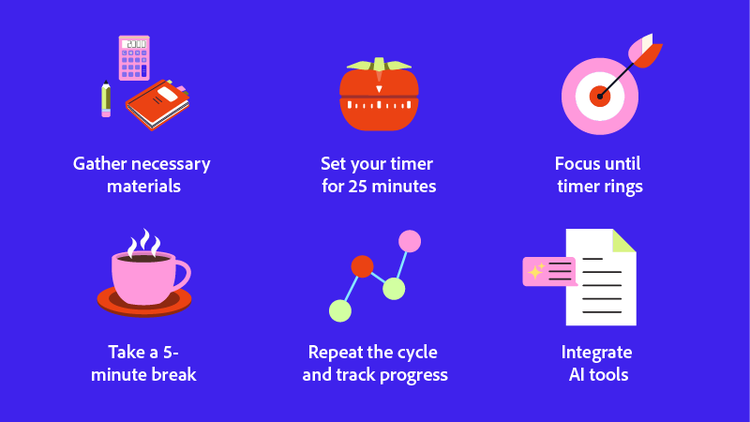
Step 1: Choose your task and gather all necessary materials
Begin each study session by selecting a specific task or assignment to focus on. Vague goals like "study biology" lead to unfocused sessions where you jump between topics without making meaningful progress. Instead, define exactly what you want to accomplish in concrete, measurable terms: "Review chapter 7 and complete practice problems 1 through 15" or "Outline the introduction section of my research paper."
Effective to-do list techniques can help you prioritize which tasks deserve your Pomodoro intervals. Consider using methods like the Eisenhower Matrix to identify urgent and important tasks, or simply rank your assignments by deadline and difficulty. Once you have identified your focus area for this session, gather all necessary materials before starting the timer.
This preparation phase should include textbooks, lecture notes, PDFs, writing instruments, calculators, and any other resources you might need during the session. Having everything within arm's reach prevents the temptation to get up and search for materials mid-session, which would break your concentration and violate the integrity of the Pomodoro interval.
Finally, eliminate distractions from your workspace before beginning. Silence your phone notifications or place your phone in another room entirely. Close unnecessary browser tabs on your computer, especially social media sites and email. Let roommates or family members know you need uninterrupted time. Creating a distraction-free environment before starting ensures you can maintain focus once the timer begins.
Step 2: Set your timer for 25 minutes and commit fully
Choose your preferred timing method based on what works best for your study environment and personal preferences. Physical timers offer a tactile experience without digital distractions and create a satisfying visual representation of time passing. Phone apps provide convenience, automatic tracking features, and the ability to review your history of completed sessions. Browser extensions integrate directly into your computer workflow and can block distracting websites during active intervals.
Whichever option you select, the key is complete commitment. Once the timer starts, you have made a promise to yourself that you will honor. No checking messages, no quick social media scrolls, no switching to other tasks, no responding to non-emergency requests. The 25-minute interval is sacred and non-negotiable.
Some practitioners find it helpful to verbally or mentally commit to the interval before starting: "For the next 25 minutes, I will focus only on this calculus problem set." This simple ritual reinforces the psychological contract you are making with yourself and primes your brain for concentrated work.
Step 3: Work with complete focus until the timer rings
During your Pomodoro, concentrate solely on the chosen task without allowing your attention to wander. If a distracting thought arises—remembering an email you need to send, a chore you forgot, or a question you want to research—write it down quickly on a designated notepad and immediately return to work. This "capture and continue" approach acknowledges the distraction without letting it derail your focus or consume mental energy.
Resist every urge to check notifications, browse unrelated content, or peek at your phone. These small interruptions carry significant cognitive costs, requiring several minutes to fully refocus after each one. Research suggests that even brief interruptions can derail deep thinking and reduce the quality of your work. The short duration of the Pomodoro interval makes avoiding these interruptions feel more manageable—you only need to resist for 25 minutes, not hours.
If you find your mind wandering despite your best efforts, gently redirect your attention back to the task. Do not waste energy feeling frustrated or guilty about the momentary lapse. Simply notice that your attention drifted and guide it back to your work. Over time, this practice of redirecting attention strengthens your ability to maintain focus for the entire interval.
Step 4: Take a genuine 5-minute break to recharge
When the timer rings, stop working immediately, even if you feel like continuing or are in the middle of an interesting section. Step away from your study materials physically. Stand up from your chair, stretch your body, walk around the room, drink some water, or rest your eyes by looking at something distant through a window. These physical movements help release tension that accumulates during focused mental work.
The key is avoiding new cognitive tasks during this break. Scrolling through social media or reading news articles engages your brain in ways that prevent genuine recovery. Your break should feel restful and refreshing, not stimulating or demanding. Consider activities like simple stretching, getting a healthy snack, stepping outside briefly for fresh air, or practicing a few minutes of deep breathing.
Respecting the break is just as important as respecting the work interval. Students often skip or shorten breaks, thinking they will accomplish more by continuing to work. This approach backfires because mental fatigue accumulates, leading to diminishing returns and eventual burnout. Trust the system and take your full five minutes every time.
Step 5: Repeat the cycle and track your progress over time
After completing your break, start another 25-minute Pomodoro interval with the same or a different task. Complete four Pomodoro intervals, then reward yourself with a longer 15 to 30-minute break. Use this extended rest period for a snack, a short walk outside, a phone call with a friend, or any activity that genuinely refreshes your mind and body.
Logging your completed sessions creates a visual record of accomplishment that builds momentum. Many students find that tracking motivates them to add more sessions—seeing a row of completed Pomodoros creates satisfaction and encourages continued effort. You can track using simple tally marks on paper, a dedicated app, a spreadsheet, or any method that feels sustainable.
Over time, your logs provide valuable data about your productivity patterns. You might discover that you complete more Pomodoros in the morning, or that certain subjects require more intervals than others. This information helps you plan future study sessions more effectively and set realistic expectations for how much you can accomplish.
Step 6: Integrate AI tools strategically into your workflow
Modern AI tools can dramatically enhance your Pomodoro study sessions when used strategically at the right moments. The key is leveraging these tools during preparation phases or breaks rather than during focused intervals, preserving the integrity of your concentrated work time while capturing efficiency benefits.
Before starting your Pomodoro session, use an AI summary generator to quickly digest lengthy PDF readings. Instead of spending an entire study session reading a 50-page document, you can extract the key points and main arguments in minutes. This preparation allows you to spend your Pomodoro intervals on deeper analysis, critical thinking, and practice problems rather than basic comprehension.
You can also chat with PDFs to extract specific concepts or find answers to questions without reading documents cover to cover. This approach transforms passive reading into active inquiry, helping you identify exactly what material deserves your focused attention during Pomodoro intervals. Ask questions like "What are the main causes discussed in this chapter?" or "Summarize the methodology section of this research paper."
During longer breaks between Pomodoro cycles, consider creating flashcards with AI tools for future review sessions. This productive use of break time prepares materials for spaced repetition practice without interrupting your focused work intervals. The combination of the Pomodoro technique for studying with AI-generated flashcards creates a powerful learning system that addresses both concentration and retention.

Benefits of the Pomodoro technique
Research and countless student testimonials confirm that the Pomodoro technique delivers measurable improvements in study effectiveness. When combined with AI-powered document tools, these benefits multiply significantly. Understanding these advantages can help you commit to the practice and recognize the value you are gaining from each session.
1. Improved focus and sustained concentration
The 25-minute interval length prevents mental fatigue before it begins. Rather than watching your attention slowly deteriorate over a two-hour study marathon, you work in bursts of peak performance. Each interval represents your best effort, not a gradual decline into distraction and diminished returns.
Defined timeframes create natural urgency and motivation that open-ended study sessions lack. Knowing the timer will ring soon encourages you to make every minute count and resist the temptation to work slowly or carelessly. This structure also reduces the tendency to multitask, as the short interval makes single-task focus feel achievable and temporary.
Following proven study tips alongside the Pomodoro method can further enhance your concentration abilities. Techniques like creating a dedicated study space, using active recall, and teaching material to others complement the time structure that Pomodoro provides. Together, these approaches create an environment optimized for focused learning.
2. Reduced procrastination and easier task initiation
Starting a large project feels overwhelming and triggers avoidance behavior. Starting a single 25-minute work session feels manageable and non-threatening. The Pomodoro technique breaks intimidating tasks into small chunks, making it psychologically easier to begin. You are not committing to hours of work—you are simply committing to 25 minutes.
The timer creates external accountability that many students lack when studying alone. You are not just telling yourself to focus—you are racing against a concrete deadline that exists outside your own willpower. As you complete more intervals, progress tracking builds momentum that carries you forward and makes subsequent sessions easier to start.
This benefit proves especially valuable for assignments you have been avoiding. The Pomodoro study technique transforms a dreaded task into a series of brief commitments that feel achievable rather than overwhelming.
3. Better time awareness and realistic planning
Many students dramatically underestimate or overestimate how long tasks actually take. This poor time awareness leads to missed deadlines, cramming sessions, and chronic stress. The Pomodoro technique develops accurate time estimation by forcing you to measure your work in concrete intervals.
After several weeks of consistent practice, you will know that reviewing a chapter takes approximately three Pomodoros, while completing a problem set requires four. Writing a page of your research paper might take two intervals, while editing that page takes one. This knowledge improves planning and scheduling, creating realistic expectations for future study sessions.
Accurate time awareness also helps with prioritization. When you understand the true time cost of each task, you can make better decisions about what to tackle first and how to allocate your limited study hours.
4. Decreased mental exhaustion and sustainable energy
Regular breaks prevent the burnout that comes from pushing through fatigue without rest. Instead of ending a study session feeling drained, depleted, and dreading the next one, you maintain consistent energy throughout your work period and finish with motivation intact.
These breaks also allow your brain to consolidate information. Research on memory suggests that rest periods help transfer learning from short-term to long-term memory, making your study time more effective. The diffuse thinking that happens during breaks can also lead to insights and connections that focused attention misses.
The sustainable pace of the Pomodoro method means you can study more total hours without experiencing the diminishing returns and exhaustion that come from marathon sessions.
5. Enhanced motivation through visible progress
Each completed Pomodoro represents tangible evidence of your effort. Unlike vague study sessions where you cannot remember what you accomplished, Pomodoro tracking creates a clear record of work done. This visible progress motivates continued effort and builds confidence in your ability to tackle challenging material.
The gamification aspect of counting intervals appeals to many students. Trying to beat your previous day's total or complete a certain number of sessions creates positive competition with yourself. Some students find this tracking transforms studying from a dreaded obligation into an engaging challenge.
6. Amplified productivity through AI integration
Incorporating AI productivity tools into your Pomodoro workflow amplifies every benefit listed above. AI tools reduce time spent on preliminary reading and document preparation, allowing you to spend more Pomodoro intervals on active learning rather than passive consumption.
An AI flashcard maker can generate study materials in seconds from your lecture notes and textbook chapters, saving hours of manual preparation. These flashcards can then fuel spaced repetition practice that reinforces what you learn during Pomodoro sessions.
Instant document insights from generative AI tools help you identify the most important concepts before you begin studying. This preparation ensures your Pomodoro intervals address the highest-priority material rather than spending precious focused time on less relevant content.
The best practice is using AI tools during your preparation phase or longer breaks rather than during focus intervals. This approach preserves the integrity of your concentrated work time while still capturing the efficiency benefits that AI provides. Think of AI as the preparation that makes your Pomodoro sessions more valuable, not a replacement for focused human attention.
Frequently asked questions
Research on attention spans and cognitive performance supports the Pomodoro technique's effectiveness for studying.
The 25-minute intervals align with the natural limits of sustained concentration, allowing students to work at peak focus rather than pushing through declining attention and diminishing returns.
Studies have shown that brief breaks improve overall performance on extended tasks by preventing mental fatigue and allowing consolidation of learned material. The technique also addresses psychological barriers to studying, such as procrastination and task avoidance, by making work feel manageable and time-limited.
However, effectiveness varies by individual learning style and task type. Students working on creative projects, complex problem-solving, or activities that require entering a "flow state" may need to adjust interval lengths to avoid interrupting productive momentum. Some learners prefer 45 or 50-minute intervals that allow for deeper immersion in material.
The Pomodoro technique for studying proves most effective when combined with other evidence-based learning strategies like active recall, spaced repetition, and elaborative interrogation. The technique provides the structure and time management framework, while these other methods optimize what you do during each focused interval.
Many individuals with Attention Deficit Hyperactivity Disorder (ADHD) find the Pomodoro technique helpful because it provides external structure and accountability that their brains do not naturally generate. The visible timer creates a concrete deadline that can motivate focus, while the promise of an upcoming break makes sustained attention feel more achievable and less overwhelming.
The technique addresses several ADHD challenges directly. Task initiation becomes easier when you only need to commit to 25 minutes. Time blindness improves as the timer provides external time awareness. Hyperfocus tendencies find appropriate outlets in defined intervals rather than consuming entire days.
Some users with ADHD modify the technique by using shorter intervals, such as 15 or 20 minutes, to match their attention capacity. Others find that the strict rules provide exactly the framework they need to function effectively. Experimentation with interval lengths helps identify what works best for individual brains. Consulting with healthcare professionals, therapists, or ADHD coaches can help identify personalized strategies that complement the Pomodoro technique. For some individuals, the technique works best in combination with medication, environmental modifications, or other ADHD management strategies.
Correct implementation requires genuine commitment to full intervals without interruption. When the timer starts, you must resist all distractions until it rings. If an interruption occurs that you cannot avoid—a fire alarm, a genuine emergency, or an unavoidable demand—the traditional rule is to restart the entire interval rather than continuing from where you stopped.
Equally important is taking genuine breaks that allow for mental recovery. Step away from work rather than continuing to think about your task. Do not check email, scroll social media, or engage in other cognitive tasks. The break should feel restful and refreshing.
Tracking your completed Pomodoros helps maintain motivation and provides data on your productivity patterns. Many practitioners keep a simple tally or use an app to log sessions, allowing them to review their consistency over time.
Avoid common mistakes like skipping breaks, extending intervals indefinitely, or checking your phone "quickly." These compromises undermine the structure that makes the technique effective. Trust the system completely for at least two weeks before making any modifications based on your personal experience.
You may also like
title
Use AI tools for a more efficient Pomodoro study method
cardImageAltText
Student using timer while studying with organized materials
cardImage

Tags
caas:content-type/article,caas:products/acrobat,caas:topic/students,caas:topic/edit-pdf,caas:topic/chat-pdf

