Adobe Acrobat
Cornell notes: How to use the Cornell note-taking method
Effective note-taking is a cornerstone of academic success, yet many students struggle to retain critical information from lectures and study materials.

Unlike scattered notes or disorganized pages, Cornell notes offer a structured format that separates key ideas from supporting details, helping you retain and recall information with ease. The Cornell Method is more than just a way to take notes, it's a tool designed to transform how students and professionals approach learning and information retention. By organizing notes systematically, this method encourages active engagement with the material, ultimately leading to better comprehension and improved study outcomes.
In this article, you'll learn everything you need to know about Cornell notes, from the history and step-by-step instructions to benefits, best practices, and answers to common questions. Whether you're a student striving for better grades or a professional seeking an efficient way to organize ideas, this guide has you covered.
What is the Cornell note-taking method?
The Cornell note-taking system was developed by Walter Pauk, an education professor at Cornell University, in the 1940s. Pauk created this method to address common challenges students faced with learning and retaining information. By dividing a single page into distinct sections, the Cornell Method encourages critical thinking and active engagement with the material. Today, it remains one of the most popular note-taking methods worldwide.
Cornell notes gained widespread recognition for their simplicity and effectiveness. The structured approach allows students to focus on understanding concepts rather than transcribing everything they hear. By separating a page into a cue column, a note-taking area, and a summary section, it ensures that key information stands out, making review sessions more productive.
How to take Cornell notes
Before diving into the steps, it’s essential to understand why mastering the Cornell note-taking method is crucial. By following a structured process, you can ensure your notes are clear, concise, and easy to review. Whether you're preparing for exams or organizing work ideas, this system simplifies note-taking while maximizing retention.
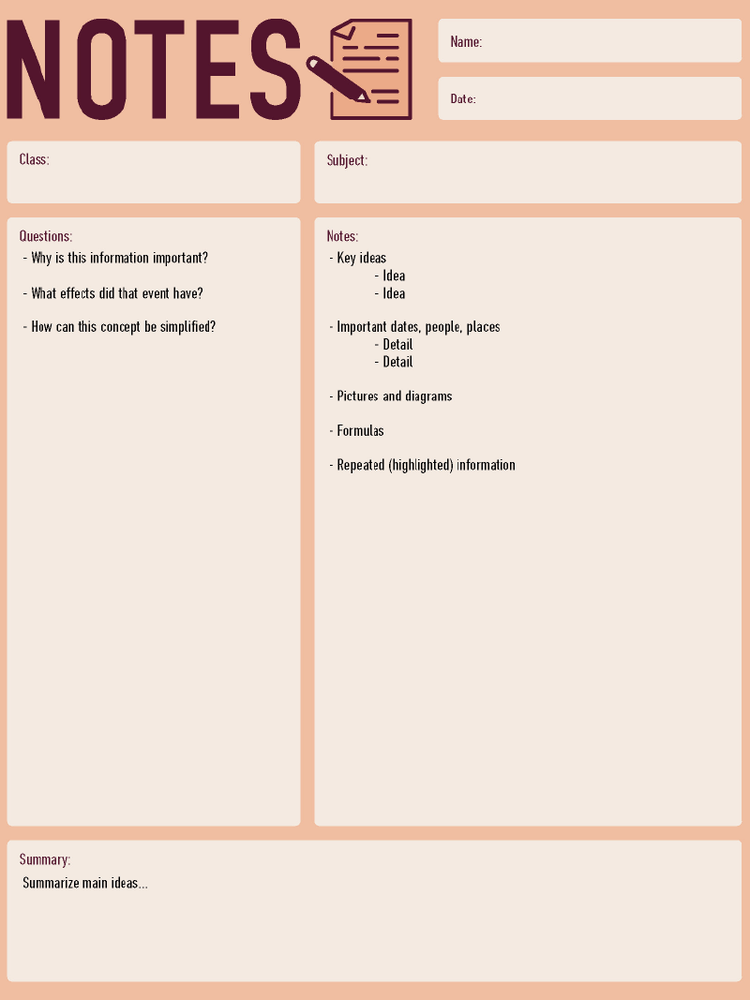
Follow these steps to set up and use Cornell notes effectively:
1. Divide the page into three sections:
- Draw a vertical line roughly 2.5 inches from the left margin to create the cue column.
- Use the remaining area on the right for the note-taking section.
- Reserve the bottom quarter of the page for the summary section.
2. Take notes in the note-taking area: During lectures or while studying, jot down important ideas, facts, and explanations in this section.
3. Use the cue column for keywords and questions: After completing your notes, fill the cue column with keywords, questions, or prompts that help you recall the material.
4. Summarize key points in the summary section: At the end of the session, write a summary of the main ideas covered.
5. Review and refine notes: Regularly revisit your notes to reinforce learning and refine any unclear points.
Benefits of the Cornell Method
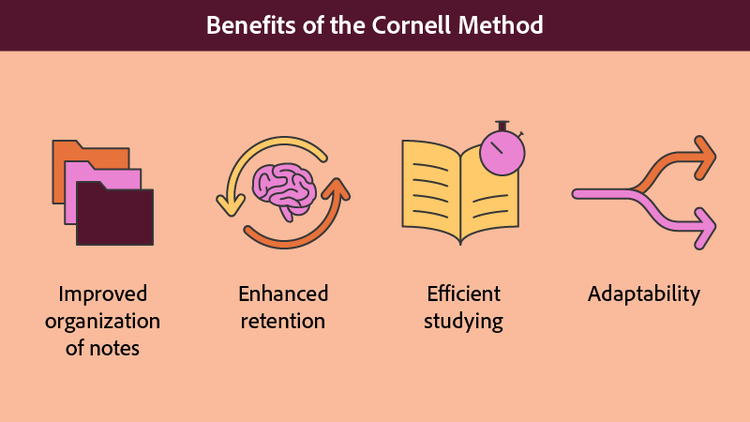
The Cornell Method is not just a way to take notes, it’s a proven system for organizing information and boosting productivity. For students, Cornell notes save time during exam preparations by emphasizing essential points and providing a clear structure for review. For professionals, they offer a way to capture important meeting insights or brainstorming ideas effectively. Key benefits include:
- Improved organization of notes: Helps separate key ideas from supporting details, making your notes easier to navigate.
- Enhanced retention: By summarizing and reviewing notes, the Cornell Method encourages active learning and better memory recall. Tools like an AI summary generator can help summarize notes efficiently and further simplify this process.
- Efficient studying: Saves time during preparation by focusing on essential information rather than extraneous details.
- Adaptability: One of the standout features of the Cornell Method is its versatility. It works equally well for lectures, textbook studies, and brainstorming sessions, even professional meetings. Additionally, when paired with resources that help organize study notes, it becomes a powerful tool to streamline workflows and refine ideas.
Tips and best practices for Cornell notes
Even with a proven system like the Cornell Method, it’s easy to miss out on its full potential. Whether trying to make a study guide or practice for a test, students often struggle with consistency or overlook key steps, which can limit how effective their notes are. That’s why knowing the right tips and best practices can make all the difference. With these strategies in mind, let’s explore the practical tips that will help you get the most out of your Cornell notes:
- Use abbreviations or symbols: Save time by creating shorthand for commonly used terms.
- Review notes regularly: Reinforce your learning by revisiting notes shortly after taking them.
- Use AI tools: AI tools like Acrobat AI Assistant allow you to chat with a PDF, ask questions and find citations, as well as generate practice questions, refine summaries, or even provide insights into your notes for better clarity.
- Incorporate templates: Leverage pre-designed templates to ensure consistency in your note-taking. This is especially useful for beginners or those looking to streamline their study sessions.
Frequently asked questions
How do you do Cornell notes?
What are the 5 steps of Cornell notes?
- Divide the page into three sections.
- Take notes in the note-taking area.
- Fill the cue column with keywords or prompts.
- Summarize the content in the summary section.
- Review and refine the notes.
What is the main purpose of Cornell notes?
What are the 5 Rs of Cornell note-taking?
The 5 Rs are:
- Record: Write down important information.
- Reduce: Summarize key ideas in the cue column.
- Recite: Use the cue column to test yourself.
- Reflect: Consider the significance of the material.
- Review: Revisit notes regularly to reinforce learning.
Are Cornell notes actually helpful?
Keep exploring