Endnotes vs Footnotes: Difference and use cases
Whether you're writing your first research paper or your hundredth, understanding when to use footnotes versus endnotes can make the difference between a polished academic document and a confusing one.
For students navigating citation requirements across different courses, understanding the difference between a footnote and an endnote is essential for academic success.

What is a footnote and when to use one
A footnote is a note placed at the bottom of a page that provides additional information, citations, or commentary related to specific content in the main text. When you encounter a small superscript number in a book or academic paper, that number corresponds to a footnote at the bottom of the same page.
The superscript numbering system works sequentially throughout a document. When you want to cite a source or add explanatory content, you insert a superscript number directly after the relevant word, phrase, or sentence. The corresponding note then appears in the page footer, beginning with the same number.
When to use footnotes:
- Quick references that readers may want to verify immediately
- Adding significant context or commentary without disrupting text flow
- Short documents where page-by-page references improve readability
- Academic papers following Chicago or Turabian style requirements
- Providing source information for direct quotes or specific claims
- Explanatory notes that define technical terms or provide background information
- Cross-references to other sections of your document
Understanding the difference between citation footnotes and content note footnotes is essential for proper academic writing. Citation footnotes provide source information, allowing readers to locate the original material you referenced in your research paper. For example, a citation footnote might read: “1. Johnson, Modern Research Methods (Boston: University Press, 2022), 87.”
Content note footnotes, on the other hand, offer explanatory information, definitions, or tangential commentary that would interrupt the main text's flow. For instance: “2. The term "methodology" in this context refers specifically to qualitative research approaches, though quantitative methods have also been applied to similar studies.” When you need to cite an article or any source while adding relevant context, footnotes keep that information readily accessible to your reader.
What is an endnote and when to use one
An endnote serves the same fundamental purpose as a footnote—providing citations or supplementary content—but appears in a collected section at the end of a document, chapter, or major section rather than at the bottom of each page. This placement creates a cleaner reading experience for documents with extensive citations.
Like footnotes, endnotes use sequential superscript numbers within the text. However, readers must navigate to the endnotes section to find the corresponding information. In printed materials, this means flipping to the back of the book or chapter. In digital documents, hyperlinks can streamline this process considerably.
When to use endnotes:
- Long documents like books, theses, or dissertations
- Maintaining clean, uninterrupted text flow for reader experience
- Documents with extensive citations that would clutter page bottoms
- Publications following specific style guide requirements, as some journals prefer endnotes
- When supplementary commentary is lengthy or detailed
- Extended explanations that provide substantial background context
- Complex cross-references to multiple sources or sections
Many scholarly articles use endnotes to maintain visual clarity while still providing comprehensive source documentation. This approach is particularly valuable in legal documents and other professional materials where extensive citations are necessary but shouldn't dominate each page.
The distinction between citation endnotes and content note endnotes mirrors that of footnotes. A citation endnote documents your source: “15. Martinez, "Evolving Citation Standards," Academic Review 28, no. 4 (2023): 201-215.” A content note endnote provides extended commentary: “16. This interpretation has been contested by several scholars, most notably Chen (2021) and Patel (2022), who argue that the original framework fails to account for digital publication formats.”
Endnotes vs footnotes: key differences
Understanding the core distinctions between these citation methods helps you make informed decisions for your specific writing project. The footnote vs endnote distinction extends beyond simple placement to affect reader experience, document aesthetics, and citation style compliance.
Placement and accessibility
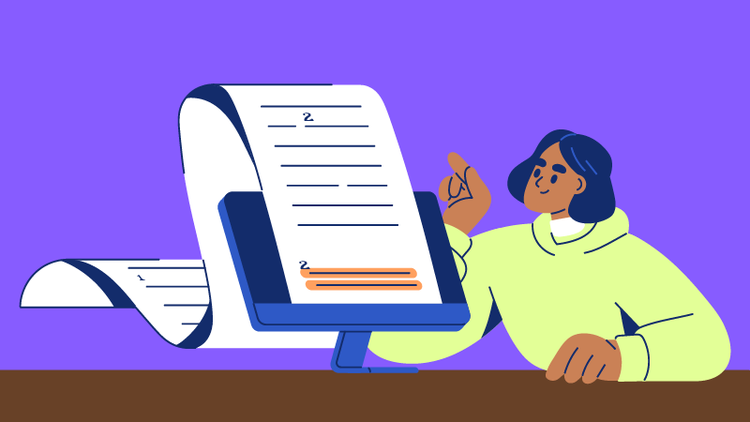
The most obvious distinction lies in physical placement. Footnotes appear at the bottom of the page where the reference occurs, providing immediate access to source information or supplementary content. Readers can glance down without losing their place in the text.
Endnotes collect all references in a dedicated section, typically titled "Notes" or "Endnotes," at the document's conclusion or at the end of each chapter. This centralization requires readers to navigate away from the main text to access citation information.
For digital documents, the accessibility gap narrows considerably. When you cite a PDF or other electronic document, hyperlinked endnotes allow readers to click directly to the reference and return to their reading position instantly. This functionality has made endnotes increasingly practical for online publications.
Formatting across citation styles
Different academic disciplines and style guides have distinct preferences for the endnote vs footnote choice:
American Psychological Association (APA) style generally uses in-text parenthetical citations rather than footnotes or endnotes. When notes are necessary, APA reserves them for supplementary content that would disrupt the main text—not for standard citations. APA notes appear at the end of the document and should be used sparingly.
Modern Language Association (MLA) style similarly prefers in-text citations with a Works Cited page. Endnotes in MLA format typically contain supplementary material, cross-references, or explanatory content rather than source citations. MLA allows both footnotes and endnotes for these content notes, though endnotes are more common in longer works.
Chicago Manual of Style offers two distinct systems. The notes-bibliography system uses footnotes or endnotes for citations, making it the most flexible for choosing between these formats. This system is commonly used in history, literature, and the arts. The author-date system uses parenthetical citations similar to APA and is preferred in the sciences and social sciences.
Reader experience considerations
Footnotes provide immediate access to source information but may interrupt visual flow, especially when multiple citations appear on a single page. Readers who want to verify sources appreciate the convenience, while those focused on the narrative may find frequent footnotes distracting.
Endnotes maintain clean, uncluttered pages that allow readers to focus on the main argument without visual interruption. However, readers who want to check sources must flip pages or click links, potentially disrupting their reading rhythm.
The best choice often depends on your audience. Academic readers accustomed to heavily cited texts may prefer footnotes for quick verification. General readers or those engaging with narrative-driven content often appreciate the cleaner appearance endnotes provide.
Elements of footnote vs endnote
Both footnotes and endnotes contain specific elements that vary based on whether they serve as citation references or content notes. Understanding these components ensures your notes provide complete, properly formatted information regardless of the citation style you follow.
Citation footnote and endnote elements
Citation notes document your sources and typically include author name, title, publication information, and specific page numbers. The exact format depends on your required citation style.
For a book citation in Chicago style, the format appears as: 1. Jane Smith, The Art of Research (New York: Academic Press, 2023), 45.
For a journal article citation in Chicago: 2. John Doe, "Citation Methods in Modern Academia," Journal of Academic Writing 15, no. 3 (2022): 112–128.
In APA style, supplementary notes follow a different format: 1. For additional discussion of research methodology, see Thompson (2022).
MLA endnotes for citations, when used, appear as: 1. See Smith 45–52 for a comprehensive overview of citation practices.
Essential elements include the author's full name on first reference (Chicago), the complete title with proper formatting (italics for books and journals, quotation marks for articles), publication details including city and publisher for books or volume and issue numbers for journals, and specific page numbers when referencing particular content. Learning to paraphrase effectively can reduce the number of direct quote citations needed while still requiring proper source documentation.
Content note footnote and endnote elements
Content notes provide explanatory information, cross-references, or extended commentary. These notes offer flexibility in format but should remain concise and relevant.
An explanatory content note might read: 3. While this methodology was standard practice in the 1990s, recent studies have challenged its validity. See Thompson (2021) for a comprehensive review.
A cross-reference content note: 4. For further discussion of this concept, see Chapter 5.
A definitional content note: 5. The term "triangulation" refers to the use of multiple data sources or methods to verify findings.
When paraphrasing sources, content notes can provide additional context about your interpretation or acknowledge alternative viewpoints without cluttering the main text.
Style-specific formatting considerations
Chicago style requires full citation information on first reference, with shortened forms for subsequent references to the same source. The shortened form typically includes author's last name, abbreviated title, and page number: 6. Smith, Art of Research, 72.
APA supplementary notes should be brief and used sparingly. They appear as footnotes in APA format and are numbered consecutively throughout the document. Content might include: 1. The sample included participants from three geographic regions; regional differences were not statistically significant.
MLA notes focus primarily on content rather than citations, since MLA uses in-text parenthetical citations. Endnotes in MLA provide space for explanatory material that doesn't fit the main text's flow: 1. While beyond the scope of this analysis, scholars have noted similar patterns in nineteenth-century British literature.
Generate footnotes and endnotes with AI
Modern AI tools for students have transformed how researchers approach citation management. These technologies can streamline the often tedious process of creating, formatting, and organizing footnotes and endnotes while maintaining academic standards.

Tips for using AI to create citations
Artificial intelligence can significantly reduce the time spent on citation formatting. Here are practical approaches for leveraging these tools effectively:
- Use AI Assistant to extract citation information from source documents by uploading PDFs and asking for bibliographic details
- Generate properly formatted citations by specifying your required style, such as Chicago, APA, or MLA
- Verify AI-generated citations against original sources for accuracy, as AI can occasionally introduce errors
- Organize research materials in a centralized workspace
- Use AI to identify patterns in your citations and ensure consistency across your document
When you chat with PDF documents using AI tools, you can quickly identify key passages that require citation and extract the necessary bibliographic information. This capability proves especially valuable when working with multiple sources simultaneously.
AI study tools can also help you determine when content notes might benefit your reader. By analyzing your text, AI can identify complex concepts that might warrant additional explanation or suggest where cross-references to other sections would improve document navigation.
Before creating content notes, consider using an AI summary generator to distill lengthy source materials into key points. This approach helps you write concise, focused explanatory notes rather than overwhelming readers with excessive detail.
Maintaining academic integrity
While AI accelerates citation work, maintaining academic integrity remains a top priority. Always verify that AI-generated citations accurately reflect your sources. Double-check page numbers, publication dates, and author names against the original materials.
Use AI as a tool to enhance your research process, not replace critical thinking about source evaluation and citation necessity. The goal is efficiency without compromising scholarly standards. Proper citation practices help you avoid plagiarism while giving appropriate credit to the sources that informed your research.
Frequently asked questions
Can I use both footnotes and endnotes in the same document?
How do I convert footnotes to endnotes in my word processor?
What is the maximum number of footnotes per page before switching to endnotes?
Do footnotes and endnotes affect my word count for assignments?
How should I number footnotes and endnotes when writing a multi-chapter document?
Should I use footnotes or endnotes for my thesis or dissertation?
How do digital documents handle footnotes and endnotes differently than print?
You may also like