Adobe Acrobat
How to memorize something fast when studying
Memorization is a key skill that enhances productivity and learning, especially for students.

Memory is an intricate process with four primary stages: attention, encoding, storage, and retrieval. Attention involves focusing on specific information, while encoding transforms it into a format suitable for storage. Storage keeps this information for future use, and retrieval allows you to access it when needed. When learning how to memorize something fast, mastering these steps is crucial for efficiency.
For students, having strong memorization skills can significantly improve the efficiency of all study methods. Understanding and applying effective memorization techniques not only saves time but also ensures better retention of complex topics. These strategies empower learners to ace exams, grasp new ideas quickly, and stay organized during their academic journey.
Principles of memorization
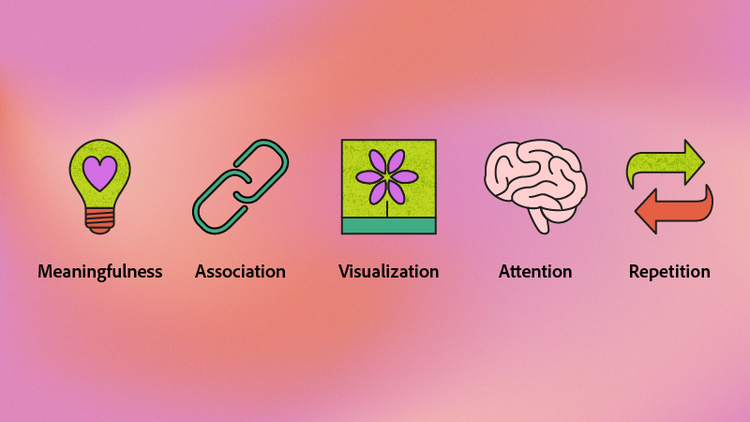
Memorization is built on a set of essential principles that help improve the retention and recall of information. Understanding these principles is crucial for developing effective strategies to memorize something fast. These principles include meaningfulness, association, visualization, attention, and repetition, each playing a unique role in the memory process:
- Meaningfulness: Associating information with personal relevance or understanding its importance.
- Association: Linking new information to existing knowledge for better recall.
- Visualization: Creating mental images to represent concepts, making them easier to remember.
- Attention: Maintaining focus on the material to fully encode it into memory.
- Repetition: Reinforcing information through repeated practice.
Applying these principles of memorization improves retention and recall. For instance, meaningfulness helps you prioritize essential information, while visualization simplifies complex ideas. Repetition strengthens neural connections, ensuring long-term memory storage. Techniques like active recall further enhance these principles by actively testing your understanding of the material.
Verbal memorization techniques
Verbal memorization techniques focus on using language to enhance memory retention. These methods are particularly useful for processing textual or spoken information, allowing learners to convert abstract ideas into manageable chunks or patterns. By leveraging tools like mnemonics, acronyms, and rhymes, you can make studying more engaging and effective.
Verbal methods leverage the power of language to enhance memory. Popular verbal memorization techniques include:
- Chunking: Breaking down information into smaller, manageable pieces.
- Mnemonics: Creating catchy phrases or acronyms to remember lists or sequences.
- Acronyms: Using initials to represent complex information (e.g., PEMDAS for math operations).
- Rhymes: Crafting rhyming phrases to make concepts memorable.
- Repetition: Repeating information aloud or writing it multiple times.
How to use verbal techniques
These techniques can be very effective depending on your studying style. Here are a few steps to follow to ensure you’re getting the most out of your learning:
- Identify key concepts in your study material.
- Break the information into chunks or create mnemonics.
- Repeat the material regularly to solidify retention.
- Incorporate rhymes or acronyms to simplify complex ideas.
For instance, you can turn notes into flashcards to practice chunking and repetition in bite-sized formats.
Visual memorization techniques
Visual memorization techniques utilize imagery and spatial organization to make studying more immersive and memorable. These methods are particularly effective for learners who are more attuned to visual cues or patterns. By integrating tools like flashcards, mind maps, and memory palaces, you can transform abstract concepts into tangible visuals.
These techniques use imagery and spatial organization to make information more engaging. Examples include:
- Storytelling: Turning facts into narratives for easier recall.
- Flashcards: Using visual aids to test your memory.
- Songs/Jingles: Setting information to music for better retention.
- Mind Maps: Organizing ideas visually to show relationships.
- Memory Palace: Associating information with specific locations in an imagined space.
By encouraging reflection and active engagement, PQ4R fosters critical thinking skills and helps with long-term memory retention. This technique, similar to the SQ3R study method, is commonly used to effectively study for tests.
How to use visual techniques
To integrate visual methods into your study routine:
- Use flashcards for quick reviews.
- Create a mind map to visualize relationships between concepts.
- Develop a memory palace by associating ideas with familiar spaces.
- Turn complex material into a song or story.
Visual aids not only support retention but also help you learn how to memorize something fast. Explore these study tips for more creative ways to study visually.
Other memorization practices
Beyond verbal and visual methods, there are a variety of other memorization practices that can further strengthen your ability to retain information. These approaches often involve active participation and leveraging technology to streamline the learning process. Such techniques are particularly effective for comprehensive studying and they include:
- Self-testing: Actively quizzing yourself on the material.
- Writing it out: Physically writing information to reinforce learning.
- Interleaving: Mixing different topics or subjects to improve understanding.
- Using AI tools: Leveraging technology like flashcard makers or practice generators for efficient studying. AI-powered tools like Acrobat AI Assistant enable students to create customized summaries with an AI summary generator, ask questions and cite sources fast. These tools streamline the learning process, making it easier to focus on key concepts and save time.
You can learn more about how to apply these strategies, how to study for a test, or how to enhance your learning process by following the tips below.

Tips on improving memorization
To further improve memorization, focus on staying organized, minimizing distractions, maintaining concentration and practicing regularly. Structuring your study materials and creating a quiet environment can make a significant difference in your ability to retain information. Generally, the best practices for memorizing anything quickly are:
- Stay organized: Keep your study materials structured and accessible.
- Minimize distractions: Create a quiet and focused study environment.
- Maintain focus: Practice mindfulness techniques to avoid multitasking.
- Practice regularly: Consistent repetition ensures long-term retention.
Acrobat AI tools can help you organize study notes, making it easier to structure your learning process and optimize study sessions.
Frequently asked questions.
How can I memorize anything quickly?
How to memorize in 10 minutes?
What is the 7 3 2 1 memorization method?
What is the 2 7 30 rule for memory?
What is the 20 20 20 rule for memorizing?
What is the fastest way to memorize words?
Keep exploring