Adobe Acrobat
What is the Leitner System and how it works
The Leitner System is rapidly gaining popularity as one of the most efficient study techniques for improving memory retention.


Adobe Acrobat
The Leitner System is rapidly gaining popularity as one of the most efficient study techniques for improving memory retention.

One of the biggest challenges students face is retaining information long-term. Traditional cramming methods often lead to forgetfulness and wasted effort. The Leitner method addresses this problem by incorporating a systematic review schedule, making it easier to remember complex material over time.
In this article, we’ll explore the Leitner System in detail, covering what it is, how it can transform the way students approach learning, its advantages and disadvantages, study tips for effective usage, and how AI-powered tools can help streamline the process.
The Leitner System is a simple, yet powerful study method based on spaced repetition. Developed by German science journalist Sebastian Leitner, this method uses flashcards to organize information into categories based on how well the learner understands each concept. It prioritizes regular reviews of challenging material while gradually reducing the frequency of reviewing mastered topics. This system complements well techniques like active recall, which further enhance comprehension and retention.

At its core, the Leitner study method involves sorting flashcards into boxes according to your mastery of the information:
During each study session, you test yourself on the material in Box 1. Correct answers move the cards to the next box, while incorrect answers return cards to Box 1 for more frequent review. This system ensures that difficult concepts are revisited often, while easier ones are reviewed periodically.
To implement the Leitner System, you’ll need:
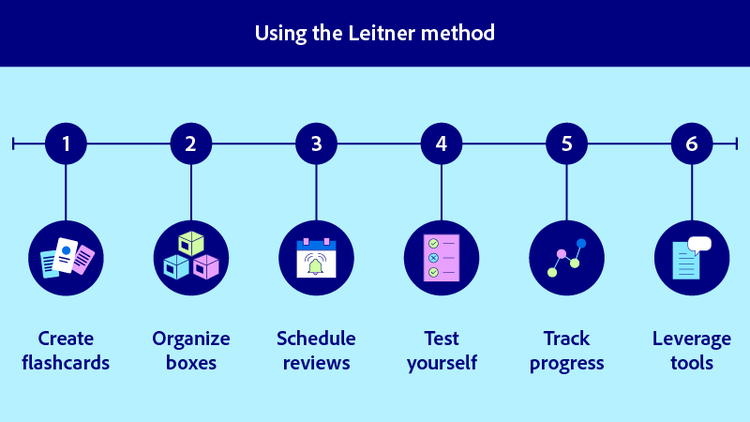
1. Create flashcards: Write questions or prompts on one side and answers on the other. Use digital tools to speed up the process.
2. Organize boxes: Divide your flashcards into 3–5 boxes based on how well you know the material. Box 1 should contain new or challenging topics.
3. Schedule reviews: Set specific intervals for reviewing each box, with Box 1 reviewed daily, Box 2 reviewed every few days, and so on.
4. Test yourself: During each session, test your knowledge using the flashcards in Box 1. Move correct answers to the next box and incorrect ones back to Box 1.
5. Track progress: Monitor which flashcards are advancing through the boxes to identify areas that require extra focus.
Understanding the advantages and limitations of the Leitner study method is crucial for determining whether it aligns with your study needs.
The Leitner System offers several benefits:
However, it also has its drawbacks:
The Leitner System is a smart way to make spaced repetition work for you, but using it effectively takes more than just moving cards between boxes. Small adjustments can help you stay organized, reinforce learning, and keep your sessions productive. Here are some practical tips to get the most out of this method:
In addition to these tips, students can now use digital tools to create and track flashcards, as well as tools for making study guides or editing their course materials. You can use a Word to PDF converter if your notes are in Word format, but you need a PDF to turn it into flashcards.


