What is an objective summary and how to write one with AI
An objective summary is a brief, neutral restatement of the main ideas and key points of a source text, written without personal opinions, interpretations, or bias.

What is an objective summary?
An objective summary captures the essence of a text using only the author's ideas, presented in your own words. Unlike a personal response or an opinion piece, it avoids adding judgments, feelings, or outside information. The goal is to give a reader who has not seen the original material a clear, accurate picture of what it says.
You might need to write an objective summary when preparing study notes, briefing colleagues on a research paper, reviewing legal documents, or summarizing an article for readers in a hurry. In academic settings, teachers often assign objective summaries to assess whether students truly understand what they read.
What should be included in an objective summary? Every effective one shares a few key elements:
- Proper attribution to the original author or source
- A clear statement of the main idea or thesis of the source
- The most important supporting points, presented in logical order
- Neutral, third-person language free of personal opinions
- Concise wording that is significantly shorter than the original
Objective writing, more broadly, refers to any writing that presents facts and information without the writer's personal slant. Examples of objective writing include news reports, encyclopedia entries, scientific abstracts, and textbook explanations. An objective summary follows the same principle, applied specifically to condensing another text.
For instance, an objective summary of a research article about remote work might read: "The study found that employees who work remotely at least three days per week report higher job satisfaction but may experience reduced collaboration with teammates. The researchers recommend hybrid models that balance flexibility with in-person teamwork." Notice how it reports findings without adding agreement or disagreement.
How to write an objective summary.
Writing a strong objective summary is a skill that improves with practice. A structured approach ensures you capture the source material accurately without drifting into personal commentary. The following steps walk you through the process from start to finish.
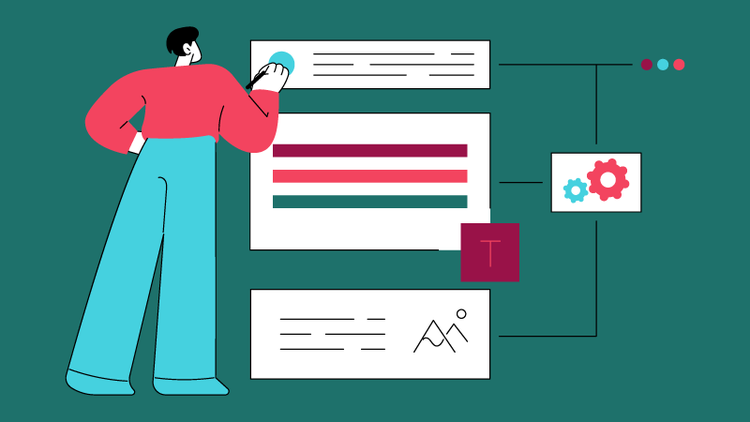
Read through all the material.
Before you begin, read the entire source text from beginning to end. Resist the urge to start summarizing mid-read. Understanding the full scope of the material helps you distinguish between central arguments and minor details. If the text is long or complex, consider reading it twice — once for general comprehension and a second time to identify structure and key themes.
Take detailed notes.
As you read, jot down the main points of each section or paragraph. Use brief phrases rather than full sentences so you focus on ideas, not the author's exact wording. Highlight or underline passages that convey the core argument. When working with PDFs or digital documents, tools that let you chat with your documents using AI can help you quickly identify important passages and ask targeted questions about the content.
Identify the main idea.
Look at your notes and determine the single most important point the author is making. This is the thesis or central argument. Everything else in your summary should support or connect back to this main idea. If you struggle to pinpoint it, ask yourself: "If I could only tell someone one thing about this text, what would it be?"
Choose supporting points.
Select two to four key points that directly support the main idea. These might be major arguments, significant evidence, or essential conclusions. Leave out examples, anecdotes, and minor details unless they are critical to understanding the author's message. Your summary should be a streamlined version of the original, not a comprehensive retelling.
Write your summary.
Start with a sentence that states the main idea, then present the supporting points in the same order they appear in the original text. Keep your language neutral — avoid words like "I think," "unfortunately," or "interestingly," which inject opinion. Use transitions to connect ideas smoothly and aim for roughly one-quarter to one-third the length of the original text.
Revise and refine.
Reread your summary alongside the original to check for accuracy. Have you represented the author's ideas faithfully? Have any personal opinions crept in? Trim unnecessary words, fix awkward phrasing, and confirm that someone unfamiliar with the source could understand your summary on its own. A PDF editor can be helpful for cleaning up and formatting your final draft.
How to write an objective summary using AI.
Artificial intelligence (AI) tools have made summarization faster and more accessible. Instead of spending an hour reading and condensing a lengthy document, you can use AI to generate a draft summary in seconds and then refine it. This approach is especially useful when you are working with multiple sources or tight deadlines.
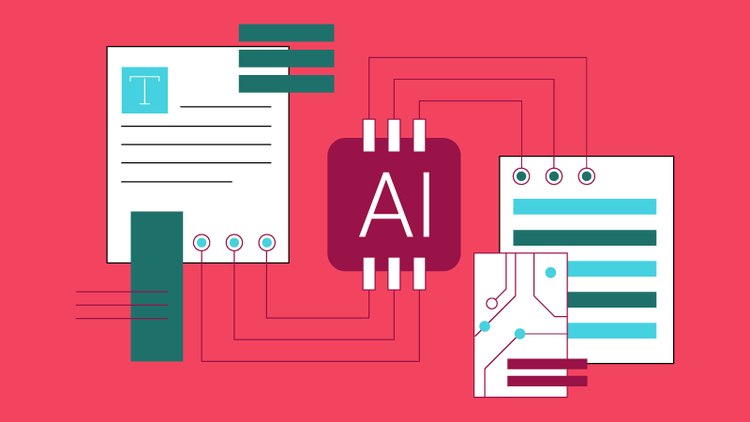
Here is how to write an objective summary using AI tools:
- Gather your source material and upload it to a tool that supports AI-powered PDF summarization. Acrobat AI Assistant, for example, can process PDFs, Word documents, and other file types directly in your browser or desktop app.
- Use the AI assistant to generate a summary of the document. The tool analyzes the text and produces a condensed version highlighting the main ideas and key points. You can ask follow-up questions to clarify specific sections or dig deeper into particular arguments.
- Review the AI-generated summary carefully. While AI is powerful, it may occasionally miss nuance or include less relevant details. Compare the summary against the original to ensure accuracy, neutrality, and completeness.
- Edit the summary in your own voice. Adjust the length, reorder points if needed, and confirm the language remains objective. This step is critical — AI provides a starting point, but your judgment ensures the final product meets your standards.
- For students managing multiple assignments, Acrobat Student Spaces offers a dedicated environment for organizing study materials and using AI tools to summarize different types of documents. You can summarize textbook chapters, lecture notes, and research papers all in one place.
Using an AI summary generator does not replace critical thinking. It accelerates the initial drafting phase so you can spend more time evaluating and polishing your work.
Objective summary examples and tips.
Seeing objective summaries in action helps clarify what good looks like. Below are examples tailored to two common contexts, along with practical tips.
A student summarizing a biology textbook chapter on photosynthesis might write: "Chapter 5 explains that photosynthesis is the process by which plants convert sunlight, water, and carbon dioxide into glucose and oxygen. The chapter describes the light-dependent reactions in the thylakoid membranes and the Calvin cycle in the stroma, emphasizing how each stage contributes to energy production."
A project manager summarizing a quarterly performance report might write: "The Q3 report shows that revenue increased 12% year over year, driven primarily by growth in the enterprise segment. Customer retention remained steady at 91%, though the support team flagged an increase in ticket volume related to the new onboarding process. The report recommends expanding the support team by two before Q1 2027."
Both examples state facts from the source without adding commentary. Here are tips to strengthen your objective summaries:
- Start with the source's main point in your very first sentence
- Use present tense when describing what the author argues or the text explains
- Avoid direct quotes unless absolutely necessary—paraphrase instead
- Keep your summary focused on ideas, not on evaluating the author’s stance
- Read your finished summary to a friend or colleague—if they can understand the source's argument without reading it, you have succeeded
- When working with complex or lengthy documents, consider using executive summary techniques to structure your approach, especially in professional settings
Frequently asked questions
Can an objective summary include direct quotes?
How long should an objective summary be?
What is the difference between an objective summary and a subjective summary?
Can AI tools write an objective summary for me?
You may also like