Erstellen Sie in Adobe Illustrator aus Vektorformen ein Logo, das sowohl am Bildschirm als auch auf Papier überzeugt. Vektorgrafiken bieten den Vorteil, dass sie sich ohne Qualitätsverlust auf eine beliebige Größe skalieren lassen – von der Visitenkarte bis zur großen Reklametafel.
Erstellen Sie ein neues Dokument. Richten Sie Ihren Arbeitsbereich ein. Fügen Sie ein Bild als Vorlage hinzu, das als Ausgangspunkt für Ihr Projekt dienen wird. Für jeden verwendeten Inhalt fügen Sie der Übersichtlichkeit wegen eine neue Ebene hinzu.
Lernen Sie, wie Sie ein neues Dokument erstellen, Ihren Arbeitsbereich zurücksetzen, ein Referenzbild platzieren und das Ebenen-Bedienfeld öffnen.
2
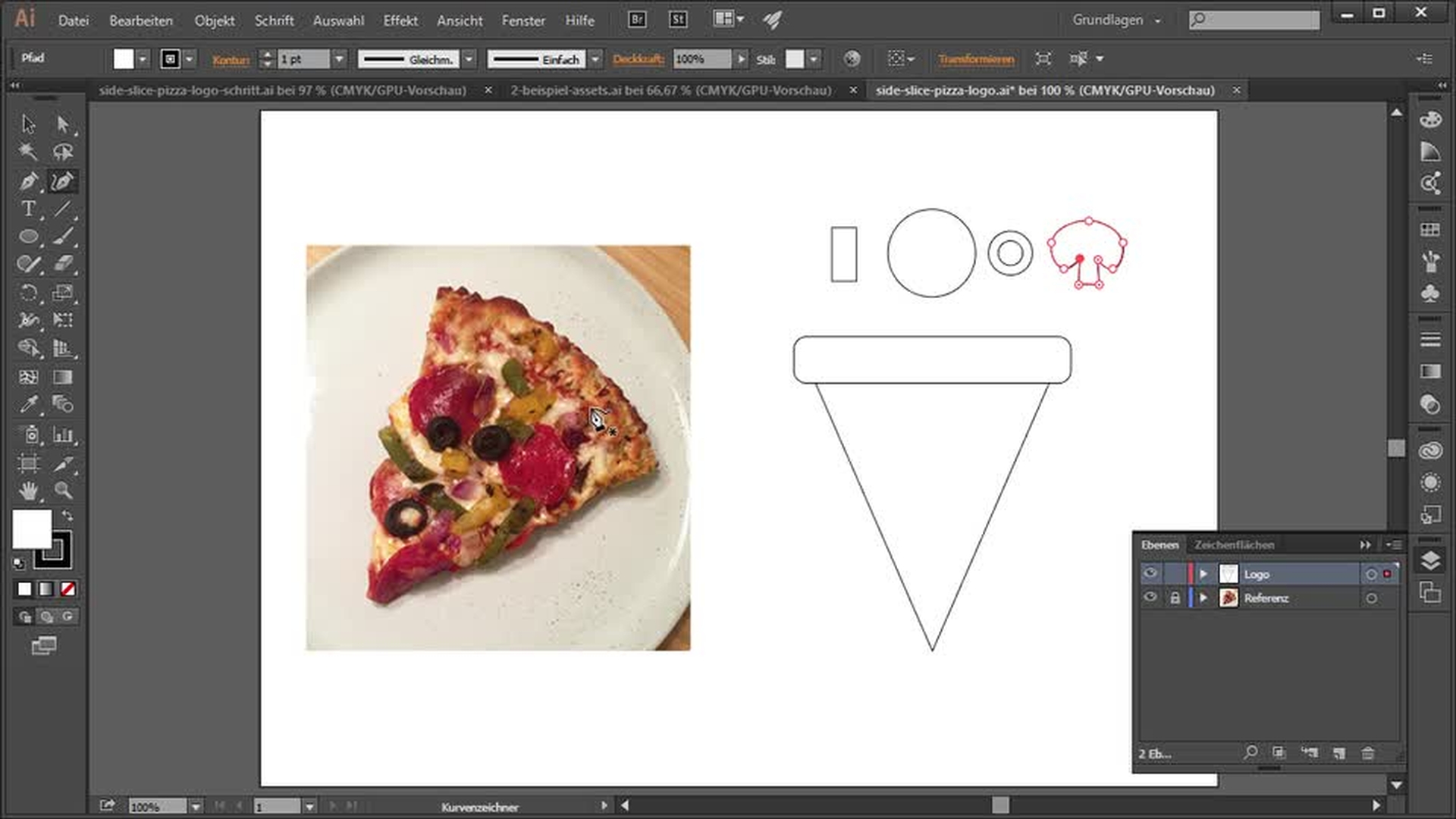
Aus einfachen Formen eine komplexe Grafik erstellen.
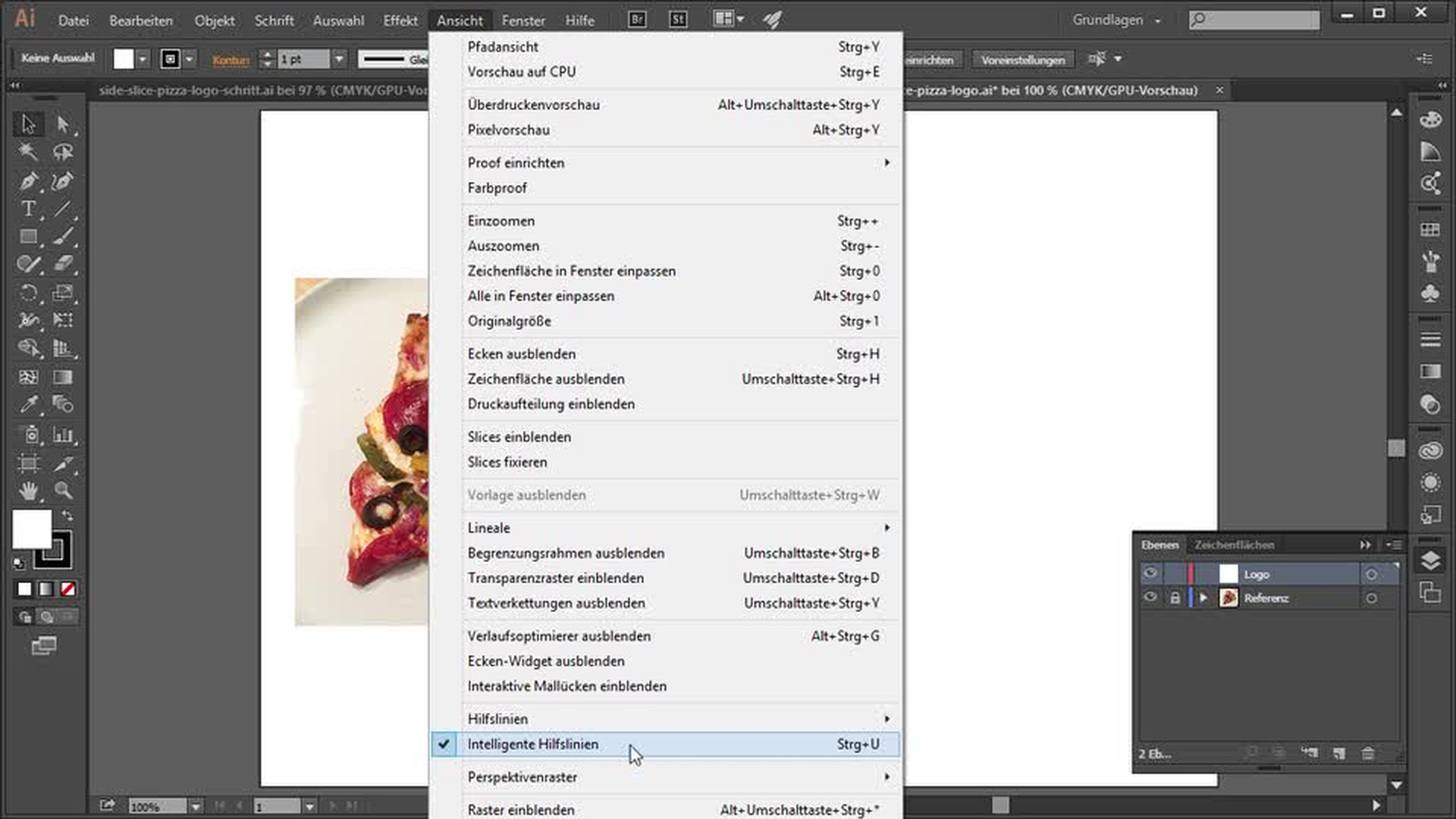
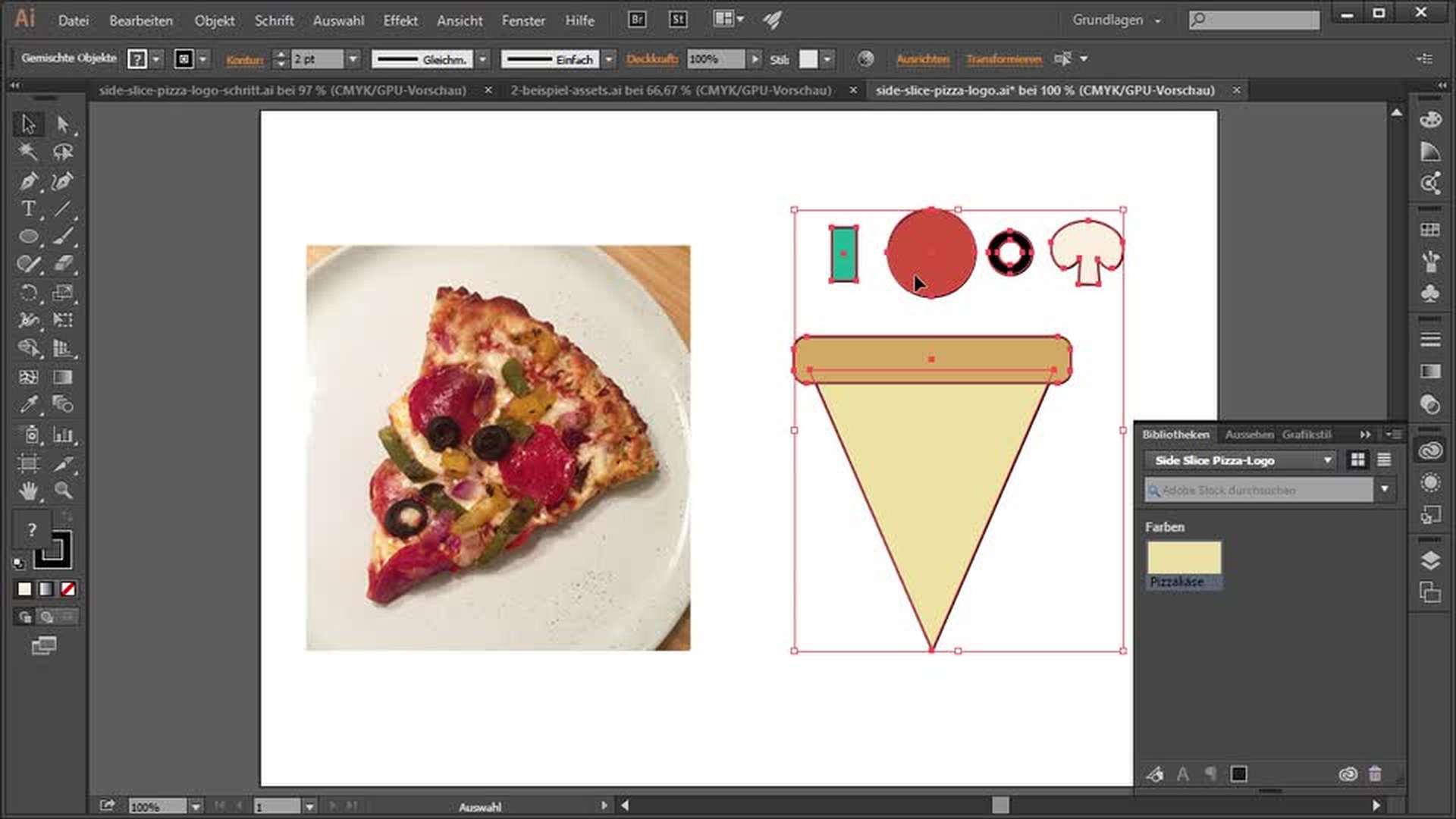
Kombinieren Sie Rechtecke, Dreiecke, Kreise und Freihandformen. Hilfslinien unterstützen Sie bei der Ausrichtung von Elementen.
Lernen Sie, wie Sie intelligente Hilfslinien aktivieren, die das Ausrichten von Elementen erleichtern, interaktive Formen bearbeiten und Freihandformen zeichnen.
3
Farbe hinzufügen.
Nutzen Sie intuitive Steuerungen, um Farben auf sämtliche Komponenten Ihres Logos anzuwenden. Fügen Sie die Farben und Formen Ihres Logos zu Ihrer Creative Cloud-Bibliothek hinzu, um sie später wiederverwenden zu können.
Lernen Sie, wie Sie eine Farbe bearbeiten, Farbe in einer Bibliothek speichern und auf gebrauchsfertige Farbfeld-Bibliotheken zugreifen.
4
Logo feinanpassen.
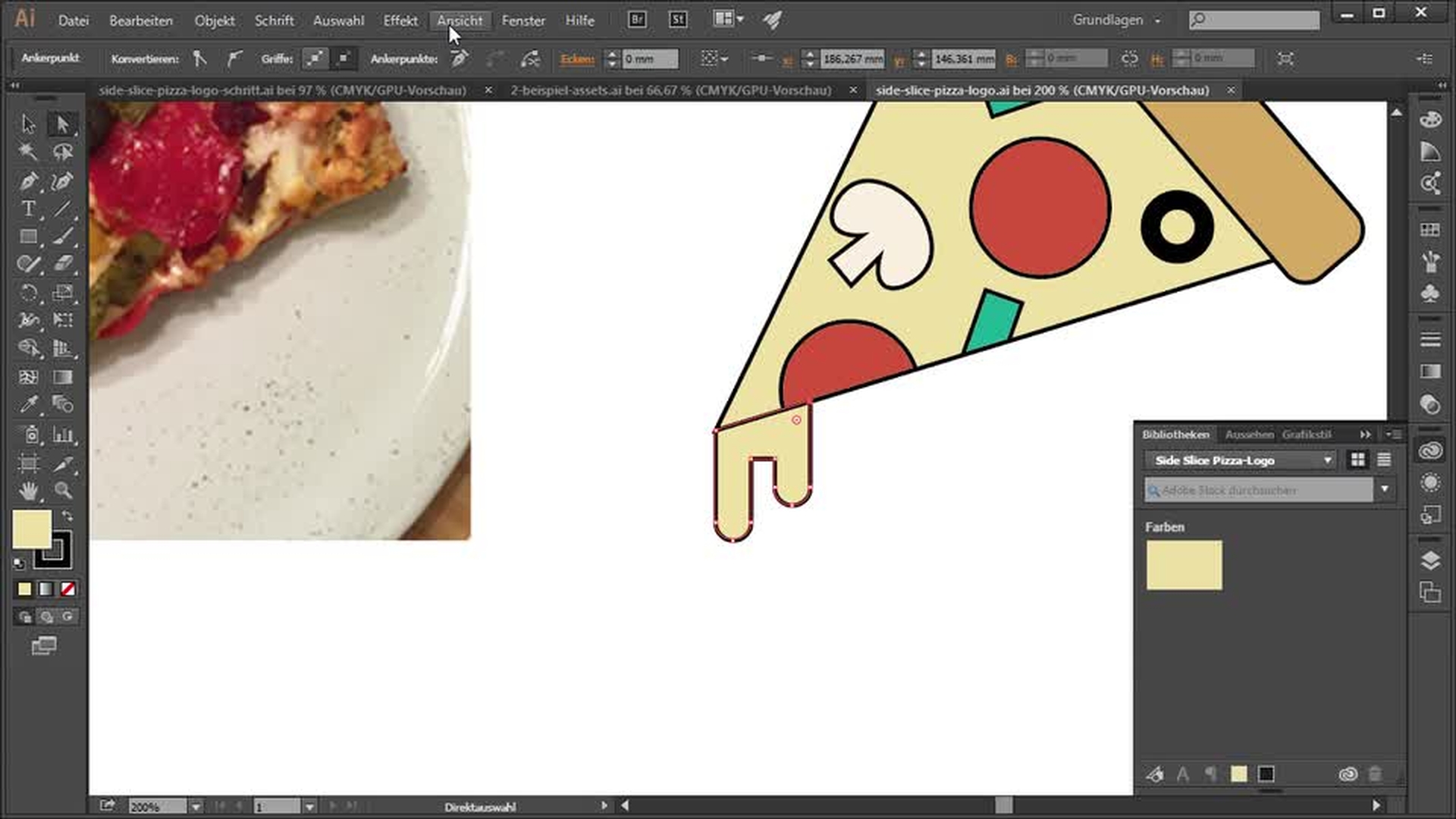
Passen Sie die Größe der Formen an. Drehen Sie sie. Und erstellen Sie daraus den Belag Ihrer Pizza.
Lernen Sie, wie Sie eine Form drehen und eine Farbe aus einer Bibliothek wiederverwenden.
5
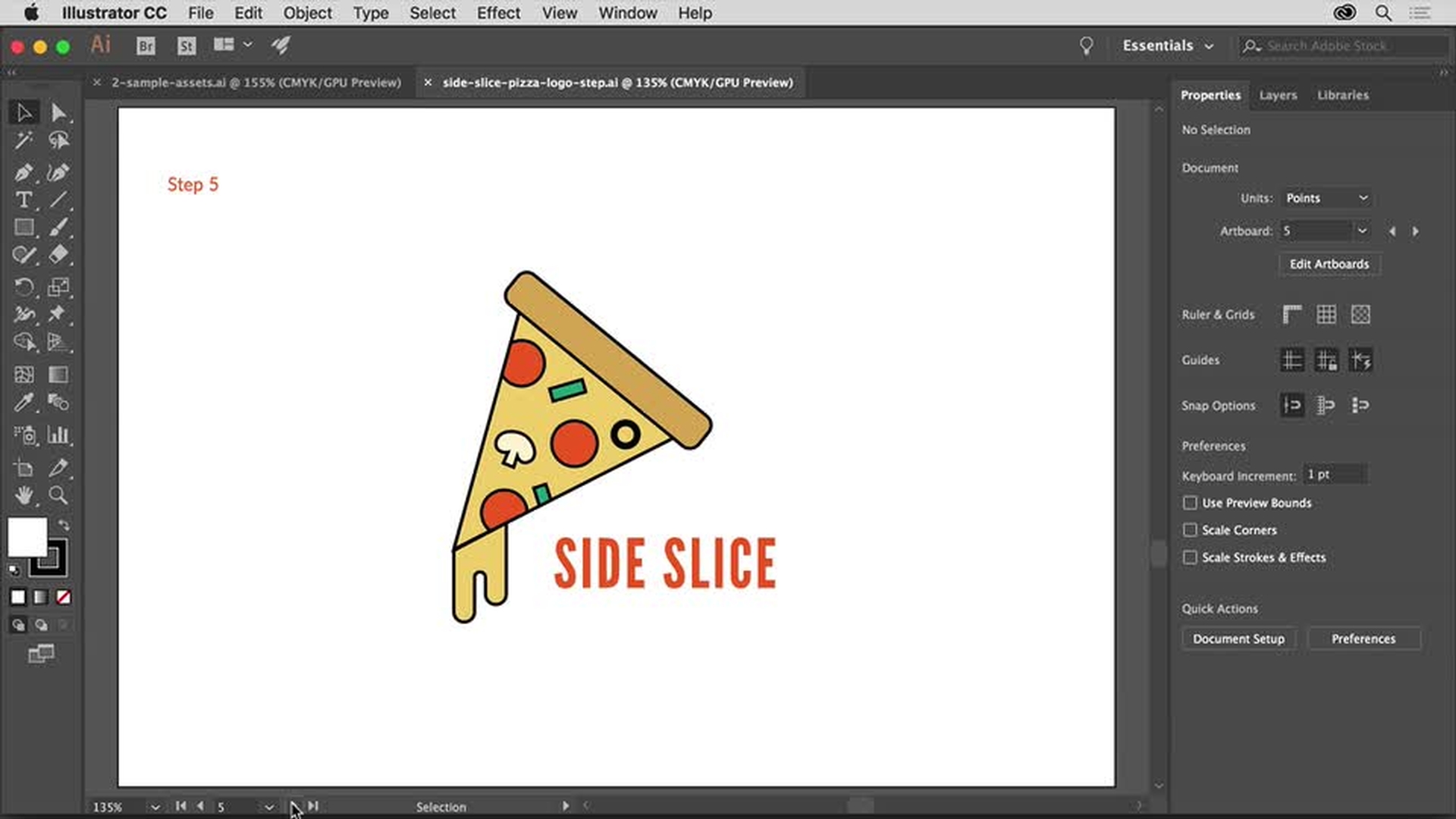
Text hinzufügen.
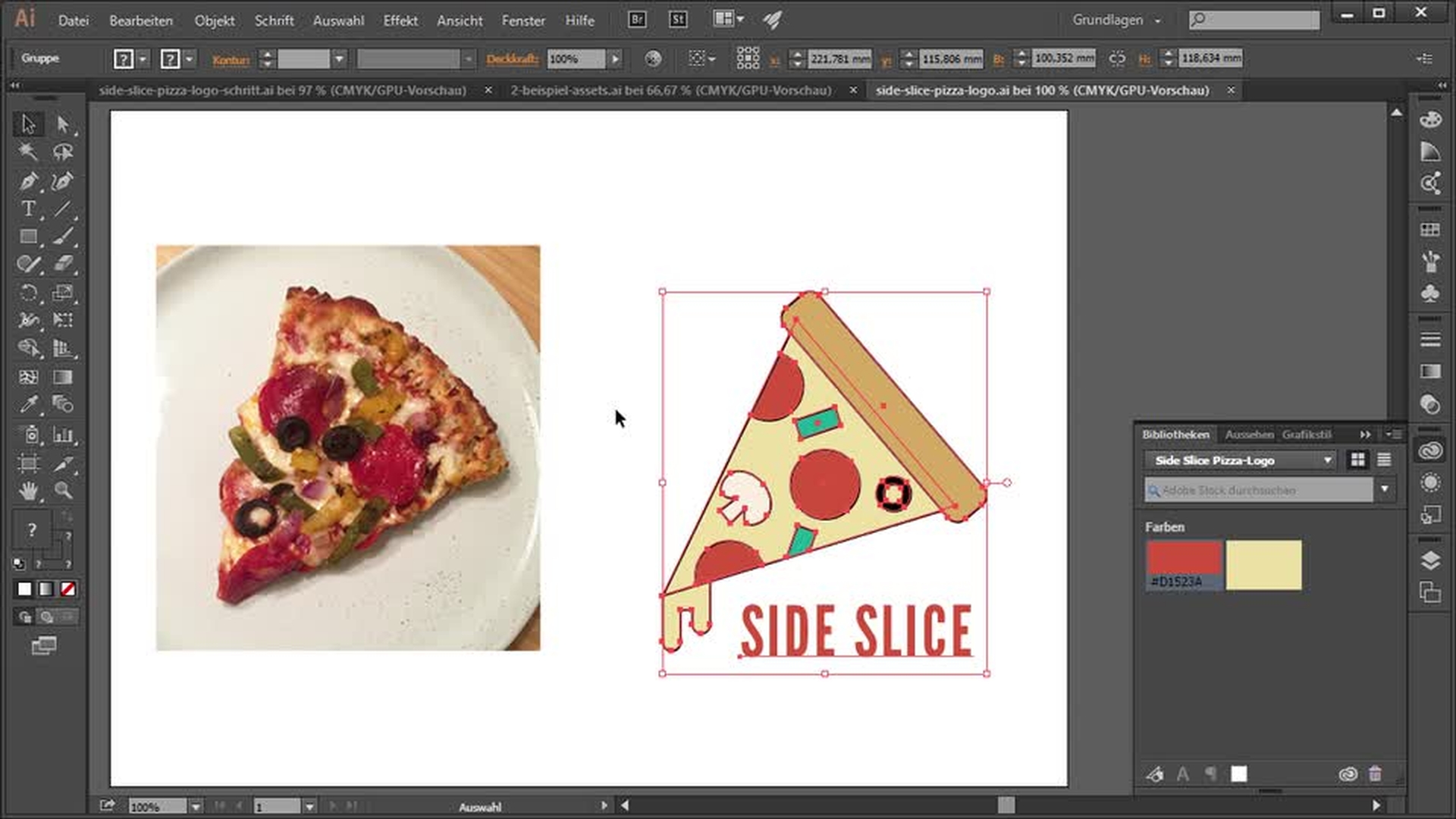
Vervollständigen Sie Ihr Logo, indem Sie mit den Textwerkzeugen von Illustrator den Namen Ihres Unternehmens hinzufügen. Creative Cloud-Abonnenten können aus der umfangreichen Schriftenbibliothek von Adobe Typekit (jetzt Adobe Fonts) mit hochwertigen Schriften wählen.
Lernen Sie, wie Sie Text hinzufügen, die Schrift ändern, Typekit-Schriften hinzufügen und den Zeichenabstand einrichten.
6
Logo prüfen und speichern.
Testen Sie, wie Ihr Logo auf verschiedenen Objekten wie T-Shirts und Visitenkarten wirkt. Speichern Sie Ihre Logo dann im passenden Format für den Druck, die Weitergabe als PDF-Datei, die Veröffentlichung im Web oder andere Zwecke.
Lernen Sie, wie Sie Ihr fertiges Logo in einer Bibliothek ablegen, als PDF-Datei speichern und Optionen für die Verwendung im Web auswählen.
You can control how Adobe websites use cookies and similar technologies by making choices below. But note that if you disable cookies and similar technologies entirely, Adobe websites may not function properly.
Cookies are small text files stored by your web browser when you use websites. There are also other technologies that can be used for similar purposes like HTML5 Local Storage and local shared objects, web beacons, and embedded scripts. These technologies help us do things like remembering you and your preferences when you return to our sites, measure how you use the website, conduct market research, and gather information about the ads you see and interact with.
You can make choices in the menu below about what cookies and other technologies you want us to use on Adobe sites when you visit them from this browser. You can always change those choices later by clicking on the Cookie Preferences link at the bottom of the page.
If enabled:
We can improve your experience by tailoring the site and the content to things we think might be of interest
We can better keep track of your preferences — like what language you prefer to use
We will better understand your likely interests so we can provide you more relevant Adobe ads and content on non-Adobe websites and in non-Adobe apps
It will help us improve the performance of our website and those of our partners who use the Adobe Experience Cloud
If disabled:
We won’t be able to remember you from session to session so the experience may not be tailored to your interests
You’ll still have access to the content of the site but certain features that depend on cookies may not function
You’ll still see ads, they just may not be as relevant to you
General information
You can control how Adobe websites use cookies and similar technologies by making choices below. But note that if you disable cookies and similar technologies entirely, Adobe websites may not function properly.
Cookies are small text files stored by your web browser when you use websites. There are also other technologies that can be used for similar purposes like HTML5 Local Storage, web beacons, and embedded scripts. These technologies help us do things like remembering you and your preferences when you return to our sites, measure how you use the website, conduct market research, and gather information about the ads you see and interact with.
You can make choices in the menu below about what cookies and other technologies you want us to use on Adobe sites when you visit them from this browser. You can always change those choices later by clicking on the Cookie Preferences link at the bottom of the page.
If enabled:
We can improve your experience by tailoring the site and the content to things we think might be of interest
We can better keep track of your preferences — like what language you prefer to use
We will better understand your likely interests so we can provide you more relevant Adobe ads and content on non-Adobe websites and in non-Adobe apps
It will help us improve the performance of our website and those of our partners who use the Adobe Experience Cloud
If disabled:
We won’t be able to remember you from session to session so the experience may not be tailored to your interests
We’ll still count your use of our site and services
You’ll still have access to the content of the site but certain features that depend on cookies may not function
You’ll still see ads, they just may not be as relevant to you
Operate the site and core servicesOperate site and measure engagement
Always active
These cookies are required, and they are used to enable the site and related services core functionality. Without them the site could not operate, so they cannot be disabled.
These cookies enable the site and related services’ core functionality and collect statistics about user engagement, such as counting active use to help us understand trends. These cookies cannot be disabled.
Measure performance
These cookies are used to analyze site usage to measure and improve performance. Without them Adobe cannot know what content is most valued and how often unique visitors return to the site, making it hard to improve information we offer to you.
These cookies are used to analyze site usage to measure and improve performance. Without them Adobe cannot know what content is most valued, making it hard to improve information we offer to you.
Extend functionality
These cookies are used to enhance the functionality of Adobe sites such as remembering your settings and preferences to deliver a personalized experience; for example, your username, your repeated visits, preferred language, your country, or any other saved preference.
Personalize advertising
These cookies are used to enable Adobe and our partners to serve ads more relevant to your interests. Without them you will still see ads, but they might not be as relevant to you.
Personalize advertising
These cookies are used to enable Adobe and our partners to serve ads more relevant to your interests. Without them you will still see ads, but they might not be as relevant to you.