Nota: questo file è stato creato per l’uso su desktop. Condividi il link per accedervi in seguito.
“Lightroom e Photoshop mi rendono molto più produttiva. Posso esportare da Lightroom a Photoshop invece di dover salvare il file e riportarlo in Photoshop. Risparmio un sacco di tempo.”
Come ritoccare un ritratto per valorizzare al meglio le foto.
Segui i consigli di Dana su come usare Adobe Photoshop e Lightroom insieme per creare un ritratto luminoso.
Modifica un ritratto.
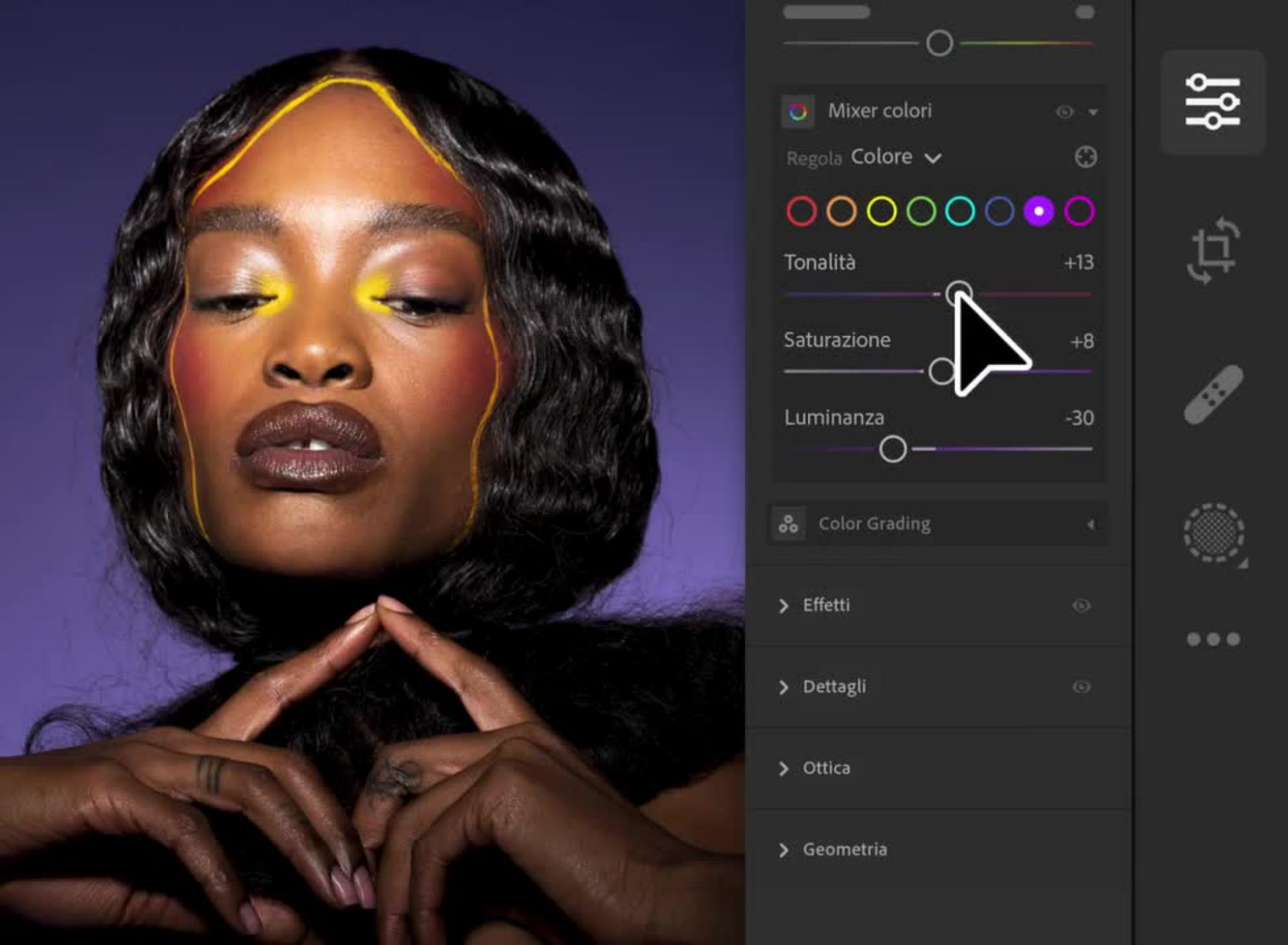
In Lightroom, apri la foto fornita da Dana o un’altra a tua scelta. Usa il pannello Modifica per regolare l’illuminazione e il colore in modo da aggiungere profondità e ottimizzare il colore. Replica le impostazioni di Dana o fai qualche prova con i cursori per personalizzare il risultato.
Continua in Photoshop.
Al termine delle modifiche in Lightroom, fai clic sull’icona del menu con i tre puntini di sospensione a destra e scegli Modifica in Photoshop.
Isola il soggetto.
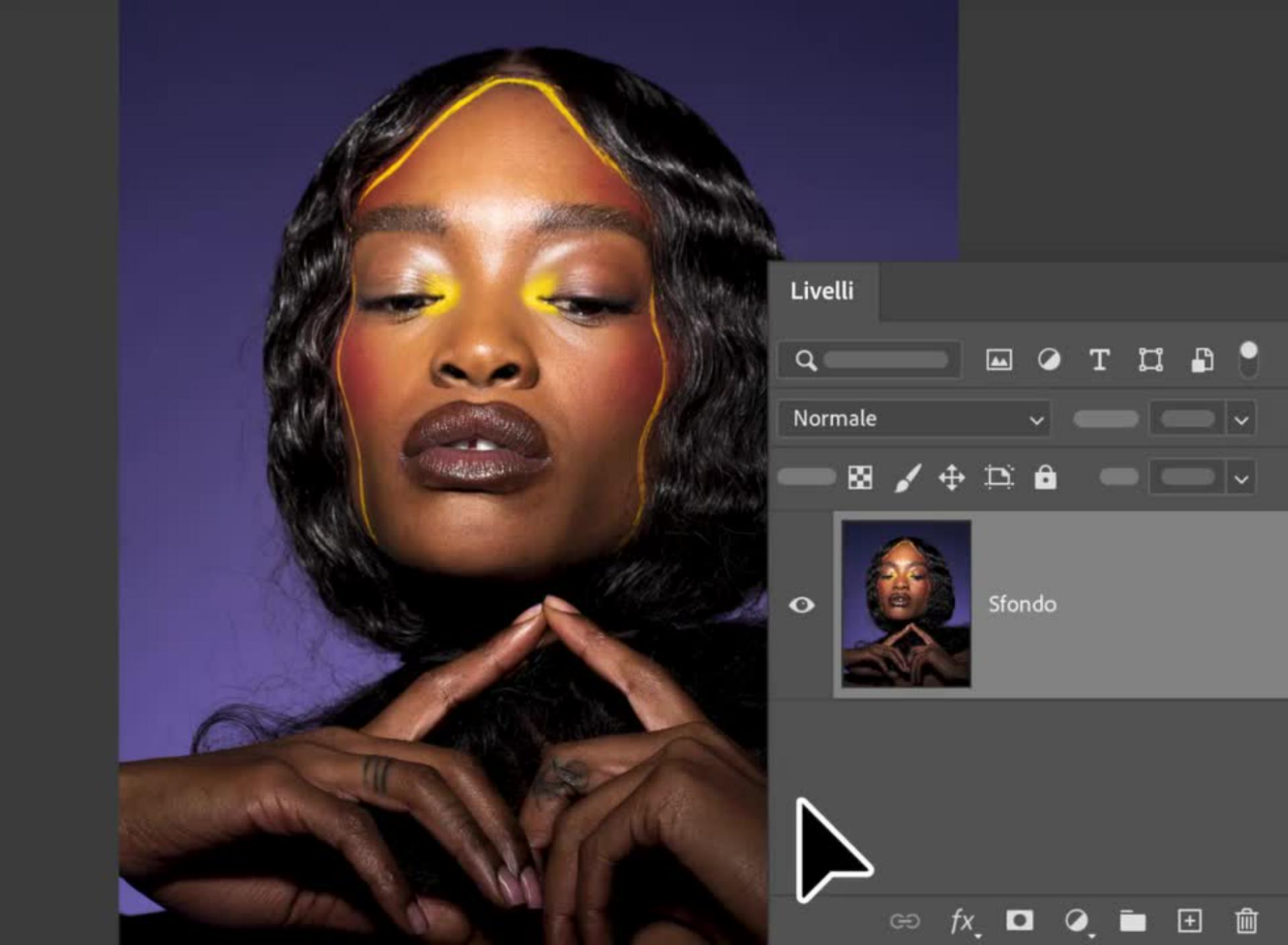
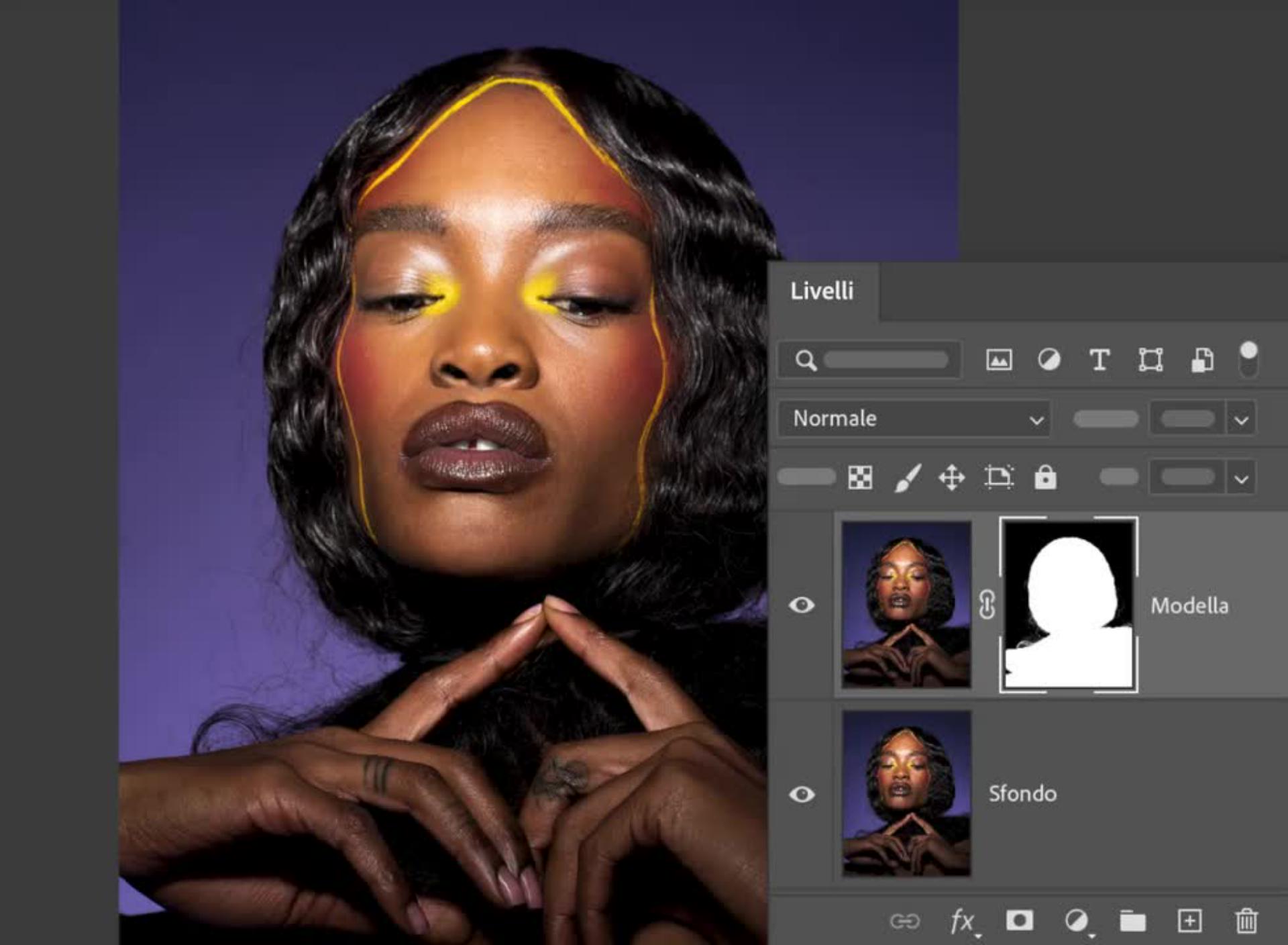
In Photoshop, duplica il livello Sfondo e rinominalo. Seleziona lo strumento Selezione oggetto e fai clic sull’immagine nel livello della modella per creare una selezione. Quindi fai clic sul pulsante Maschera dal pannello Livelli per nascondere lo sfondo nel livello della modella.
Consiglio professionale: la maschera separa il soggetto dallo sfondo in modo che sia possibile modificare la modella o lo sfondo senza che questi elementi si influenzino a vicenda. È utile quando vuoi aggiungere disturbo allo sfondo.
Elimina le imperfezioni.
Seleziona lo strumento Pennello correttivo al volo dalla barra degli strumenti, poi fai clic o dipingi sui piccoli punti che desideri rimuovere. Premi i tasti [ ] sulla tastiera per regolare la dimensione del pennello mentre lavori. Il Pennello correttivo al volo analizza i pixel intorno all’area per uniformare il colore e la texture.
Consiglio professionale: se l’area da ritoccare è molto più grande di un punto, usa lo strumento Timbro clone o passa leggermente sull’area con un pennello morbido impostato su un colore simile.
Osserva le differenze.
Con poche regolazioni, puoi valorizzare al meglio le tue foto utilizzando gli strumenti di ritocco di volta in volta più indicati in Lightroom e Photoshop.
You can control how Adobe websites use cookies and similar technologies by making choices below. But note that if you disable cookies and similar technologies entirely, Adobe websites may not function properly.
Cookies are small text files stored by your web browser when you use websites. There are also other technologies that can be used for similar purposes like HTML5 Local Storage and local shared objects, web beacons, and embedded scripts. These technologies help us do things like remembering you and your preferences when you return to our sites, measure how you use the website, conduct market research, and gather information about the ads you see and interact with.
You can make choices in the menu below about what cookies and other technologies you want us to use on Adobe sites when you visit them from this browser. You can always change those choices later by clicking on the Cookie Preferences link at the bottom of the page.
If enabled:
We can improve your experience by tailoring the site and the content to things we think might be of interest
We can better keep track of your preferences — like what language you prefer to use
We will better understand your likely interests so we can provide you more relevant Adobe ads and content on non-Adobe websites and in non-Adobe apps
It will help us improve the performance of our website and those of our partners who use the Adobe Experience Cloud
If disabled:
We won’t be able to remember you from session to session so the experience may not be tailored to your interests
You’ll still have access to the content of the site but certain features that depend on cookies may not function
You’ll still see ads, they just may not be as relevant to you
General information
You can control how Adobe websites use cookies and similar technologies by making choices below. But note that if you disable cookies and similar technologies entirely, Adobe websites may not function properly.
Cookies are small text files stored by your web browser when you use websites. There are also other technologies that can be used for similar purposes like HTML5 Local Storage, web beacons, and embedded scripts. These technologies help us do things like remembering you and your preferences when you return to our sites, measure how you use the website, conduct market research, and gather information about the ads you see and interact with.
You can make choices in the menu below about what cookies and other technologies you want us to use on Adobe sites when you visit them from this browser. You can always change those choices later by clicking on the Cookie Preferences link at the bottom of the page.
If enabled:
We can improve your experience by tailoring the site and the content to things we think might be of interest
We can better keep track of your preferences — like what language you prefer to use
We will better understand your likely interests so we can provide you more relevant Adobe ads and content on non-Adobe websites and in non-Adobe apps
It will help us improve the performance of our website and those of our partners who use the Adobe Experience Cloud
If disabled:
We won’t be able to remember you from session to session so the experience may not be tailored to your interests
We’ll still count your use of our site and services
You’ll still have access to the content of the site but certain features that depend on cookies may not function
You’ll still see ads, they just may not be as relevant to you
Operate the site and core servicesOperate site and measure engagement
Always active
These cookies are required, and they are used to enable the site and related services core functionality. Without them the site could not operate, so they cannot be disabled.
These cookies enable the site and related services’ core functionality and collect statistics about user engagement, such as counting active use to help us understand trends. These cookies cannot be disabled.
Measure performance
These cookies are used to analyze site usage to measure and improve performance. Without them Adobe cannot know what content is most valued and how often unique visitors return to the site, making it hard to improve information we offer to you.
These cookies are used to analyze site usage to measure and improve performance. Without them Adobe cannot know what content is most valued, making it hard to improve information we offer to you.
Extend functionality
These cookies are used to enhance the functionality of Adobe sites such as remembering your settings and preferences to deliver a personalized experience; for example, your username, your repeated visits, preferred language, your country, or any other saved preference.
Personalize advertising
These cookies are used to enable Adobe and our partners to serve ads more relevant to your interests. Without them you will still see ads, but they might not be as relevant to you.
Personalize advertising
These cookies are used to enable Adobe and our partners to serve ads more relevant to your interests. Without them you will still see ads, but they might not be as relevant to you.