How to write an acceptance letter in the UK.
Don’t get stumped at the final hurdle. Learn how to write an acceptance letter with Adobe today.





At the end of a long job hunt, there’s nothing better than hearing the words “we would like to offer you a position.” However, doing a fist pump and shouting “Yes!” doesn’t come across great over email and may not be the best way to accept your hard-won role.
Learning how to write an acceptance letter can help you officially take an offer, without coming across as unprofessional. Think of it as the last step in your job search journey.
Read on to learn how to write a job acceptance letter with Adobe Express today.
What is an acceptance letter?
It’s in the name – an acceptance letter is a type of professional letter used to formally respond to offers or requests. Most commonly, they’re used to accept job offers, but they could also be used to accept an award, event invitation, or even a school placement.
They’re more than a formal way to say “yes”, though. One of the reasons why an acceptance letter is important is that it allows you to lay down any terms or conditions of the acceptance. For example, you can reinstate any work requirements, pending holidays, or terms of employment that you’re agreeing to.
recipe
Prepare for writing a job acceptance letter.
You’ve just been offered the job role you were after – you’re excited, maybe a touch eager, and ready to accept. The adrenaline might be high, but before you agree to everything, it’s important to consider a few things first. Read through the job offer, and don’t be afraid to ask questions before accepting the terms if you’re uncertain about anything.
Some areas you may want to check include:
- Salary. Before you think about writing a job acceptance letter, it’s best to ensure your salary is suitable (and what you agreed on). If there are any discrepancies, now’s the time to raise the issue.
- Benefits. Whether it’s health insurance, holiday entitlement, wellness programmes or travel schemes, it’s good to confirm any benefits. Especially if they’ve been previously discussed and are not visible in the offer.
- Job title. This may sound like a small issue, but you should confirm your job title is correct and matches the role you’ve applied for – remember, it defines your duties.
- Work hours / flexible arrangements. If you agreed to any flexible working arrangement, such as reduced hours on a certain day, or limits on start or finish times, you’ll want to ensure they’re noted. Likewise, if you applied for a 40-hour job, ensure that the hours here match up. If they’re less, you may want to enquire about it – remember, many companies don’t include breaks.
- Work locations. Does your job acceptance hinge on flexible working, or working at specific locations? Double check this information is in line with what you agreed.
- Probationary period. Lots of UK job roles now depend on you completing a probationary period before you are taken on as a permanent member of the team. Check if the job offer provides details of this. Some employers only offer benefits and perks once the probationary period is completed and notice periods and holiday allowances can also differ.
How to write a job acceptance letter for a UK employer.
Once everything’s looking good on the offer, it’s time for you to say, “I accept”. But it’s important to make sure you write this the right way.
Here are six steps to help you learn how to write a job acceptance letter.

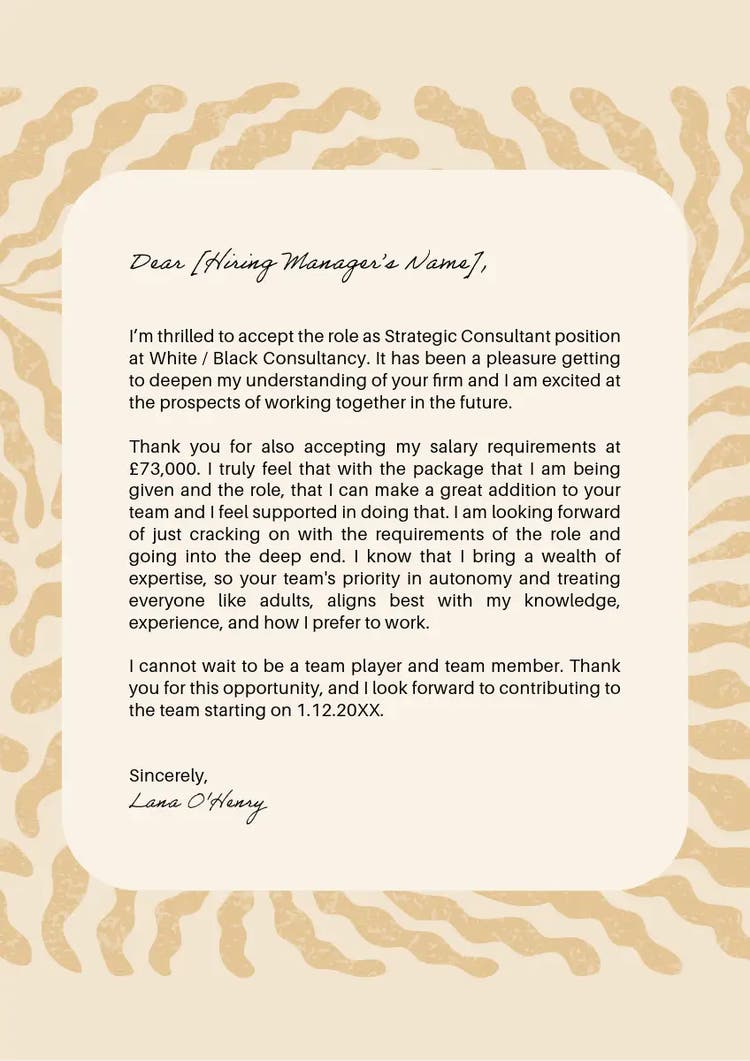
"Thank you for offering me the position of [Job Title] at [Company Name]. I’m incredibly enthusiastic about the role and excited to begin this journey."
Next, mention that you accept the offer, stating the salary. You could write something like:
"I formally accept the job offer, as described in the offer letter. I accept my starting salary of £00,000.00, and the terms of the offer as described in the offer letter."
6 letter of acceptance examples.
recipe
recipe
Top tips for writing an acceptance letter for a job.
Need a helping hand to get started? Not feeling your response? Here are some quick tips to help you write that perfect job acceptance letter for your future UK employer.
1. Use a professional format.
While the tone of your letter can vary somewhat, it’s important to always remain professional. That means presenting your acceptance letter in a way that doesn’t come across as unprofessional. Unsure how to format your documents? You can quickly create letters and professional emails with Adobe Express.
2. Show enthusiasm for the job role.
Express your enthusiasm and gratitude for the role in your letter – while it’s not essential, it starts things off on the right foot when it comes to forming relationships in your new job or career.
3. Don’t forget to proofread.
Read, read, and read some more – as you’re writing, and when you’re done. Check for errors or spelling mistakes in the details to start with, such as names, greetings, and information such as salary, job titles or benefits. Then, look at the more granular details.
4. Don’t forget the little extras.
If the employer has asked you for any documentation, such as evidence of your right to work in the UK or your P45 from your previous employer, don’t forget to attach them. Remember to include an easy to read, relevant subject line too. For example: [Applicant Name Acceptance Offer].
5. Keep things short.
Try not to meander too much, as you could get lost in what you’re trying to say. Keep things pleasant, professional, and concise. Try to make your communications easier to read too, by separating paragraphs, using a professional font, and considering formatting and structure. You don’t want to seem rushed, but walls of text or meandering lines don’t make the best first impression.
recipe
You might also like...